Long Shot: The Dice Game
2022
Strategize, place bets, and influence an eight-horse race as dice rolls create tense choices and changing opportunities.
25
minutes
1 - 8
player(s)
14+
Medium Light


About this board game
Long Shot: The Dice Game is a horse-racing strategy game for 1–8 players that plays in about 25 minutes. In this tense contest, players compete to make the most money during an eight-horse race.
Each turn, the roll of the dice determines which horses move and which options become available. You will need to adapt your plans as the race unfolds, balancing careful decisions with the excitement of pushing your luck.
Players can pursue several ways to build their earnings, including:
- Buying horses
- Placing bets
- Influencing race movement
- Using special abilities
The race continues until three horses cross the finish line. At that point, earnings are totaled, and the player who has made the most money is declared the winner.
Will you play it safe with steady opportunities, or risk it all on a long shot? The dice keep the available choices moving, while the changing positions of the horses create new possibilities throughout the game. Long Shot: The Dice Game combines strategic planning, betting decisions, and push-your-luck tension in a compact experience released in 2022.

Board Game Rules for
Long Shot: The Dice Game
Plan and push your luck as the action unfolds in this tense race of 8 horses. You’ll buy horses, place bets, influence race movement, and utilize special abilities. The dice determine which horses move and the actions available each turn, so be ready to adapt your plans. Once three horses cross the finish line, earnings are totaled. While there are many ways to earn money during a horse race, only the player that makes the most money will be declared the winner. Will you play it safe, or risk it big on a long shot?
OBJECT OF THE GAME
Be the player with the most money when the race ends.
COMPONENTS
- 1 Track Board
- 8 Player Boards
- 8 Horse Tokens
- 8 Dry Erase Markers
- 8 Starting Cards
- 16 Horse Cards (8 in ‘1 Set’ and 8 in ‘2 Set’)
- 1 Horse Die (
 )
- 1 Movement Die (
 )
- 1 Solo Board

If playing a single player game, see SOLO RACE.
- Place the Track Board in the center of the table.
- Place the 8 Horse Tokens behind the blue Start/Finish line on the Track Board.
- Select a Set of 8 Horse Cards numbered 1-8 to use this game. If this is your first game, use the set of Horse Cards marked with ‘1 Set’.
Horse Cards: Sets play well together, though they can also be mixed and matched with other sets for a custom experience. If using horses from different sets, use only one Horse Card for each horse number. - Place the selected Horse Cards face up next to the Track Board to form the ‘Market’. Return unselected Horse Cards to the box.
- Give each player a Player Board and a Dry Erase Marker.
- Shuffle the Starting Cards and deal one to each player. Mark your Player Board so it matches your starting card. Mark the 4 X’s (
 ) shown on the card onto the Concession Grid (
 ), and write the 2 numbers in the Bet spaces (
 ) for the horses listed. Then return all Starting Cards to the box.
- Each player gets $12 and marks that amount in the Money circle on their Player Board.
- The player who most recently made a bet starts as the Active Player. Give them both Dice.
The race is about to start! You’re now ready to play Long Shot: The Dice Game.


THE TRACK BOARD
Long Shot: The Dice Game covers a single race of 8 horses. The Track Board is where horse positions are noted. Horses race along track spaces from the Start/Finish line and back to it. Horses typically advance during the race, but occasionally a sneaky player may force them back.

Track Board Elements
- A. NO BET LINE (
 ): Horses that are currently past this line cannot have any Bets placed on them.
- B. START/FINISH LINE: Horses start the race on the light brown side of this line, and finish when they cross it after racing around the track. Once a horse passes the finish line by moving all the way around the track, move it to the topmost finish position in the ‘Winner’s Circle’.
Horses can only pass the finish line from a dice roll or secondary movement, and never from direct player movement. - C. WINNER’S CIRCLE: Horses that cross the finish line are placed here. The finish position determines the horse’s purse and Bet earnings multiplier.
- The first horse to cross the finish line is immediately placed in the ‘1st – $35’ space.
- The second horse is placed in the ‘2nd – $25’ space.
- The third horse is placed in the ‘3rd – $15’ space.
HORSE CARDS
Each horse in the race has a matching card with detailed information.

Horse Card Elements
- D. HORSE NUMBER: A number used to reference the horse throughout the game.
- E. HORSE NAME
- F. COST: The amount of Money required to buy the horse from the Market.
- G. HORSE SET: Each horse is designated into a set (‘1 Set’ and ‘2 Set’, etc.).
- H. HORSE ABILITY: Each horse has a unique ability with its own special rules. Horse abilities only apply if the Horse is owned.
- I. BET ODDS: Bet Odds show how much Money a bet on that horse earns at the end of the race. Bet Odds are multipliers, with each player getting money equal to the multiplier times their bet amount.
- J. SECONDARY MOVEMENT BAR: Check the Secondary Movement Bar for the horse rolled to see which additional horses move. Each horse marked on the bar moves 1 space forward.
PLAYER BOARD
Each player has their own Player Board only they mark. For Bets and Money, you will be marking numbers, which will need to be erased and updated throughout the game. All other marks are permanent and are marked with an X. Player Boards are public knowledge.

Player Board Elements
- A. HORSE NUMBERS: The Horse Numbers here are for reference, and are not marked on. Each horizontal row across A – F corresponds to a single horse.
- B. HELMET SPACES: Mark Helmets here. Having a Helmet for a horse allows you to place Bets on that horse while it is past the No Bet line (), but has not yet finished the race.
- C. JERSEY SPACES: Mark Jerseys here. Jerseys let you influence horses to move more often. If you have the Helmet and Jersey for a horse, you also earn additional Money at the end of the game.
- D. BET SPACES: Mark Bets here. To place a bet you must have enough Money.
- E. BET ODDS: Bet Odds show how much Money a bet on that horse earns at the end of the race. Bet Odds are multipliers, with each player winning Money equal to the multiplier times their bet amount.
- F. BET WINNINGS: Use this column to calculate your Bet winnings. Write the total from any Bet winnings in the bottom square of this column ().
- G. CONCESSION GRID: Mark numbers in the Concession Grid. Completing a row or column in the grid gets you a Concession Bonus.
- H. CONCESSION BONUSES: Concession Bonuses are one-time rewards that you get by completing rows and columns in your Concession Grid.
- I. WILD NUMBER: Use a Wild Number to take an Action for any horse number instead of the horse rolled.
- J. ACTIONS: Choose 1 Action to perform each turn.
- K. MONEY: Track your Money here. Money is used during the game to place Bets and buy horses. Leftover Money is added to your Final Score at the end of the game.
- L. FINAL SCORE: At the end of the game, calculate your earnings in this scoring column and write the total Money here.
Long Shot: The Dice Game is played in rounds. Each round has 4 phases that must be completed in order:
- ROLL DICE
- MOVE HORSE SPACES
- MOVE ALL ON HORSE 1 SPACE
- ALL PLAYERS TAKE ONE ACTION
1. ROLL DICE
The Active Player picks up both Dice and rolls them.
2. MOVE HORSE SPACES
Move the Horse Token matching the a number of track spaces equal to the . If the rolled horse has finished the race, it does not move.

3. MOVE ALL ON HORSE 1 SPACE
Find the Horse Card matching the and reference its Secondary Movement Bar. In bar order from left to right, move each horse marked with an 1 track space.
There are pre-printed marks on Horse Cards, which work the same way as marks made by players.


RULES FOR MOVING HORSES
Additional rules when moving horses:
- Any number of Horse Tokens can occupy the same track space.
- When an effect moves multiple horses, move horses in order from lowest numbered to highest numbered.
- By default, horses move forward when they are moved. Some Concession Bonuses and Horse Abilities can move horses forward when the (+) is shown. If there is a (-) listed for a movement effect, move that horse backward the number of spaces shown.
- If a horse would ever be moved backwards past the Start/Finish line, stop the horse at the Start/Finish line with any other movement wasted.
- Horses can only pass the finish line from a dice roll or secondary movement, and never from direct player movement (see CROSSING THE FINISH LINE).
4. ALL PLAYERS TAKE ONE ACTION
Starting with the Active Player and proceeding clockwise, each player takes a turn in which they perform a single Action:
- CONCESSION (
 )
- HELMET (
 )
- JERSEY (
 )
- BET (
 )
- BUY (
 )
The Action you take is restricted to the number rolled on the , unless you also mark a ‘Wild Number’ (see below). You may take the same Action as other players.
WILD NUMBERS
At the start of your turn, you may mark an on one of your Wild Numbers ( ). If you do, your action counts the for this turn as if it were a single number of your choice (this does not activate abilities on horses).
CONCESSION: MARK
Mark an on a single  (circle space) on the Concession Grid that matches the .
When you complete any row or column in your Concession Grid (diagonals do not count), mark one of the Concession Bonuses and immediately resolve it. It is possible to complete a row and a column at the same time, in which case you mark two Concession Bonuses to resolve.
Concession Bonuses
- $7: Gain $7.
- -2 -2: Move any two horses backward 2 spaces each.
- -3: Move any one horse backward 3 spaces.
- +2 +2: Move any two horses forward 2 spaces each.
- +3: Move any one horse forward 3 spaces.
 : Place a $3 Free Bet on any horse.
 : Take the Helmet Action for any horse.
 : Take the Jersey Action for any horse.
 : Take any horse from the Market to own, and do not pay its cost.
HELMET: MARK
Mark an on a Helmet space that matches the . You may place Bets on horses you have a Helmet for, even if they are past the No Bet line ().
JERSEY: MARK , MARK CARD
Mark an on a Jersey space that matches the . Then go to the Horse Card matching the and mark an on ANY horse on that Horse Card’s Secondary Movement Bar.
Jockey Set Scoring
Pairs of Helmet and Jersey ( ) for the same horse are worth $5 at the end of the game.

BET: BET UP TO $3 ON HORSE
Mark $1, $2, or $3 on a Bet space that matches the . Spend the bet amount by reducing your Money. If there is already a bet marked there, add the new bet to it and write the total.
To take this action, you must have enough money to pay your Bet. You cannot Bet on horses past the No Bet line (), unless you have the Helmet for that horse. You can never place Bets on horses that have finished (including FREE BETS described below).
Free Bets
Some abilities place ‘Free Bets’. A Free Bet is a Bet you place, but do not pay for. You cannot place Free Bets on horses past the No Bet line () unless you have the Helmet for that horse. You can never place Bets on horses that have finished.
At the end of the game, horses with bets on them that are past the No Bet line () or have finished the race will pay out.
BUY: BUY HORSE
Buy Horse from the Market if the horse is available. Pay the cost of the horse from your Money, and place the Horse Card in front of you to show you own it. You cannot buy a horse that has finished the race.
GETTING STUCK
If you cannot take an action using the rolled number, you can use a Wild Number to change the number to something you can use, or you can spend your whole turn to erase the mark on one of your Wild Numbers, leaving it available for the future.
END OF ROUND
After every player has taken a turn, the Active Player passes the Dice to the player on their left to begin a new round.
Each horse has a unique ability with its own special rules. Horse abilities only apply while the horse is owned by a player.
Horse Abilities usually resolve when the owner takes their action or at a specified time. Horse Abilities are always optional, and the horse owner decides when to apply them.
Each Horse Ability begins with a symbol or keyword to show when its effect occurs. These include:
- #: At the start of your turn, if the rolled the specified number.
- : When you take the Concession Action.
- : When you take the Helmet Action.
- : When you take the Jersey Action.
- : When you take the Bet Action.
- WHEN BOUGHT: When you buy the horse from the Market, immediately apply this effect.
- AT SCORING: Calculate this bonus and add it to your Money total during scoring.
CROSSING THE FINISH LINE
Once a horse passes the finish line, move it to the topmost finish position on the side of the track (Winner’s Circle).
Horses can only pass the finish line from a dice roll or movement on the Secondary Movement Bar, and never from Concession Bonuses or Horse Abilities. Concession Bonus movement must stop short of its full amount if the horse reaches the finish line.
Finished horses cannot be moved or bet on. When a finished horse is rolled, move the other horses on its Secondary Movement Bar as normal.
Once 3 horses cross the finish line, no other horses may finish. Any horse that would be moved across the finish line instead stops on the space before the finish line and any extra movement is wasted.
END OF GAME
Once a third horse has crossed the finish line, finish the current round. Then end the game and proceed to Scoring.
- PURSE: Earn the listed purse amount from the finish position for each finishing horse you own.
- BETS: Use your Bet and Bet Odds columns to determine your Bet winnings. Multiply your Bet amount for each horse times the number shown that corresponds to the horse’s finish position. Horses that are past the No Bet line () that did not finish earn 1x their Bet.
- JOCKEY SETS ( + ): Earn $5 for each pair of Helmet and Jersey for the same horse.
- MONEY: Any remaining Money you have.
- TOTAL SCORE AND ANY ‘AT SCORING’ HORSE ABILITIES: Total from all scoring elements and any money from horses you own that affect scoring.
Total the scoring column to determine your final score in Money. The player with the most Money wins!

If you’re heading to the race track alone, you’ll be betting against noted racing tycoon and fledgling game inventor Roland Wright – a fierce competitor.
SOLO SETUP
Set up the game with the following changes:
- Roland (AI) receives the special Solo Board pictured below.
- After dealing Roland his Starting Card, mark his free Starting Bets, but do not mark any Concessions, as his (Solo) Board doesn’t have a Concession Grid.
- Roland starts the game with $20 in the Money box (
 ).

SOLO PLAY
The player goes first in every round. After they take their Action, Roland takes his. Find Roland’s Action by looking at the column for the rolled, then the row for the roll. Roland then takes that Action. If the Action has a icon in it, roll the an additional time and use that number. If that Action cannot be taken, then Roland takes the default Action (*) at the bottom of the column.
 : The 3 column will mostly mark Horse Cards, similar to a player taking the Jersey () Action.
 : The 2 column will mostly place Bets on horses, using Money.
 : The 1 column will mostly buy horses.
Important: Horses Roland (AI) buys are considered not to have Horse Abilities.
SPENDING MONEY
Similar to a player, Roland spends his own Money to buy horses and bet unless those Actions are labeled free.
TIES FOR TAKING AN ACTION
If there is a tie among several horses for how an Action is to be taken, Roland attempts to take the Action with the lowest # tied horse.
SCORING
Roland earns Money for his Bets, his remaining Money, and his owned horses that finish 1st, 2nd, or 3rd. Write his Final Score in the bottom box on the Solo Board score column. Determine your Final Score and compare it with Roland’s score. The player with the most Money wins!
TERMINOLOGY
- Lead: The horse(s) that have not yet finished that have the least spaces until they finish.
- Last-place: The horse(s) that have the most spaces until they finish.
- Horse’s Box: The horse number on the Secondary Movement Bar (of the indicated Horse Card).
EXAMPLE ACTION
After your turn, Roland takes his. The Dice you rolled are  , so Roland will ‘Mark Lead Owned Horse’s Box on .’
Checking the owned horses near Roland’s Solo Board and the track, you see that Horse #4 is the lead horse that Roland owns. This Action contains a , so you roll the to determine the number to use, getting a 7.

Go to Horse Card #7 and mark an X on the #4 on the Secondary Movement Bar.
SOLO ACTIONS CLARIFIED
 : Mark Roland’s lead horse that he owns on Horse Card.
 : Mark Roland’s last-place horse that he owns on Horse Card and gain $1.
 : Mark all boxes matching Roland’s owned horses on Horse Card.
 : Mark box on Horse Card matching the horse with Roland’s highest bet.
 : Move back 2 spaces the horse you own that is in the lead.
 : Move back 2 spaces the horse with your highest bet.
 : Buy the unowned horse that is in the lead.
 : Buy the unowned horse with the lowest rank number.
Game Design: Chris Handy
Game Development: John Brieger, John Velgus
Illustrations: Clau Souza
Graphic Design: Chris Handy
‘Roland Wright’ Brand Concept: Daniel Solis & Graham Russell
Playtesters: Jenn Handy, Christian Montague, Colleen Montague, Bernardo Salcido, Kevin Baldizon, Luis Mendoza, Grace Paradis, John McCloud, John Victor, Paul Butler, Janine Widman, Corey Downum, Bay Area Game Designers and Boosters, Pacificon Protospiel, Michael Dunsmore, Jeremy Commandeur, Ting Chow, Jon Simantov, Aaron Daar, John Westenhaver, Breeze Grigas, Karla Heuer, John Furth, Zach Nieman, Brian Fattig, Glenn Cotter, Brian McKay, Mike Mihealsick, Joshua Norris
For more information visit: www.LongShotDiceGame.com
© 2021 Perplext, LLC – All Rights Reserved
Overview & Components
Plan and push your luck as the action unfolds in this tense race of 8 horses. You’ll buy horses, place bets, influence race movement, and utilize special abilities. The dice determine which horses move and the actions available each turn, so be ready to adapt your plans. Once three horses cross the finish line, earnings are totaled. While there are many ways to earn money during a horse race, only the player that makes the most money will be declared the winner. Will you play it safe, or risk it big on a long shot?
OBJECT OF THE GAME
Be the player with the most money when the race ends.
COMPONENTS
- 1 Track Board
- 8 Player Boards
- 8 Horse Tokens
- 8 Dry Erase Markers
- 8 Starting Cards
- 16 Horse Cards (8 in ‘1 Set’ and 8 in ‘2 Set’)
- 1 Horse Die ()
- 1 Movement Die ()
- 1 Solo Board
Setup
If playing a single player game, see SOLO RACE.
- Place the Track Board in the center of the table.
- Place the 8 Horse Tokens behind the blue Start/Finish line on the Track Board.
- Select a Set of 8 Horse Cards numbered 1-8 to use this game. If this is your first game, use the set of Horse Cards marked with ‘1 Set’.
Horse Cards: Sets play well together, though they can also be mixed and matched with other sets for a custom experience. If using horses from different sets, use only one Horse Card for each horse number. - Place the selected Horse Cards face up next to the Track Board to form the ‘Market’. Return unselected Horse Cards to the box.
- Give each player a Player Board and a Dry Erase Marker.
- Shuffle the Starting Cards and deal one to each player. Mark your Player Board so it matches your starting card. Mark the 4 X’s () shown on the card onto the Concession Grid (), and write the 2 numbers in the Bet spaces () for the horses listed. Then return all Starting Cards to the box.
- Each player gets $12 and marks that amount in the Money circle on their Player Board.
- The player who most recently made a bet starts as the Active Player. Give them both Dice.
The race is about to start! You’re now ready to play Long Shot: The Dice Game.
Boards & Cards Anatomy
THE TRACK BOARD
Long Shot: The Dice Game covers a single race of 8 horses. The Track Board is where horse positions are noted. Horses race along track spaces from the Start/Finish line and back to it. Horses typically advance during the race, but occasionally a sneaky player may force them back.
Track Board Elements
- A. NO BET LINE (): Horses that are currently past this line cannot have any Bets placed on them.
- B. START/FINISH LINE: Horses start the race on the light brown side of this line, and finish when they cross it after racing around the track. Once a horse passes the finish line by moving all the way around the track, move it to the topmost finish position in the ‘Winner’s Circle’.
Horses can only pass the finish line from a dice roll or secondary movement, and never from direct player movement. - C. WINNER’S CIRCLE: Horses that cross the finish line are placed here. The finish position determines the horse’s purse and Bet earnings multiplier.
- The first horse to cross the finish line is immediately placed in the ‘1st – $35’ space.
- The second horse is placed in the ‘2nd – $25’ space.
- The third horse is placed in the ‘3rd – $15’ space.
HORSE CARDS
Each horse in the race has a matching card with detailed information.
Horse Card Elements
- D. HORSE NUMBER: A number used to reference the horse throughout the game.
- E. HORSE NAME
- F. COST: The amount of Money required to buy the horse from the Market.
- G. HORSE SET: Each horse is designated into a set (‘1 Set’ and ‘2 Set’, etc.).
- H. HORSE ABILITY: Each horse has a unique ability with its own special rules. Horse abilities only apply if the Horse is owned.
- I. BET ODDS: Bet Odds show how much Money a bet on that horse earns at the end of the race. Bet Odds are multipliers, with each player getting money equal to the multiplier times their bet amount.
- J. SECONDARY MOVEMENT BAR: Check the Secondary Movement Bar for the horse rolled to see which additional horses move. Each horse marked on the bar moves 1 space forward.
PLAYER BOARD
Each player has their own Player Board only they mark. For Bets and Money, you will be marking numbers, which will need to be erased and updated throughout the game. All other marks are permanent and are marked with an X. Player Boards are public knowledge.
Player Board Elements
- A. HORSE NUMBERS: The Horse Numbers here are for reference, and are not marked on. Each horizontal row across A – F corresponds to a single horse.
- B. HELMET SPACES: Mark Helmets here. Having a Helmet for a horse allows you to place Bets on that horse while it is past the No Bet line (), but has not yet finished the race.
- C. JERSEY SPACES: Mark Jerseys here. Jerseys let you influence horses to move more often. If you have the Helmet and Jersey for a horse, you also earn additional Money at the end of the game.
- D. BET SPACES: Mark Bets here. To place a bet you must have enough Money.
- E. BET ODDS: Bet Odds show how much Money a bet on that horse earns at the end of the race. Bet Odds are multipliers, with each player winning Money equal to the multiplier times their bet amount.
- F. BET WINNINGS: Use this column to calculate your Bet winnings. Write the total from any Bet winnings in the bottom square of this column ().
- G. CONCESSION GRID: Mark numbers in the Concession Grid. Completing a row or column in the grid gets you a Concession Bonus.
- H. CONCESSION BONUSES: Concession Bonuses are one-time rewards that you get by completing rows and columns in your Concession Grid.
- I. WILD NUMBER: Use a Wild Number to take an Action for any horse number instead of the horse rolled.
- J. ACTIONS: Choose 1 Action to perform each turn.
- K. MONEY: Track your Money here. Money is used during the game to place Bets and buy horses. Leftover Money is added to your Final Score at the end of the game.
- L. FINAL SCORE: At the end of the game, calculate your earnings in this scoring column and write the total Money here.
How to Play: Round Structure & Movement
Long Shot: The Dice Game is played in rounds. Each round has 4 phases that must be completed in order:
- ROLL DICE
- MOVE HORSE SPACES
- MOVE ALL ON HORSE 1 SPACE
- ALL PLAYERS TAKE ONE ACTION
1. ROLL DICE
The Active Player picks up both Dice and rolls them.
2. MOVE HORSE SPACES
Move the Horse Token matching the a number of track spaces equal to the . If the rolled horse has finished the race, it does not move.
3. MOVE ALL ON HORSE 1 SPACE
Find the Horse Card matching the and reference its Secondary Movement Bar. In bar order from left to right, move each horse marked with an 1 track space.
There are pre-printed marks on Horse Cards, which work the same way as marks made by players.
RULES FOR MOVING HORSES
Additional rules when moving horses:
- Any number of Horse Tokens can occupy the same track space.
- When an effect moves multiple horses, move horses in order from lowest numbered to highest numbered.
- By default, horses move forward when they are moved. Some Concession Bonuses and Horse Abilities can move horses forward when the (+) is shown. If there is a (-) listed for a movement effect, move that horse backward the number of spaces shown.
- If a horse would ever be moved backwards past the Start/Finish line, stop the horse at the Start/Finish line with any other movement wasted.
- Horses can only pass the finish line from a dice roll or secondary movement, and never from direct player movement (see CROSSING THE FINISH LINE).
Player Actions
4. ALL PLAYERS TAKE ONE ACTION
Starting with the Active Player and proceeding clockwise, each player takes a turn in which they perform a single Action:
- CONCESSION ()
- HELMET ()
- JERSEY ()
- BET ()
- BUY ()
The Action you take is restricted to the number rolled on the , unless you also mark a ‘Wild Number’ (see below). You may take the same Action as other players.
WILD NUMBERS
At the start of your turn, you may mark an on one of your Wild Numbers (). If you do, your action counts the for this turn as if it were a single number of your choice (this does not activate abilities on horses).
CONCESSION: MARK
Mark an on a single (circle space) on the Concession Grid that matches the .
When you complete any row or column in your Concession Grid (diagonals do not count), mark one of the Concession Bonuses and immediately resolve it. It is possible to complete a row and a column at the same time, in which case you mark two Concession Bonuses to resolve.
Concession Bonuses
- $7: Gain $7.
- -2 -2: Move any two horses backward 2 spaces each.
- -3: Move any one horse backward 3 spaces.
- +2 +2: Move any two horses forward 2 spaces each.
- +3: Move any one horse forward 3 spaces.
- : Place a $3 Free Bet on any horse.
- : Take the Helmet Action for any horse.
- : Take the Jersey Action for any horse.
- : Take any horse from the Market to own, and do not pay its cost.
HELMET: MARK
Mark an on a Helmet space that matches the . You may place Bets on horses you have a Helmet for, even if they are past the No Bet line ().
JERSEY: MARK , MARK CARD
Mark an on a Jersey space that matches the . Then go to the Horse Card matching the and mark an on ANY horse on that Horse Card’s Secondary Movement Bar.
Jockey Set Scoring
Pairs of Helmet and Jersey () for the same horse are worth $5 at the end of the game.
BET: BET UP TO $3 ON HORSE
Mark $1, $2, or $3 on a Bet space that matches the . Spend the bet amount by reducing your Money. If there is already a bet marked there, add the new bet to it and write the total.
To take this action, you must have enough money to pay your Bet. You cannot Bet on horses past the No Bet line (), unless you have the Helmet for that horse. You can never place Bets on horses that have finished (including FREE BETS described below).
Free Bets
Some abilities place ‘Free Bets’. A Free Bet is a Bet you place, but do not pay for. You cannot place Free Bets on horses past the No Bet line () unless you have the Helmet for that horse. You can never place Bets on horses that have finished.
At the end of the game, horses with bets on them that are past the No Bet line () or have finished the race will pay out.
BUY: BUY HORSE
Buy Horse from the Market if the horse is available. Pay the cost of the horse from your Money, and place the Horse Card in front of you to show you own it. You cannot buy a horse that has finished the race.
GETTING STUCK
If you cannot take an action using the rolled number, you can use a Wild Number to change the number to something you can use, or you can spend your whole turn to erase the mark on one of your Wild Numbers, leaving it available for the future.
END OF ROUND
After every player has taken a turn, the Active Player passes the Dice to the player on their left to begin a new round.
Horse Abilities
Each horse has a unique ability with its own special rules. Horse abilities only apply while the horse is owned by a player.
Horse Abilities usually resolve when the owner takes their action or at a specified time. Horse Abilities are always optional, and the horse owner decides when to apply them.
Each Horse Ability begins with a symbol or keyword to show when its effect occurs. These include:
- #: At the start of your turn, if the rolled the specified number.
- : When you take the Concession Action.
- : When you take the Helmet Action.
- : When you take the Jersey Action.
- : When you take the Bet Action.
- WHEN BOUGHT: When you buy the horse from the Market, immediately apply this effect.
- AT SCORING: Calculate this bonus and add it to your Money total during scoring.
Crossing the Finish Line & End of Game
CROSSING THE FINISH LINE
Once a horse passes the finish line, move it to the topmost finish position on the side of the track (Winner’s Circle).
Horses can only pass the finish line from a dice roll or movement on the Secondary Movement Bar, and never from Concession Bonuses or Horse Abilities. Concession Bonus movement must stop short of its full amount if the horse reaches the finish line.
Finished horses cannot be moved or bet on. When a finished horse is rolled, move the other horses on its Secondary Movement Bar as normal.
Once 3 horses cross the finish line, no other horses may finish. Any horse that would be moved across the finish line instead stops on the space before the finish line and any extra movement is wasted.
END OF GAME
Once a third horse has crossed the finish line, finish the current round. Then end the game and proceed to Scoring.
Scoring
- PURSE: Earn the listed purse amount from the finish position for each finishing horse you own.
- BETS: Use your Bet and Bet Odds columns to determine your Bet winnings. Multiply your Bet amount for each horse times the number shown that corresponds to the horse’s finish position. Horses that are past the No Bet line () that did not finish earn 1x their Bet.
- JOCKEY SETS ( + ): Earn $5 for each pair of Helmet and Jersey for the same horse.
- MONEY: Any remaining Money you have.
- TOTAL SCORE AND ANY ‘AT SCORING’ HORSE ABILITIES: Total from all scoring elements and any money from horses you own that affect scoring.
Total the scoring column to determine your final score in Money. The player with the most Money wins!
Solo Race
If you’re heading to the race track alone, you’ll be betting against noted racing tycoon and fledgling game inventor Roland Wright – a fierce competitor.
SOLO SETUP
Set up the game with the following changes:
- Roland (AI) receives the special Solo Board pictured below.
- After dealing Roland his Starting Card, mark his free Starting Bets, but do not mark any Concessions, as his (Solo) Board doesn’t have a Concession Grid.
- Roland starts the game with $20 in the Money box ().
SOLO PLAY
The player goes first in every round. After they take their Action, Roland takes his. Find Roland’s Action by looking at the column for the rolled, then the row for the roll. Roland then takes that Action. If the Action has a icon in it, roll the an additional time and use that number. If that Action cannot be taken, then Roland takes the default Action (*) at the bottom of the column.
- : The 3 column will mostly mark Horse Cards, similar to a player taking the Jersey () Action.
- : The 2 column will mostly place Bets on horses, using Money.
- : The 1 column will mostly buy horses.
Important: Horses Roland (AI) buys are considered not to have Horse Abilities.
SPENDING MONEY
Similar to a player, Roland spends his own Money to buy horses and bet unless those Actions are labeled free.
TIES FOR TAKING AN ACTION
If there is a tie among several horses for how an Action is to be taken, Roland attempts to take the Action with the lowest # tied horse.
SCORING
Roland earns Money for his Bets, his remaining Money, and his owned horses that finish 1st, 2nd, or 3rd. Write his Final Score in the bottom box on the Solo Board score column. Determine your Final Score and compare it with Roland’s score. The player with the most Money wins!
TERMINOLOGY
- Lead: The horse(s) that have not yet finished that have the least spaces until they finish.
- Last-place: The horse(s) that have the most spaces until they finish.
- Horse’s Box: The horse number on the Secondary Movement Bar (of the indicated Horse Card).
EXAMPLE ACTION
After your turn, Roland takes his. The Dice you rolled are , so Roland will ‘Mark Lead Owned Horse’s Box on .’
Checking the owned horses near Roland’s Solo Board and the track, you see that Horse #4 is the lead horse that Roland owns. This Action contains a , so you roll the to determine the number to use, getting a 7.
Go to Horse Card #7 and mark an X on the #4 on the Secondary Movement Bar.
SOLO ACTIONS CLARIFIED
- : Mark Roland’s lead horse that he owns on Horse Card.
- : Mark Roland’s last-place horse that he owns on Horse Card and gain $1.
- : Mark all boxes matching Roland’s owned horses on Horse Card.
- : Mark box on Horse Card matching the horse with Roland’s highest bet.
- : Move back 2 spaces the horse you own that is in the lead.
- : Move back 2 spaces the horse with your highest bet.
- : Buy the unowned horse that is in the lead.
- : Buy the unowned horse with the lowest rank number.
Credits
Game Design: Chris Handy
Game Development: John Brieger, John Velgus
Illustrations: Clau Souza
Graphic Design: Chris Handy
‘Roland Wright’ Brand Concept: Daniel Solis & Graham Russell
Playtesters: Jenn Handy, Christian Montague, Colleen Montague, Bernardo Salcido, Kevin Baldizon, Luis Mendoza, Grace Paradis, John McCloud, John Victor, Paul Butler, Janine Widman, Corey Downum, Bay Area Game Designers and Boosters, Pacificon Protospiel, Michael Dunsmore, Jeremy Commandeur, Ting Chow, Jon Simantov, Aaron Daar, John Westenhaver, Breeze Grigas, Karla Heuer, John Furth, Zach Nieman, Brian Fattig, Glenn Cotter, Brian McKay, Mike Mihealsick, Joshua Norris
For more information visit: www.LongShotDiceGame.com
© 2021 Perplext, LLC – All Rights Reserved
Expansions for
Long Shot: The Dice Game
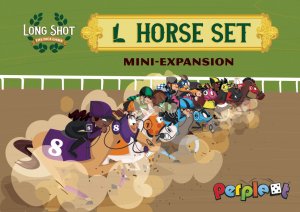
Long Shot: The Dice Game – Horse Set 4 (Boot) Mini-Expansion
2022
Add eight boot-marked horse cards for more race-day variety
30
minutes
Medium

View expansion
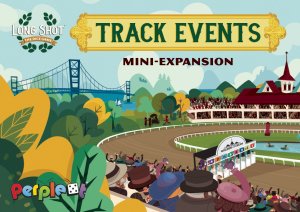
Long Shot: The Dice Game – Track Events Mini-Expansion
2022
Add unpredictable twists with eight unique event cards.
30
minutes
Medium
View expansion
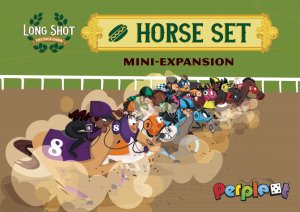
Long Shot: The Dice Game – Horse Set 5 (Hot Dog) Mini-Expansion
2022
Add eight concession-focused horse cards to every race
30
minutes
Medium
View expansion
Long Shot: The Dice Game – Horse Set 6 (Jockey) Mini Expansion
2022
A jockey-focused horse set from the Barnes & Noble version
Medium
View expansion