Marvel United: X-Men
2021
Build a dynamic Storyline as Heroes combine their powers to complete Missions, overcome threats, and defeat the Villain.
40
minutes
1 - 5
player(s)
14+
Medium


About this board game
Marvel United: X-Men is a card-driven superhero game for 1–5 players, with games lasting around 40 minutes. Players build a Storyline as Heroes unite their abilities to counter a Villain’s plan and save the day.
Each Villain reveals a unique master plan through a deck of cards. As the Storyline develops, these cards trigger different effects, spread chaos across the locations, deploy Henchmen, and bring attacks against the Heroes.
Heroes must carefully choose cards from their unique decks. These cards can provide movement, help rescue Civilians, defeat Thugs, clear Threats, and activate each Hero’s distinctive powers. The actions on different Hero cards can also combine, allowing the team to accomplish more together.
- Build the Storyline: Draw Villain cards and respond to the changing situation.
- Use unique abilities: Play Hero cards for movement, actions, and special powers.
- Complete key Missions: Rescue Civilians, defeat Thugs, and clear Threats from the locations.
- Face the Villain: Once the necessary Missions are accomplished, attack and remove the Villain’s Health.
Meanwhile, the Villain roams the city while weaving their plan and increasing the pressure on the Heroes. Every card choice matters as players decide how to respond to immediate dangers while working toward the Missions required for the final confrontation.
Only after those Missions are complete can the Heroes directly attack the Villain. In Marvel United: X-Men, victory comes when the team removes all of the Villain’s Health and takes them down for good.

Board Game Rules for
Marvel United: X-Men
Overview
In Marvel United: X-Men, 1 to 4 players take the role(s) of Heroes working together to thwart the master plan of a Villain. Alternatively, in Super Villain Mode, 1 player takes the role of the Villain going up against up to 4 Hero players.
Players build a Storyline by drawing the Villain’s cards and playing their own Hero cards to counter the Villain’s schemes. Player’s cards allow them to move their Hero around, rescue Civilians, defeat Thugs, clear Threats, and use their Hero’s unique powers. Choose cards carefully, as Heroes can unite their abilities to act as the perfect team. Meanwhile, the Villain will roam the city, weaving their plan, spreading chaos, deploying Henchmen, and attacking the Heroes. Only after accomplishing the necessary Missions will the Heroes be ready to directly attack the Villain and take them down for good!
Components
- 10 Character Pieces: Wolverine, Cyclops, Storm, Jean Grey, Professor X, Beast, Mystique, Magneto, Sabretooth, Juggernaut
- 8 Locations
- 4 Mission Cards
- 1 Mission Guide
- 4 Villain Dashboards
- 24 Threat Cards (6 for each Villain)
- 3 Challenge Cards
- 1 Rulebook
- 48 Master Plan Cards (12 for each Villain)
- 96 Hero Cards (12 for each Hero)
- 12 Super Villain Cards
- 8 Super Hero Cards
- 36 Thug/Civilian Tokens
- 6 Threat Tokens
- 4 Invulnerable Tokens
- 54 Action Tokens (18 Heroic, 12 Attack, 12 Move, and 12 Wild)
- 32 Health Tokens
- 18 Crisis Tokens
- 1 Villain Tracker
- 1 Hunted Token (used by Sabretooth)
- 1 Senator Kelly Token (used by Mystique)
- 2 Villain Delayed/Accelerated Tokens

Game Setup
- Place Mission Guide: Place the Mission Guide in the middle of the table and the standard 3 Mission cards on the slots at its bottom (in any order). Note that in this Core Set there is also an alternate Mission Card, Use Cerebro, which is only used when Magneto is the Villain.
- Choose a Villain: Choose a Villain to face and place its Villain Dashboard on the slot at the top of the Mission Guide (we recommend new players start with Sabretooth). If the Villain Dashboard has Special Setup instructions on its back side, make sure to follow these instructions first. Then, flip the Dashboard on its front side. The Villain Dashboard indicates the starting value of the Villain’s Health, depending on the number of Heroes in the game. Place that number of Health tokens on the Dashboard. If the Villain Dashboard has a track, place the Villain Tracker on its 0 space.
- Locations: Randomly pick 6 Locations and place them around the Mission Guide. Fill any marked slots of each Location with either Civilian or Thug tokens, as indicated. Note that the slot markings are only used for Setup, and are irrelevant during the game, when any token can be placed in any slot.


- Threat Cards: Shuffle the Villain’s Threat cards and place 1 faceup on the slot at the bottom of each Location (covering the End of Turn effect), adding a Threat token to the slots next to them. Some Threat cards contain Henchmen, characters in the service of the Villain. Each of their cards indicate the number of Health tokens that should be placed on them. Some Henchmen indicate a number of Health tokens based on the number of Heroes in the game.
- Tokens Pool: Place all remaining tokens, separated into pools, within reach of all players.
- Master Plan Deck: Take the Villain’s Master Plan deck, shuffle it, and place it facedown next to a random Location. Then, place the Villain’s game piece in that Location.
- Hero Selection: Each player chooses a Hero and places their game piece on the Location opposite the Villain. Then, each player shuffles their corresponding Hero decks and places it facedown next to them. Some Heroes, like Wolverine, have cards that read ‘Starting Hand’ on their back. Make sure those cards are placed at the top of the deck.
- Starting Hand: Each player draws 3 cards from the top of their deck into their hand. The game is now ready to start with the first Villain turn!
IMPORTANT: All players should familiarize themselves with the text on the Villain Dashboard and all 6 Threat cards, as they will inform the particulars of the game being played.

Turn Sequence
The game always starts with the Villain taking their turn. Once the active player has completed all the steps of their turn, the next player in clockwise order becomes the active player, performing their turn. Each time 3 Hero cards have been added to the Storyline, a new Master Plan card is drawn from the deck, added to the end of the Storyline, and resolved. The next player then takes their turn.

Under Pressure
Play continues in this fashion until the players complete their first Mission, at which point the Villain becomes Under Pressure and starts adding a Master Plan card to the Storyline after every TWO Hero cards. The game proceeds this way until either the Heroes defeat the Villain, or the Villain completes their master plan.
Resolving the Master Plan
Draw the top card from the Master Plan deck and place it faceup on the table. This is the start of the Storyline that will guide the entire game. Each Master Plan card played will contain different elements that must be executed in order, from top to bottom, one after the other.
1. Move Villain
Move the Villain clockwise (unless otherwise indicated) the number of Locations equal to the number shown on the card.
If there is a Threat card with the  symbol in the Location where the Villain ends their movement (even if the movement was 0), immediately resolve the effect described on that Threat card.


2. Activate BAM!
If the card shows this symbol  , activate the BAM! effect detailed on the Villain Dashboard and then any BAM! effects shown on Threat cards, starting with the Threat card in the Villain’s Location and proceeding clockwise. These effects complicate the Heroes’ lives in all sorts of different ways, often dealing damage to them.

3. Special Effect
Resolve any Special Effects described on the Master Plan card, if possible.

4. Add Thugs / Civilians & Overflow
Add the indicated number of Thug and/or Civilian tokens to the Villain’s Location and those around it. The central Location on the card represents where the Villain is, with the 2 adjacent Locations to either side. Go in clockwise order adding the tokens to the Locations. At each Location, first place the required Thug tokens, then the required Civilian tokens. At each location, if there are not enough empty slots available, an Overflow effect is generated.
Overflow: Whenever 1 or more Thug/Civilian tokens can’t be added to a Location, a single Overflow effect is triggered at that Location. Check the effect’s description on the Villain Dashboard and resolve any triggered Overflows in clockwise order.

Hero Turn Steps
Once the Master Plan card is fully resolved, it’s time for the Heroes to act!
Players collectively choose which Hero will start the game. Then, they will take their turns in clockwise order until the end of the game.
During their turn, players follow these steps in order:
- DRAW A CARD
- PLAY A CARD
- RESOLVE ACTIONS
- LOCATION EFFECT
1. Draw a Card
The active player draws the top card from their Hero deck into their hand. If their Hero was KO’d, they draw up to 4 cards instead.
NOTE: There is no limit to the number of cards a player may have in their hand. If their deck runs out, the player simply doesn’t draw a card.
2. Play a Card
The active player chooses a Hero card from their hand and adds it to the end of the Storyline, to the right of the last card played.
3. Resolve Actions
Look at the symbols at the bottom part of the Hero card just played AND at the bottom of the previous Hero card in the Storyline (even if they are separated by a Master Plan card). Each of these symbols corresponds to an action the Hero can perform this turn, in any order (the first player in the game does not benefit from the actions of another Hero’s card, as there are no other Hero cards in the Storyline yet). Keep in mind that when Heroes unite their efforts, they only benefit from the symbols at the bottom of the other Hero’s card, not from any special effects or extra symbols shown above that.


The active player may perform the following actions, once per symbol available to them, in any order they like:
 Move: Move the Hero to an adjacent Location, in any direction.
 Attack: Deal 1 damage to an enemy of the player’s choice in the active Hero’s Location.
- If attacking a Thug, it is eliminated upon receiving 1 damage (unless a Threat card in its Location says otherwise).
- If attacking a Henchman on a Threat card, remove 1 Health token from the card for each damage dealt.
- Only after resolving 2 Missions, Heroes can attack the Villain directly. Remove 1 Health token from the Villain Dashboard for each damage dealt.
 Heroic Action: This can be used to do one of two things:
- Rescue 1 Civilian in the active Hero’s Location.
- Place a Heroic Action token on an empty slot of the Threat card in the active Hero’s Location in order to clear that Threat.
 Wild: This can be used to perform either a , , or action.
Special Effect
In each Hero deck, there are a few cards with a Special Effect described in a box above the regular action symbols. The active Hero may apply the listed effect before or after any other of their actions. Remember that these Special Effects cannot be performed by other Heroes.
Action Tokens
If the active Hero has any Action tokens in their possession (Move, Attack, Heroic Action, or Wild), they may spend them at any point during this step to perform the corresponding action. Note that when a Hero gets an Action token, they may hold on to them and spend them during any future turn.

4. Location Effect
If the Location where the active Hero ends their turn has no Threat card on it, the player may choose to apply the End of Turn effect detailed at the bottom of the Location. Each turn, a Hero can only use a single Location Effect.

Overview of Missions
Completing Missions is a crucial step in the Heroes’ road to victory. Every game has 3 Missions available for the Heroes to tackle. They can be completed in any order.
Rescue Civilians 
Endangered Civilians are always in need of rescuing. If a Location can’t hold any more of them, the Villain’s Overflow effect is triggered. Whenever a Civilian is rescued, take its token and place it on an empty slot of the Rescue Civilians Mission card (if possible. Otherwise, discard it).
Defeat Thugs 
Thugs are always threatening to dominate Locations, triggering the Villain’s Overflow effect if the Location can’t hold any more. Whenever a Thug is defeated, take its token and place it on an empty slot of the Defeat Thugs Mission card (if possible. Otherwise, discard it).
IMPORTANT: If an effect “discards” a Civilian or Thug token, it is returned to the pool, not placed on a Mission card.
Clear Threats 
The Threat cards that the Villain places on the Locations, covering their End of Turn effect, may have all sorts of different effects, from constant effects at that Location or the entire game, to effects triggered by a Master Plan’s BAM!, to effects triggered by the Villain’s presence.
When it comes to clearing them, Threats are divided into two basic types:
- Henchmen: To clear this Threat, Heroes must defeat them, removing all of their Health tokens.
- Other: Other Threats are usually cleared by placing 3 Heroic Action tokens on its slots. Note that some Threats may display other quantities and types of actions that must be spent.
Once a Threat has been cleared, remove its card, returning any tokens on it to the pool. The Threat has no effect anymore and its Location’s End of Turn effect can now be used by the Heroes. Take the Threat token located next to it and place it on an empty slot of the Clear Threats Mission card (if possible. Otherwise, discard it).
IMPORTANT: If a Threat card moves, its Threat token moves with it. If a Threat card has no Threat token next to it (usually because it was brought back into play), when cleared, simply take any available Threat token to place on the Mission card (if possible).
Note: After their respective Missions have been completed, rescuing Civilians, defeating Thugs, and clearing Threats does not advance the game. However, doing so still helps the players avoid Overflow effects and gain benefits from more Locations.

Completing Missions
Remember that Missions can be completed in any order. Once all the slots on a Mission card are filled, the Mission is complete! Remove its card from the game, returning its tokens to the pool. If necessary, move the remaining Missions to the right so that the leftmost slots are left empty, unlocking the effects listed above them.
- Once the first Mission is complete, the Villain becomes Under Pressure and starts playing Master Plan cards after every 2 Hero cards instead of after every 3 cards.
- Once the second Mission is complete, the Heroes are able to damage the Villain directly. Once all Health tokens are removed from the Villain Dashboard, the Villain is defeated and the Heroes win the game!
- Players don’t have to complete the third Mission, but doing so allows all Heroes to immediately draw 1 card from their deck into their hand.

Special Mission: Use Cerebro
Use Cerebro is a special Mission that replaces Rescue Civilians when using Magneto as the Villain. To complete this Mission, a Hero must use both a Heroic and a Move action in the same turn to place a pair of tokens ( and ) from the pool on the card. These actions are spent to add the tokens to the Mission and do not allow the Hero to Move and/or perform a Heroic action. Once 3 pairs of tokens are added, the Mission is complete.
Note: Heroes can still rescue Civilians when playing against Magneto, though their tokens are simply discarded.

Hero Damage
Heroes usually take damage when attacked by the Villain or Henchmen due to activated BAM! effects. For each damage a Hero takes, they must discard 1 card from their hand, placing it at the bottom of their deck.
KO
If a Hero discards the last card from their hand, they are immediately KO’d. Lay down that Hero’s game piece to indicate that it must be ignored by all game effects, both negative and positive.
Then, immediately resolve the BAM! effect listed on the Villain Dashboard (but not those on any Henchman Threat cards). This could cause another Hero to be KO’d, creating a chain reaction. If multiple Heroes are KO’d at the same time, the Villain BAM! effect is resolved once for each KO’d Hero.
At the start of a KO’d Hero’s next turn, their piece is placed back upright. During the Draw Card step, the player draws up to 4 cards from their deck.
Note: If a Hero plays their last card during their turn, they get to perform their full turn before being KO’d.
Winning & Losing
HEROES WIN if they defeat the Villain. To be able to damage the Villain, Heroes must first accomplish at least 2 of the 3 available Missions.
HEROES LOSE if the Villain completes their master plan. This happens if any of these conditions are met:
- The Villain achieves the conditions of the Villainous Plot stated on their Dashboard (if they have one).
- The Villain must draw a Master Plan card, but their deck is empty.
- Any Hero starts their turn with no cards both in their deck and in their hand.
Special Rules & Clarifications
- ANTI-HEROES: The purple-colored character pieces represent Anti-Heroes. These characters have both a Hero deck and a Villain Dashboard, Threat cards, and Master Plan deck. They can each be chosen as either a Hero or a Villain in any game (but not both roles at the same time).
- VILLAIN DELAYED/ACCELERATED: Some game effects will “delay” or “accelerate” the next Villain turn. This means the Villain will play their next Master Plan card either 1 card later or earlier than they would normally. If the Villain is delayed, place a token on its green Delayed side on top of the Master Plan deck as a reminder. If the Villain is accelerated, place a token on its orange Accelerated side at the end of the Storyline. Discard the token once the next Master Plan card is played. If the Villain is ever both accelerated and delayed, just discard both tokens.
- INVULNERABLE: If a Hero card states the Hero cannot take any damage until their next turn, place an Invulnerable token on the Hero as a reminder, removing it at the start of their next turn. An invulnerable Hero can still volunteer or be chosen to take damage in order to satisfy a special effect, though they still ignore the damage.
- CRISIS: Crisis tokens are used by certain Villains to represent their various nefarious influences. Simply use them as described by the text on the cards and dashboards. Some of them will tell players how Crisis enters play, and others what adverse effect it causes.
- UNLIMITED TOKENS: The supply of tokens is considered to be unlimited. If for any reason a specific token runs out, players may use anything as replacements.
- BREAKING TIES: If there are ever events or effects whose conditions are tied, the players decide how they should be resolved.


Challenges
The basic game is designed to introduce the game to new players and provide a reasonable challenge for families. Players can add Challenges to the game in order to up the difficulty and introduce new twists. There are 3 Challenges included in this set. Other expansions will provide players with additional Challenges that they can freely add and combine. Challenge cards are provided to help players easily choose and remember the Challenges in play.
- MODERATE CHALLENGE: Each Hero removes 1
 card from their Hero deck. This Challenge is recommended as soon as players get familiar with the basic game.
- HARD CHALLENGE: Each Hero removes 1
 card from their Hero deck. This is recommended for players already familiar with cooperative games, or once they’ve mastered the previous Challenge.
- HEROIC CHALLENGE: Each Hero removes both 1 and 1 card from their Hero deck. This is recommended for expert gamers that are used to challenging cooperative games, or once they’ve mastered the previous Challenges.
Super Villain Mode
Marvel United may also be played with 1 player controlling the Villain going against the Heroes controlled by the other players, allowing up to 5 players in the game. The Villain is bolstered not only by the skill of the player, but also by Super Villain cards with nasty surprises to pull on the Heroes. In order to rise to the challenge, the Heroes are given a few starting Action tokens, as well as Super Hero cards with special tricks of their own.
The following rules changes are applied when playing in Super Villain Mode:
Special Setup
- The Hero players choose the Villain’s starting Location.
- The Villain player shuffles the 12 Super Villain cards, draws 4 cards, and chooses 3 (keep them hidden), removing the rest from the game. Super Villain cards are at the disposal of the Villain player (see next page) but are not part of their hand.
- After shuffling the Master Plan deck (and making sure any indicated starting card is placed on top), the Villain player draws 2 cards from the top of the Master Plan deck to form their Villain hand.
- Before drawing their 3 Hero cards, each Hero player draws 2 random Super Hero cards, chooses 1 (keep it hidden) and removes the rest from the game. Super Hero cards are at the disposal of each individual Hero (see next page) but are not part of their hand.
- Before the game begins, the Hero players must choose who will be the starting Hero.
- The back of each Villain Dashboard indicates the number of Action tokens that must be given to the Heroes when playing in Super Villain Mode. The Hero players take these tokens and distribute them among the Heroes as they see fit. They don’t need to be shared equally.
Note: If a Villain has no indicated Action tokens, they can’t be used in Super Villain Mode. If players have Villains from previous boxes, they can find their indicated Action tokens at cmon.com/q/mun011/r

Special Rules
Winning & Losing
The Heroes lose when the Villain is supposed to play a Master Plan card from their hand, but their hand is empty (instead of when the Villain needs to draw a card, but the Master Plan deck is empty). All other winning/losing conditions remain unchanged.
Villain Turn
At the start of each of their turns (including the start of the game) the Villain player draws the top card from the Master Plan deck, then chooses 1 card from their hand and plays it into the Storyline. (If the Master Plan deck is empty, the Villain simply plays a card from their hand. If they have no cards at all when they’re supposed to play one, they win.) The elements of the Master Plan card are executed as usual.
IMPORTANT: If the Villain has an indicated starting card, they must play it on the first turn.
- If a game effect instructs to play another Master Plan card or add a Master Plan card facedown in the storyline, the Villain player must first draw the top card from the Master Plan deck (if possible) and then choose a card from their hand to place in the Storyline. Here too, if the Villain can’t place a Master Plan card because they have none, they win the game.
- If there are ever events or effects whose conditions are tied, it is the Hero players who decide how they should be resolved. For example, deciding which Hero takes damage when several are eligible. However, this can be changed by Super Villain card effects.
Super Villain Cards
Each Super Villain card has a specific Trigger condition. The Villain may play only 1 Super Villain card per turn (whether a Villain turn or a Hero turn) if its Trigger condition has been met. The card’s Effect is resolved immediately and then the card is removed from the game.
- Cards triggered by playing a Master Plan card must be played simultaneously with it. They are resolved together with that Master Plan card, usually modifying certain effects in it.
- Cards triggered at the end of a Hero turn are only resolved after any possible Location Effect.

Super Hero Cards
Each Super Hero card has a specific Trigger condition. Heroes may decide to play their Super Hero card only when its Trigger condition is met. The card’s Effect is resolved immediately and then the card is removed from the game.
- Most Super Hero cards trigger during the Villain turn, possibly modifying or cancelling certain effects on the Master Plan card played.
IMPORTANT: Super Hero cards are not Hero cards. They are not part of a Hero’s hand. Rules that mention a Hero’s cards have no relation to the Super Hero card in their possession.

Hero Turn
There are no changes to how Hero turns work in Super Villain Mode. Note that effects that allow Heroes to manipulate the Master Plan deck still only concern the deck. They can’t manipulate the Villain’s hand or force the Villain to play a specific card.
Challenges
Players may add Challenges to the Super Villain Mode in order to increase the difficulty for the Heroes. However, the Super Villain mode is not compatible with the following Challenges:
- Traitor (from Tales of Asgard)
- Plan B (from Guardians of the Galaxy Remix)
Xavier Solo Mode
Marvel United may also be played by a single player. In this special mode, you act as Xavier, coordinating the efforts of multiple Heroes at once. The Solo Mode uses all the same rules as the regular game, with the following exceptions:
Special Setup
- Choose 3 Heroes and shuffle their decks together to create your Hero deck. The different card backs do not affect the game (the player can use this information to their advantage).
- If you wish to do so, you may only add Challenges that support single-player games.
- During setup, draw 5 cards into your hand instead of 3 (making sure any Starting Hand cards are in your hand).
- Set the Villain’s Health at the 3-Heroes level.

Special Rules
- Turns are resolved in the usual sequence, with you playing every Hero turn.
- Each turn, you may play the card of any Hero in your hand, even if it’s the same Hero as the last card played. You always benefit as usual from the symbols on the previously played card (but not from their Special Effect, even if it’s the same Hero).
- The Hero whose card you played is considered the active Hero that turn.
- Any effect that refers to “another player” refers to “you.”
- Any effect that refers to “you” refers to the specific Hero in question, except when concerning your tokens or your hand of cards, which belong to the player.
- Action tokens in your possession can be used by any Hero.
- If the 3rd Mission is complete, you draw 3 cards (1 for each Hero).
- When taking damage, you may discard any card from your hand, even if it doesn’t belong to the Hero that took damage. If multiple Heroes take damage at once, discard 1 card per damage.
- If you are ever KO’d, you immediately lose.
- Difficulty Setting: You can make the game easier by allowing 1 or 2 extra KOs before defeat. When KO’d, lay down all the Hero game pieces and resolve a single Villain BAM! At the start of your next turn, place all the Hero pieces back upright. During the Draw Card step, draw up to 6 cards from your deck.
Super Villain vs Xavier Solo Mode
In order to play 1 vs 1 combining the Super Villain Mode with Xavier Solo Mode, apply the following changes:
Special Setup
- The Hero player draws 6 random Super Hero cards, keeps 3, and removes the rest from the game.
- The Hero player gets all the Action tokens indicated on the back of the Villain dashboard.
Special Rules
- The Super Hero cards belong to the player instead of to any specific Hero.
- The Hero player loses if they are KO’d for the second time. The first time they are KO’d, they lay down all the Hero game pieces and resolve a single Villain BAM! At the start of their next turn, all the Hero pieces are placed back upright. During the Draw Card step, the Hero player draws up to 6 cards from their deck.
Rules Summary
1 Villain Turn, then 3 clockwise Hero Turns. Continue until first Mission is completed. Then, 1 Villain Turn every 2 Hero Turns.
Villain Turn
- Add 1 Master Plan card to the Storyline.
- Resolve effects in order, from top to bottom:
 Move clockwise this number of Locations. Trigger effect on final Location.
- Resolve BAM! effects on Villain Dashboard and Threat cards.
- Resolve any special effect on the card.
- Add the indicated and on the Locations around the Villain.
- Resolve Overflow effect on each Location where tokens couldn’t be added.
Hero Turn
- Draw a Card: From your deck into your hand.
- Play a Card: Add it to the Storyline.
- Resolve Actions: In any order, all symbols at the bottom of your card and the previous Hero card:
- Move to an adjacent Location.
- Deal 1 damage to an enemy at your Location:
- Defeat 1 Thug, or
- Remove 1 Health from a Henchman, or
- Remove 1 Health from Villain (after completing 2 Missions).
- Rescue 1 Civilian or place 1 Heroic Action token on the Threat at your Location.
- Resolve any action.
- Resolve any Special Effects on your card.
- Spend any Action tokens to resolve their action.
- Location Effect: May resolve visible End of Turn effect of your Location.
Hero Damage
- Discard 1 card from your hand to the bottom of your deck per damage suffered.
- KO’d if you discard the last card in hand. Lay Hero down. Activate Villain’s .
- Next turn, stand back up and draw 4 cards.
Winning & Losing
Heroes win if they remove all Health tokens from Villain (must complete 2 Missions first).
Heroes lose if:
- Villain completes the Villainous Plot on their Dashboard.
- Villain must play a card, but the Master Plan deck is empty.
- A Hero starts their turn with no cards at all.
Credits
GAME DESIGN: Andrea Chiarvesio, Francesco Rugerfred Sedda, and Eric M. Lang
DEVELOPMENT: Marco Legato and Alexio Schneeberger
LEAD PRODUCER: Thiago Aranha
EXECUTIVE PRODUCER AND LICENSE COORDINATOR: Mike Bisogno
PRODUCTION: Marcela Fabreti, Vincent Fontaine, Raquel Fukuda, Guilherme Goulart, Rebecca Ho, Isadora Leite, Holly Loke, Aaron Lurie, and Shafiq Rizwan
ART DIRECTOR: Mathieu Harlaut
LEAD ARTIST: Edouard Guiton
ART: Saeed Jalabi, Giorgia Lanza, Lorenzo Magalotti, and Aurelio Mazzara
LEAD GRAPHIC DESIGN: Max Duarte
GRAPHIC DESIGN: Marc Brouillon, Gabriel Burghi, Fabio de Castro, Louise Combal, Júlia Ferrari, and Jean-Sébastien Grinneiser
SCULPTING: BigChild Creatives
RENDERING: Edgar Ramos
PROOFREADING: Jason Koepp
PUBLISHER: David Preti
PLAYTESTERS: Cecilia Arata, Alessandro Avataneo, Marco Averone, Claudio Bagliani, Fernando Barros Costa, Gianfranco Buccoliero, Matteo Carioni, Alessia Caviglia, Damien Chauveau, Remo Conzadori, Alessandro Cuneo, Caio Da Quinta, Luca Feliciani, Simone Fenoil, Esteban Garbin, Mickaël Garcin, Paolo Giampietruzzi, Christian Giove, William Greco, Luca Iennaco, Fabio Lamacchia, Pierre Lanrezac, Alessandro Licchetta, Luca Liperi, Salvatore Lucifora, Giovanni Madoi, Dario Massarenti, Marco Meina, Fabio Menel, Andrea Pala, Sonia Palumbo, Pierpaolo Paoletti, Simone Paris, Gianluca Pavone, Riccardo Pelle, Andrea Robbiani, Luciano Roggero, Alessandro Rubbo, Paolo Ruffo, Fiorenzo Sartore, Ivano Scoppetta, Beatrice Sgaravatto, Spyridon Stavropoulos, Domenico Stellato, Emanuele Tomassetti, Alberto Tonda, Sabrina Vallenari, Julien Vergonjeanne, Pierluca Zizzi, Emanuele Zulian.
Special thanks to Brian Ng at Marvel, this would not have been possible without you.
Introduction & Components
Overview
In Marvel United: X-Men, 1 to 4 players take the role(s) of Heroes working together to thwart the master plan of a Villain. Alternatively, in Super Villain Mode, 1 player takes the role of the Villain going up against up to 4 Hero players.
Players build a Storyline by drawing the Villain’s cards and playing their own Hero cards to counter the Villain’s schemes. Player’s cards allow them to move their Hero around, rescue Civilians, defeat Thugs, clear Threats, and use their Hero’s unique powers. Choose cards carefully, as Heroes can unite their abilities to act as the perfect team. Meanwhile, the Villain will roam the city, weaving their plan, spreading chaos, deploying Henchmen, and attacking the Heroes. Only after accomplishing the necessary Missions will the Heroes be ready to directly attack the Villain and take them down for good!
Components
- 10 Character Pieces: Wolverine, Cyclops, Storm, Jean Grey, Professor X, Beast, Mystique, Magneto, Sabretooth, Juggernaut
- 8 Locations
- 4 Mission Cards
- 1 Mission Guide
- 4 Villain Dashboards
- 24 Threat Cards (6 for each Villain)
- 3 Challenge Cards
- 1 Rulebook
- 48 Master Plan Cards (12 for each Villain)
- 96 Hero Cards (12 for each Hero)
- 12 Super Villain Cards
- 8 Super Hero Cards
- 36 Thug/Civilian Tokens
- 6 Threat Tokens
- 4 Invulnerable Tokens
- 54 Action Tokens (18 Heroic, 12 Attack, 12 Move, and 12 Wild)
- 32 Health Tokens
- 18 Crisis Tokens
- 1 Villain Tracker
- 1 Hunted Token (used by Sabretooth)
- 1 Senator Kelly Token (used by Mystique)
- 2 Villain Delayed/Accelerated Tokens
Setup
Game Setup
- Place Mission Guide: Place the Mission Guide in the middle of the table and the standard 3 Mission cards on the slots at its bottom (in any order). Note that in this Core Set there is also an alternate Mission Card, Use Cerebro, which is only used when Magneto is the Villain.
- Choose a Villain: Choose a Villain to face and place its Villain Dashboard on the slot at the top of the Mission Guide (we recommend new players start with Sabretooth). If the Villain Dashboard has Special Setup instructions on its back side, make sure to follow these instructions first. Then, flip the Dashboard on its front side. The Villain Dashboard indicates the starting value of the Villain’s Health, depending on the number of Heroes in the game. Place that number of Health tokens on the Dashboard. If the Villain Dashboard has a track, place the Villain Tracker on its 0 space.
- Locations: Randomly pick 6 Locations and place them around the Mission Guide. Fill any marked slots of each Location with either Civilian or Thug tokens, as indicated. Note that the slot markings are only used for Setup, and are irrelevant during the game, when any token can be placed in any slot.
- Threat Cards: Shuffle the Villain’s Threat cards and place 1 faceup on the slot at the bottom of each Location (covering the End of Turn effect), adding a Threat token to the slots next to them. Some Threat cards contain Henchmen, characters in the service of the Villain. Each of their cards indicate the number of Health tokens that should be placed on them. Some Henchmen indicate a number of Health tokens based on the number of Heroes in the game.
- Tokens Pool: Place all remaining tokens, separated into pools, within reach of all players.
- Master Plan Deck: Take the Villain’s Master Plan deck, shuffle it, and place it facedown next to a random Location. Then, place the Villain’s game piece in that Location.
- Hero Selection: Each player chooses a Hero and places their game piece on the Location opposite the Villain. Then, each player shuffles their corresponding Hero decks and places it facedown next to them. Some Heroes, like Wolverine, have cards that read ‘Starting Hand’ on their back. Make sure those cards are placed at the top of the deck.
- Starting Hand: Each player draws 3 cards from the top of their deck into their hand. The game is now ready to start with the first Villain turn!
IMPORTANT: All players should familiarize themselves with the text on the Villain Dashboard and all 6 Threat cards, as they will inform the particulars of the game being played.
Turn Structure & Storyline
Turn Sequence
The game always starts with the Villain taking their turn. Once the active player has completed all the steps of their turn, the next player in clockwise order becomes the active player, performing their turn. Each time 3 Hero cards have been added to the Storyline, a new Master Plan card is drawn from the deck, added to the end of the Storyline, and resolved. The next player then takes their turn.
Under Pressure
Play continues in this fashion until the players complete their first Mission, at which point the Villain becomes Under Pressure and starts adding a Master Plan card to the Storyline after every TWO Hero cards. The game proceeds this way until either the Heroes defeat the Villain, or the Villain completes their master plan.
Villain Turn
Resolving the Master Plan
Draw the top card from the Master Plan deck and place it faceup on the table. This is the start of the Storyline that will guide the entire game. Each Master Plan card played will contain different elements that must be executed in order, from top to bottom, one after the other.
1. Move Villain
Move the Villain clockwise (unless otherwise indicated) the number of Locations equal to the number shown on the card.
If there is a Threat card with the symbol in the Location where the Villain ends their movement (even if the movement was 0), immediately resolve the effect described on that Threat card.
2. Activate BAM!
If the card shows this symbol , activate the BAM! effect detailed on the Villain Dashboard and then any BAM! effects shown on Threat cards, starting with the Threat card in the Villain’s Location and proceeding clockwise. These effects complicate the Heroes’ lives in all sorts of different ways, often dealing damage to them.
3. Special Effect
Resolve any Special Effects described on the Master Plan card, if possible.
4. Add Thugs / Civilians & Overflow
Add the indicated number of Thug and/or Civilian tokens to the Villain’s Location and those around it. The central Location on the card represents where the Villain is, with the 2 adjacent Locations to either side. Go in clockwise order adding the tokens to the Locations. At each Location, first place the required Thug tokens, then the required Civilian tokens. At each location, if there are not enough empty slots available, an Overflow effect is generated.
Overflow: Whenever 1 or more Thug/Civilian tokens can’t be added to a Location, a single Overflow effect is triggered at that Location. Check the effect’s description on the Villain Dashboard and resolve any triggered Overflows in clockwise order.
Hero Turn
Hero Turn Steps
Once the Master Plan card is fully resolved, it’s time for the Heroes to act!
Players collectively choose which Hero will start the game. Then, they will take their turns in clockwise order until the end of the game.
During their turn, players follow these steps in order:
- DRAW A CARD
- PLAY A CARD
- RESOLVE ACTIONS
- LOCATION EFFECT
1. Draw a Card
The active player draws the top card from their Hero deck into their hand. If their Hero was KO’d, they draw up to 4 cards instead.
NOTE: There is no limit to the number of cards a player may have in their hand. If their deck runs out, the player simply doesn’t draw a card.
2. Play a Card
The active player chooses a Hero card from their hand and adds it to the end of the Storyline, to the right of the last card played.
3. Resolve Actions
Look at the symbols at the bottom part of the Hero card just played AND at the bottom of the previous Hero card in the Storyline (even if they are separated by a Master Plan card). Each of these symbols corresponds to an action the Hero can perform this turn, in any order (the first player in the game does not benefit from the actions of another Hero’s card, as there are no other Hero cards in the Storyline yet). Keep in mind that when Heroes unite their efforts, they only benefit from the symbols at the bottom of the other Hero’s card, not from any special effects or extra symbols shown above that.
The active player may perform the following actions, once per symbol available to them, in any order they like:
- Move: Move the Hero to an adjacent Location, in any direction.
- Attack: Deal 1 damage to an enemy of the player’s choice in the active Hero’s Location.
- If attacking a Thug, it is eliminated upon receiving 1 damage (unless a Threat card in its Location says otherwise).
- If attacking a Henchman on a Threat card, remove 1 Health token from the card for each damage dealt.
- Only after resolving 2 Missions, Heroes can attack the Villain directly. Remove 1 Health token from the Villain Dashboard for each damage dealt.
- Heroic Action: This can be used to do one of two things:
- Rescue 1 Civilian in the active Hero’s Location.
- Place a Heroic Action token on an empty slot of the Threat card in the active Hero’s Location in order to clear that Threat.
- Wild: This can be used to perform either a , , or action.
Special Effect
In each Hero deck, there are a few cards with a Special Effect described in a box above the regular action symbols. The active Hero may apply the listed effect before or after any other of their actions. Remember that these Special Effects cannot be performed by other Heroes.
Action Tokens
If the active Hero has any Action tokens in their possession (Move, Attack, Heroic Action, or Wild), they may spend them at any point during this step to perform the corresponding action. Note that when a Hero gets an Action token, they may hold on to them and spend them during any future turn.
4. Location Effect
If the Location where the active Hero ends their turn has no Threat card on it, the player may choose to apply the End of Turn effect detailed at the bottom of the Location. Each turn, a Hero can only use a single Location Effect.
Missions
Overview of Missions
Completing Missions is a crucial step in the Heroes’ road to victory. Every game has 3 Missions available for the Heroes to tackle. They can be completed in any order.
Rescue Civilians
Endangered Civilians are always in need of rescuing. If a Location can’t hold any more of them, the Villain’s Overflow effect is triggered. Whenever a Civilian is rescued, take its token and place it on an empty slot of the Rescue Civilians Mission card (if possible. Otherwise, discard it).
Defeat Thugs
Thugs are always threatening to dominate Locations, triggering the Villain’s Overflow effect if the Location can’t hold any more. Whenever a Thug is defeated, take its token and place it on an empty slot of the Defeat Thugs Mission card (if possible. Otherwise, discard it).
IMPORTANT: If an effect “discards” a Civilian or Thug token, it is returned to the pool, not placed on a Mission card.
Clear Threats
The Threat cards that the Villain places on the Locations, covering their End of Turn effect, may have all sorts of different effects, from constant effects at that Location or the entire game, to effects triggered by a Master Plan’s BAM!, to effects triggered by the Villain’s presence.
When it comes to clearing them, Threats are divided into two basic types:
- Henchmen: To clear this Threat, Heroes must defeat them, removing all of their Health tokens.
- Other: Other Threats are usually cleared by placing 3 Heroic Action tokens on its slots. Note that some Threats may display other quantities and types of actions that must be spent.
Once a Threat has been cleared, remove its card, returning any tokens on it to the pool. The Threat has no effect anymore and its Location’s End of Turn effect can now be used by the Heroes. Take the Threat token located next to it and place it on an empty slot of the Clear Threats Mission card (if possible. Otherwise, discard it).
IMPORTANT: If a Threat card moves, its Threat token moves with it. If a Threat card has no Threat token next to it (usually because it was brought back into play), when cleared, simply take any available Threat token to place on the Mission card (if possible).
Note: After their respective Missions have been completed, rescuing Civilians, defeating Thugs, and clearing Threats does not advance the game. However, doing so still helps the players avoid Overflow effects and gain benefits from more Locations.
Completing Missions
Remember that Missions can be completed in any order. Once all the slots on a Mission card are filled, the Mission is complete! Remove its card from the game, returning its tokens to the pool. If necessary, move the remaining Missions to the right so that the leftmost slots are left empty, unlocking the effects listed above them.
- Once the first Mission is complete, the Villain becomes Under Pressure and starts playing Master Plan cards after every 2 Hero cards instead of after every 3 cards.
- Once the second Mission is complete, the Heroes are able to damage the Villain directly. Once all Health tokens are removed from the Villain Dashboard, the Villain is defeated and the Heroes win the game!
- Players don’t have to complete the third Mission, but doing so allows all Heroes to immediately draw 1 card from their deck into their hand.
Special Mission: Use Cerebro
Use Cerebro is a special Mission that replaces Rescue Civilians when using Magneto as the Villain. To complete this Mission, a Hero must use both a Heroic and a Move action in the same turn to place a pair of tokens ( and ) from the pool on the card. These actions are spent to add the tokens to the Mission and do not allow the Hero to Move and/or perform a Heroic action. Once 3 pairs of tokens are added, the Mission is complete.
Note: Heroes can still rescue Civilians when playing against Magneto, though their tokens are simply discarded.
Damage & KO
Hero Damage
Heroes usually take damage when attacked by the Villain or Henchmen due to activated BAM! effects. For each damage a Hero takes, they must discard 1 card from their hand, placing it at the bottom of their deck.
KO
If a Hero discards the last card from their hand, they are immediately KO’d. Lay down that Hero’s game piece to indicate that it must be ignored by all game effects, both negative and positive.
Then, immediately resolve the BAM! effect listed on the Villain Dashboard (but not those on any Henchman Threat cards). This could cause another Hero to be KO’d, creating a chain reaction. If multiple Heroes are KO’d at the same time, the Villain BAM! effect is resolved once for each KO’d Hero.
At the start of a KO’d Hero’s next turn, their piece is placed back upright. During the Draw Card step, the player draws up to 4 cards from their deck.
Note: If a Hero plays their last card during their turn, they get to perform their full turn before being KO’d.
End of Game
Winning & Losing
HEROES WIN if they defeat the Villain. To be able to damage the Villain, Heroes must first accomplish at least 2 of the 3 available Missions.
HEROES LOSE if the Villain completes their master plan. This happens if any of these conditions are met:
- The Villain achieves the conditions of the Villainous Plot stated on their Dashboard (if they have one).
- The Villain must draw a Master Plan card, but their deck is empty.
- Any Hero starts their turn with no cards both in their deck and in their hand.
Additional Rules
Special Rules & Clarifications
- ANTI-HEROES: The purple-colored character pieces represent Anti-Heroes. These characters have both a Hero deck and a Villain Dashboard, Threat cards, and Master Plan deck. They can each be chosen as either a Hero or a Villain in any game (but not both roles at the same time).
- VILLAIN DELAYED/ACCELERATED: Some game effects will “delay” or “accelerate” the next Villain turn. This means the Villain will play their next Master Plan card either 1 card later or earlier than they would normally. If the Villain is delayed, place a token on its green Delayed side on top of the Master Plan deck as a reminder. If the Villain is accelerated, place a token on its orange Accelerated side at the end of the Storyline. Discard the token once the next Master Plan card is played. If the Villain is ever both accelerated and delayed, just discard both tokens.
- INVULNERABLE: If a Hero card states the Hero cannot take any damage until their next turn, place an Invulnerable token on the Hero as a reminder, removing it at the start of their next turn. An invulnerable Hero can still volunteer or be chosen to take damage in order to satisfy a special effect, though they still ignore the damage.
- CRISIS: Crisis tokens are used by certain Villains to represent their various nefarious influences. Simply use them as described by the text on the cards and dashboards. Some of them will tell players how Crisis enters play, and others what adverse effect it causes.
- UNLIMITED TOKENS: The supply of tokens is considered to be unlimited. If for any reason a specific token runs out, players may use anything as replacements.
- BREAKING TIES: If there are ever events or effects whose conditions are tied, the players decide how they should be resolved.
Challenges & Game Modes
Challenges
The basic game is designed to introduce the game to new players and provide a reasonable challenge for families. Players can add Challenges to the game in order to up the difficulty and introduce new twists. There are 3 Challenges included in this set. Other expansions will provide players with additional Challenges that they can freely add and combine. Challenge cards are provided to help players easily choose and remember the Challenges in play.
- MODERATE CHALLENGE: Each Hero removes 1 card from their Hero deck. This Challenge is recommended as soon as players get familiar with the basic game.
- HARD CHALLENGE: Each Hero removes 1 card from their Hero deck. This is recommended for players already familiar with cooperative games, or once they’ve mastered the previous Challenge.
- HEROIC CHALLENGE: Each Hero removes both 1 and 1 card from their Hero deck. This is recommended for expert gamers that are used to challenging cooperative games, or once they’ve mastered the previous Challenges.
Super Villain Mode
Marvel United may also be played with 1 player controlling the Villain going against the Heroes controlled by the other players, allowing up to 5 players in the game. The Villain is bolstered not only by the skill of the player, but also by Super Villain cards with nasty surprises to pull on the Heroes. In order to rise to the challenge, the Heroes are given a few starting Action tokens, as well as Super Hero cards with special tricks of their own.
The following rules changes are applied when playing in Super Villain Mode:
Special Setup
- The Hero players choose the Villain’s starting Location.
- The Villain player shuffles the 12 Super Villain cards, draws 4 cards, and chooses 3 (keep them hidden), removing the rest from the game. Super Villain cards are at the disposal of the Villain player (see next page) but are not part of their hand.
- After shuffling the Master Plan deck (and making sure any indicated starting card is placed on top), the Villain player draws 2 cards from the top of the Master Plan deck to form their Villain hand.
- Before drawing their 3 Hero cards, each Hero player draws 2 random Super Hero cards, chooses 1 (keep it hidden) and removes the rest from the game. Super Hero cards are at the disposal of each individual Hero (see next page) but are not part of their hand.
- Before the game begins, the Hero players must choose who will be the starting Hero.
- The back of each Villain Dashboard indicates the number of Action tokens that must be given to the Heroes when playing in Super Villain Mode. The Hero players take these tokens and distribute them among the Heroes as they see fit. They don’t need to be shared equally.
Note: If a Villain has no indicated Action tokens, they can’t be used in Super Villain Mode. If players have Villains from previous boxes, they can find their indicated Action tokens at cmon.com/q/mun011/r
Special Rules
Winning & Losing
The Heroes lose when the Villain is supposed to play a Master Plan card from their hand, but their hand is empty (instead of when the Villain needs to draw a card, but the Master Plan deck is empty). All other winning/losing conditions remain unchanged.
Villain Turn
At the start of each of their turns (including the start of the game) the Villain player draws the top card from the Master Plan deck, then chooses 1 card from their hand and plays it into the Storyline. (If the Master Plan deck is empty, the Villain simply plays a card from their hand. If they have no cards at all when they’re supposed to play one, they win.) The elements of the Master Plan card are executed as usual.
IMPORTANT: If the Villain has an indicated starting card, they must play it on the first turn.
- If a game effect instructs to play another Master Plan card or add a Master Plan card facedown in the storyline, the Villain player must first draw the top card from the Master Plan deck (if possible) and then choose a card from their hand to place in the Storyline. Here too, if the Villain can’t place a Master Plan card because they have none, they win the game.
- If there are ever events or effects whose conditions are tied, it is the Hero players who decide how they should be resolved. For example, deciding which Hero takes damage when several are eligible. However, this can be changed by Super Villain card effects.
Super Villain Cards
Each Super Villain card has a specific Trigger condition. The Villain may play only 1 Super Villain card per turn (whether a Villain turn or a Hero turn) if its Trigger condition has been met. The card’s Effect is resolved immediately and then the card is removed from the game.
- Cards triggered by playing a Master Plan card must be played simultaneously with it. They are resolved together with that Master Plan card, usually modifying certain effects in it.
- Cards triggered at the end of a Hero turn are only resolved after any possible Location Effect.
Super Hero Cards
Each Super Hero card has a specific Trigger condition. Heroes may decide to play their Super Hero card only when its Trigger condition is met. The card’s Effect is resolved immediately and then the card is removed from the game.
- Most Super Hero cards trigger during the Villain turn, possibly modifying or cancelling certain effects on the Master Plan card played.
IMPORTANT: Super Hero cards are not Hero cards. They are not part of a Hero’s hand. Rules that mention a Hero’s cards have no relation to the Super Hero card in their possession.
Hero Turn
There are no changes to how Hero turns work in Super Villain Mode. Note that effects that allow Heroes to manipulate the Master Plan deck still only concern the deck. They can’t manipulate the Villain’s hand or force the Villain to play a specific card.
Challenges
Players may add Challenges to the Super Villain Mode in order to increase the difficulty for the Heroes. However, the Super Villain mode is not compatible with the following Challenges:
- Traitor (from Tales of Asgard)
- Plan B (from Guardians of the Galaxy Remix)
Xavier Solo Mode
Marvel United may also be played by a single player. In this special mode, you act as Xavier, coordinating the efforts of multiple Heroes at once. The Solo Mode uses all the same rules as the regular game, with the following exceptions:
Special Setup
- Choose 3 Heroes and shuffle their decks together to create your Hero deck. The different card backs do not affect the game (the player can use this information to their advantage).
- If you wish to do so, you may only add Challenges that support single-player games.
- During setup, draw 5 cards into your hand instead of 3 (making sure any Starting Hand cards are in your hand).
- Set the Villain’s Health at the 3-Heroes level.
Special Rules
- Turns are resolved in the usual sequence, with you playing every Hero turn.
- Each turn, you may play the card of any Hero in your hand, even if it’s the same Hero as the last card played. You always benefit as usual from the symbols on the previously played card (but not from their Special Effect, even if it’s the same Hero).
- The Hero whose card you played is considered the active Hero that turn.
- Any effect that refers to “another player” refers to “you.”
- Any effect that refers to “you” refers to the specific Hero in question, except when concerning your tokens or your hand of cards, which belong to the player.
- Action tokens in your possession can be used by any Hero.
- If the 3rd Mission is complete, you draw 3 cards (1 for each Hero).
- When taking damage, you may discard any card from your hand, even if it doesn’t belong to the Hero that took damage. If multiple Heroes take damage at once, discard 1 card per damage.
- If you are ever KO’d, you immediately lose.
- Difficulty Setting: You can make the game easier by allowing 1 or 2 extra KOs before defeat. When KO’d, lay down all the Hero game pieces and resolve a single Villain BAM! At the start of your next turn, place all the Hero pieces back upright. During the Draw Card step, draw up to 6 cards from your deck.
Super Villain vs Xavier Solo Mode
In order to play 1 vs 1 combining the Super Villain Mode with Xavier Solo Mode, apply the following changes:
Special Setup
- The Hero player draws 6 random Super Hero cards, keeps 3, and removes the rest from the game.
- The Hero player gets all the Action tokens indicated on the back of the Villain dashboard.
Special Rules
- The Super Hero cards belong to the player instead of to any specific Hero.
- The Hero player loses if they are KO’d for the second time. The first time they are KO’d, they lay down all the Hero game pieces and resolve a single Villain BAM! At the start of their next turn, all the Hero pieces are placed back upright. During the Draw Card step, the Hero player draws up to 6 cards from their deck.
Rules Summary & Credits
Rules Summary
1 Villain Turn, then 3 clockwise Hero Turns. Continue until first Mission is completed. Then, 1 Villain Turn every 2 Hero Turns.
Villain Turn
- Add 1 Master Plan card to the Storyline.
- Resolve effects in order, from top to bottom:
- Move clockwise this number of Locations. Trigger effect on final Location.
- Resolve BAM! effects on Villain Dashboard and Threat cards.
- Resolve any special effect on the card.
- Add the indicated and on the Locations around the Villain.
- Resolve Overflow effect on each Location where tokens couldn’t be added.
Hero Turn
- Draw a Card: From your deck into your hand.
- Play a Card: Add it to the Storyline.
- Resolve Actions: In any order, all symbols at the bottom of your card and the previous Hero card:
- Move to an adjacent Location.
- Deal 1 damage to an enemy at your Location:
- Defeat 1 Thug, or
- Remove 1 Health from a Henchman, or
- Remove 1 Health from Villain (after completing 2 Missions).
- Rescue 1 Civilian or place 1 Heroic Action token on the Threat at your Location.
- Resolve any action.
- Resolve any Special Effects on your card.
- Spend any Action tokens to resolve their action.
- Location Effect: May resolve visible End of Turn effect of your Location.
Hero Damage
- Discard 1 card from your hand to the bottom of your deck per damage suffered.
- KO’d if you discard the last card in hand. Lay Hero down. Activate Villain’s .
- Next turn, stand back up and draw 4 cards.
Winning & Losing
Heroes win if they remove all Health tokens from Villain (must complete 2 Missions first).
Heroes lose if:
- Villain completes the Villainous Plot on their Dashboard.
- Villain must play a card, but the Master Plan deck is empty.
- A Hero starts their turn with no cards at all.
Credits
GAME DESIGN: Andrea Chiarvesio, Francesco Rugerfred Sedda, and Eric M. Lang
DEVELOPMENT: Marco Legato and Alexio Schneeberger
LEAD PRODUCER: Thiago Aranha
EXECUTIVE PRODUCER AND LICENSE COORDINATOR: Mike Bisogno
PRODUCTION: Marcela Fabreti, Vincent Fontaine, Raquel Fukuda, Guilherme Goulart, Rebecca Ho, Isadora Leite, Holly Loke, Aaron Lurie, and Shafiq Rizwan
ART DIRECTOR: Mathieu Harlaut
LEAD ARTIST: Edouard Guiton
ART: Saeed Jalabi, Giorgia Lanza, Lorenzo Magalotti, and Aurelio Mazzara
LEAD GRAPHIC DESIGN: Max Duarte
GRAPHIC DESIGN: Marc Brouillon, Gabriel Burghi, Fabio de Castro, Louise Combal, Júlia Ferrari, and Jean-Sébastien Grinneiser
SCULPTING: BigChild Creatives
RENDERING: Edgar Ramos
PROOFREADING: Jason Koepp
PUBLISHER: David Preti
PLAYTESTERS: Cecilia Arata, Alessandro Avataneo, Marco Averone, Claudio Bagliani, Fernando Barros Costa, Gianfranco Buccoliero, Matteo Carioni, Alessia Caviglia, Damien Chauveau, Remo Conzadori, Alessandro Cuneo, Caio Da Quinta, Luca Feliciani, Simone Fenoil, Esteban Garbin, Mickaël Garcin, Paolo Giampietruzzi, Christian Giove, William Greco, Luca Iennaco, Fabio Lamacchia, Pierre Lanrezac, Alessandro Licchetta, Luca Liperi, Salvatore Lucifora, Giovanni Madoi, Dario Massarenti, Marco Meina, Fabio Menel, Andrea Pala, Sonia Palumbo, Pierpaolo Paoletti, Simone Paris, Gianluca Pavone, Riccardo Pelle, Andrea Robbiani, Luciano Roggero, Alessandro Rubbo, Paolo Ruffo, Fiorenzo Sartore, Ivano Scoppetta, Beatrice Sgaravatto, Spyridon Stavropoulos, Domenico Stellato, Emanuele Tomassetti, Alberto Tonda, Sabrina Vallenari, Julien Vergonjeanne, Pierluca Zizzi, Emanuele Zulian.
Special thanks to Brian Ng at Marvel, this would not have been possible without you.
Expansions for
Marvel United: X-Men

Marvel United: Deadpool (X-Force) Promo Deck
2023
A 12-card Deadpool (X-Force) promo deck from 2023
40
minutes
View expansion

Marvel United: Symbiote Companions Deck
2024
Add four adaptable symbiotes to your Marvel United hero deck.
View expansion
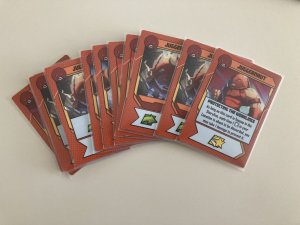
Marvel United: X-Men – Juggernaut Promo Deck
2022
A 12-card promotional deck that lets Juggernaut join as a hero.
40
minutes
View expansion
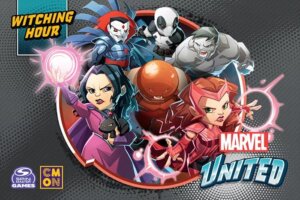
Marvel United: Witching Hour
2025
A special promo box featuring Scarlet Witch, Agatha Harkness, and four alternate decks.
40
minutes
Medium
View expansion
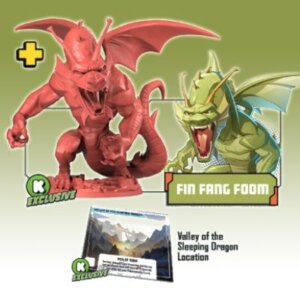
Marvel United: Multiverse – Fin Fang Foom
2024
Prepare for a sleeping space dragon—and the invasion waiting to awaken.
Medium
View expansion
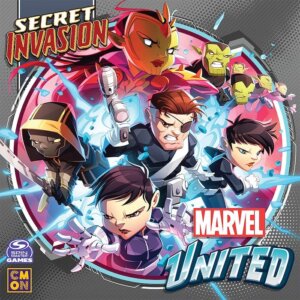
Marvel United: Secret Invasion
2024
Unmask the Skrulls and help Nick Fury stop a secret invasion.
Medium
View expansion
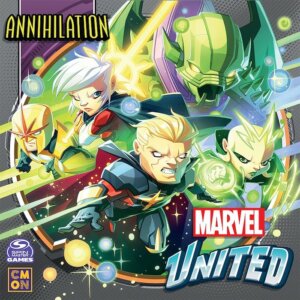
Marvel United: Annihilation
2024
Stand united against Annihilus and the relentless Annihilation Wave.
Medium
View expansion
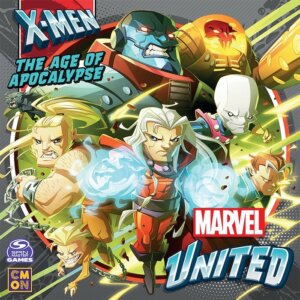
Marvel United: X-Men – The Age of Apocalypse
2024
Unite a resistance of unlikely heroes against Apocalypse's mutant regime.
View expansion
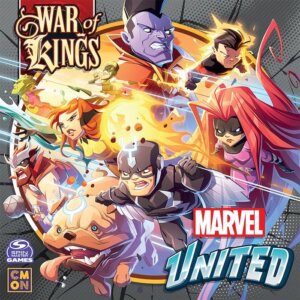
Marvel United: War of Kings
2024
Unite the Inhumans and harness Terrigen Mist to stop a galactic war.
View expansion
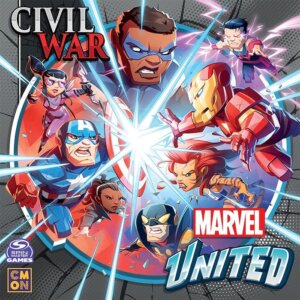
Marvel United: Civil War
2024
Choose a side and lead rival heroes into an all-out super-powered clash.
Medium
View expansion
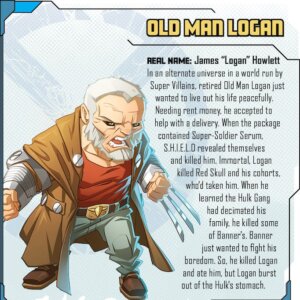
Marvel United: X-Men – Old Man Logan
2022
Add Old Man Logan as an exclusive hero with miniature and 12 cards.
40
minutes
View expansion
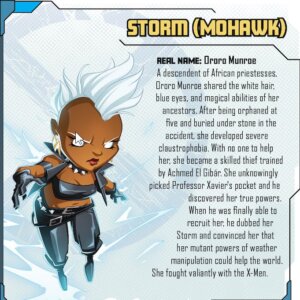
Marvel United: X-Men – Storm (Mohawk)
2022
A Kickstarter-exclusive Storm hero with Mohawk styling and 12 cards.
40
minutes
View expansion
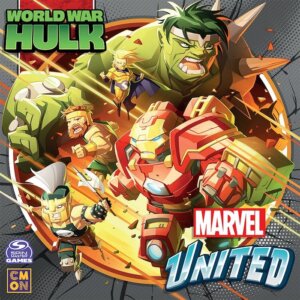
Marvel United: World War Hulk
2024
A rage-fueled Marvel showdown turns New York into a gladiatorial arena.
View expansion
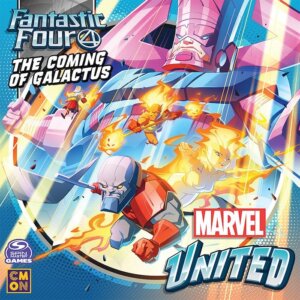
Marvel United: Fantastic Four – The Coming of Galactus
2024
Face Galactus and his four Heralds in an epic Marvel United showdown.
40
minutes
View expansion
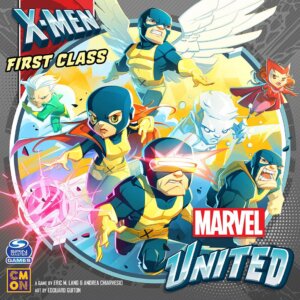
Marvel United: X-Men – First Class
2022
Relive the X-Men’s earliest days with raw heroes, twin villains, and the Danger Room.
40
minutes
Medium
View expansion
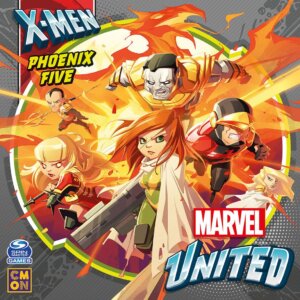
Marvel United: X-Men – Phoenix Five
2022
Face five transformed heroes in a cascading Phoenix Force campaign.
40
minutes
Medium
View expansion
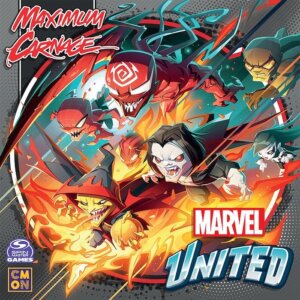
Marvel United: Maximum Carnage
2024
Face the New Sinister Six and stop Carnage’s infection before it spreads.
Medium
View expansion
Marvel United: Multiverse – Kickstarter Promos Box
2024
A packed collection of Kickstarter stretch goals, heroes, villains, and more
40
minutes
Medium
View expansion
Marvel United: Adam Warlock
2021
A Kickstarter-exclusive Adam Warlock hero with 12 cards.
40
minutes
Medium Light

View expansion
Marvel United: Yondu
2021
Add Yondu, an exclusive hero with a dedicated miniature and 12 cards.
40
minutes
Medium
View expansion
Marvel United: X-Men – The Horsemen of Apocalypse
2022
Face Apocalypse and his four devastating Horsemen in an epic X-Men challenge.
40
minutes
Medium
View expansion
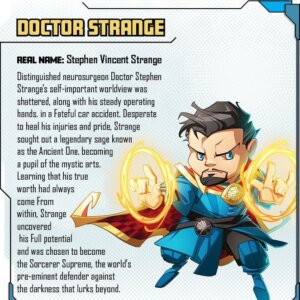
Marvel United: Doctor Strange
2020
Add Doctor Strange to your Marvel United collection.
40
minutes
Medium
View expansion
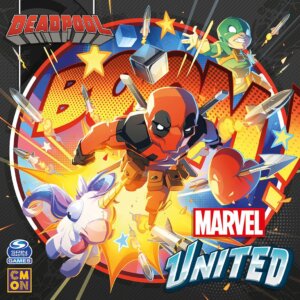
Marvel United: Deadpool
2022
Three Deadpool incarnations, Bob, and a chaos-spreading unicorn challenge.
40
minutes
Medium Light
View expansion
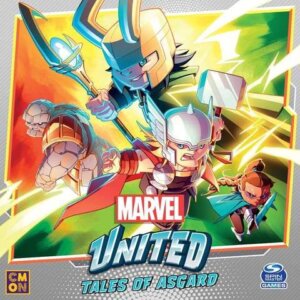
Marvel United: Tales of Asgard – Kickstarter Edition
2021
Add Beta Ray Bill and his 12-card Hero deck to your team.
40
minutes
Medium
View expansion