Summoner Wars (Second Edition)
2021
A tactical two-player card duel of summoning, maneuvering, deckbuilding, and defeating the enemy summoner.
60
minutes
2 - 2
player(s)
9+
Medium


About this board game
Summoner Wars (Second Edition) is a tactical dueling card game for 2 players, with games lasting about 60 minutes. Each player takes the role of a powerful summoner leading a unique army across the war-torn planet of Itharia.
Summon units to your gates, maneuver your forces, and use a wide variety of spells and abilities to outplay your opponent. Victory comes from cutting down the enemy summoner, but every move matters as your opponent looks for opportunities to destroy your army and claim the advantage.
With countless units and the option to build your own decks, each battle offers plenty of room for tactical decision-making. The game is fully expandable, featuring updated versions of beloved factions alongside exciting new factions ready to join the fight.
- Summon and command: Bring units into play through your gates and direct your army in battle.
- Use spells and abilities: Combine varied effects to support your tactics and challenge the opposing force.
- Build your decks: Customize your approach with the option to create your own decks.
- Play in person or online: Use physical cards or the browser-based app.
Summoner Wars (Second Edition) refines the original experience with new art and a perfected rules system. Its expanding range of factions and replayable deck-based battles make it a compelling choice for players who enjoy direct, tactical competition.

Board Game Rules for
Summoner Wars (Second Edition)

It was Ret-Talus, the lord of the Fallen Kingdom, who found the first Summoning Stone. The stone bestowed its power onto the dark-hearted king, changing him into the first of the Summoners.
For a thousand years Ret-Talus went unchallenged as he and his summonings wrought havoc upon the world of Itharia. The power of the stone was so great, that though the world sent entire armies to fight against him, none could defeat the vile ruler.
It was not until Dane Lightbringer discovered a second Summoning Stone, that Ret-Talus’ reign was put in check. The discovery of a second stone gave a new hope to the people of Itharia, for not only did it mean that Ret-Talus’ power might be countered, but it also meant that the Summoning Stone was not unique. If there were two, surely there were more. Every faction of Itharia began pouring their resources into scouring the world for a Summoning Stone to claim as their own.
More stones were revealed, and more Summoners emerged, but the Summoners of Itharia have failed to unite against their common threat. Instead, they have let old faction rivalries and the desire for the power of more Summoning Stones turn them against one another.
The Summoner Wars have begun!
Object of the Game
Summoner Wars is a 2-player expandable card game in which players take on the role of battling summoners. They will call forth mighty warriors, maneuver them about the battlefield, and play powerful events in an effort to destroy their opponent’s summoner.
Dice

 = Melee Hit
 = Ranged Hit
 = Special
Cards Anatomy
Unit Card

- Name
- Class
- Faction
- Strength
- Life
- Cost
- Ability
- Deck Symbol
- / Symbol
Event Card

- Name
- Class
- Cost
- Play Phase
- Deck Symbol
- Effect
Structure Card

- Name
- Class
- Cost
- Life
Tokens

- Boost
- Damage
- Magic
To set up a game of Summoner Wars, follow these steps:

- Place the battlefield between the players.
- Create a supply of damage and boost tokens within reach of both players.
- Each player chooses a faction deck or builds a custom deck.
- Each player places their summoner, 2 starting units and starting gate on the battlefield as shown on the back of their summoner’s card.
Note: Starting gates have 10 life. - Each player shuffles their remaining cards, places them face down into their draw pile, and then draws 5 cards.
- Randomly determine which player will go first. That player places their magic token on the 2 space and the other player places their magic token on the 3 space of their magic tracks.
Players will alternate taking turns until a player has won the game by destroying their opponent’s summoner. On a player’s turn, they must complete the following 6 phases in order:
- Summon
- Move
- Build
- Attack
- Magic
- Draw
After a player completes all 6 phases, it becomes their opponent’s turn.
Phase 1: Summon
Summon any number of units from your hand to the battlefield. To summon a unit, pay its cost by spending a number of magic equal to the unit’s cost, then place it on an empty space adjacent to a gate you control.
Spending/Gaining Magic
To spend or gain 1 or more magic, move your magic token down or up that many spaces on your magic track.

Adjacency
A card or space is adjacent to another one if they share an edge. Diagonals are not adjacent.


Example: Summoning a Unit
- Ella spends 2 magic to summon an Undead Archer unit from her hand.
- She can place the unit on any of the empty spaces adjacent to her gate.
- She chooses to place it directly below her gate.
Phase 2: Move
Move up to 3 different units you control 1 or 2 spaces each. Units can only move into or through empty, adjacent spaces. A unit that is also a structure cannot move unless an effect allows it to.

Rules for Moving:
- Units can move vertically or horizontally 1 to 2 spaces.
- Units can move 1 space vertically and 1 space horizontally or vice versa.
- Units can move 1 space and then move back to their original space. (Sometimes units do this to trigger an after moving ability.)
- Units CANNOT move diagonally.
- Structures CANNOT move.
- Units CANNOT move through other cards.
Phase 3: Build
Build any number of gates or other structures from your hand to the battlefield. To build a structure, pay its cost, then place it on an empty space adjacent to your summoner or in your back 3 rows.

Example: Building a Structure
You can build a structure on any of the empty spaces outlined in green (your back 3 rows or adjacent to your summoner).
Phase 4: Attack
Attack with up to 3 different units you control. (They don’t need to be the same units that moved this turn.)
To attack with a unit, follow these steps in order:
- Declare a Target:
- Melee units () can target adjacent cards.
- Ranged units () can target cards up to 3 clear straight spaces away.
- Melee units (
- Roll: Roll a number of dice equal to the attacking unit’s strength.
- Add Damage: Add 1 damage to the target for each symbol rolled that matches the attacking unit’s / symbol. results are ignored unless otherwise specified.
Damaging and Destroying Cards
To add damage to a card, place damage tokens on it. A card’s life is reduced by 1 for each damage it has. If a card’s life ever reaches 0, that card is destroyed. Discard that card. Cards under a destroyed card are discarded but not destroyed.
Gain 1 magic each time a card you control destroys an ENEMY card.
Discarding Cards
To discard a card, remove any tokens on it and place it face down on top of its owner’s discard pile. Discard any cards that were under it.
The Cost of Inaction
Add 1 damage to your summoner at the end of your Attack Phase if you did not target any enemy cards with an attack this turn.

Example: Ranged Attack
- Toby uses his Horde Slinger to make a ranged attack on Ella’s Undead Warrior, 2 spaces away.
- The Horde Slinger has 2 strength so Toby rolls 2 dice.
- Since this was a ranged attack and 2 ranged symbols were rolled, place 2 damage tokens on the Undead Warrior.
Phase 5: Magic
Discard any number of cards from your hand (face down). Gain 1 magic for each.

Example: Emma discards 2 cards from her hand to gain 2 magic.
Phase 6: Draw
If you have fewer than 5 cards in your hand, draw back up to 5.

Example: Emma is left with 2 cards at the start of her Draw Phase so she draws 3 cards to have a full hand of 5.
Empty Draw Pile
If your draw pile becomes empty, do NOT reshuffle your discard pile. You cannot draw cards while your draw pile is empty.
Playing Event Cards
Play event cards on your turn during the phase listed on the card. To play an event card, pay its cost, resolve its effects, and then discard it. Event cards cannot be played while a game effect is being resolved, e.g. during summoning, building, moving, attacking, or when resolving an event, ability or other effect.
Active Event Effects
When playing an event with the ACTIVE keyword on it, instead of discarding it, place it in your active area. Event card effects are active while in either active area. At the start of your next turn, discard all events in your active area.

Sacrificial Pyre is labeled as “Active” so when played it is placed in the Active Events area next to the board.
Winning the Game
When only 1 player’s summoner remains on the battlefield, that player wins.
Card Effects & Precedence
Abilities and effects written on cards always take precedence over the normal rules of the game. Consult the glossary if you have any questions on a card’s terminology.
Timing Conflicts
If 2 or more game effects ever occur at the same time, the player whose turn it is determines the order in which those effects will resolve.
Card Names
When an effect references a card by name, it refers to any card that has that word or words as part or all of its name.
Example: An Undead unit would include both an Undead Warrior and an Undead Carrier as both are units with Undead in their name. An Archer unit would include both a Citadel Archer and a Wind Archer.
Boost
Boost tokens have various effects based on the cards that are in play. To boost a card, place a boost token on it (no maximum). If a card’s effect requires you to spend 1 or more boost, remove that number of boost tokens from that card (the card must have at least that much boost to activate that effect).
Force
To force a card 1 or more spaces, slide it that many clear straight spaces in a single direction (horizontal or vertical). Forcing a card is NOT considered moving it.
Counting Spaces (Target and Within)
When counting spaces for any purpose, never count diagonally unless specified. Abilities that affect cards “within a number of spaces” always count from the card with the ability and do not include that card, e.g. a card is not “within 2 spaces” of itself. Cards cannot target themselves when attacking or using abilities.

Faction decks are all preconstructed and ready to play. However, players may construct their own custom Summoner Wars decks by mixing cards from different faction decks (sold separately). To construct a custom Summoner Wars deck, select and add to your deck all of the following:
- 1 Summoner
- 1 Ten-Life Gate
- 3 Five-Life Gates
- The 2 starting units listed on the back of your summoner’s card
- The 2 Epic Events listed on the back of your summoner’s card
- 6 Standard Events
- 3 Champion Units
- 16 Common Units
Deck Restrictions
- Each unit and event in your deck must have at least 1 deck symbol that matches 1 of your summoner’s deck symbols.
Example: If you have a summoner with symbols A/B, you could include a card matching either, but not a card with only unmatched symbols. - A deck can have no more than 2 copies of each standard event, 1 copy of each champion unit and 4 copies of each common unit (starting units do not count toward this limit).

Example: Polar Dwarves Deck Breakdown
- 1 Summoner: Svara x 1
- 4 Gates: 10-life Gate x 1, 5-life Gate x 3
- 2 Starting Units: Frost Mage x 1, Ice Golem x 1
- 2 Epic Events: Ice Ram x 2
- 6 Standard Events: Parapet x 2, Ice Repair x 2, Glacial Shift x 2
- 3 Champion Units: Nadiana x 1, Ollag x 1, Jarmund x 1
- 16 Common Units: Frost Mage x 4, Ice Golem x 4, Bear Cavalry x 4, Ice Smith x 4
- ABILITY
- A named effect on a unit card. A unit’s ability is only in effect while it is on the battlefield, while it is being summoned or built, or immediately after it is destroyed. It is not in effect if it enters or leaves play by any other means. Unless otherwise specified, abilities cannot be activated while a game effect is being resolved. If a card gains an ability it already has, that card is treated as if it only has one copy of that ability. See also: Base Abilities.
- ACTIVE AREA
- The areas to the side of the battlefield where active events are placed.
- ACTIVE EVENT
- An event with the ACTIVE keyword on it. The text after the word ACTIVE is considered to be in effect for as long as the event card is in a player’s active area. Your active events are discarded at the start of your turn.
- ADJACENT
- A card or space is adjacent to another card or space if they share an edge. Cards and spaces connected diagonally are not adjacent, and a card or space is not adjacent to itself.

- AFTER
- An effect (B) that happens after another effect (A) must happen immediately after effect A is fully resolved and before any other effect (except another effect that happens after A).
- Examples: After this unit moves: immediately after the unit has moved all of the spaces it intended to move during that activation.
- After this unit attacks: immediately after all of the steps of the unit’s attack, including adding damage and destroying the target, if applicable.
- ANY NUMBER
- Zero or any positive whole number.
- ATTACK
- A unit attacks by declaring a target, rolling dice, and (possibly) adding damage to the target, as detailed in the rules on page 8 under “Phase 4: Attack.” Other abilities and effects that add damage are not attacks.
- AWAY
- Refers to any partial or whole move or force that increases the number of spaces required to count from one card to another.
- BACK ROW
- A player’s back row is the row that is positioned closest to that player. A player’s two back rows are the two rows closest to that player, etc.

- BASE ABILITIES
- Any or all abilities printed on a unit’s card. Does not include abilities added by other cards.
- BASE STRENGTH
- The strength value as printed on a unit card (with no modifications from the effects of other cards). If an effect changes a unit’s base strength, treat that new number as if it were the number actually printed on the card. If two or more effects change a unit’s base strength, use only the last one. Apply any other modifications to the unit’s strength from other card effects to the new base strength.
- BATTLEFIELD
- All of the spaces on the game board are collectively called the battlefield.
- BEHIND
- A card is behind another card if it is in a row that is closer to that other card’s controlling player. Since cards are oriented so they look right-side up to their controlling player, a card that is behind another card will look like it is “below” that other card.

- BOOST
- Boost tokens have various effects based on the cards that are in play. To boost a card, place a boost token on it, even if it already has 1 or more boost tokens on it. There is no limit to the number of boost tokens that can be on a card. The number of boost a card has is equal to the number of boost tokens on it. If a card’s effect says to spend 1 or more boost, its controlling player must remove that number of boost tokens from that card. If the card does not have enough boost tokens on it, that effect cannot be used. The 3 side of a boost token represents 3 boost tokens.
- BOOSTED
- Has 1 or more boost tokens on it.
- BUILD
- Choose a gate or other structure in your hand, pay its cost, and place it on an empty space on the battlefield during your Build Phase. Usually structures must be built either adjacent to your summoner or in your back 3 rows. Any card with a class of structure can be built.
- CHAMPION
- A class of unit. Each deck has 3 unique champions.
- CLASS
- Short for classification. There are 3 classes of units: Common, Champion and Summoner. There are 2 classes of events: Standard and Epic. Structures are their own class. Some game effects apply only to a specified class.
Note: All of the words in a card’s class are part of its class separately or together, so a common unit has a class of common, unit, and common unit.

- CLEAR STRAIGHT SPACES
- A series of adjacent empty spaces that are connected in a single direction (horizontal or vertical).

- COMMON
- A class of unit. Each deck has 16, with up to 4 copies of each. The starting units do not count against these limits.
- CONTROL
- A player controls any cards that began in their deck and are now on the battlefield, in their active area or being resolved, unless a game effect gives control to their opponent. Every card on the battlefield should always be oriented so they appear right-side up to their controlling player. If a game effect causes a player to take control of a card on the battlefield, rotate that card 180º (so it becomes right-side up for the new controlling player). If control was granted only for a specified period, afterward return control by again rotating that card 180º (so it becomes right-side up for the original controlling player).
- COST
- A value listed on all cards, except summoners. The cost, which can be 0, is the number of magic that must be spent in order to summon that unit, build that structure, or play that event.
- DAMAGE
- To add 1 or more damage to a card, place that number of damage tokens on it. The number of damage a card has is equal to the number of damage tokens on it. A card’s damage reduces its life (each damage reduces life by 1). If a card’s life reaches (or goes below) 0, it is destroyed. The 3 side of a damage token represents 3 damage tokens.
- DAMAGED
- Has 1 or more damage tokens on it.
- DECK
- A complete set of cards ready for one player to play Summoner Wars with. Every faction deck is sold as a ready to play deck. See the Deck Construction section to learn the rules for how to construct a custom Summoner Wars deck.
- DESTROY
- To destroy a card, discard it (place it face down on top of its owner’s discard pile). When a card is destroyed, discard any cards under it and remove any tokens on it.
Gain 1 magic:- if an attack from a unit you control targets an opponent’s card and destroys that target.
- if an event or ability from a card you control causes a card your opponent controls to be destroyed.
Do NOT gain magic:
- if a card you control causes another card you control to be destroyed.
- if the effect of a destroyed enemy card causes another card to be destroyed.
- for any cards under a destroyed card.
- DIAGONAL
- A card or space is diagonal to another card or space if they share a corner.
- DISCARD
- To discard a card, place it face down on top of its owner’s discard pile. When a card is discarded from the battlefield, any cards under it are discarded and any tokens on it are removed. If a discarded card is later placed back on the battlefield, it is considered a new card.
- DISCARD PILE
- On each player’s side of the game board is a labeled area where cards they own are placed face down when they are discarded. This area, and the cards that accumulate there, are that player’s discard pile. The number of cards in a player’s discard pile is public information, but the contents are private to that player.
- DISTINCT
- A card is distinct if all the cards it is being compared to have different names from it. A set of distinct cards is one where each card has a different name.
- DRAW
- Take 1 or more cards from the top of your draw pile and add them to your hand.
- DRAW PILE
- On each player’s side of the game board is a labeled area where most of a player’s cards will begin the game in a face down pile. This area, and the cards piled there, are that player’s draw pile. The number of cards in a player’s draw pile is public information, but the contents are secret to all players. No player may rearrange the cards in a draw pile after setup unless specified, such as when retrieving a card from the draw pile. If a draw pile becomes empty, do NOT reshuffle the corresponding discard pile. A player cannot draw cards if their draw pile is empty.
- EMPTY
- Something (a space, hand, draw pile, discard pile, etc.) is empty if there is nothing in it. In particular, a space is empty if there is no card in it.
- END
- Effects that occur at the end of a phase happen after that phase is completed. Effects that occur at the end of a turn happen after the Draw Phase of that turn.
- ENEMY
- Any card that a player’s opponent controls.
- EPIC
- A class of event. Each deck has 2, which are determined by the deck’s summoner.
- EVENT
- A type of card. An event can only be played on its owner’s turn during the phase listed on it. To play an event, pay its cost, resolve its effects and then discard it. Event cards cannot be played while a game effect is being resolved, e.g. during summoning, building, moving, attacking, or when resolving an ability or event. An event with a class of structure enters play by being built. See also Active Event.
- EXCHANGE PLACES
- Two cards swap which spaces they are on. This is not considered moving or forcing either card.
- EXTRA
- In addition to what the normal rules allow. Example: During an Attack Phase, 3 units can attack, but an extra attacking unit could be a 4th (4 attacks with 4 units). If a unit is granted an extra attack, however, it could attack twice (4 attacks with 3 units).
- FACTION
- An attribute listed on each unit card. Some game effects will only apply to units of a specified faction.
- FORCE
- To force a card 1 or more spaces, slide it that many clear straight spaces in a single direction (horizontal or vertical). When interpreting card text, forcing a card is NOT considered moving it.
- FRIENDLY
- All cards controlled by a player are friendly to that player and to each other.
- GATE
- A type of structure. Each player starts with 1 gate (with 10 life) on the battlefield and 3 gates (with 5 life each) in their draw pile. Gates serve as the primary summoning locations: when a player summons a unit, they place that unit on an empty space adjacent to a gate they control. If there are no valid spaces (because a player doesn’t control any gates or there are no empty adjacent spaces), that player usually cannot summon.
- HAND
- The cards a player is currently holding. There is no maximum hand size.
- IGNORE
- To disregard (not resolve) a specified rule or effect.
- IN PLAY
- On the battlefield or in an active area.
- INSTEAD
- An effect to be resolved in place of the normal rules. The original effect does not take place, e.g. “instead of moving” means a card has not moved and cannot trigger “after this unit moves” effects and “instead of destroying” means a card is not destroyed and no magic is gained. Note, however, that effects that occur “instead of moving” and “instead of attacking” still count toward the 3 unit limits for those phases, and a unit that has used an ability “instead of moving/attacking” cannot also move/attack that phase. Effects that occur “instead of moving” can happen even if a unit has no empty adjacent spaces and effects that occur “instead of attacking” can happen even if there is not a viable attack target, but effects that occur “instead of moving/attacking” CANNOT happen if the game rules specifically forbid that unit from moving/attacking.
- LIFE
- A value listed on all unit and structure cards. If a card’s life is ever reduced to 0 (or below), usually from adding damage, that card is destroyed.
- MAGIC
- An asset that can be spent to pay a cost. The amount of magic each player has is represented by the position of that player’s magic token on their magic track, with a maximum of 15.
- MAY
- The term may is used when a player has permission to trigger an effect, but is not required to.
- MELEE UNIT
- A unit that has the symbol next to the strength value on their card.
- MOVE
- To move a unit 1 space is to slide it from the space it is on to an empty adjacent space. To move a unit 2 or more spaces is to repeat this action that many times. A unit cannot move 0 spaces, but can be moved back onto a space it was just moved off of.
- NAME
- When an effect references a card by name, it refers to any card that has that word or words as part or all of its name. Note: This refers to full words only, so an Ice structure would NOT include a Portal Device structure.
- OTHER
- Indicates a card or cards different from a card already mentioned.
- OWNER
- A player is the owner of a card if they started the game with that card in their deck.
- PAY
- A player must pay before playing any card with a cost by spending magic equal to the card’s cost.
- PHASE
- One of the 6 parts of a player’s turn. In order, the phases are Summon, Move, Build, Attack, Magic, Draw.
- PLACE
- Put something where specified. When placing a card on the battlefield, it must always be placed onto an empty space, unless otherwise specified.
- RANGED UNIT
- A unit that has the symbol next to the strength value on their card.
- REMOVE
- When removing damage or boost from a card, remove the appropriate number of tokens from that card and return them to their supply. When told to remove more than the number of tokens that are on the card, remove them all.
- REPLACE
- Put a card where another card was.
- RE-ROLL
- When rolling dice, roll some number of those dice again and keep the new result(s). Re-rolled dice can be re-rolled again.
- RESOLVE
- Follow all the steps of an effect or game rule.
- RETRIEVE
- Search through a specified group of cards to find a specified card. If you looked at the contents of a draw pile while retrieving a card, shuffle that draw pile.
- RETURN TO YOUR HAND
- Take a card from the battlefield and add it back to your hand. When returning a card to your hand, discard any cards that were under it and remove any tokens that were on it. If a returned card is later placed back on the battlefield, it is considered a new card.
- ROW
- A full horizontal line of 6 adjacent spaces.
- SIDE
- The battlefield has two sides. The 4 rows closest to you, your 4 back rows, are your side, and the 4 rows farthest from you are your opponent’s side.
- SPEND
- To spend 1 or more magic, move your magic token down that many spaces on your magic track. To spend 1 or more boost, remove that number of boost tokens from the card that is spending boost. If you do not have enough magic or boost, you cannot pay the cost or activate the effect.
- STANDARD
- A class of event. Each deck has 6, with up to 2 copies of each.
- START
- Effects that occur at the start of a phase happen before anything else during that phase. Effects that occur at the start of a turn happen before the Summon Phase of that turn.
- STRAIGHT SPACES
- A series of adjacent spaces that are connected in a single direction (horizontal or vertical).
- STRENGTH
- A value listed on all unit cards. When a unit attacks, its controlling player rolls a number of dice equal to that unit’s strength. A unit’s strength can be modified (increased or decreased) by various card effects. See also, Base Strength.
- STRUCTURE
- A type of card that can be built on the battlefield during a Build Phase. Structures usually cannot move or attack, but they can be attacked and destroyed. Gates are a special type of structure.
- SUMMON
- Choose a unit in your hand, pay its cost, and place it on an empty space on the battlefield during your Summon Phase. Usually units must be summoned adjacent to a gate you control. Any card with a class of common or champion can be summoned.
- SUMMONER
- A class of unit. Each player has 1 summoner that begins play on the battlefield. If a player’s summoner is ever destroyed, that player loses the game.
- SUPPLY
- The area where unused damage and boost tokens are kept. If these components run out, please use other household items as a substitute.
- TARGET
- Identify the recipient of an attack or the recipient(s) of a game effect, usually by counting spaces from a unit that is attacking or using an ability. A card cannot target itself.
- THROUGH
- Treat a card as if it were not there when passing by. A unit that can move through commons cannot move through other cards and still cannot end its movement on a common. A melee unit can never attack through another card because it still can only target adjacent cards.
- TOWARD
- Refers to any partial or whole move or force that decreases the number of spaces required to count from one card to another.
- TURN
- A turn is 1 player completing the 6 phases of a turn in order: Summon, Move, Build, Attack, Magic, Draw. A turn also includes any effects that happen at the start or end of a player’s turn.
- UNBOOSTED
- Has no boost tokens on it.
- UNDAMAGED
- Has no damage tokens on it.
- UNDER
- Some effects tell you to place a card under another card. Place it beneath that card in the same space and with the same orientation (same controlling player as the card it is placed under). When a card moves, is forced, or otherwise changes position on the battlefield, all the cards under it stay with it, remaining under it. When an opponent takes control of a card, they take control of all the cards under it. Cards under another card cannot be affected by any game effect unless specifically mentioned. When a card is destroyed, discarded or returned to a hand, discard all the cards under it. Note: Before placing a card (A) under another card (B), discard any cards that were under card A and remove any tokens that were on card A.
- UNIT
- A type of card, including commons, champions, and summoners. Units are summoned to the battlefield during a Summon Phase. Units can move and attack.
- UP TO
- Up to includes 0.
- WITHIN X SPACES
- A card is within X spaces of another card if you can reach that card by counting that many spaces. Remember that you cannot count diagonally, but the spaces do not need to be empty unless specified (e.g. within X clear straight spaces). Abilities that say “within” count from the card on which the ability is found. A card is NOT considered to be within X spaces of itself.
Expanding the Game
Additional faction decks are available for the game. Each faction deck is a preconstructed and ready to play deck that can also be mined for new cards to add into your custom decks.
Inquire with a hobby tabletop games retailer or visit plaidhatgames.com to get yours!
Credits
- Game Designer: Colby Dauch
- Game Developer: J. Arthur Ellis
- Illustrators: Martin Abel, Madison Johnson
- Graphic Designers: David Richards, Kendall Wilkerson
- Editor: Jonathan Liu
- Cultural Advisors: Khary Bridgewater, Dandy Ren, Calvin Wong, Jonathan Liu
- Playtesters: Adam Tarr, Adrian Han Shi, Andrei, Arthur Scheuerman, Barnaby Alsop, Benjamin Winterscheidt, Blaze Nimmons, Brett Lowey, Bryan Lull, Chad Barbry, Corey Salem, Daniel Garcia-Rosas, Daniel Kenline, Daniel Kotačka, David Glandon, David West, Dustin Golden, Eric Wells, Ethan Fritz, Evan Pitts, Everett Zuras, Ezequiel Heyn, Francis Olit, Frank Balog, Gabriel Meyer, Genarch Bren Olit, Glen Gallik, Gordon Helle, Holden Zuras, Hope Gundlah, Jáchym Bajgar, James Sitz, Jan Trinkhaus, Jan Zalewski, Jason Spain, Jeffrey Berman, Jeffrey Joyce, Jon Merkle, Jon Stimson, Jonas Schmidt, Jonathan Davison, Jonathan Liu, Jonathan Marcantel, Jorge García de la Higuera, Joseph Perek, Joshua James Hardy, Joshua Koehn, JT Perek, Kaitlyn Sevits, Kyla Joy Hughes, Leila Mariela Nievas, Leo Meister, Lionel Kinkartz, Luis Canela, Luke Muench, Martin Miguez, Matouš Hofmeister, Matt Kaminsky, Matt Sherba, Matthew Messer, Matthew Pettigrew, Mohamad Samir Syed Ahmed, Nathan Fritz, Nathan Howell, Neal Burghardt, Ned Lauber, Nicholas White, Nick de Raet, Nick Trengove, Paco Estevez, Ray Sevits, Reinhold Daykin Schnell, Rick Heit, Robert Lawson, Rogerson Robin, Ryan De La Torre, Ryan James, Sean Faeth, Sophia Meister, Taylor Kowbel, Thomas Trengove, Tim Jones, Travis Schneider, Vasily Shipunov, Zander Galluppi
Introduction & Object of the Game
It was Ret-Talus, the lord of the Fallen Kingdom, who found the first Summoning Stone. The stone bestowed its power onto the dark-hearted king, changing him into the first of the Summoners.
For a thousand years Ret-Talus went unchallenged as he and his summonings wrought havoc upon the world of Itharia. The power of the stone was so great, that though the world sent entire armies to fight against him, none could defeat the vile ruler.
It was not until Dane Lightbringer discovered a second Summoning Stone, that Ret-Talus’ reign was put in check. The discovery of a second stone gave a new hope to the people of Itharia, for not only did it mean that Ret-Talus’ power might be countered, but it also meant that the Summoning Stone was not unique. If there were two, surely there were more. Every faction of Itharia began pouring their resources into scouring the world for a Summoning Stone to claim as their own.
More stones were revealed, and more Summoners emerged, but the Summoners of Itharia have failed to unite against their common threat. Instead, they have let old faction rivalries and the desire for the power of more Summoning Stones turn them against one another.
The Summoner Wars have begun!
Object of the Game
Summoner Wars is a 2-player expandable card game in which players take on the role of battling summoners. They will call forth mighty warriors, maneuver them about the battlefield, and play powerful events in an effort to destroy their opponent’s summoner.
Components
Dice
- = Melee Hit
- = Ranged Hit
- = Special
Cards Anatomy
Unit Card
- Name
- Class
- Faction
- Strength
- Life
- Cost
- Ability
- Deck Symbol
- / Symbol
Event Card
- Name
- Class
- Cost
- Play Phase
- Deck Symbol
- Effect
Structure Card
- Name
- Class
- Cost
- Life
Tokens
- Boost
- Damage
- Magic
Setup
To set up a game of Summoner Wars, follow these steps:
- Place the battlefield between the players.
- Create a supply of damage and boost tokens within reach of both players.
- Each player chooses a faction deck or builds a custom deck.
- Each player places their summoner, 2 starting units and starting gate on the battlefield as shown on the back of their summoner’s card.
Note: Starting gates have 10 life. - Each player shuffles their remaining cards, places them face down into their draw pile, and then draws 5 cards.
- Randomly determine which player will go first. That player places their magic token on the 2 space and the other player places their magic token on the 3 space of their magic tracks.
How to Play
Players will alternate taking turns until a player has won the game by destroying their opponent’s summoner. On a player’s turn, they must complete the following 6 phases in order:
- Summon
- Move
- Build
- Attack
- Magic
- Draw
After a player completes all 6 phases, it becomes their opponent’s turn.
Phase 1: Summon
Summon any number of units from your hand to the battlefield. To summon a unit, pay its cost by spending a number of magic equal to the unit’s cost, then place it on an empty space adjacent to a gate you control.
Spending/Gaining Magic
To spend or gain 1 or more magic, move your magic token down or up that many spaces on your magic track.
Adjacency
A card or space is adjacent to another one if they share an edge. Diagonals are not adjacent.
Example: Summoning a Unit
- Ella spends 2 magic to summon an Undead Archer unit from her hand.
- She can place the unit on any of the empty spaces adjacent to her gate.
- She chooses to place it directly below her gate.
Phase 2: Move
Move up to 3 different units you control 1 or 2 spaces each. Units can only move into or through empty, adjacent spaces. A unit that is also a structure cannot move unless an effect allows it to.
Rules for Moving:
- Units can move vertically or horizontally 1 to 2 spaces.
- Units can move 1 space vertically and 1 space horizontally or vice versa.
- Units can move 1 space and then move back to their original space. (Sometimes units do this to trigger an after moving ability.)
- Units CANNOT move diagonally.
- Structures CANNOT move.
- Units CANNOT move through other cards.
Phase 3: Build
Build any number of gates or other structures from your hand to the battlefield. To build a structure, pay its cost, then place it on an empty space adjacent to your summoner or in your back 3 rows.
Example: Building a Structure
You can build a structure on any of the empty spaces outlined in green (your back 3 rows or adjacent to your summoner).
Phase 4: Attack
Attack with up to 3 different units you control. (They don’t need to be the same units that moved this turn.)
To attack with a unit, follow these steps in order:
- Declare a Target:
- Melee units () can target adjacent cards.
- Ranged units () can target cards up to 3 clear straight spaces away.
- Melee units (
- Roll: Roll a number of dice equal to the attacking unit’s strength.
- Add Damage: Add 1 damage to the target for each symbol rolled that matches the attacking unit’s / symbol. results are ignored unless otherwise specified.
Damaging and Destroying Cards
To add damage to a card, place damage tokens on it. A card’s life is reduced by 1 for each damage it has. If a card’s life ever reaches 0, that card is destroyed. Discard that card. Cards under a destroyed card are discarded but not destroyed.
Gain 1 magic each time a card you control destroys an ENEMY card.
Discarding Cards
To discard a card, remove any tokens on it and place it face down on top of its owner’s discard pile. Discard any cards that were under it.
The Cost of Inaction
Add 1 damage to your summoner at the end of your Attack Phase if you did not target any enemy cards with an attack this turn.
Example: Ranged Attack
- Toby uses his Horde Slinger to make a ranged attack on Ella’s Undead Warrior, 2 spaces away.
- The Horde Slinger has 2 strength so Toby rolls 2 dice.
- Since this was a ranged attack and 2 ranged symbols were rolled, place 2 damage tokens on the Undead Warrior.
Phase 5: Magic
Discard any number of cards from your hand (face down). Gain 1 magic for each.
Example: Emma discards 2 cards from her hand to gain 2 magic.
Phase 6: Draw
If you have fewer than 5 cards in your hand, draw back up to 5.
Example: Emma is left with 2 cards at the start of her Draw Phase so she draws 3 cards to have a full hand of 5.
Empty Draw Pile
If your draw pile becomes empty, do NOT reshuffle your discard pile. You cannot draw cards while your draw pile is empty.
Playing Event Cards
Play event cards on your turn during the phase listed on the card. To play an event card, pay its cost, resolve its effects, and then discard it. Event cards cannot be played while a game effect is being resolved, e.g. during summoning, building, moving, attacking, or when resolving an event, ability or other effect.
Active Event Effects
When playing an event with the ACTIVE keyword on it, instead of discarding it, place it in your active area. Event card effects are active while in either active area. At the start of your next turn, discard all events in your active area.
Sacrificial Pyre is labeled as “Active” so when played it is placed in the Active Events area next to the board.
End of Game
Winning the Game
When only 1 player’s summoner remains on the battlefield, that player wins.
Key Rules & Concepts
Card Effects & Precedence
Abilities and effects written on cards always take precedence over the normal rules of the game. Consult the glossary if you have any questions on a card’s terminology.
Timing Conflicts
If 2 or more game effects ever occur at the same time, the player whose turn it is determines the order in which those effects will resolve.
Card Names
When an effect references a card by name, it refers to any card that has that word or words as part or all of its name.
Example: An Undead unit would include both an Undead Warrior and an Undead Carrier as both are units with Undead in their name. An Archer unit would include both a Citadel Archer and a Wind Archer.
Boost
Boost tokens have various effects based on the cards that are in play. To boost a card, place a boost token on it (no maximum). If a card’s effect requires you to spend 1 or more boost, remove that number of boost tokens from that card (the card must have at least that much boost to activate that effect).
Force
To force a card 1 or more spaces, slide it that many clear straight spaces in a single direction (horizontal or vertical). Forcing a card is NOT considered moving it.
Counting Spaces (Target and Within)
When counting spaces for any purpose, never count diagonally unless specified. Abilities that affect cards “within a number of spaces” always count from the card with the ability and do not include that card, e.g. a card is not “within 2 spaces” of itself. Cards cannot target themselves when attacking or using abilities.
Deck Construction
Faction decks are all preconstructed and ready to play. However, players may construct their own custom Summoner Wars decks by mixing cards from different faction decks (sold separately). To construct a custom Summoner Wars deck, select and add to your deck all of the following:
- 1 Summoner
- 1 Ten-Life Gate
- 3 Five-Life Gates
- The 2 starting units listed on the back of your summoner’s card
- The 2 Epic Events listed on the back of your summoner’s card
- 6 Standard Events
- 3 Champion Units
- 16 Common Units
Deck Restrictions
- Each unit and event in your deck must have at least 1 deck symbol that matches 1 of your summoner’s deck symbols.
Example: If you have a summoner with symbols A/B, you could include a card matching either, but not a card with only unmatched symbols. - A deck can have no more than 2 copies of each standard event, 1 copy of each champion unit and 4 copies of each common unit (starting units do not count toward this limit).
Example: Polar Dwarves Deck Breakdown
- 1 Summoner: Svara x 1
- 4 Gates: 10-life Gate x 1, 5-life Gate x 3
- 2 Starting Units: Frost Mage x 1, Ice Golem x 1
- 2 Epic Events: Ice Ram x 2
- 6 Standard Events: Parapet x 2, Ice Repair x 2, Glacial Shift x 2
- 3 Champion Units: Nadiana x 1, Ollag x 1, Jarmund x 1
- 16 Common Units: Frost Mage x 4, Ice Golem x 4, Bear Cavalry x 4, Ice Smith x 4
Glossary
- ABILITY
- A named effect on a unit card. A unit’s ability is only in effect while it is on the battlefield, while it is being summoned or built, or immediately after it is destroyed. It is not in effect if it enters or leaves play by any other means. Unless otherwise specified, abilities cannot be activated while a game effect is being resolved. If a card gains an ability it already has, that card is treated as if it only has one copy of that ability. See also: Base Abilities.
- ACTIVE AREA
- The areas to the side of the battlefield where active events are placed.
- ACTIVE EVENT
- An event with the ACTIVE keyword on it. The text after the word ACTIVE is considered to be in effect for as long as the event card is in a player’s active area. Your active events are discarded at the start of your turn.
- ADJACENT
- A card or space is adjacent to another card or space if they share an edge. Cards and spaces connected diagonally are not adjacent, and a card or space is not adjacent to itself.
- AFTER
- An effect (B) that happens after another effect (A) must happen immediately after effect A is fully resolved and before any other effect (except another effect that happens after A).
- Examples: After this unit moves: immediately after the unit has moved all of the spaces it intended to move during that activation.
- After this unit attacks: immediately after all of the steps of the unit’s attack, including adding damage and destroying the target, if applicable.
- ANY NUMBER
- Zero or any positive whole number.
- ATTACK
- A unit attacks by declaring a target, rolling dice, and (possibly) adding damage to the target, as detailed in the rules on page 8 under “Phase 4: Attack.” Other abilities and effects that add damage are not attacks.
- AWAY
- Refers to any partial or whole move or force that increases the number of spaces required to count from one card to another.
- BACK ROW
- A player’s back row is the row that is positioned closest to that player. A player’s two back rows are the two rows closest to that player, etc.
- BASE ABILITIES
- Any or all abilities printed on a unit’s card. Does not include abilities added by other cards.
- BASE STRENGTH
- The strength value as printed on a unit card (with no modifications from the effects of other cards). If an effect changes a unit’s base strength, treat that new number as if it were the number actually printed on the card. If two or more effects change a unit’s base strength, use only the last one. Apply any other modifications to the unit’s strength from other card effects to the new base strength.
- BATTLEFIELD
- All of the spaces on the game board are collectively called the battlefield.
- BEHIND
- A card is behind another card if it is in a row that is closer to that other card’s controlling player. Since cards are oriented so they look right-side up to their controlling player, a card that is behind another card will look like it is “below” that other card.
- BOOST
- Boost tokens have various effects based on the cards that are in play. To boost a card, place a boost token on it, even if it already has 1 or more boost tokens on it. There is no limit to the number of boost tokens that can be on a card. The number of boost a card has is equal to the number of boost tokens on it. If a card’s effect says to spend 1 or more boost, its controlling player must remove that number of boost tokens from that card. If the card does not have enough boost tokens on it, that effect cannot be used. The 3 side of a boost token represents 3 boost tokens.
- BOOSTED
- Has 1 or more boost tokens on it.
- BUILD
- Choose a gate or other structure in your hand, pay its cost, and place it on an empty space on the battlefield during your Build Phase. Usually structures must be built either adjacent to your summoner or in your back 3 rows. Any card with a class of structure can be built.
- CHAMPION
- A class of unit. Each deck has 3 unique champions.
- CLASS
- Short for classification. There are 3 classes of units: Common, Champion and Summoner. There are 2 classes of events: Standard and Epic. Structures are their own class. Some game effects apply only to a specified class.
Note: All of the words in a card’s class are part of its class separately or together, so a common unit has a class of common, unit, and common unit.
- CLEAR STRAIGHT SPACES
- A series of adjacent empty spaces that are connected in a single direction (horizontal or vertical).
- COMMON
- A class of unit. Each deck has 16, with up to 4 copies of each. The starting units do not count against these limits.
- CONTROL
- A player controls any cards that began in their deck and are now on the battlefield, in their active area or being resolved, unless a game effect gives control to their opponent. Every card on the battlefield should always be oriented so they appear right-side up to their controlling player. If a game effect causes a player to take control of a card on the battlefield, rotate that card 180º (so it becomes right-side up for the new controlling player). If control was granted only for a specified period, afterward return control by again rotating that card 180º (so it becomes right-side up for the original controlling player).
- COST
- A value listed on all cards, except summoners. The cost, which can be 0, is the number of magic that must be spent in order to summon that unit, build that structure, or play that event.
- DAMAGE
- To add 1 or more damage to a card, place that number of damage tokens on it. The number of damage a card has is equal to the number of damage tokens on it. A card’s damage reduces its life (each damage reduces life by 1). If a card’s life reaches (or goes below) 0, it is destroyed. The 3 side of a damage token represents 3 damage tokens.
- DAMAGED
- Has 1 or more damage tokens on it.
- DECK
- A complete set of cards ready for one player to play Summoner Wars with. Every faction deck is sold as a ready to play deck. See the Deck Construction section to learn the rules for how to construct a custom Summoner Wars deck.
- DESTROY
- To destroy a card, discard it (place it face down on top of its owner’s discard pile). When a card is destroyed, discard any cards under it and remove any tokens on it.
Gain 1 magic:- if an attack from a unit you control targets an opponent’s card and destroys that target.
- if an event or ability from a card you control causes a card your opponent controls to be destroyed.
Do NOT gain magic:
- if a card you control causes another card you control to be destroyed.
- if the effect of a destroyed enemy card causes another card to be destroyed.
- for any cards under a destroyed card.
- DIAGONAL
- A card or space is diagonal to another card or space if they share a corner.
- DISCARD
- To discard a card, place it face down on top of its owner’s discard pile. When a card is discarded from the battlefield, any cards under it are discarded and any tokens on it are removed. If a discarded card is later placed back on the battlefield, it is considered a new card.
- DISCARD PILE
- On each player’s side of the game board is a labeled area where cards they own are placed face down when they are discarded. This area, and the cards that accumulate there, are that player’s discard pile. The number of cards in a player’s discard pile is public information, but the contents are private to that player.
- DISTINCT
- A card is distinct if all the cards it is being compared to have different names from it. A set of distinct cards is one where each card has a different name.
- DRAW
- Take 1 or more cards from the top of your draw pile and add them to your hand.
- DRAW PILE
- On each player’s side of the game board is a labeled area where most of a player’s cards will begin the game in a face down pile. This area, and the cards piled there, are that player’s draw pile. The number of cards in a player’s draw pile is public information, but the contents are secret to all players. No player may rearrange the cards in a draw pile after setup unless specified, such as when retrieving a card from the draw pile. If a draw pile becomes empty, do NOT reshuffle the corresponding discard pile. A player cannot draw cards if their draw pile is empty.
- EMPTY
- Something (a space, hand, draw pile, discard pile, etc.) is empty if there is nothing in it. In particular, a space is empty if there is no card in it.
- END
- Effects that occur at the end of a phase happen after that phase is completed. Effects that occur at the end of a turn happen after the Draw Phase of that turn.
- ENEMY
- Any card that a player’s opponent controls.
- EPIC
- A class of event. Each deck has 2, which are determined by the deck’s summoner.
- EVENT
- A type of card. An event can only be played on its owner’s turn during the phase listed on it. To play an event, pay its cost, resolve its effects and then discard it. Event cards cannot be played while a game effect is being resolved, e.g. during summoning, building, moving, attacking, or when resolving an ability or event. An event with a class of structure enters play by being built. See also Active Event.
- EXCHANGE PLACES
- Two cards swap which spaces they are on. This is not considered moving or forcing either card.
- EXTRA
- In addition to what the normal rules allow. Example: During an Attack Phase, 3 units can attack, but an extra attacking unit could be a 4th (4 attacks with 4 units). If a unit is granted an extra attack, however, it could attack twice (4 attacks with 3 units).
- FACTION
- An attribute listed on each unit card. Some game effects will only apply to units of a specified faction.
- FORCE
- To force a card 1 or more spaces, slide it that many clear straight spaces in a single direction (horizontal or vertical). When interpreting card text, forcing a card is NOT considered moving it.
- FRIENDLY
- All cards controlled by a player are friendly to that player and to each other.
- GATE
- A type of structure. Each player starts with 1 gate (with 10 life) on the battlefield and 3 gates (with 5 life each) in their draw pile. Gates serve as the primary summoning locations: when a player summons a unit, they place that unit on an empty space adjacent to a gate they control. If there are no valid spaces (because a player doesn’t control any gates or there are no empty adjacent spaces), that player usually cannot summon.
- HAND
- The cards a player is currently holding. There is no maximum hand size.
- IGNORE
- To disregard (not resolve) a specified rule or effect.
- IN PLAY
- On the battlefield or in an active area.
- INSTEAD
- An effect to be resolved in place of the normal rules. The original effect does not take place, e.g. “instead of moving” means a card has not moved and cannot trigger “after this unit moves” effects and “instead of destroying” means a card is not destroyed and no magic is gained. Note, however, that effects that occur “instead of moving” and “instead of attacking” still count toward the 3 unit limits for those phases, and a unit that has used an ability “instead of moving/attacking” cannot also move/attack that phase. Effects that occur “instead of moving” can happen even if a unit has no empty adjacent spaces and effects that occur “instead of attacking” can happen even if there is not a viable attack target, but effects that occur “instead of moving/attacking” CANNOT happen if the game rules specifically forbid that unit from moving/attacking.
- LIFE
- A value listed on all unit and structure cards. If a card’s life is ever reduced to 0 (or below), usually from adding damage, that card is destroyed.
- MAGIC
- An asset that can be spent to pay a cost. The amount of magic each player has is represented by the position of that player’s magic token on their magic track, with a maximum of 15.
- MAY
- The term may is used when a player has permission to trigger an effect, but is not required to.
- MELEE UNIT
- A unit that has the symbol next to the strength value on their card.
- MOVE
- To move a unit 1 space is to slide it from the space it is on to an empty adjacent space. To move a unit 2 or more spaces is to repeat this action that many times. A unit cannot move 0 spaces, but can be moved back onto a space it was just moved off of.
- NAME
- When an effect references a card by name, it refers to any card that has that word or words as part or all of its name. Note: This refers to full words only, so an Ice structure would NOT include a Portal Device structure.
- OTHER
- Indicates a card or cards different from a card already mentioned.
- OWNER
- A player is the owner of a card if they started the game with that card in their deck.
- PAY
- A player must pay before playing any card with a cost by spending magic equal to the card’s cost.
- PHASE
- One of the 6 parts of a player’s turn. In order, the phases are Summon, Move, Build, Attack, Magic, Draw.
- PLACE
- Put something where specified. When placing a card on the battlefield, it must always be placed onto an empty space, unless otherwise specified.
- RANGED UNIT
- A unit that has the symbol next to the strength value on their card.
- REMOVE
- When removing damage or boost from a card, remove the appropriate number of tokens from that card and return them to their supply. When told to remove more than the number of tokens that are on the card, remove them all.
- REPLACE
- Put a card where another card was.
- RE-ROLL
- When rolling dice, roll some number of those dice again and keep the new result(s). Re-rolled dice can be re-rolled again.
- RESOLVE
- Follow all the steps of an effect or game rule.
- RETRIEVE
- Search through a specified group of cards to find a specified card. If you looked at the contents of a draw pile while retrieving a card, shuffle that draw pile.
- RETURN TO YOUR HAND
- Take a card from the battlefield and add it back to your hand. When returning a card to your hand, discard any cards that were under it and remove any tokens that were on it. If a returned card is later placed back on the battlefield, it is considered a new card.
- ROW
- A full horizontal line of 6 adjacent spaces.
- SIDE
- The battlefield has two sides. The 4 rows closest to you, your 4 back rows, are your side, and the 4 rows farthest from you are your opponent’s side.
- SPEND
- To spend 1 or more magic, move your magic token down that many spaces on your magic track. To spend 1 or more boost, remove that number of boost tokens from the card that is spending boost. If you do not have enough magic or boost, you cannot pay the cost or activate the effect.
- STANDARD
- A class of event. Each deck has 6, with up to 2 copies of each.
- START
- Effects that occur at the start of a phase happen before anything else during that phase. Effects that occur at the start of a turn happen before the Summon Phase of that turn.
- STRAIGHT SPACES
- A series of adjacent spaces that are connected in a single direction (horizontal or vertical).
- STRENGTH
- A value listed on all unit cards. When a unit attacks, its controlling player rolls a number of dice equal to that unit’s strength. A unit’s strength can be modified (increased or decreased) by various card effects. See also, Base Strength.
- STRUCTURE
- A type of card that can be built on the battlefield during a Build Phase. Structures usually cannot move or attack, but they can be attacked and destroyed. Gates are a special type of structure.
- SUMMON
- Choose a unit in your hand, pay its cost, and place it on an empty space on the battlefield during your Summon Phase. Usually units must be summoned adjacent to a gate you control. Any card with a class of common or champion can be summoned.
- SUMMONER
- A class of unit. Each player has 1 summoner that begins play on the battlefield. If a player’s summoner is ever destroyed, that player loses the game.
- SUPPLY
- The area where unused damage and boost tokens are kept. If these components run out, please use other household items as a substitute.
- TARGET
- Identify the recipient of an attack or the recipient(s) of a game effect, usually by counting spaces from a unit that is attacking or using an ability. A card cannot target itself.
- THROUGH
- Treat a card as if it were not there when passing by. A unit that can move through commons cannot move through other cards and still cannot end its movement on a common. A melee unit can never attack through another card because it still can only target adjacent cards.
- TOWARD
- Refers to any partial or whole move or force that decreases the number of spaces required to count from one card to another.
- TURN
- A turn is 1 player completing the 6 phases of a turn in order: Summon, Move, Build, Attack, Magic, Draw. A turn also includes any effects that happen at the start or end of a player’s turn.
- UNBOOSTED
- Has no boost tokens on it.
- UNDAMAGED
- Has no damage tokens on it.
- UNDER
- Some effects tell you to place a card under another card. Place it beneath that card in the same space and with the same orientation (same controlling player as the card it is placed under). When a card moves, is forced, or otherwise changes position on the battlefield, all the cards under it stay with it, remaining under it. When an opponent takes control of a card, they take control of all the cards under it. Cards under another card cannot be affected by any game effect unless specifically mentioned. When a card is destroyed, discarded or returned to a hand, discard all the cards under it. Note: Before placing a card (A) under another card (B), discard any cards that were under card A and remove any tokens that were on card A.
- UNIT
- A type of card, including commons, champions, and summoners. Units are summoned to the battlefield during a Summon Phase. Units can move and attack.
- UP TO
- Up to includes 0.
- WITHIN X SPACES
- A card is within X spaces of another card if you can reach that card by counting that many spaces. Remember that you cannot count diagonally, but the spaces do not need to be empty unless specified (e.g. within X clear straight spaces). Abilities that say “within” count from the card on which the ability is found. A card is NOT considered to be within X spaces of itself.
Additional Information & Credits
Expanding the Game
Additional faction decks are available for the game. Each faction deck is a preconstructed and ready to play deck that can also be mined for new cards to add into your custom decks.
Inquire with a hobby tabletop games retailer or visit plaidhatgames.com to get yours!
Credits
- Game Designer: Colby Dauch
- Game Developer: J. Arthur Ellis
- Illustrators: Martin Abel, Madison Johnson
- Graphic Designers: David Richards, Kendall Wilkerson
- Editor: Jonathan Liu
- Cultural Advisors: Khary Bridgewater, Dandy Ren, Calvin Wong, Jonathan Liu
- Playtesters: Adam Tarr, Adrian Han Shi, Andrei, Arthur Scheuerman, Barnaby Alsop, Benjamin Winterscheidt, Blaze Nimmons, Brett Lowey, Bryan Lull, Chad Barbry, Corey Salem, Daniel Garcia-Rosas, Daniel Kenline, Daniel Kotačka, David Glandon, David West, Dustin Golden, Eric Wells, Ethan Fritz, Evan Pitts, Everett Zuras, Ezequiel Heyn, Francis Olit, Frank Balog, Gabriel Meyer, Genarch Bren Olit, Glen Gallik, Gordon Helle, Holden Zuras, Hope Gundlah, Jáchym Bajgar, James Sitz, Jan Trinkhaus, Jan Zalewski, Jason Spain, Jeffrey Berman, Jeffrey Joyce, Jon Merkle, Jon Stimson, Jonas Schmidt, Jonathan Davison, Jonathan Liu, Jonathan Marcantel, Jorge García de la Higuera, Joseph Perek, Joshua James Hardy, Joshua Koehn, JT Perek, Kaitlyn Sevits, Kyla Joy Hughes, Leila Mariela Nievas, Leo Meister, Lionel Kinkartz, Luis Canela, Luke Muench, Martin Miguez, Matouš Hofmeister, Matt Kaminsky, Matt Sherba, Matthew Messer, Matthew Pettigrew, Mohamad Samir Syed Ahmed, Nathan Fritz, Nathan Howell, Neal Burghardt, Ned Lauber, Nicholas White, Nick de Raet, Nick Trengove, Paco Estevez, Ray Sevits, Reinhold Daykin Schnell, Rick Heit, Robert Lawson, Rogerson Robin, Ryan De La Torre, Ryan James, Sean Faeth, Sophia Meister, Taylor Kowbel, Thomas Trengove, Tim Jones, Travis Schneider, Vasily Shipunov, Zander Galluppi
Expansions for
Summoner Wars (Second Edition)

Summoner Wars (Second Edition): Blacksaber Promo Card
2021
A powerful mercenary whose loyalty can change with the highest offer.
View expansion

Summoner Wars (Second Edition): Khan Queso Promo Card
2021
A mercenary card that spreads danger through clever battlefield positioning.
View expansion

Summoner Wars (Second Edition): Isle Vekkid Faction Deck
2025
Lead Rokomoko and turn your allies’ skills against your foes.
90
minutes
Medium Heavy

View expansion

Summoner Wars (Second Edition): Spectral Conclave Faction Deck
2025
Assault your enemies with an endless-seeming army of spectral illusions.
90
minutes
Medium
View expansion
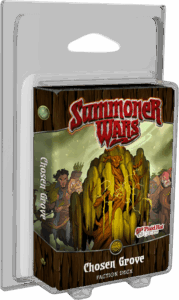
Summoner Wars (Second Edition): Chosen Grove Faction Deck
2024
Harness nature’s power through magical energy and symbiosis.
90
minutes
Medium Heavy
View expansion
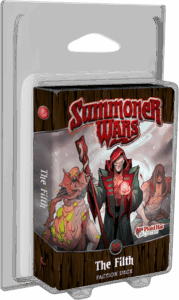
Summoner Wars (Second Edition): The Filth Faction Deck
2024
Unleash demon-fueled mutations and shape monsters for every challenge.
90
minutes
Medium Heavy
View expansion
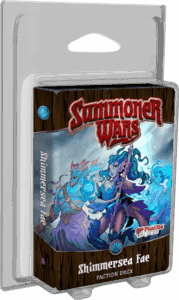
Summoner Wars (Second Edition): Shimmersea Fae Faction Deck
2024
Control the tide of battle with elusive fae tactics.
90
minutes
Medium Heavy
View expansion
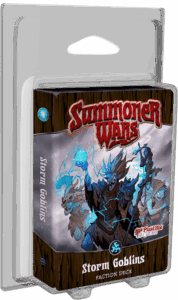
Summoner Wars (Second Edition): Storm Goblins Faction Deck
2024
Unleash lightning, overwhelm foes, and charge into battle with goblin recklessness.
90
minutes
Medium Heavy
View expansion
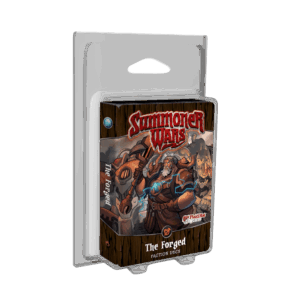
Summoner Wars (Second Edition): The Forged Faction Deck
2023
Construct, upgrade, and unleash a war band of technological marvels.
90
minutes
Medium Heavy
View expansion
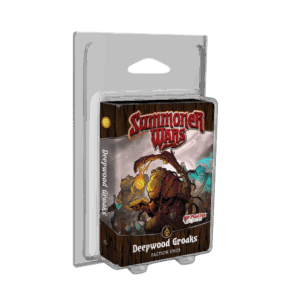
Summoner Wars (Second Edition): Deepwood Groaks Faction Deck
2023
Brew foul potions, empower your warriors, and poison your foes.
90
minutes
Medium Heavy
View expansion