
Tales & Games: The Grasshopper & the Ant
2015
Choose your terrain, place the grasshopper, and compete for path cards in two strategic modes inspired by Aesop’s classic fable.
30
minutes
2 - 4
player(s)
8+
Medium Light

About this board game
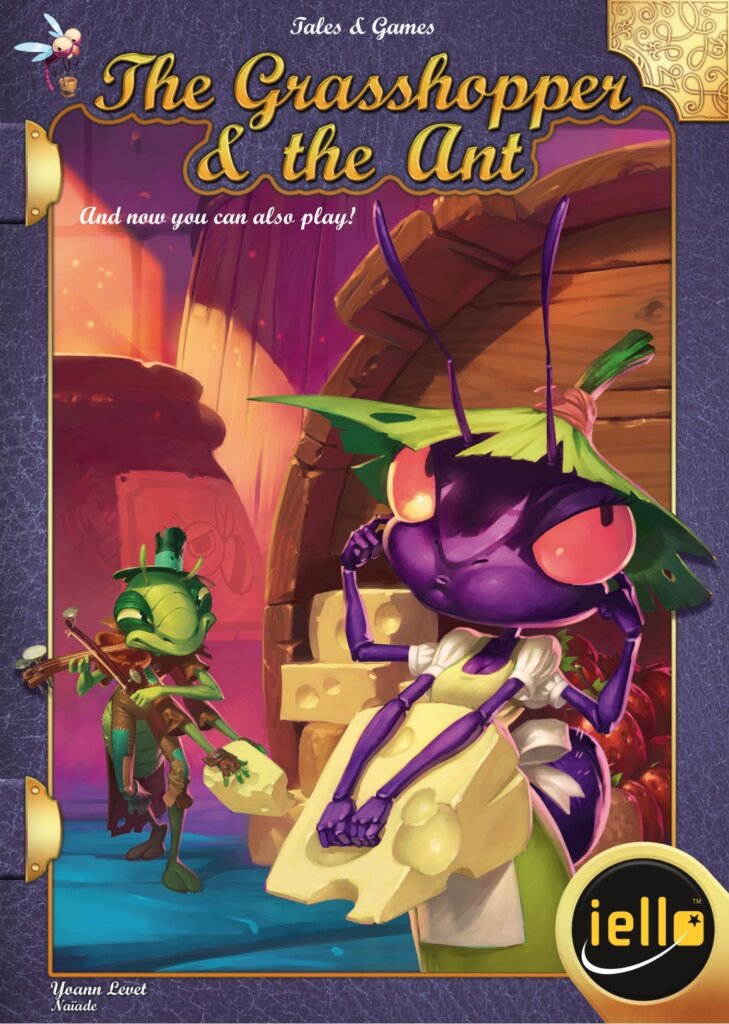
Tales & Games: The Grasshopper & the Ant is a 2–4-player board game with a playing time of about 30 minutes, built around a clever contest for path cards. Players take turns controlling industrious ants or the grasshopper, with two distinct modes offering different ways to score and win.
To begin, 16 of the game’s 48 path cards form a 4×4 grid. Each card shows one of four landscape types. The ant player places six ants on the cards, one per card, creating a chain, then secretly chooses a landscape type occupied by at least one ant. The grasshopper player stands with one ant and tries to identify the chosen terrain.
If the grasshopper selects the same landscape, the grasshopper takes all cards of that type containing an ant. If the choice is wrong, the ant player claims those cards instead. The grid is refilled after each contest, and the ant player continues until she wins path cards; control then passes to the next player clockwise. In winter mode, third and fourth players control red ants and receive a random path card when they match the ant player’s choice.
- Autumn mode: Score path cards immediately, tracking each landscape type separately. Insect cards are saved for an endgame bonus, and the game ends when a player maxes out two scoring tracks.
- Winter mode: Keep collected cards to buy provision cards worth one victory point. Matching insect cards can let you claim another card featuring the same insect, while collecting both provisions of one type earns a bonus point.
The first player to collect four victory points wins in winter mode, while autumn mode goes to the player with the most points. With its book-shaped presentation and shifting tactical choices, Tales & Games: The Grasshopper & the Ant turns a familiar fable into a compact competition of deduction and timing.
/pic7182955.jpg)
