Welcome To…: Collector’s Edition
2023
Explore seven maps, new expansions, and a reworked classic game in a polished dry-erase edition for 1–6 players.
25
minutes
1 - 6
player(s)
10+
Medium

About this board game
Welcome To…: Collector’s Edition is a definitive edition of the game for 1–6 players, with an approximate play time of 25 minutes. It brings together the released expansion sets, a reworked version of the classic game, and several new ways to play.
This fast-paced, interactive edition includes seven different maps, offering a broad selection of neighborhood experiences. The collection also introduces “Roswell,” a brand-new expansion featuring risk-taking mechanics in a story about aliens and flying saucers.
Several additional expansions round out the collection. “American Dream” is a rethemed expansion previously exclusive to France, while “Quack” presents a quirky game about lost ducks in a neighborhood. “Quack” was previously offered as a print-and-play release during the lockdowns.
- All released expansion sets, covering seven maps
- A complete reworking of the classic game
- The new “Roswell” expansion
- The rethemed “American Dream” expansion
- The “Quack” expansion about lost ducks
- 35 new cards for increased replayability
The components are presented in a high-quality dry-erase format, with six dry-erase markers and six eraser pads included. A six-space tray keeps these accessories organized and easy to store.
Welcome To…: Collector’s Edition also includes six alternate versions of the classic sheet. Each has been completely reimagined and illustrated by a world-renowned artist: Christine Alcouffe, Maud Chalmel, Vincent Dutrait, Ryan Goldsberry, Weberson Santiago, or Beth Sobel.
/pic7182955.jpg)
Board Game Rules for
Welcome To…: Collector’s Edition
Welcome to, a Collector’s Saga
Greetings! Welcome to… is a trilogy of games. And we are pleased to present to you here the “Collector’s Edition” of the first game in this trilogy: Welcome to Your Perfect Home. The game and all its expansions have been revised, improved and expanded to provide fans, but also architects discovering Welcome to…, with a perfect gaming experience. Rewritten rules, rebalanced gameplay, and also numerous new features added: new Advanced Plan cards, new Plan cards for each expansion, sheets redesigned by renowned artists, and even a brand new “Roswell” sheet!
When Benoit Turpin created Welcome to Your Perfect Home, no one suspected the success that was to come… Five years after its release, hundreds of thousands of you have played Welcome! You have made this game one of the biggest successes of its kind: the “roll & write” genre (without the roll), and now a “classic” of modern board gaming! Thank you!
The Welcome Team
★ 2018 – The year it all began
- Welcome to Your Perfect Home: The 1st edition of the game was published in February.
- Classic Sheet Recharge Pack and Goodies Sheet: In 2023, a completely reworked Goodies sheet becomes the Blueprint sheet, added to the new edition of the game.
★ 2019 – The expansions
The expansion packs were sometimes released separately depending on the country.
- Easter Egg Hunt, Doomsday, and the AAA Solo Mode expansions: Alexis Allard joined the Welcome team with his new solo mode, which becomes a permanent part of the new edition of the game.
- Ice Cream Truck and Zombie Outbreak expansion
- Halloween and Christmas Lights expansion
★ 2020 – New game and other expansions
- Welcome to New Las Vegas: This standalone game is the 2nd installment of the trilogy. This more complex Welcome is for the most expert fans.
- Quack expansion: This expansion was only available as a downloadable file.
- 9¾ Cards expansion: Discover their story on page 27!
- La Petite Mort expansion: Only available in France, this expansion was based on the La Petite Mort universe, a French comic book by Davy Mourier. In 2023, with a new theme, it becomes the American Dream sheet in the Collector’s Edition.
★ 2021 – The year of the Moon
- Welcome to the Moon: This standalone game is the 3rd installment of the trilogy. With 8 different sheets and an evolving, narrative campaign, Welcome became epic!
★ 2022 – Are we resting?
No. We’re preparing for 2023!
★ 2023 – Collector’s Edition
- Roswell Expansion: A completely new and exclusive expansion created specifically for the Collector’s Edition!
- Welcome Collector’s Edition: You are here! The 1st installment of the trilogy in a comprehensive edition with all its revised expansions, and several exclusives!
Components Overview
Each card has on its bottom left corner an identification number (from 111 to 165) which has no use during the game.
Components specific to the expansions
- 54 dry-erase Expansion sheets (9 expansions for 6 architects)
- 3 9¾ cards
- 40 Expansion Plan C cards (5 per expansion)
- 9 American Dream Plan A B C cards
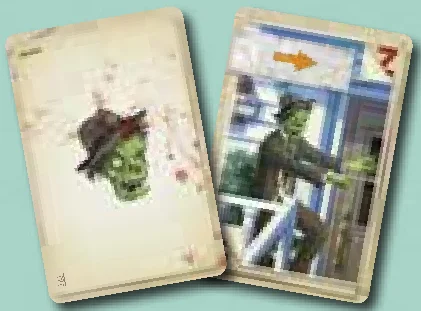
- 3 Zombie cards
- 6 unique dry-erase Re-imagined Classic sheets
- 6 postcards by six artists
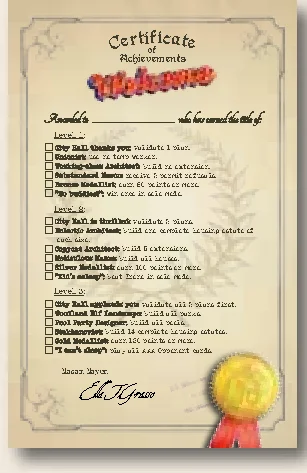
- 1 Certificate of achievements to be checked after each game
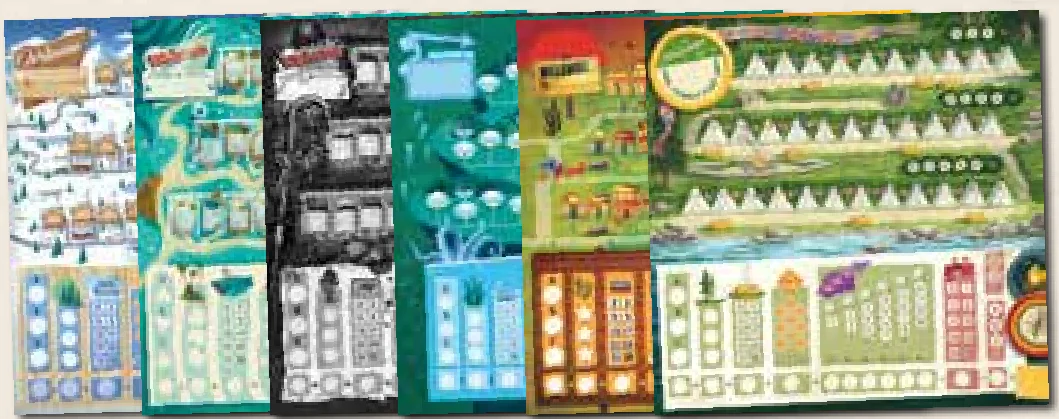

Re-imagined Classic Sheets
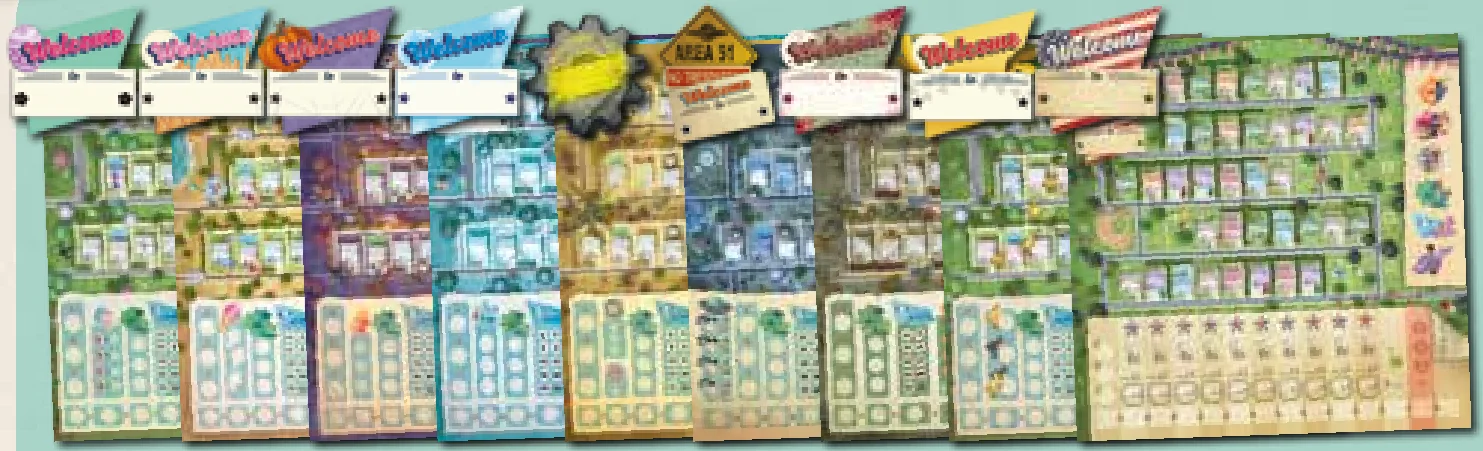
We gave carte blanche to six internationally renowned artists to reinterpret the now iconic Classic sheet illustrated by Anne Heidsieck. Ski or seaside vacations, bayou and creatures inspired by old black & white films, underwater city or western town, summer camp… Each sheet is unique and offers a different atmosphere that renews the pleasure of playing Welcome in its classic version.
There are no rule changes. Thus, in the same game, each architect can play with a different re-imagined sheet according to their mood.
-
Christine Alcouffe is a French illustrator. Curious and versatile, she is also a game designer. She illustrates children’s books as well as numerous games, such as Paper Tales, Lucky Numbers, Yòkai…
-
Maud Chalmel is a French illustrator. Being dreamy by nature, drawing has always been her sanctuary. She is a game illustrator and also a comic book artist. You can see her work in games like Shamans, Splito, Siggil…
-
Vincent Dutrait is French and lives in South Korea. He works in a traditional way, using pencils, brushes and paints on paper, with a modern and contemporary approach. He has illustrated games like Heat, Jekyll vs. Hyde, Oltréé…
-
Ryan Goldsberry lives in California and his five children don’t let him sleep much! A child of the 80s, he loves movies and rock and roll. He has notably illustrated games like Burgle Bros., Paperback, Fugitive…
-
Weberson Santiago is a Brazilian illustrator and teacher. He creates illustrations for the press, books, and board games. He has notably illustrated games like The Bloody Inn, Fuji, The Great Split…
-
Beth Sobel lives in the United States with her husband and their two cats. She enjoys playing cards and taking walks in nature. You can see her illustration work in games like Wingspan, Cascadia, Calico…

Before Starting with Expansions
Each expansion has additional rules. Apply all the standard rules of the Classic sheet (See the Rulebook) with the changes and additional rules found in the following pages.
All expansions can be played with the Advanced Mode, Solo Mode, and Expert Mode, except for the American Dream expansion, which cannot be played with the Advanced Mode.
★ Expansion Plan Cards
Each Expansion sheet has its own 5 Expansion Plan cards, all of which are type C.
During setup, you must select:
- 1 Plan A card (standard or advanced),
- 1 Plan B card (standard or advanced),
- 1 Expansion-specific Plan C card for the sheet you are playing.
Note that the American Dream sheet has 9 specific Plan A, B, and C cards.
Quick Guide to the Expansions
- 9¾ Cards (page 27): We recommend incorporating these cards in your early games. They are simple and make the game a bit easier. However, if you prefer to play Welcome in its purest version, you can leave them aside.
- American Dream (page 24): This sheet is the one that changes the game experience the most while making it much simpler. So, if you already know Welcome and want to play with new players, we recommend using this sheet as it serves as a good introduction to the game.
The 9 Expansions Ranked by Difficulty
- Easy Sheets ★
- Easter Egg Hunt (page 6)
- Christmas Lights (page 12)
- The American Dream (page 24)
- Moderately Easy Sheets ★★
- Doomsday (page 14)
- Roswell (page 16)
- Quack (page 22)
- Challenging Sheets ★★★
- Ice Cream Truck (page 8)
- Halloween (page 10)
- Zombie Outbreak (page 18)
The 9 Expansions Sorted by Theme
- Four Seasons Sheets
- Easter Egg Hunt ★ (page 6)
- Ice Cream Truck ★★★ (page 8)
- Halloween ★★★ (page 10)
- Christmas Lights ★ (page 12)
- Catastrophe Sheets
- Doomsday ★★ (page 14)
- Roswell ★★ (page 16)
- Zombie Outbreak ★★★ (page 18)
- Feel Good Sheets
- Quack ★★ (page 22)
- The American Dream ★ (page 24)
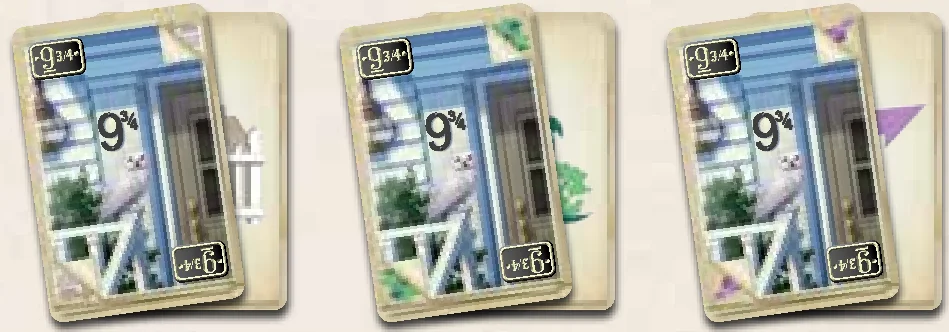
9¾ Cards
These cards have a special story! In People magazine, on February 17, 2020, actor Daniel Radcliffe, famous for his role as Harry Potter, made the following revelation:
“Last game I played: This addictive board game called Welcome to Your Perfect Home, based around the idea of town planning. I’m not really competitive. I don’t win a lot, so I can’t afford to be.”
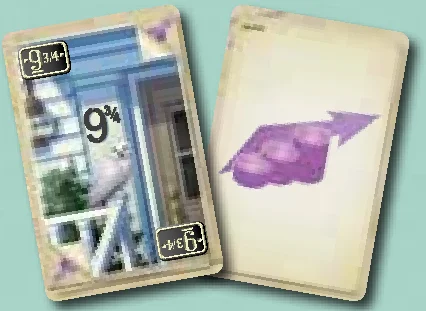
We were deeply moved and happy to discover in this interview that Daniel Radcliffe enjoyed playing Welcome to… In return, we decided to pay tribute to him by creating cards based on the Harry Potter theme. And thanks to the power of social media, we were able to send him a special edition of the game that included, among other things, these 3 cards. They were also shared as a free download. Here they are now included in this Collector’s Edition.
Gameplay Rules
Play with these 3 9¾ Construction cards simply by adding them to the other Construction cards.
During the game, you can place a 9¾ between a 9 and a 10.
-
 Temp worker Action: With this action, you can modify a 9¾ and get 7¾, 8¾, 10¾, or 11¾.
 -
 Extension Action: With this action, you can copy a 9¾ number and obtain 9¾B.
 -
Easter Egg Hunt: Just like with a number 9, it is possible to collect 1 egg with a 9¾ number.
-
Christmas Lights: 9 – 9¾ – 10 are consecutive and form a string of lights. The same goes for 8 – 9¾ – 10.
-
Doomsday: When you write 9¾ in a house with a shelter, write 9 in the shelter because ¾ of a person does not exist!
Expert Mode
This game mode increases interaction between architects and can be played with all the sheets as well as with the Advanced Mode. However, it cannot be played with the AAA Solo Mode since it already uses the same principle.
★ Setup
Form a single deck of Construction cards with the Action side up. In clockwise order, starting with the game owner, each architect draws 1 card and keeps it in hand without showing the number.
★ Gameplay
- At the beginning of each round, in clockwise order, starting with the game owner, each architect draws 2 additional Construction cards. When the deck is exhausted, shuffle the discard pile to form a new deck.
- Choose 2 Construction cards from the 3 you have in hand.
- Use one card for its number by numbering a house.
- Use the other card for its action (performing the action is not mandatory). To do this, you can check the corners of the card that indicate the action present on the other side.
Then, place these two cards in a discard pile next to the deck.
Next, give the remaining third Construction card, with the Number side hidden, to the opponent on your left. And take the card given by the opponent on your right. - You can validate a Plan card according to the usual rules.
★ Expert Mode for Zombie Outbreak
Set up: Give 1 Construction card to each architect. Then, form a deck with 10 Construction cards per architect and 1 Zombie card. With 6 architects, you must use all the Construction cards. Place the remaining Construction cards in the discard pile and set aside the remaining Zombie cards face down.
Example: with 4 architects, form a deck with 40 Construction cards and 1 Zombie card.
During the game: In each round, in clockwise order, each architect only draws 1 additional Construction card. Use one card for its number and the other for its action. Then discard one of the 2 cards and give the other to the opponent on your left.
When you draw a Zombie card, the architects immediately apply its effect. Then permanently remove it from the game and draw a new Construction card in order to have 2 cards in hand.
When the deck is exhausted, shuffle the discard pile and reconstruct a deck with 10 cards per architect and a new Zombie card. If the deck is exhausted for the third time, the game ends.
Egg Hunt
Spring has arrived, and eggs of all colors have been hidden in the neighborhood, much to the delight of children and adults who will embark on the search. The egg hunt is open. Try to collect as many eggs as possible!
★ Gameplay
Number a house: While numbering houses, you can also collect eggs, which will earn you additional points at the end of the game. To collect an egg from a house, you must circle it using the loops found in numbers like 0, 6, 8, 9, 10, and 16.
- With numbers 6, 9, and 16, you can collect 1 egg.
- With numbers 0, 8, and 10, you can collect 1 or 2 eggs.
Note that you can write a 6, a 9 or a 16 on a house with 2 eggs, but then you will only collect one egg out of the two.
Temp worker Action: This action can be very useful for modifying and obtaining a number that allows you to collect eggs. Additionally, using this action can get you a 0 or a 16 (See Rulebook, page 9).
Extension Action: This action also allows you to collect eggs by using the potential loops of the copied number. However, note that “B” does not allow you to circle eggs.

★ End of Game
You earn points based on the threshold of collected eggs you have reached or crossed. If you have collected 6 / 10 / 14 or 18 eggs, then you score 5 / 10 / 20 or 35 points.

★ Plan C Cards
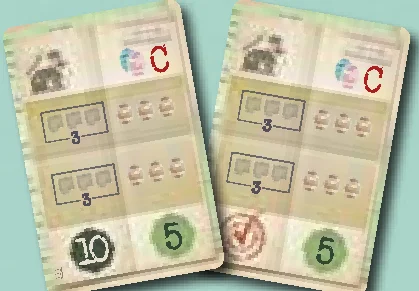
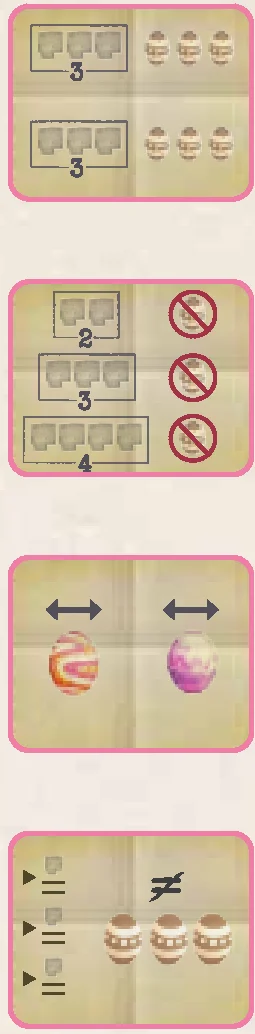
- Plan C (Card 111 – 10/5 pts): Build 2 complete housing estates of size 3, each with at least 3 collected eggs.
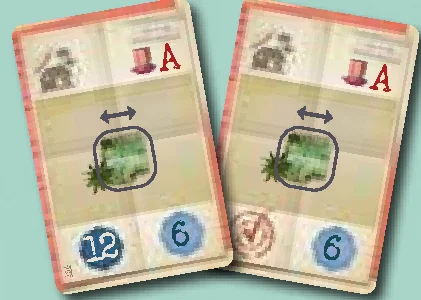
- Plan C (Card 112 – 12/6 pts): Build 1 complete housing estate of size 2, 1 complete housing estate of size 3, and 1 complete housing estate of size 4, each without any collected eggs.
- Plan C (Card 113 – 7/4 pts): Collect all the orange eggs and all the pink eggs.
- Plan C (Card 114 – 9/5 pts): In each street: collect 3 eggs of a different color.
- Plan C (Card 115 – 8/4 pts): In the 3rd street (bottom): collect all the eggs.
★ AAA Solo Mode
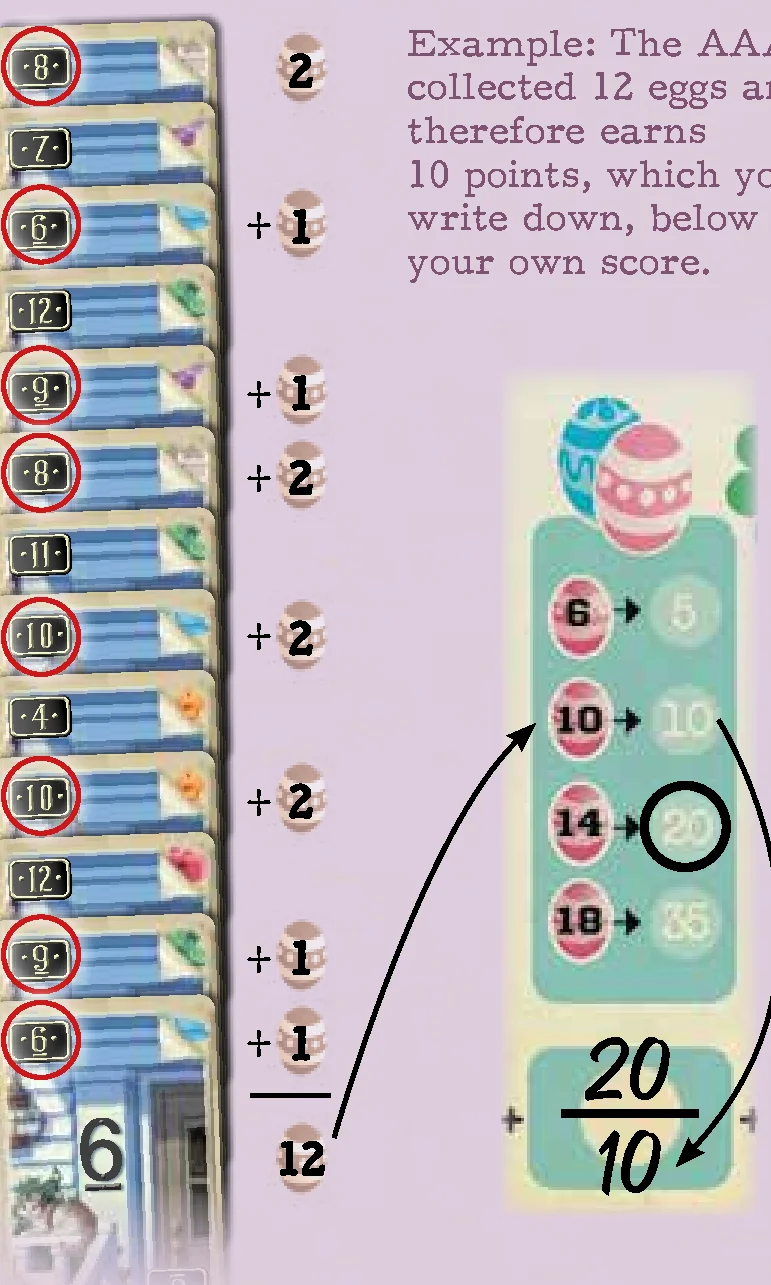
Add up the score for the AAA (level 1 or higher): At the end of the game, check the number of eggs collected by the AAA using the cards 6, 8, 9, and 10 that you have given to them.
- Each 6 and 9 card earns them 1 egg.
- Each 8 and 10 card earns them 2 eggs.
Just like for yourself, the AAA earns points corresponding to the number of collected eggs.
Ice Cream Truck
It’s summertime and ice cream trucks are making their rounds on the streets to sell the best ice cream. Try to sell as many ice cream cones as possible on each street!
★ Gameplay
There is an ice cream truck  making its delivery rounds at the end of each street. At the other end, there is an End of Delivery Bonus
  . In front of certain houses, there are ice cream cones with 1, 2, or 3 scoops of ice cream. These cones represent ice cream orders.
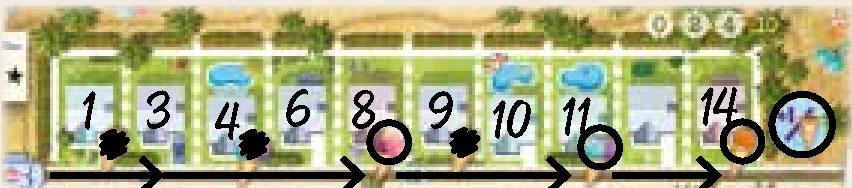
Number a house: Each time you number a house, the ice cream truck on the street immediately moves up to that house. To represent the truck’s path, draw an arrow from the truck to the house you just numbered. If there is an ice cream cone in front of that house, circle it. Then cross out all other ice cream cones that the truck has passed without stopping.
Ice cream trucks do not go back. When you number a house that a truck has already passed, nothing happens.
Note that the trucks on the 1st and 3rd streets move from left to right →. However, the truck on the 2nd street moves from right to left ←.
Extension Action: Since this action allows you to number an additional house, it can immediately make a truck move and allow you to circle an extra ice cream cone.
End of Delivery Bonus: When you circle or cross out the last ice cream cone on a street, the truck’s delivery round on that street is complete. At the end of the round, circle the End of Delivery Bonus in that street.
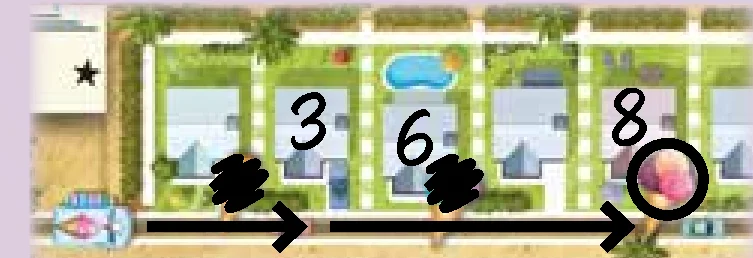
Architects who complete the same street’s delivery round in the same round can also receive the bonus. The other architects must cross out the bonus on their sheet and cannot obtain it afterwards.
★ End of Game
Add up your score for the ice creams delivered on each street:
- Each circled ice cream cone earns 1 point per scoop (a cone with 3 scoops is worth 3 points).
- If you circled the End of Delivery Bonus, each circled ice cream cone on that street earns you an additional 1 point.
★ Plan C Cards
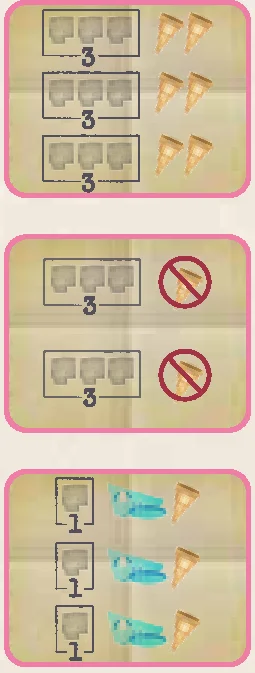
- Plan C (Card 116 – 9/5 pts): Build 3 complete housing estates of size 3, each with at least 2 circled ice cream cones.
- Plan C (Card 117 – 10/5 pts): Build 2 complete housing estates of size 3, each without any circled ice cream cones.
- Plan C (Card 118 – 8/4 pts): Build 3 complete housing estates of size 1, each with 1 swimming pool built and 1 circled ice cream cone.
- Plan C (Card 119 – 7/3 pts): Circle at least 5 cones with 3 scoops of ice cream.
- Plan C (Card 120 – 8/3 pts): In one street: circle all the ice cream cones.
★ AAA Solo Mode
When you draw an AAA Validation card, regardless of whether the AAA validates a plan or not, you must immediately cross out 1 End of Delivery Bonus of your choice that you have not yet circled.
Add up the score for the AAA (level 1 or higher): At the end of the game, for the ice creams, the AAA earns 1 point for each card you have given to it, except for Fence cards, which do not count for ice creams. Additionally, the AAA earns an additional 10 points for each crossed out End of Delivery Bonus.
Halloween
With autumn comes Halloween, and its scary procession of young and old going from house to house, asking for candy with the famous phrase, “Trick or Treat!” What will you choose?
★ Gameplay
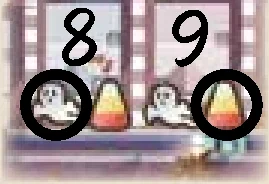
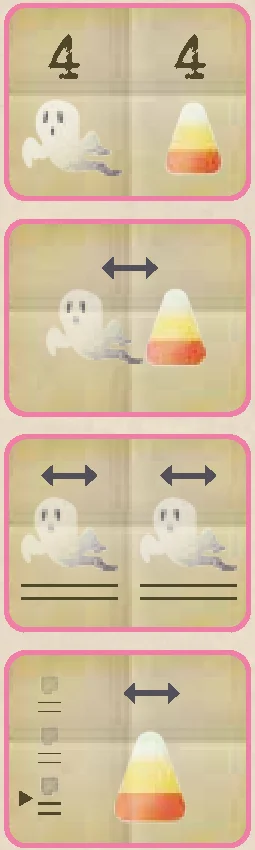
Number a house: Each time you number a house with a ghost and a candy, circle one of the two. The circled ghosts and candies allow you to claim bonuses at different levels.
Extension Action: When you number a house with a ghost and a candy using this action, you must also circle one of the two.
Bonus Levels: At the top of your sheet, there are 3 Ghost bonus levels and 3 Candy bonus levels. At the end of a round, you can claim 1 or 2 levels of bonuses. When you claim a level, circle it.
- Multiple architects can claim the same level in the same round.
- The other architects must cross out that level and can no longer claim it.
- If you have exactly 4, 6, or 9 circled ghosts, you can claim the corresponding level or a lower level.
- The same applies to candies.
- However, if you don’t have the exact required number of ghosts or candies, you cannot claim any level, even a lower one. Additionally, you can only claim one Ghost level and one Candy level per game.
Ghost bonuses: The Ghost levels provide bonus actions of your choice to use immediately.


Ghost Bonuses details:
- Pool bonus: Circle 1 pool anywhere, whether the house is numbered or not, and cross out 1 box in the pool section.
- Park bonus: Cross out 1 Park box on any street.
- Extension bonus: Perform 1 Extension action without crossing out a box in the extension section. This bonus can allow you to claim a Candy level in the same round.
Levels:
- 4-ghost level: 1 Pool bonus OR 1 Park bonus.
- 6-ghost level: 2 Pool bonuses OR 1 Extension bonus.
- 9-ghost level: 3 Park bonuses OR 2 Extension bonuses.
Candy bonuses:
Each Candy level provides additional points at the end of the game.
★ End of Game
If you have claimed a Candy level, add the indicated points to your score.
★ Plan C Cards
- Plan C (Card 121 – 7/3 pts): Circle at least 7 candies.
- Plan C (Card 122 – 9/4 pts): Circle at least 4 ghosts and 4 candies.
- Plan C (Card 123 – 10/4 pts): Number all 13 houses with a ghost and a candy.
- Plan C (Card 124 – 9/4 pts): In 2 different streets: circle all the ghosts.
- Plan C (Card 125 – 7/3 pts): In the 3rd street (bottom): circle all the candies.
★ AAA Solo Mode
When you draw an AAA Validation card, regardless of whether the AAA validates a plan or not, you must immediately cross out the corresponding 2 levels if you haven’t circled them.
- Validation A card: Cross out the 1st Ghost level AND the 1st Candy level.
- Validation B card: Cross out the 2nd Ghost level AND the 2nd Candy level.
- Validation C card: Cross out the 3rd Ghost level AND the 3rd Candy level.
Add up the score for the AAA (level 1 or higher): At the end of the game, for the candies, the AAA earns 4 points for each crossed out Ghost and Candy level.
Christmas Lights
With the holiday season, excitement can be felt throughout the city. After a difficult year, everyone is seeking comfort. Warm up the heart and soul of the city by decorating the streets with long strings of Christmas lights!
★ Gameplay
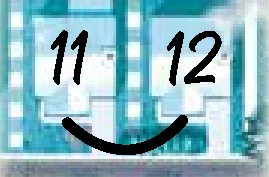
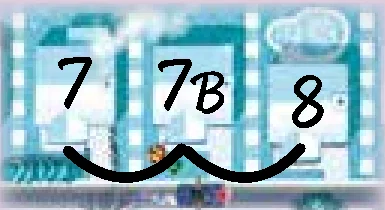
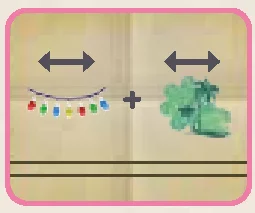
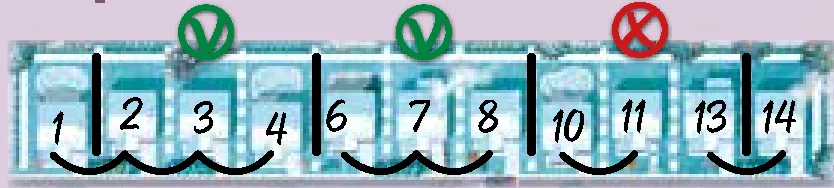
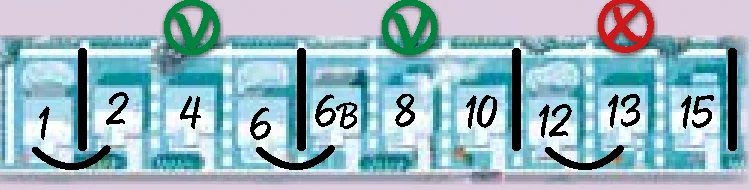
Number a house: Decorate the houses with strings of lights by writing consecutive numbers. Numbers are consecutive if they form a sequence of neighboring numbers without any missing numbers. Each time you number a house, if the numbers written next to each other are consecutive, you must immediately connect them by drawing a string of lights.
Extension Action: The number of an extension is considered consecutive to the copied neighboring number. Therefore, you must immediately connect them with a string of lights.
★ End of Game
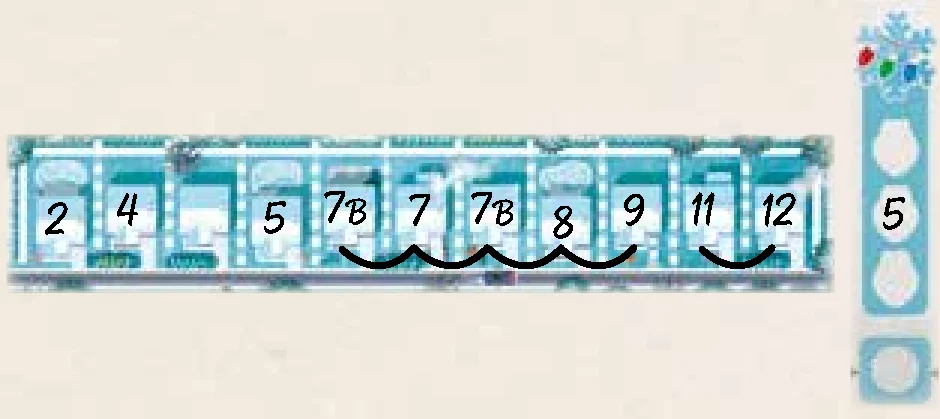
In each street, the longest string of lights earns you 1 point per connected house. You can have multiple strings of lights in the same street, but only the longest string in each street earns you points.
★ Plan C Cards
- Plan C (Card 126 – 9/5 pts): Build 1 complete housing estate of size 4 and 1 complete housing estate of size 5, each with all its houses connected by a single string of lights.
- Plan C (Card 127 – 10/5 pts): Build 2 complete housing estates of size 3. In each of these housing estates, the central house must not be connected by any strings of lights.
- Plan C (Card 128 – 10/5 pts): Build 3 complete housing estates of size 3, each with all its houses connected by a single string of lights.
- Plan C (Card 129 – 7/3 pts): In the 3rd street (bottom): connect all the houses with a single string of lights.
- Plan C (Card 130 – 9/4 pts): In the same street: connect all the houses with a single string of lights and cross out all the Park boxes.
★ AAA Solo Mode
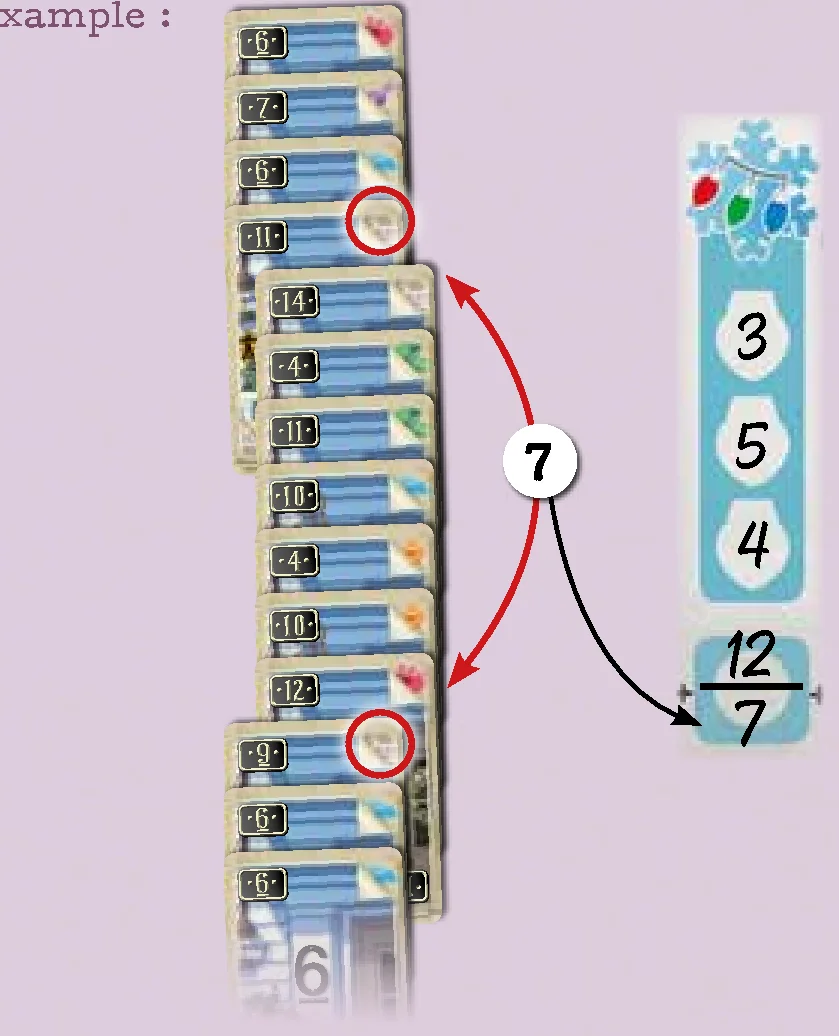
Add up the score for the AAA (level 1 or higher): At the end of the game, in the stack of cards you gave to the AAA, count the number of cards placed between the first Fence card and the last Fence card. For the strings of lights, the AAA earns 1 point for each of these cards.
Doomsday
It is one minute to midnight on the Doomsday Clock. Who pressed the button again? Well, it doesn’t matter anymore. It’s the least of our concerns. Have you prepared the fallout shelters we requested?
★ Gameplay
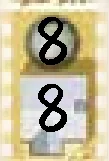
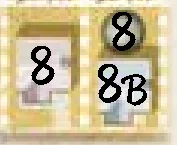
Number a house: Some houses have fallout shelters that you need to finish constructing. Depending on the capacity of these shelters (the number of people they can accommodate), you will earn additional points at the end of the game. When you number a house with a shelter, also write that number inside the shelter. This number will define the maximum capacity of that shelter.
Extension Action: When you number a house with a shelter using this action, you must also write the number inside the shelter.
★ End of Game
Shelter capacity: For each street, add up the capacities of the shelters, write the total for the street in the box on its right, and then compare it with the other architects. For each street where your capacity is the highest, you earn the corresponding bonus points. In case of a tie, each architect earns the bonus points.
- The 1st street earns 8 points.
- The 2nd street earns 10 points.
- The 3rd street earns 11 points.

Optimism Bonus: You earn additional points if you are more optimistic than others about the eventuality of avoiding a nuclear war. Add up the capacities of your 3 streets. Write your total capacity in the flower at the bottom of your sheet and compare it with the other architects. If your total capacity is the lowest, you earn 9 points. In case of a tie, each architect earns 9 points.

★ Plan C Cards
- Plan C (Card 131 – 8/3 pts): Build 4 complete housing estates of size 1, each with 1 shelter.
- Plan C (Card 132 – 9/4 pts): Build 3 complete housing estates of size 3, each with exactly 1 shelter.
- Plan C (Card 133 – 9/4 pts): The total capacity of your fallout shelters is 50 or more.
- Plan C (Card 134 – 6/2 pts): Build all the fallout shelters.
- Plan C (Card 135 – 8/3 pts): In 2 different streets: the total capacity of your fallout shelters is 30 or more.
★ AAA Solo Mode
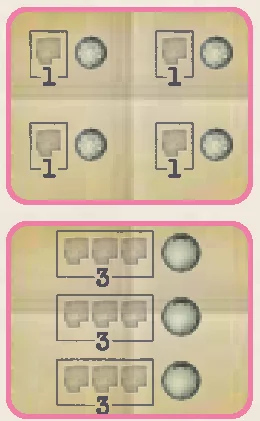
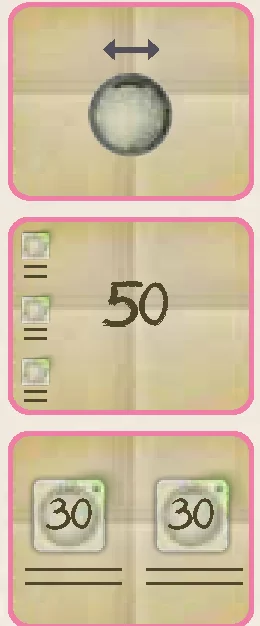
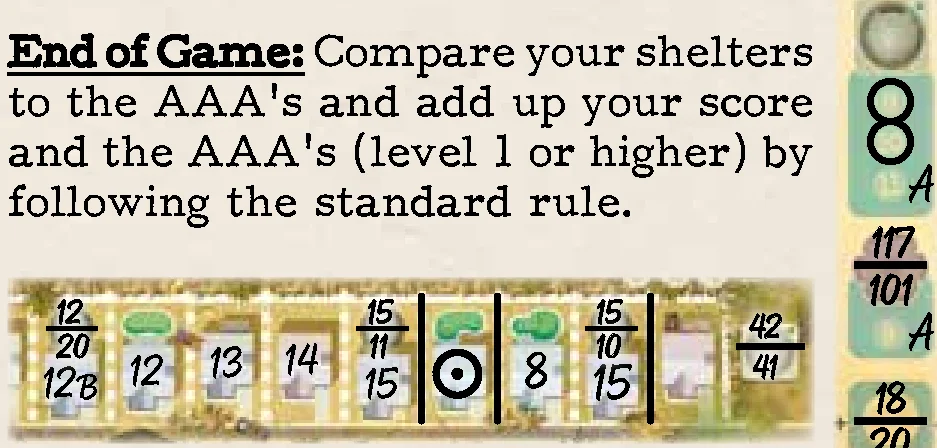
Set up: With a horizontal line, split in half each shelter, the shelter box at the end of each street, and the “flower” box. Write the capacities of your shelters above the line and those of the AAA below. At the start, the AAA has already built the first shelter in each street with the following values:
- 1st street: 20
- 2nd street: 30
- 3rd street: 30
During the game: When you draw an AAA Validation card, regardless of whether the AAA validates a plan or not, the AAA immediately builds a shelter in the corresponding street.
- Validation A card: 1st street.
- Validation B card: 2nd street.
- Validation C card: 3rd street.
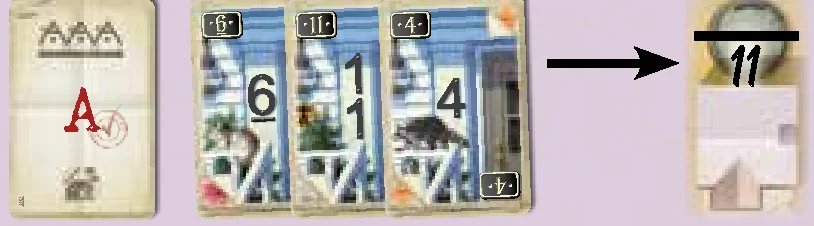
To build the AAA shelter, check the last 3 Construction cards you gave to the AAA and write the value of the highest card inside the shelter.
Advanced Mode: Roundabouts can help you build shelters with higher numbers. So, if you build a roundabout, the AAA immediately reacts by building a shelter. In the same street, write “10” for the AAA inside an available shelter.
End of Game: Compare your shelters to the AAA’s and add up your score and the AAA’s (level 1 or higher) by following the standard rule.
Roswell
“Zoorg people! We have arrived on Earth, ready to infiltrate these humans! But be careful not to be distracted by their strange customs, like drinking cold coffee or even watching intentionally scary movies…”
“Oh, sorry! I forgot that you have already taken human form. So, I have to speak to you in reverse. Anyway… The Zoorg people will prevail!”
You are a Zoorg, an infiltrated alien who has taken on human form. Your mission is to build houses while infiltrating Zoorgs into housing estates.
★ Set Up
After the regular set up, choose one infiltration objective from the 4 objectives at the bottom left of your sheet and secretly circle it. Once each architect has made their choice, reveal your objective.
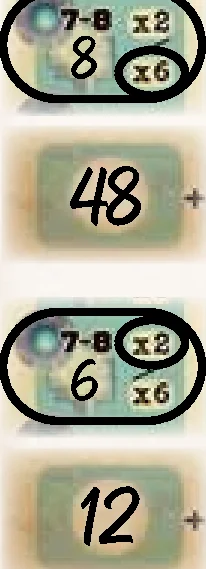
Each objective requires infiltrating a certain number of housing estates. For example, the first objective requires infiltrating 3 or 4 estates, and the last objective requires infiltrating 9 estates or more. At the end of the game, you will earn additional points based on your objective.
★ Gameplay
Number the houses as humans would normally do.
Using the action: If you have numbered a house with a flying saucer positioned above it, you have 2 options:
- Use the action associated with the chosen number, following human customs (including the option to do nothing, humans are strange).
OR - Infiltrate a Zoorg by circling the flying saucer (and therefore do not perform the action on the card).
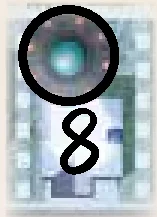
Infiltrated housing estates: When you complete a housing estate with 1 infiltrated Zoorg, color the circled flying saucer cockpit. Remember to respect human customs: an infiltrated estate must be complete with all its houses numbered and have a maximum size of 6 houses. Remember that we only count infiltrated estates. A housing estate can have more than one infiltrated Zoorg, but it is not necessary.
★ End of Game
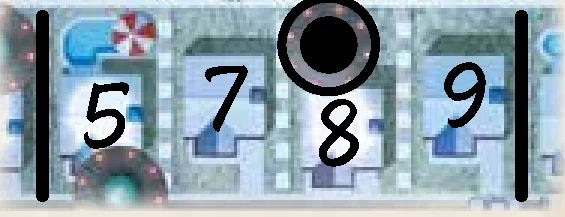
In the chosen objective box, write the number of your completed and infiltrated housing estates.
- Successful infiltration objective: If you have the requested number of infiltrated estates, you earn the highest score indicated for each infiltrated estate (4, 5, 6, or 7 points).
- Failed infiltration objective: If you have too few or too many infiltrated estates, you only earn 2 points per infiltrated housing estate.
★ Plan C Cards
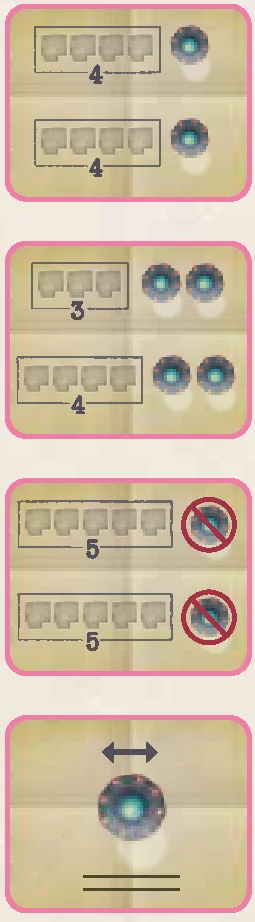
- Plan C (Card 136 – 7/3 pts): Build 2 complete housing estates of size 4, each with at least 1 infiltrated Zoorg.
- Plan C (Card 137 – 13/7 pts): Build 1 complete housing estate of size 3 and 1 complete housing estate of size 4, each with at least 2 infiltrated Zoorgs.
- Plan C (Card 138 – 11/6 pts): Build 2 complete housing estates of size 5, each without any infiltrated Zoorgs.
- Plan C (Card 139 – 6/3 pts): In 1 street: all Zoorgs are infiltrated (there can be multiple in the same estate).
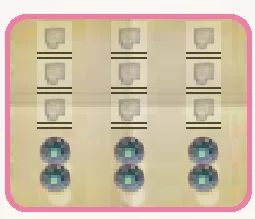
- Plan C (Card 140 – 9/4 pts): In 3 vertical columns of houses: at least 2 Zoorgs are infiltrated.
★ AAA Solo Mode
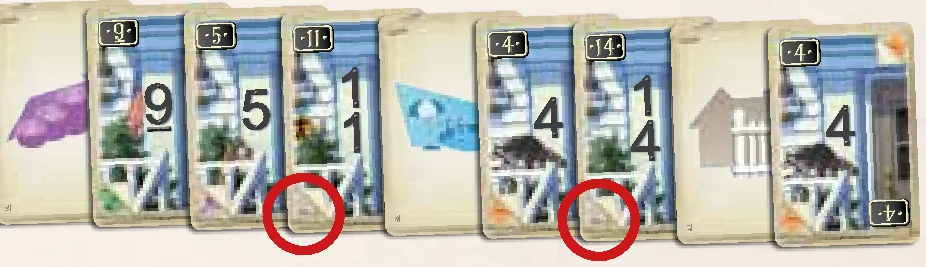
With a level 1 or higher AAA opponent: A Zoorg has infiltrated the AAA. The first card you give to the AAA must be placed upside down on its stack, with the Number side hidden. And subsequently, each card given immediately after a Fence card must also be placed upside down.
An upside-down card no longer follows its regular action but represents a house infiltrated by a Zoorg. For example, an upside-down Fence card does not represent a fence but an infiltrated house.
End of Game:
- For the infiltration objectives, the AAA earns 5 points for each upside-down card.
- For the housing estate points, each upside-down card represents 1 house. Do not apply any of the actions of these upside-down cards.
- Do not take the upside-down cards into account for the remaining points (parks, pools, temp workers, fences).
Zombie Outbreak
“911, hello, what’s your emergency?”
“Hello! Hello! They’re here! I can hear them scratching at the door! CRACK! Quick! Send the army! PAW PAW! Oh my god! There are too many of them! PAW! PAW! PAW! AAAAARGH NOOO! SCRONTCH SCRONTCH! Tuuut tuuut tuuut…”
★ Additional Components
- 3 Zombie cards
★ Overview
On your sheet, there are 6 zombie hordes threatening the city. There is one zombie horde at each end of the 3 streets. When a Zombie card appears, the zombies will move.
You can slow down the zombies by using ammunition that you can obtain through the Improvement action.
Note that most houses are already barricaded, but some are not. To prevent the zombies from invading them, you can barricade them using the Fence action. Will you be able to survive?
★ Set Up
A zombie outbreak is a challenging situation, so you must play with only 2 stacks of Construction cards instead of 3. Each round, you will have a choice between 2 combinations of cards instead of 3.
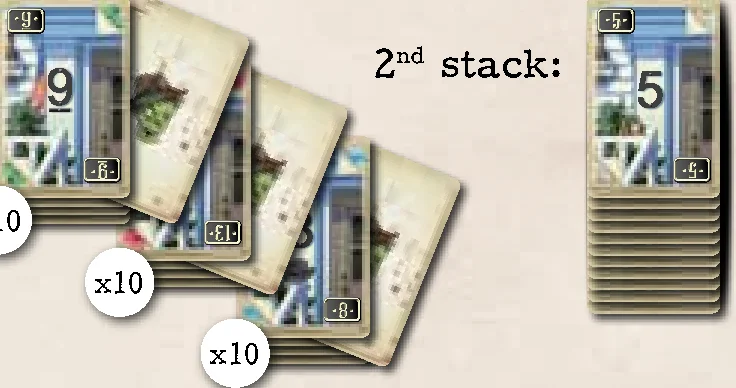
- Shuffle all the Construction cards and form 3 stacks of 10 cards. Randomly shuffle 1 Zombie card into each of these 3 stacks. Place these 3 stacks on top of each other to create the first card stack, Number side up.
- With the remaining cards, form the second card stack, Number side up.
★ Gameplay
Flip 2 Construction cards: After flipping the first card from each stack, if a Zombie card appears, you must immediately apply its effect. Then, remove it from the game and continue playing normally.
When you flip the last card from the first stack, do not shuffle the cards because the game is over (see End of Game, page 20).
Zombie cards: They indicate which zombie hordes move:
- The 3 hordes on the left move to the right.
- The 3 hordes on the right move to the left.
- All 6 hordes move.
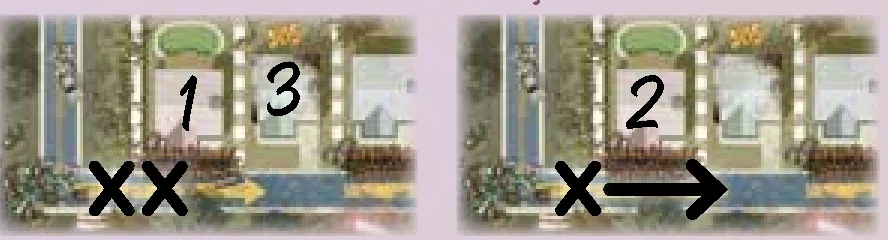
Move the zombie hordes starting with the 1st street, then the 2nd, and finally the 3rd. To represent the movement of a zombie horde, draw a line over the yellow arrow on the road.

Ammunition: You can choose to slow down the zombies with your ammunition. Your stock of ammunition is represented at the top of your sheet. You start the game with one ammunition already circled and available.
- Cross out 1 circled ammunition and choose 1 zombie horde.
- Instead of drawing the movement arrow for that horde, draw a cross at the beginning of the yellow arrow.
- You can use multiple ammunition to slow down multiple zombie hordes (1 ammunition per horde).
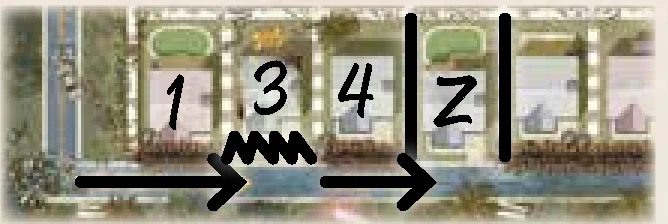
Barricades: After drawing the line over the arrow for a horde, check if the house they arrive in is barricaded or not.
- If it is barricaded, nothing happens.
- If it is not barricaded, the zombies invade the house. If the house is numbered, erase the number. Write a Z on the house and draw a fence on each side to contain the invasion. A house with a Z is permanently sealed off.
MESSAGE FROM THE ANGRY CITIZEN COMMUNITY
We denounce the cynicism of architects and the complicity of the City Council! Architects can rig the system by sacrificing houses to get free fences, and thus creating more profitable estates. Taking advantage of a distressed community is UNACCEPTABLE!
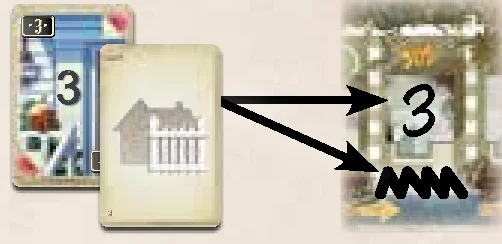
 Fence/Barricade Action: If you write the number associated with this action in a house without a barricade, you can choose to build a barricade instead of a fence. To do this, draw a barricade in front of the house you just numbered.
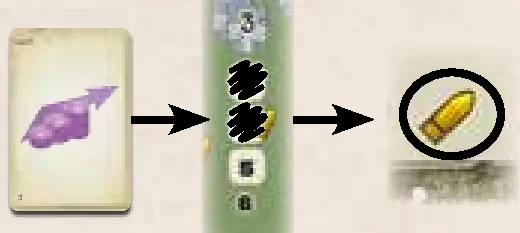
 Improvement-Ammunition Action: When you cross out an Improvement box with ammunition, circle an ammunition in your stock at the top of your sheet.
Clarifications:
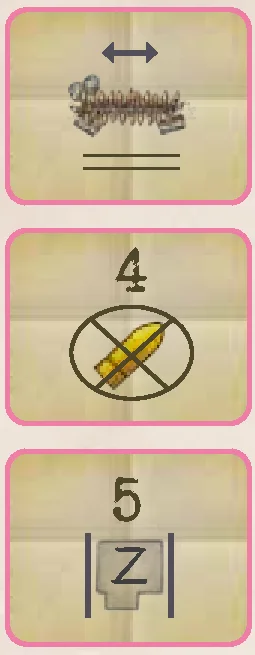
- A housing estate with a zombie-infested house cannot be used to validate a plan and does not earn any points at the end of the game.
- When zombies invade a house, it may divide an existing housing estate. If this housing estate has already been used to validate a plan, the housing estates created by this division cannot be used to validate another plan. The already validated plan remains validated, and you do not lose the corresponding points.
- If zombies invade a house with an already built swimming pool, you do not lose the points for that swimming pool.
- If zombies invade a house numbered with the Extension action (with a B), you do not regain the lost points for building that extension.
- A Z is not a number and does not stop the numbering.
Example: You have a numbered house with an adjacent extension: 5B-5. But this house is then invaded by zombies: 5B-Z. Afterwards, it is possible to continue to number like this: 5B-Z-5, or like this, using the Extension action: 5B-Z-5B.
Advanced Mode and Roundabout: If a horde of zombies reaches a roundabout, nothing happens.
★ End of Game
In addition to the usual 3 end-of-game conditions, when the last card of the first Construction stack is flipped, the game ends immediately. You have held out until the end of the crisis, and help has finally arrived.
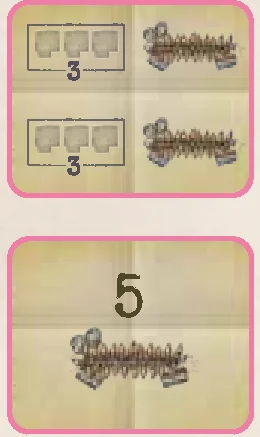
★ Plan C Cards
- Plan C (Card 144 – 8/4 pts): Build 2 complete housing estates of size 3, each with at least 1 barricade built.
- Plan C (Card 145 – 11/5 pts): Build 5 barricades.
- Plan C (Card 146 – 8/4 pts): In 1 street: build all the barricades.
- Plan C (Card 147 – 7/3 pts): Use 4 ammunitions to slow down the zombies.
- Plan C (Card 148 – 6/2 pts): You have at least 5 houses invaded by zombies.
★ AAA Solo Mode
Set up: Shuffle all the Construction cards and take 60 cards. Put the remaining cards back in the box. Divide the 60 cards into 3 stacks of 20 cards each, Action side up. Randomly shuffle the following cards into each stack:
- 1st stack: 1 Zombie card.
- 2nd stack: 1 Zombie card and 1 AAA Validation card.
- 3rd stack: 1 Zombie card and 2 AAA Validation cards.
To form the draw deck, place these 3 stacks on top of each other, Action side up, in the following order: the 3rd stack at the bottom, the 2nd stack on top of it, and the 1st stack on top of the other two.
During the game: Each round, draw only 2 Construction cards. Use one card for its number and the other for its action. Then give one of the 2 cards to the AAA and place the other in your discard pile.
When you draw a Zombie card, apply the effect of the Zombie card on your sheet. Then remove it from the game and draw a new Construction card to have 2 cards to play for the round.
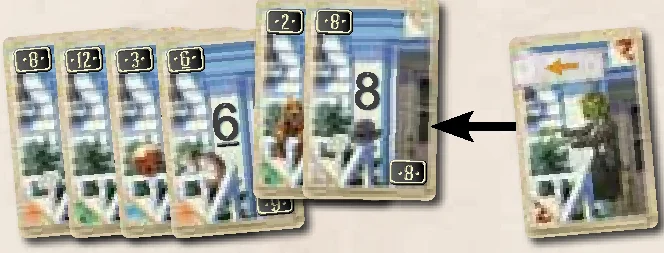
Additional rules with a level 1 or higher AAA opponent: When you draw a Zombie card, remove the last 2 cards given to the AAA from the game and replace them with the Zombie card. Then apply the effect of the Zombie card on your sheet.
At the end of the game, to add up the score for the AAA, each Zombie card in the stack of AAA cards is considered as a Fence card:
- When calculating fence points for the AAA, each Zombie card acts as an additional Fence card.
- When calculating housing estate points for the AAA, each Zombie card acts as a Fence card, creating estates.
Quack
Oh, what a story! Two duck families have gotten lost in the streets of the city! Poor things! If you could be so kind as to help these charming ducklings find their parents, it would be absolutely wonderful!
★ Gameplay
To find a lost duckling, seek help from the families living in neighboring houses.
Number a house: As soon as you have 2 numbered houses on each side of a duckling, horizontally or vertically, circle the duckling.
Fence Action: You can build a fence where there is a duckling. Just be careful not to harm it.
Extension Action: By numbering houses with this action, it can help you circle ducklings.
Duckling Scoring
During the game, there are 3 scoring phases. After these 3 phases, each color of duckling will have been scored twice. Each scoring phase takes place at the end of the round in which it is triggered. It is possible for multiple scoring phases to be triggered in the same round and therefore be conducted at the end of that same round.
A duckling earns points if it is circled and connected to its parent by an uninterrupted chain of circled ducklings and numbered houses.
-
 Yellow Ducklings: The architect who first circles all the yellow ducklings triggers the scoring phase. At the end of the round, each architect scores 1 point for each yellow duckling circled and connected to its parent.
 -
 Black Ducklings: The architect who first circles all the black ducklings triggers the scoring phase. At the end of the round, each architect scores 1 point for each black duckling circled and connected to its parent.
 -
 Yellow AND Black Ducklings: The architect who first circles all the yellow AND black ducklings triggers the scoring phase. At the end of the round, each architect scores 1 point for each yellow duckling and 1 point for each black duckling circled and connected to its parent.
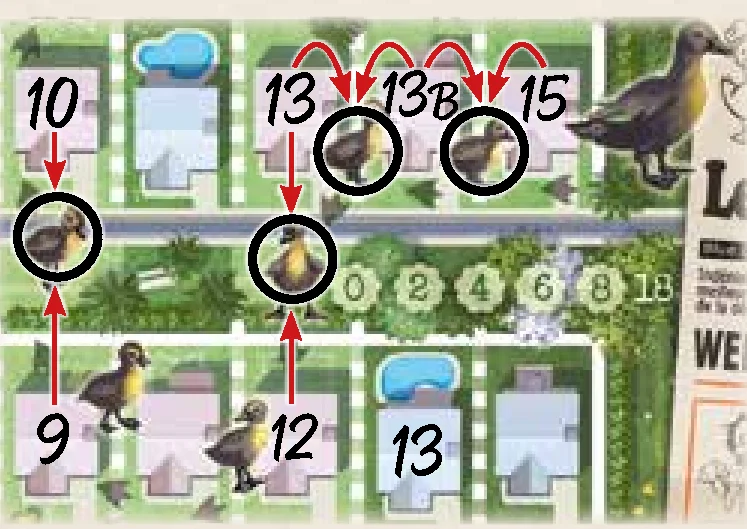
★ End of Game
If one or more scoring phases have not been triggered, each architect performs the missing scoring phases before calculating their final score.
★ Plan C Cards
- Plan C (Card 149 – 6/3 pts): Build 2 complete housing estates of size 3, each with at least 1 built swimming pool and 1 circled duckling that must be entirely inside the estate.
- Plan C (Card 150 – 8/4 pts): Circle 5 yellow ducklings and 5 black ducklings.
- Plan C (Card 151 – 7/3 pts): In 2 different streets: circle all the ducklings.
- Plan C (Card 152 – 8/4 pts): Circle the 2 yellow ducklings in the 3rd street (bottom) and the 2 black ducklings in the 1st street (top).
- Plan C (Card 153 – 6/2 pts): Circle the 2 yellow ducklings and the 3 black ducklings between the streets.
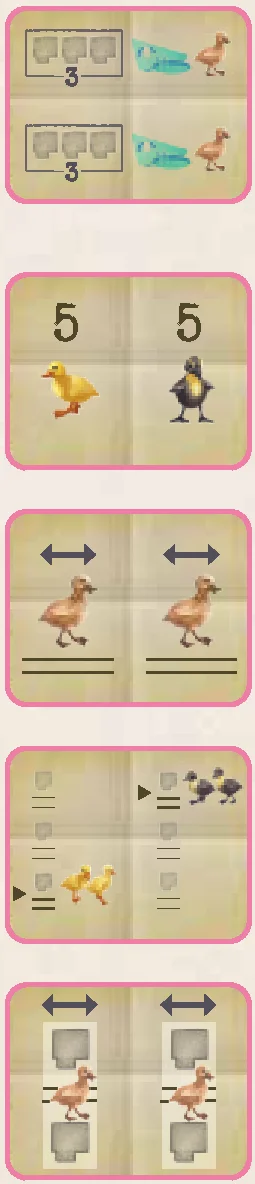
★ AAA Solo Mode
If you trigger a duckling scoring phase, it takes place at the end of the current round. If the AAA triggers a duckling scoring phase, it takes place immediately.
When you draw an AAA Validation card, regardless of whether the AAA validates a plan or not, you must also check if the AAA triggers a duckling scoring phase:
- Validation A card: The AAA triggers the scoring phase for yellow ducklings if you haven’t already triggered it yourself.
- Validation B card: The AAA triggers the scoring phase for black ducklings if you haven’t already triggered it yourself.
- Validation A and B cards: When either of these two cards is drawn, while the other has already been drawn previously, the AAA triggers the scoring phase for both yellow AND black ducklings if you haven’t already triggered it yourself.
- Validation card C does not trigger any scoring phase.
For each scoring phase, add up your points as usual.
To add up the score for the AAA (level 1 or higher): Follow the same process regardless of the scoring phase, the AAA scores 1 point for each pair of Construction cards you have given them since the beginning of the game.
The American Dream
The American Dream is about working hard, succeeding, and having a loving family to share that success. It’s like eating an apple pie while watching a baseball game, and believe me, nobody does it better than us!
★ Game Setup
You must play only with the American Dream Expansion Plan cards. Among these cards, select one Plan A card, one Plan B card, and one Plan C card.
★ Gameplay
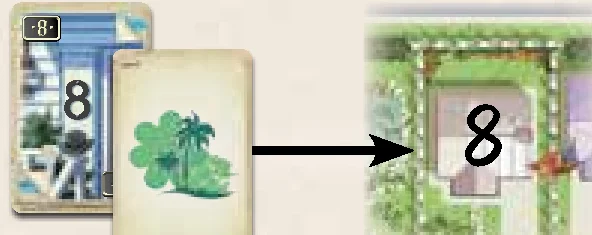
On your sheet, houses are grouped into 5 streets. You must number each of these streets in ascending order as usual. However, each house is designed for a specific type of family, and you will accommodate these families by numbering the houses.
You cannot use the usual actions. For example, you cannot use the Temporary worker action to change a number. Here, each action corresponds to a type of family and house.
Each round, choose a combination of 2 Number-Action cards as usual and then:
- Number a house: Write the number in a house to accommodate a family.
- Use the action: Check if the action corresponds to the house you just numbered.
- Perfect House: If the action matches the house, then the family has a perfect house. Circle the house.
- Regular House: If the action does not match the house, then the family has a normal house, and nothing else happens. However, you will earn fewer points.
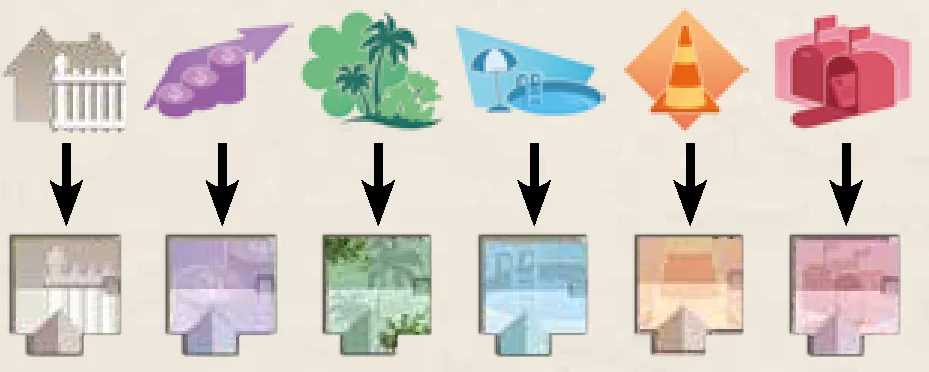
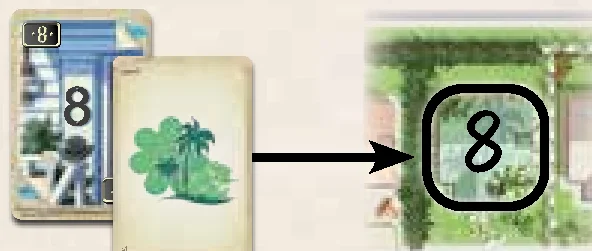
Street and Column Bonuses
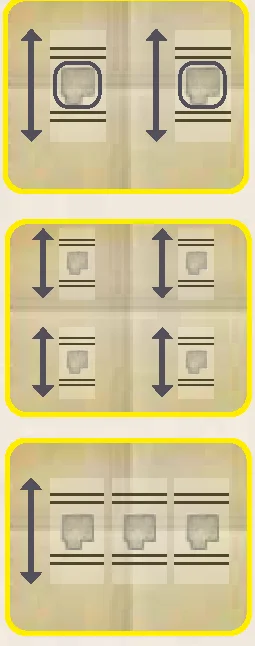
The houses form horizontal streets and vertical columns. To complete a street or a column, you must number all the houses in that street or column. It doesn’t matter if the houses are perfect or regular (circled or not).
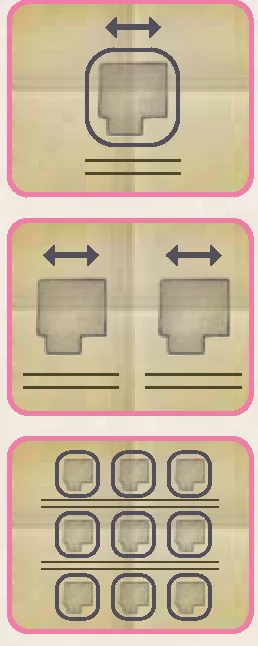
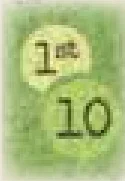 Street Bonus: When you are the first to complete a street, at the end of the round, circle the 10-point bonus at the end of the street.
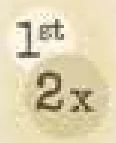 Column Bonus: When you are the first to complete a column, at the end of the round, circle the x2 bonus at the bottom of the column.
All the architects who circle the same bonus in the same round can claim it. The other architects must cross out that bonus on their sheet and will no longer be able to claim it.
★ End of Game
The game ends based on the usual end game conditions.
- Columns: For each complete column (all houses numbered), score 1 point per regular house and 3 points per perfect (circled) house in that column. You double your points if you have the x2 bonus of that column.
Attention! Incomplete columns score no points! - Streets: Add up the 10-point bonuses you obtained by completing streets first.
To calculate your total score, add the points from objectives, columns, streets, and subtract the penalty points for the Building Permit Refusals. The architect with the highest score wins the game. In case of a tie, the victory is shared.
★ Plan Cards
PLAN A
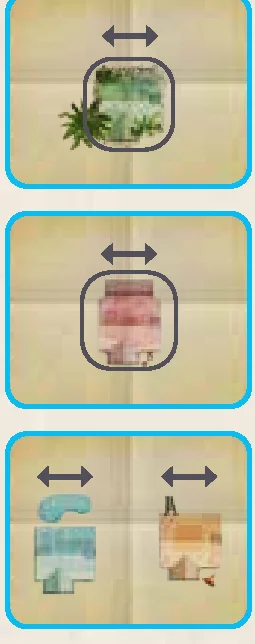
- Plan A (Card 154 – 12/6 pts): All your green houses are perfect houses.
- Plan A (Card 155 – 10/5 pts): All your red houses are perfect houses.
- Plan A (Card 156 – 9/5 pts): All your blue and orange houses are numbered, regardless of whether they are perfect or regular houses.
PLAN B
- Plan B (Card 157 – 11/5 pts): You have completed 2 columns with only perfect houses.
- Plan B (Card 158 – 8/2 pts): You have completed 4 columns, regardless of whether the houses are perfect or regular.
- Plan B (Card 159 – 8/3 pts): You have 3 complete and adjacent columns, regardless of whether the houses are perfect or normal.
PLAN C
- Plan C (Card 160 – 12/7 pts): You have completed 1 street with only perfect houses.
- Plan C (Card 161 – 10/5 pts): You have completed 2 streets, regardless of whether the houses are perfect or regular.
- Plan C (Card 162 – 9/5 pts): You have 9 perfect adjacent houses forming a 3×3 square.
★ AAA Solo Mode
Every time you draw an AAA Validation card, regardless of whether the AAA validates a plan or not, you must immediately cross out several bonuses that you will no longer be able to obtain. Choose and cross out 1 street bonus and 2 column bonuses that you have not circled.
Add up the score for the AAA (level 1 or higher): At the end of the game, in addition to the plans it validated, the AAA also earns points for columns and streets.
- Columns: Each card you gave to the AAA earns them points. For each card type, calculate the AAA’s points and write them down. The value of each card type is indicated on the Opponent card. For example, with Sam, a level 1 opponent: Each Park, Pool, Temporary worker and Fence card earns him 1 point, and each Extension and Improvement card earns him 2 points.
- Streets: The AAA scores 10 points for each crossed out Street bonus.
Introduction: A Collector’s Saga
Welcome to, a Collector’s Saga
Greetings! Welcome to… is a trilogy of games. And we are pleased to present to you here the “Collector’s Edition” of the first game in this trilogy: Welcome to Your Perfect Home. The game and all its expansions have been revised, improved and expanded to provide fans, but also architects discovering Welcome to…, with a perfect gaming experience. Rewritten rules, rebalanced gameplay, and also numerous new features added: new Advanced Plan cards, new Plan cards for each expansion, sheets redesigned by renowned artists, and even a brand new “Roswell” sheet!
When Benoit Turpin created Welcome to Your Perfect Home, no one suspected the success that was to come… Five years after its release, hundreds of thousands of you have played Welcome! You have made this game one of the biggest successes of its kind: the “roll & write” genre (without the roll), and now a “classic” of modern board gaming! Thank you!
The Welcome Team
★ 2018 – The year it all began
- Welcome to Your Perfect Home: The 1st edition of the game was published in February.
- Classic Sheet Recharge Pack and Goodies Sheet: In 2023, a completely reworked Goodies sheet becomes the Blueprint sheet, added to the new edition of the game.
★ 2019 – The expansions
The expansion packs were sometimes released separately depending on the country.
- Easter Egg Hunt, Doomsday, and the AAA Solo Mode expansions: Alexis Allard joined the Welcome team with his new solo mode, which becomes a permanent part of the new edition of the game.
- Ice Cream Truck and Zombie Outbreak expansion
- Halloween and Christmas Lights expansion
★ 2020 – New game and other expansions
- Welcome to New Las Vegas: This standalone game is the 2nd installment of the trilogy. This more complex Welcome is for the most expert fans.
- Quack expansion: This expansion was only available as a downloadable file.
- 9¾ Cards expansion: Discover their story on page 27!
- La Petite Mort expansion: Only available in France, this expansion was based on the La Petite Mort universe, a French comic book by Davy Mourier. In 2023, with a new theme, it becomes the American Dream sheet in the Collector’s Edition.
★ 2021 – The year of the Moon
- Welcome to the Moon: This standalone game is the 3rd installment of the trilogy. With 8 different sheets and an evolving, narrative campaign, Welcome became epic!
★ 2022 – Are we resting?
No. We’re preparing for 2023!
★ 2023 – Collector’s Edition
- Roswell Expansion: A completely new and exclusive expansion created specifically for the Collector’s Edition!
- Welcome Collector’s Edition: You are here! The 1st installment of the trilogy in a comprehensive edition with all its revised expansions, and several exclusives!
Components
Components Overview
Each card has on its bottom left corner an identification number (from 111 to 165) which has no use during the game.
Components specific to the expansions
- 54 dry-erase Expansion sheets (9 expansions for 6 architects)
- 3 9¾ cards
- 40 Expansion Plan C cards (5 per expansion)
- 9 American Dream Plan A B C cards
- 3 Zombie cards
- 6 unique dry-erase Re-imagined Classic sheets
- 6 postcards by six artists
- 1 Certificate of achievements to be checked after each game
Re-imagined Classic Sheets
Re-imagined Classic Sheets
We gave carte blanche to six internationally renowned artists to reinterpret the now iconic Classic sheet illustrated by Anne Heidsieck. Ski or seaside vacations, bayou and creatures inspired by old black & white films, underwater city or western town, summer camp… Each sheet is unique and offers a different atmosphere that renews the pleasure of playing Welcome in its classic version.
There are no rule changes. Thus, in the same game, each architect can play with a different re-imagined sheet according to their mood.
-
Christine Alcouffe is a French illustrator. Curious and versatile, she is also a game designer. She illustrates children’s books as well as numerous games, such as Paper Tales, Lucky Numbers, Yòkai…
-
Maud Chalmel is a French illustrator. Being dreamy by nature, drawing has always been her sanctuary. She is a game illustrator and also a comic book artist. You can see her work in games like Shamans, Splito, Siggil…
-
Vincent Dutrait is French and lives in South Korea. He works in a traditional way, using pencils, brushes and paints on paper, with a modern and contemporary approach. He has illustrated games like Heat, Jekyll vs. Hyde, Oltréé…
-
Ryan Goldsberry lives in California and his five children don’t let him sleep much! A child of the 80s, he loves movies and rock and roll. He has notably illustrated games like Burgle Bros., Paperback, Fugitive…
-
Weberson Santiago is a Brazilian illustrator and teacher. He creates illustrations for the press, books, and board games. He has notably illustrated games like The Bloody Inn, Fuji, The Great Split…
-
Beth Sobel lives in the United States with her husband and their two cats. She enjoys playing cards and taking walks in nature. You can see her illustration work in games like Wingspan, Cascadia, Calico…
Expansion Rules & Overview
Before Starting with Expansions
Each expansion has additional rules. Apply all the standard rules of the Classic sheet (See the Rulebook) with the changes and additional rules found in the following pages.
All expansions can be played with the Advanced Mode, Solo Mode, and Expert Mode, except for the American Dream expansion, which cannot be played with the Advanced Mode.
★ Expansion Plan Cards
Each Expansion sheet has its own 5 Expansion Plan cards, all of which are type C.
During setup, you must select:
- 1 Plan A card (standard or advanced),
- 1 Plan B card (standard or advanced),
- 1 Expansion-specific Plan C card for the sheet you are playing.
Note that the American Dream sheet has 9 specific Plan A, B, and C cards.
Quick Guide to the Expansions
- 9¾ Cards (page 27): We recommend incorporating these cards in your early games. They are simple and make the game a bit easier. However, if you prefer to play Welcome in its purest version, you can leave them aside.
- American Dream (page 24): This sheet is the one that changes the game experience the most while making it much simpler. So, if you already know Welcome and want to play with new players, we recommend using this sheet as it serves as a good introduction to the game.
The 9 Expansions Ranked by Difficulty
- Easy Sheets ★
- Easter Egg Hunt (page 6)
- Christmas Lights (page 12)
- The American Dream (page 24)
- Moderately Easy Sheets ★★
- Doomsday (page 14)
- Roswell (page 16)
- Quack (page 22)
- Challenging Sheets ★★★
- Ice Cream Truck (page 8)
- Halloween (page 10)
- Zombie Outbreak (page 18)
The 9 Expansions Sorted by Theme
- Four Seasons Sheets
- Easter Egg Hunt ★ (page 6)
- Ice Cream Truck ★★★ (page 8)
- Halloween ★★★ (page 10)
- Christmas Lights ★ (page 12)
- Catastrophe Sheets
- Doomsday ★★ (page 14)
- Roswell ★★ (page 16)
- Zombie Outbreak ★★★ (page 18)
- Feel Good Sheets
- Quack ★★ (page 22)
- The American Dream ★ (page 24)
Mini-Expansion: 9¾ Cards
9¾ Cards
These cards have a special story! In People magazine, on February 17, 2020, actor Daniel Radcliffe, famous for his role as Harry Potter, made the following revelation:
“Last game I played: This addictive board game called Welcome to Your Perfect Home, based around the idea of town planning. I’m not really competitive. I don’t win a lot, so I can’t afford to be.”
We were deeply moved and happy to discover in this interview that Daniel Radcliffe enjoyed playing Welcome to… In return, we decided to pay tribute to him by creating cards based on the Harry Potter theme. And thanks to the power of social media, we were able to send him a special edition of the game that included, among other things, these 3 cards. They were also shared as a free download. Here they are now included in this Collector’s Edition.
Gameplay Rules
Play with these 3 9¾ Construction cards simply by adding them to the other Construction cards.
During the game, you can place a 9¾ between a 9 and a 10.
-
Temp worker Action: With this action, you can modify a 9¾ and get 7¾, 8¾, 10¾, or 11¾.
-
Extension Action: With this action, you can copy a 9¾ number and obtain 9¾B.
-
Easter Egg Hunt: Just like with a number 9, it is possible to collect 1 egg with a 9¾ number.
-
Christmas Lights: 9 – 9¾ – 10 are consecutive and form a string of lights. The same goes for 8 – 9¾ – 10.
-
Doomsday: When you write 9¾ in a house with a shelter, write 9 in the shelter because ¾ of a person does not exist!
Variant: Expert Mode
Expert Mode
This game mode increases interaction between architects and can be played with all the sheets as well as with the Advanced Mode. However, it cannot be played with the AAA Solo Mode since it already uses the same principle.
★ Setup
Form a single deck of Construction cards with the Action side up. In clockwise order, starting with the game owner, each architect draws 1 card and keeps it in hand without showing the number.
★ Gameplay
- At the beginning of each round, in clockwise order, starting with the game owner, each architect draws 2 additional Construction cards. When the deck is exhausted, shuffle the discard pile to form a new deck.
- Choose 2 Construction cards from the 3 you have in hand.
- Use one card for its number by numbering a house.
- Use the other card for its action (performing the action is not mandatory). To do this, you can check the corners of the card that indicate the action present on the other side.
Then, place these two cards in a discard pile next to the deck.
Next, give the remaining third Construction card, with the Number side hidden, to the opponent on your left. And take the card given by the opponent on your right. - You can validate a Plan card according to the usual rules.
★ Expert Mode for Zombie Outbreak
Set up: Give 1 Construction card to each architect. Then, form a deck with 10 Construction cards per architect and 1 Zombie card. With 6 architects, you must use all the Construction cards. Place the remaining Construction cards in the discard pile and set aside the remaining Zombie cards face down.
Example: with 4 architects, form a deck with 40 Construction cards and 1 Zombie card.
During the game: In each round, in clockwise order, each architect only draws 1 additional Construction card. Use one card for its number and the other for its action. Then discard one of the 2 cards and give the other to the opponent on your left.
When you draw a Zombie card, the architects immediately apply its effect. Then permanently remove it from the game and draw a new Construction card in order to have 2 cards in hand.
When the deck is exhausted, shuffle the discard pile and reconstruct a deck with 10 cards per architect and a new Zombie card. If the deck is exhausted for the third time, the game ends.
Expansion: Egg Hunt
Egg Hunt
Spring has arrived, and eggs of all colors have been hidden in the neighborhood, much to the delight of children and adults who will embark on the search. The egg hunt is open. Try to collect as many eggs as possible!
★ Gameplay
Number a house: While numbering houses, you can also collect eggs, which will earn you additional points at the end of the game. To collect an egg from a house, you must circle it using the loops found in numbers like 0, 6, 8, 9, 10, and 16.
- With numbers 6, 9, and 16, you can collect 1 egg.
- With numbers 0, 8, and 10, you can collect 1 or 2 eggs.
Note that you can write a 6, a 9 or a 16 on a house with 2 eggs, but then you will only collect one egg out of the two.
Temp worker Action: This action can be very useful for modifying and obtaining a number that allows you to collect eggs. Additionally, using this action can get you a 0 or a 16 (See Rulebook, page 9).
Extension Action: This action also allows you to collect eggs by using the potential loops of the copied number. However, note that “B” does not allow you to circle eggs.
★ End of Game
You earn points based on the threshold of collected eggs you have reached or crossed. If you have collected 6 / 10 / 14 or 18 eggs, then you score 5 / 10 / 20 or 35 points.
★ Plan C Cards
- Plan C (Card 111 – 10/5 pts): Build 2 complete housing estates of size 3, each with at least 3 collected eggs.
- Plan C (Card 112 – 12/6 pts): Build 1 complete housing estate of size 2, 1 complete housing estate of size 3, and 1 complete housing estate of size 4, each without any collected eggs.
- Plan C (Card 113 – 7/4 pts): Collect all the orange eggs and all the pink eggs.
- Plan C (Card 114 – 9/5 pts): In each street: collect 3 eggs of a different color.
- Plan C (Card 115 – 8/4 pts): In the 3rd street (bottom): collect all the eggs.
★ AAA Solo Mode
Add up the score for the AAA (level 1 or higher): At the end of the game, check the number of eggs collected by the AAA using the cards 6, 8, 9, and 10 that you have given to them.
- Each 6 and 9 card earns them 1 egg.
- Each 8 and 10 card earns them 2 eggs.
Just like for yourself, the AAA earns points corresponding to the number of collected eggs.
Expansion: Ice Cream Truck
Ice Cream Truck
It’s summertime and ice cream trucks are making their rounds on the streets to sell the best ice cream. Try to sell as many ice cream cones as possible on each street!
★ Gameplay
There is an ice cream truck making its delivery rounds at the end of each street. At the other end, there is an End of Delivery Bonus . In front of certain houses, there are ice cream cones with 1, 2, or 3 scoops of ice cream. These cones represent ice cream orders.
Number a house: Each time you number a house, the ice cream truck on the street immediately moves up to that house. To represent the truck’s path, draw an arrow from the truck to the house you just numbered. If there is an ice cream cone in front of that house, circle it. Then cross out all other ice cream cones that the truck has passed without stopping.
Ice cream trucks do not go back. When you number a house that a truck has already passed, nothing happens.
Note that the trucks on the 1st and 3rd streets move from left to right →. However, the truck on the 2nd street moves from right to left ←.
Extension Action: Since this action allows you to number an additional house, it can immediately make a truck move and allow you to circle an extra ice cream cone.
End of Delivery Bonus: When you circle or cross out the last ice cream cone on a street, the truck’s delivery round on that street is complete. At the end of the round, circle the End of Delivery Bonus in that street.
Architects who complete the same street’s delivery round in the same round can also receive the bonus. The other architects must cross out the bonus on their sheet and cannot obtain it afterwards.
★ End of Game
Add up your score for the ice creams delivered on each street:
- Each circled ice cream cone earns 1 point per scoop (a cone with 3 scoops is worth 3 points).
- If you circled the End of Delivery Bonus, each circled ice cream cone on that street earns you an additional 1 point.
★ Plan C Cards
- Plan C (Card 116 – 9/5 pts): Build 3 complete housing estates of size 3, each with at least 2 circled ice cream cones.
- Plan C (Card 117 – 10/5 pts): Build 2 complete housing estates of size 3, each without any circled ice cream cones.
- Plan C (Card 118 – 8/4 pts): Build 3 complete housing estates of size 1, each with 1 swimming pool built and 1 circled ice cream cone.
- Plan C (Card 119 – 7/3 pts): Circle at least 5 cones with 3 scoops of ice cream.
- Plan C (Card 120 – 8/3 pts): In one street: circle all the ice cream cones.
★ AAA Solo Mode
When you draw an AAA Validation card, regardless of whether the AAA validates a plan or not, you must immediately cross out 1 End of Delivery Bonus of your choice that you have not yet circled.
Add up the score for the AAA (level 1 or higher): At the end of the game, for the ice creams, the AAA earns 1 point for each card you have given to it, except for Fence cards, which do not count for ice creams. Additionally, the AAA earns an additional 10 points for each crossed out End of Delivery Bonus.
Expansion: Halloween
Halloween
With autumn comes Halloween, and its scary procession of young and old going from house to house, asking for candy with the famous phrase, “Trick or Treat!” What will you choose?
★ Gameplay
Number a house: Each time you number a house with a ghost and a candy, circle one of the two. The circled ghosts and candies allow you to claim bonuses at different levels.
Extension Action: When you number a house with a ghost and a candy using this action, you must also circle one of the two.
Bonus Levels: At the top of your sheet, there are 3 Ghost bonus levels and 3 Candy bonus levels. At the end of a round, you can claim 1 or 2 levels of bonuses. When you claim a level, circle it.
- Multiple architects can claim the same level in the same round.
- The other architects must cross out that level and can no longer claim it.
- If you have exactly 4, 6, or 9 circled ghosts, you can claim the corresponding level or a lower level.
- The same applies to candies.
- However, if you don’t have the exact required number of ghosts or candies, you cannot claim any level, even a lower one. Additionally, you can only claim one Ghost level and one Candy level per game.
Ghost bonuses: The Ghost levels provide bonus actions of your choice to use immediately.
Ghost Bonuses details:
- Pool bonus: Circle 1 pool anywhere, whether the house is numbered or not, and cross out 1 box in the pool section.
- Park bonus: Cross out 1 Park box on any street.
- Extension bonus: Perform 1 Extension action without crossing out a box in the extension section. This bonus can allow you to claim a Candy level in the same round.
Levels:
- 4-ghost level: 1 Pool bonus OR 1 Park bonus.
- 6-ghost level: 2 Pool bonuses OR 1 Extension bonus.
- 9-ghost level: 3 Park bonuses OR 2 Extension bonuses.
Candy bonuses:
Each Candy level provides additional points at the end of the game.
★ End of Game
If you have claimed a Candy level, add the indicated points to your score.
★ Plan C Cards
- Plan C (Card 121 – 7/3 pts): Circle at least 7 candies.
- Plan C (Card 122 – 9/4 pts): Circle at least 4 ghosts and 4 candies.
- Plan C (Card 123 – 10/4 pts): Number all 13 houses with a ghost and a candy.
- Plan C (Card 124 – 9/4 pts): In 2 different streets: circle all the ghosts.
- Plan C (Card 125 – 7/3 pts): In the 3rd street (bottom): circle all the candies.
★ AAA Solo Mode
When you draw an AAA Validation card, regardless of whether the AAA validates a plan or not, you must immediately cross out the corresponding 2 levels if you haven’t circled them.
- Validation A card: Cross out the 1st Ghost level AND the 1st Candy level.
- Validation B card: Cross out the 2nd Ghost level AND the 2nd Candy level.
- Validation C card: Cross out the 3rd Ghost level AND the 3rd Candy level.
Add up the score for the AAA (level 1 or higher): At the end of the game, for the candies, the AAA earns 4 points for each crossed out Ghost and Candy level.
Expansion: Christmas Lights
Christmas Lights
With the holiday season, excitement can be felt throughout the city. After a difficult year, everyone is seeking comfort. Warm up the heart and soul of the city by decorating the streets with long strings of Christmas lights!
★ Gameplay
Number a house: Decorate the houses with strings of lights by writing consecutive numbers. Numbers are consecutive if they form a sequence of neighboring numbers without any missing numbers. Each time you number a house, if the numbers written next to each other are consecutive, you must immediately connect them by drawing a string of lights.
Extension Action: The number of an extension is considered consecutive to the copied neighboring number. Therefore, you must immediately connect them with a string of lights.
★ End of Game
In each street, the longest string of lights earns you 1 point per connected house. You can have multiple strings of lights in the same street, but only the longest string in each street earns you points.
★ Plan C Cards
- Plan C (Card 126 – 9/5 pts): Build 1 complete housing estate of size 4 and 1 complete housing estate of size 5, each with all its houses connected by a single string of lights.
- Plan C (Card 127 – 10/5 pts): Build 2 complete housing estates of size 3. In each of these housing estates, the central house must not be connected by any strings of lights.
- Plan C (Card 128 – 10/5 pts): Build 3 complete housing estates of size 3, each with all its houses connected by a single string of lights.
- Plan C (Card 129 – 7/3 pts): In the 3rd street (bottom): connect all the houses with a single string of lights.
- Plan C (Card 130 – 9/4 pts): In the same street: connect all the houses with a single string of lights and cross out all the Park boxes.
★ AAA Solo Mode
Add up the score for the AAA (level 1 or higher): At the end of the game, in the stack of cards you gave to the AAA, count the number of cards placed between the first Fence card and the last Fence card. For the strings of lights, the AAA earns 1 point for each of these cards.
Expansion: Doomsday
Doomsday
It is one minute to midnight on the Doomsday Clock. Who pressed the button again? Well, it doesn’t matter anymore. It’s the least of our concerns. Have you prepared the fallout shelters we requested?
★ Gameplay
Number a house: Some houses have fallout shelters that you need to finish constructing. Depending on the capacity of these shelters (the number of people they can accommodate), you will earn additional points at the end of the game. When you number a house with a shelter, also write that number inside the shelter. This number will define the maximum capacity of that shelter.
Extension Action: When you number a house with a shelter using this action, you must also write the number inside the shelter.
★ End of Game
Shelter capacity: For each street, add up the capacities of the shelters, write the total for the street in the box on its right, and then compare it with the other architects. For each street where your capacity is the highest, you earn the corresponding bonus points. In case of a tie, each architect earns the bonus points.
- The 1st street earns 8 points.
- The 2nd street earns 10 points.
- The 3rd street earns 11 points.
Optimism Bonus: You earn additional points if you are more optimistic than others about the eventuality of avoiding a nuclear war. Add up the capacities of your 3 streets. Write your total capacity in the flower at the bottom of your sheet and compare it with the other architects. If your total capacity is the lowest, you earn 9 points. In case of a tie, each architect earns 9 points.
★ Plan C Cards
- Plan C (Card 131 – 8/3 pts): Build 4 complete housing estates of size 1, each with 1 shelter.
- Plan C (Card 132 – 9/4 pts): Build 3 complete housing estates of size 3, each with exactly 1 shelter.
- Plan C (Card 133 – 9/4 pts): The total capacity of your fallout shelters is 50 or more.
- Plan C (Card 134 – 6/2 pts): Build all the fallout shelters.
- Plan C (Card 135 – 8/3 pts): In 2 different streets: the total capacity of your fallout shelters is 30 or more.
★ AAA Solo Mode
Set up: With a horizontal line, split in half each shelter, the shelter box at the end of each street, and the “flower” box. Write the capacities of your shelters above the line and those of the AAA below. At the start, the AAA has already built the first shelter in each street with the following values:
- 1st street: 20
- 2nd street: 30
- 3rd street: 30
During the game: When you draw an AAA Validation card, regardless of whether the AAA validates a plan or not, the AAA immediately builds a shelter in the corresponding street.
- Validation A card: 1st street.
- Validation B card: 2nd street.
- Validation C card: 3rd street.
To build the AAA shelter, check the last 3 Construction cards you gave to the AAA and write the value of the highest card inside the shelter.
Advanced Mode: Roundabouts can help you build shelters with higher numbers. So, if you build a roundabout, the AAA immediately reacts by building a shelter. In the same street, write “10” for the AAA inside an available shelter.
End of Game: Compare your shelters to the AAA’s and add up your score and the AAA’s (level 1 or higher) by following the standard rule.
Expansion: Roswell
Roswell
“Zoorg people! We have arrived on Earth, ready to infiltrate these humans! But be careful not to be distracted by their strange customs, like drinking cold coffee or even watching intentionally scary movies…”
“Oh, sorry! I forgot that you have already taken human form. So, I have to speak to you in reverse. Anyway… The Zoorg people will prevail!”
You are a Zoorg, an infiltrated alien who has taken on human form. Your mission is to build houses while infiltrating Zoorgs into housing estates.
★ Set Up
After the regular set up, choose one infiltration objective from the 4 objectives at the bottom left of your sheet and secretly circle it. Once each architect has made their choice, reveal your objective.
Each objective requires infiltrating a certain number of housing estates. For example, the first objective requires infiltrating 3 or 4 estates, and the last objective requires infiltrating 9 estates or more. At the end of the game, you will earn additional points based on your objective.
★ Gameplay
Number the houses as humans would normally do.
Using the action: If you have numbered a house with a flying saucer positioned above it, you have 2 options:
- Use the action associated with the chosen number, following human customs (including the option to do nothing, humans are strange).
OR - Infiltrate a Zoorg by circling the flying saucer (and therefore do not perform the action on the card).
Infiltrated housing estates: When you complete a housing estate with 1 infiltrated Zoorg, color the circled flying saucer cockpit. Remember to respect human customs: an infiltrated estate must be complete with all its houses numbered and have a maximum size of 6 houses. Remember that we only count infiltrated estates. A housing estate can have more than one infiltrated Zoorg, but it is not necessary.
★ End of Game
In the chosen objective box, write the number of your completed and infiltrated housing estates.
- Successful infiltration objective: If you have the requested number of infiltrated estates, you earn the highest score indicated for each infiltrated estate (4, 5, 6, or 7 points).
- Failed infiltration objective: If you have too few or too many infiltrated estates, you only earn 2 points per infiltrated housing estate.
★ Plan C Cards
- Plan C (Card 136 – 7/3 pts): Build 2 complete housing estates of size 4, each with at least 1 infiltrated Zoorg.
- Plan C (Card 137 – 13/7 pts): Build 1 complete housing estate of size 3 and 1 complete housing estate of size 4, each with at least 2 infiltrated Zoorgs.
- Plan C (Card 138 – 11/6 pts): Build 2 complete housing estates of size 5, each without any infiltrated Zoorgs.
- Plan C (Card 139 – 6/3 pts): In 1 street: all Zoorgs are infiltrated (there can be multiple in the same estate).
- Plan C (Card 140 – 9/4 pts): In 3 vertical columns of houses: at least 2 Zoorgs are infiltrated.
★ AAA Solo Mode
With a level 1 or higher AAA opponent: A Zoorg has infiltrated the AAA. The first card you give to the AAA must be placed upside down on its stack, with the Number side hidden. And subsequently, each card given immediately after a Fence card must also be placed upside down.
An upside-down card no longer follows its regular action but represents a house infiltrated by a Zoorg. For example, an upside-down Fence card does not represent a fence but an infiltrated house.
End of Game:
- For the infiltration objectives, the AAA earns 5 points for each upside-down card.
- For the housing estate points, each upside-down card represents 1 house. Do not apply any of the actions of these upside-down cards.
- Do not take the upside-down cards into account for the remaining points (parks, pools, temp workers, fences).
Expansion: Zombie Outbreak
Zombie Outbreak
“911, hello, what’s your emergency?”
“Hello! Hello! They’re here! I can hear them scratching at the door! CRACK! Quick! Send the army! PAW PAW! Oh my god! There are too many of them! PAW! PAW! PAW! AAAAARGH NOOO! SCRONTCH SCRONTCH! Tuuut tuuut tuuut…”
★ Additional Components
- 3 Zombie cards
★ Overview
On your sheet, there are 6 zombie hordes threatening the city. There is one zombie horde at each end of the 3 streets. When a Zombie card appears, the zombies will move.
You can slow down the zombies by using ammunition that you can obtain through the Improvement action.
Note that most houses are already barricaded, but some are not. To prevent the zombies from invading them, you can barricade them using the Fence action. Will you be able to survive?
★ Set Up
A zombie outbreak is a challenging situation, so you must play with only 2 stacks of Construction cards instead of 3. Each round, you will have a choice between 2 combinations of cards instead of 3.
- Shuffle all the Construction cards and form 3 stacks of 10 cards. Randomly shuffle 1 Zombie card into each of these 3 stacks. Place these 3 stacks on top of each other to create the first card stack, Number side up.
- With the remaining cards, form the second card stack, Number side up.
★ Gameplay
Flip 2 Construction cards: After flipping the first card from each stack, if a Zombie card appears, you must immediately apply its effect. Then, remove it from the game and continue playing normally.
When you flip the last card from the first stack, do not shuffle the cards because the game is over (see End of Game, page 20).
Zombie cards: They indicate which zombie hordes move:
- The 3 hordes on the left move to the right.
- The 3 hordes on the right move to the left.
- All 6 hordes move.
Move the zombie hordes starting with the 1st street, then the 2nd, and finally the 3rd. To represent the movement of a zombie horde, draw a line over the yellow arrow on the road.
Ammunition: You can choose to slow down the zombies with your ammunition. Your stock of ammunition is represented at the top of your sheet. You start the game with one ammunition already circled and available.
- Cross out 1 circled ammunition and choose 1 zombie horde.
- Instead of drawing the movement arrow for that horde, draw a cross at the beginning of the yellow arrow.
- You can use multiple ammunition to slow down multiple zombie hordes (1 ammunition per horde).
Barricades: After drawing the line over the arrow for a horde, check if the house they arrive in is barricaded or not.
- If it is barricaded, nothing happens.
- If it is not barricaded, the zombies invade the house. If the house is numbered, erase the number. Write a Z on the house and draw a fence on each side to contain the invasion. A house with a Z is permanently sealed off.
MESSAGE FROM THE ANGRY CITIZEN COMMUNITY
We denounce the cynicism of architects and the complicity of the City Council! Architects can rig the system by sacrificing houses to get free fences, and thus creating more profitable estates. Taking advantage of a distressed community is UNACCEPTABLE!
Fence/Barricade Action: If you write the number associated with this action in a house without a barricade, you can choose to build a barricade instead of a fence. To do this, draw a barricade in front of the house you just numbered.
Improvement-Ammunition Action: When you cross out an Improvement box with ammunition, circle an ammunition in your stock at the top of your sheet.
Clarifications:
- A housing estate with a zombie-infested house cannot be used to validate a plan and does not earn any points at the end of the game.
- When zombies invade a house, it may divide an existing housing estate. If this housing estate has already been used to validate a plan, the housing estates created by this division cannot be used to validate another plan. The already validated plan remains validated, and you do not lose the corresponding points.
- If zombies invade a house with an already built swimming pool, you do not lose the points for that swimming pool.
- If zombies invade a house numbered with the Extension action (with a B), you do not regain the lost points for building that extension.
- A Z is not a number and does not stop the numbering.
Example: You have a numbered house with an adjacent extension: 5B-5. But this house is then invaded by zombies: 5B-Z. Afterwards, it is possible to continue to number like this: 5B-Z-5, or like this, using the Extension action: 5B-Z-5B.
Advanced Mode and Roundabout: If a horde of zombies reaches a roundabout, nothing happens.
★ End of Game
In addition to the usual 3 end-of-game conditions, when the last card of the first Construction stack is flipped, the game ends immediately. You have held out until the end of the crisis, and help has finally arrived.
★ Plan C Cards
- Plan C (Card 144 – 8/4 pts): Build 2 complete housing estates of size 3, each with at least 1 barricade built.
- Plan C (Card 145 – 11/5 pts): Build 5 barricades.
- Plan C (Card 146 – 8/4 pts): In 1 street: build all the barricades.
- Plan C (Card 147 – 7/3 pts): Use 4 ammunitions to slow down the zombies.
- Plan C (Card 148 – 6/2 pts): You have at least 5 houses invaded by zombies.
★ AAA Solo Mode
Set up: Shuffle all the Construction cards and take 60 cards. Put the remaining cards back in the box. Divide the 60 cards into 3 stacks of 20 cards each, Action side up. Randomly shuffle the following cards into each stack:
- 1st stack: 1 Zombie card.
- 2nd stack: 1 Zombie card and 1 AAA Validation card.
- 3rd stack: 1 Zombie card and 2 AAA Validation cards.
To form the draw deck, place these 3 stacks on top of each other, Action side up, in the following order: the 3rd stack at the bottom, the 2nd stack on top of it, and the 1st stack on top of the other two.
During the game: Each round, draw only 2 Construction cards. Use one card for its number and the other for its action. Then give one of the 2 cards to the AAA and place the other in your discard pile.
When you draw a Zombie card, apply the effect of the Zombie card on your sheet. Then remove it from the game and draw a new Construction card to have 2 cards to play for the round.
Additional rules with a level 1 or higher AAA opponent: When you draw a Zombie card, remove the last 2 cards given to the AAA from the game and replace them with the Zombie card. Then apply the effect of the Zombie card on your sheet.
At the end of the game, to add up the score for the AAA, each Zombie card in the stack of AAA cards is considered as a Fence card:
- When calculating fence points for the AAA, each Zombie card acts as an additional Fence card.
- When calculating housing estate points for the AAA, each Zombie card acts as a Fence card, creating estates.
Expansion: Quack
Quack
Oh, what a story! Two duck families have gotten lost in the streets of the city! Poor things! If you could be so kind as to help these charming ducklings find their parents, it would be absolutely wonderful!
★ Gameplay
To find a lost duckling, seek help from the families living in neighboring houses.
Number a house: As soon as you have 2 numbered houses on each side of a duckling, horizontally or vertically, circle the duckling.
Fence Action: You can build a fence where there is a duckling. Just be careful not to harm it.
Extension Action: By numbering houses with this action, it can help you circle ducklings.
Duckling Scoring
During the game, there are 3 scoring phases. After these 3 phases, each color of duckling will have been scored twice. Each scoring phase takes place at the end of the round in which it is triggered. It is possible for multiple scoring phases to be triggered in the same round and therefore be conducted at the end of that same round.
A duckling earns points if it is circled and connected to its parent by an uninterrupted chain of circled ducklings and numbered houses.
-
Yellow Ducklings: The architect who first circles all the yellow ducklings triggers the scoring phase. At the end of the round, each architect scores 1 point for each yellow duckling circled and connected to its parent.
-
Black Ducklings: The architect who first circles all the black ducklings triggers the scoring phase. At the end of the round, each architect scores 1 point for each black duckling circled and connected to its parent.
-
Yellow AND Black Ducklings: The architect who first circles all the yellow AND black ducklings triggers the scoring phase. At the end of the round, each architect scores 1 point for each yellow duckling and 1 point for each black duckling circled and connected to its parent.
★ End of Game
If one or more scoring phases have not been triggered, each architect performs the missing scoring phases before calculating their final score.
★ Plan C Cards
- Plan C (Card 149 – 6/3 pts): Build 2 complete housing estates of size 3, each with at least 1 built swimming pool and 1 circled duckling that must be entirely inside the estate.
- Plan C (Card 150 – 8/4 pts): Circle 5 yellow ducklings and 5 black ducklings.
- Plan C (Card 151 – 7/3 pts): In 2 different streets: circle all the ducklings.
- Plan C (Card 152 – 8/4 pts): Circle the 2 yellow ducklings in the 3rd street (bottom) and the 2 black ducklings in the 1st street (top).
- Plan C (Card 153 – 6/2 pts): Circle the 2 yellow ducklings and the 3 black ducklings between the streets.
★ AAA Solo Mode
If you trigger a duckling scoring phase, it takes place at the end of the current round. If the AAA triggers a duckling scoring phase, it takes place immediately.
When you draw an AAA Validation card, regardless of whether the AAA validates a plan or not, you must also check if the AAA triggers a duckling scoring phase:
- Validation A card: The AAA triggers the scoring phase for yellow ducklings if you haven’t already triggered it yourself.
- Validation B card: The AAA triggers the scoring phase for black ducklings if you haven’t already triggered it yourself.
- Validation A and B cards: When either of these two cards is drawn, while the other has already been drawn previously, the AAA triggers the scoring phase for both yellow AND black ducklings if you haven’t already triggered it yourself.
- Validation card C does not trigger any scoring phase.
For each scoring phase, add up your points as usual.
To add up the score for the AAA (level 1 or higher): Follow the same process regardless of the scoring phase, the AAA scores 1 point for each pair of Construction cards you have given them since the beginning of the game.
Expansion: The American Dream
The American Dream
The American Dream is about working hard, succeeding, and having a loving family to share that success. It’s like eating an apple pie while watching a baseball game, and believe me, nobody does it better than us!
★ Game Setup
You must play only with the American Dream Expansion Plan cards. Among these cards, select one Plan A card, one Plan B card, and one Plan C card.
★ Gameplay
On your sheet, houses are grouped into 5 streets. You must number each of these streets in ascending order as usual. However, each house is designed for a specific type of family, and you will accommodate these families by numbering the houses.
You cannot use the usual actions. For example, you cannot use the Temporary worker action to change a number. Here, each action corresponds to a type of family and house.
Each round, choose a combination of 2 Number-Action cards as usual and then:
- Number a house: Write the number in a house to accommodate a family.
- Use the action: Check if the action corresponds to the house you just numbered.
- Perfect House: If the action matches the house, then the family has a perfect house. Circle the house.
- Regular House: If the action does not match the house, then the family has a normal house, and nothing else happens. However, you will earn fewer points.
Street and Column Bonuses
The houses form horizontal streets and vertical columns. To complete a street or a column, you must number all the houses in that street or column. It doesn’t matter if the houses are perfect or regular (circled or not).
- Street Bonus: When you are the first to complete a street, at the end of the round, circle the 10-point bonus at the end of the street.
- Column Bonus: When you are the first to complete a column, at the end of the round, circle the x2 bonus at the bottom of the column.
All the architects who circle the same bonus in the same round can claim it. The other architects must cross out that bonus on their sheet and will no longer be able to claim it.
★ End of Game
The game ends based on the usual end game conditions.
- Columns: For each complete column (all houses numbered), score 1 point per regular house and 3 points per perfect (circled) house in that column. You double your points if you have the x2 bonus of that column.
Attention! Incomplete columns score no points! - Streets: Add up the 10-point bonuses you obtained by completing streets first.
To calculate your total score, add the points from objectives, columns, streets, and subtract the penalty points for the Building Permit Refusals. The architect with the highest score wins the game. In case of a tie, the victory is shared.
★ Plan Cards
PLAN A
- Plan A (Card 154 – 12/6 pts): All your green houses are perfect houses.
- Plan A (Card 155 – 10/5 pts): All your red houses are perfect houses.
- Plan A (Card 156 – 9/5 pts): All your blue and orange houses are numbered, regardless of whether they are perfect or regular houses.
PLAN B
- Plan B (Card 157 – 11/5 pts): You have completed 2 columns with only perfect houses.
- Plan B (Card 158 – 8/2 pts): You have completed 4 columns, regardless of whether the houses are perfect or regular.
- Plan B (Card 159 – 8/3 pts): You have 3 complete and adjacent columns, regardless of whether the houses are perfect or normal.
PLAN C
- Plan C (Card 160 – 12/7 pts): You have completed 1 street with only perfect houses.
- Plan C (Card 161 – 10/5 pts): You have completed 2 streets, regardless of whether the houses are perfect or regular.
- Plan C (Card 162 – 9/5 pts): You have 9 perfect adjacent houses forming a 3×3 square.
★ AAA Solo Mode
Every time you draw an AAA Validation card, regardless of whether the AAA validates a plan or not, you must immediately cross out several bonuses that you will no longer be able to obtain. Choose and cross out 1 street bonus and 2 column bonuses that you have not circled.
Add up the score for the AAA (level 1 or higher): At the end of the game, in addition to the plans it validated, the AAA also earns points for columns and streets.
- Columns: Each card you gave to the AAA earns them points. For each card type, calculate the AAA’s points and write them down. The value of each card type is indicated on the Opponent card. For example, with Sam, a level 1 opponent: Each Park, Pool, Temporary worker and Fence card earns him 1 point, and each Extension and Improvement card earns him 2 points.
- Streets: The AAA scores 10 points for each crossed out Street bonus.