
Assyria
2009
Build huts, wells, and ziggurats while managing food, camels, nobles, and the changing fortunes of three eras.
90
minutes
2 - 4
player(s)
12+
Medium

About this board game
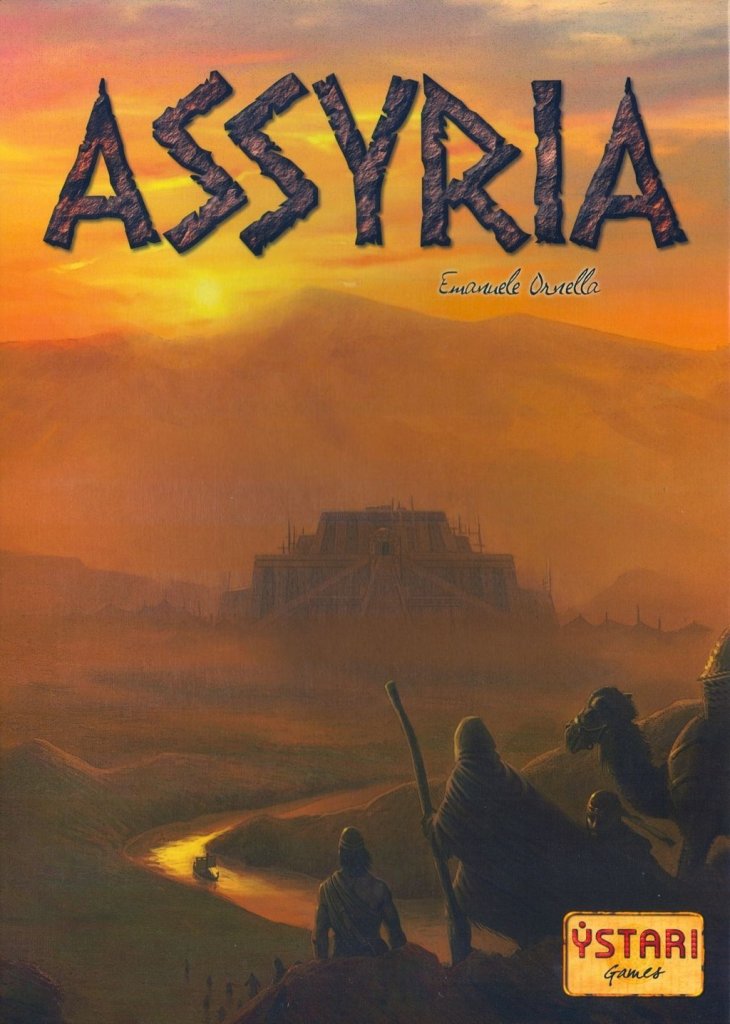
Assyria is a 2009 eurogame for 2–4 players, with a playing time of about 90 minutes. Players lead tribes developing a desert region and the limited fertile land between two rivers, seeking power through expansion, scoring, and carefully chosen investments.
Each cycle unfolds across three phases. First, players select resource cards for expansion and determine play order. The player receiving the most food plays last, while the player with the least food expands first, creating a constant tension between resources and initiative.
During the expansion phase, players build strings and clusters of huts, paying with food cards. Their chosen locations determine the reward: some placements provide points, while others generate camels, the game’s money. Huts on the fertile land between the rivers are especially valuable during scoring.
After expanding, players spend camels on short-term and long-term opportunities. They can claim one-time bonuses from the nobles of Assur, make offerings to the gods, or build ziggurats as permanent outposts. These decisions support the game’s central dilemma: take rapid points now or invest for benefits that develop over time.
- Select resources and establish play order.
- Expand with huts to gain points or camels.
- Invest through nobles, offerings, and ziggurats.
- Adapt to floods that partially clear the board while investments pay off.
The game lasts for three eras, each made up of two or three cycles. After every era, a flood partially cleans the board, while players capitalize on their investments. Points are also scored each round for huts and ziggurat tiles, making both immediate positioning and lasting development important throughout Assyria.
Lighter than Caylus, Olympos, Ys, or Sylla, yet heavier than Yspahan, Mykerinos, or Metropolis, it offers a focused eurogame experience built around timing, spatial expansion, and competing priorities.
/pic7182955.jpg)

