
Der Fliegende Holländer
1992
A tense contest of ship shares, secret horseshoes, trading, and timing as players steer the Flying Dutchman toward profit or danger.
60
minutes
3 - 6
player(s)
12+
Medium

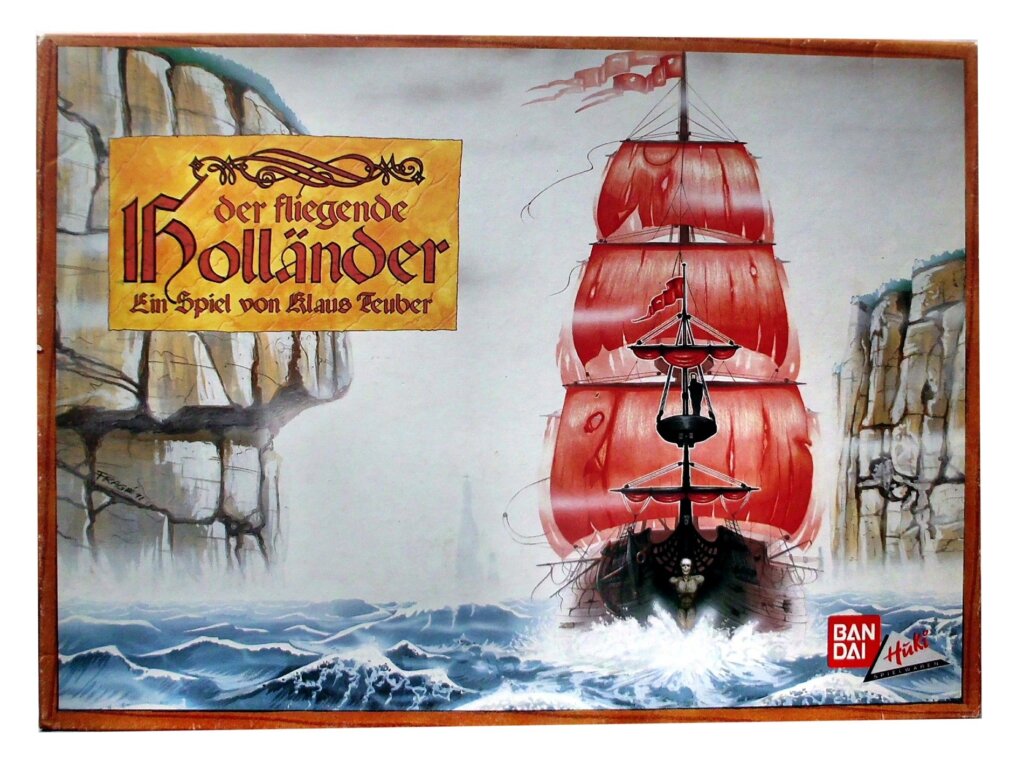
About this board game
Der Fliegende Holländer is a 1992 board game for 3–6 players, with a playing time of about 60 minutes. In this award-winning Klaus Teuber design, players compete to build the most money while managing valuable ship shares and the danger posed by the Flying Dutchman.
Players receive three random share cards, each representing one of the colored ships on the board. Ship values are shown by colored markers that move between treasure chests of increasing value. Everyone also starts with cash, three Trade cards, three Smithy cards, and a hidden rack of numbered lucky horseshoes.
- Ship shares: Watch values rise, but beware when the Dutchman approaches a vessel you own.
- Secret control: Use horseshoes to influence where the Flying Dutchman moves.
- Trade and Smithy cards: Exchange two share cards or prepare to collect horseshoes.
- Rising treasure values: Chest markers increase after each round, building toward the finale.
Two dice determine the turn’s lucky number. Players secretly lay down horseshoes, and the closest total wins control of the Dutchman’s movement. Ties can lead to agreement, bargaining, or a further contest using more horseshoes, while Smithy card players benefit when the pooled horseshoes are divided.
If the Flying Dutchman reaches a ship, its shareholders reveal their interest and pay that vessel’s current value to the bank as its marker falls to zero. If it reaches an island, the controlling players reveal a share and collect that ship’s value instead. Afterward, all chest markers, including the black marker, rise by one; when the black marker reaches the highest chest, the game ends.
Players then reveal their shares and collect the final chest values. Der Fliegende Holländer rewards careful timing, calculated risk, and opportunistic trading. It won the 1992 Deutscher Spiele Preis.
/pic7182955.jpg)
