
Illusion
2018
A fast color-focused challenge for 2–5 players where perception matters and play begins immediately.
15
minutes
2 - 5
player(s)
8+
Light

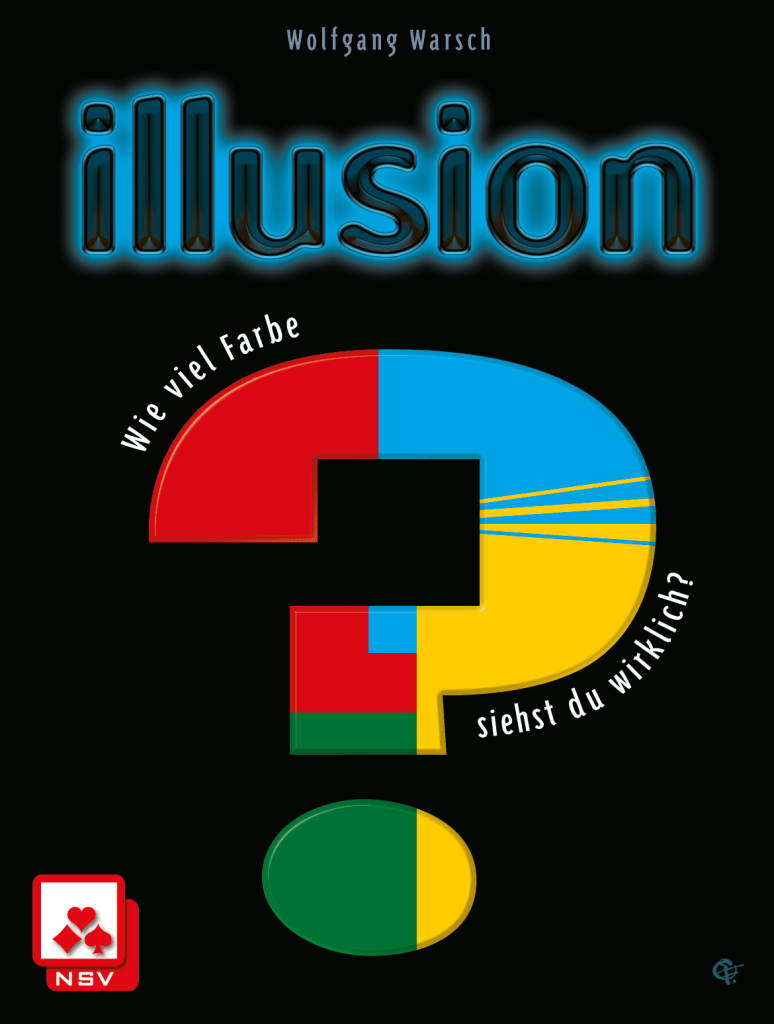
About this board game
Illusion is a color-focused board game for 2–5 players that plays in about 15 minutes. Its simple rules let everyone begin playing immediately, while each turn raises a deceptively tricky question: can you trust what your eyes see?
The game centers on color perception and perspective. Players are challenged to consider how much color they really see and whether their viewpoint is giving them the right answer. What appears obvious at first may become less certain when another perspective enters the picture.
With its immediate start and compact play time, Illusion is designed for a quick, accessible experience. The rules do not stand between players and the central challenge, making it easy to get into the game and focus on perception from the very beginning.
At the heart of Illusion is the tension between confidence and doubt. Players must decide whether their eyes are reliable, then face the possibility that they have been fooled. The game turns visual judgment into a lively shared challenge in which the right perspective can make all the difference.
Released in 2018, Illusion offers a concise experience built around a memorable premise: how much color do you really see? It is a natural choice for players looking for a short game that starts quickly and encourages everyone to question their own viewpoint.

Board Game Rules for
Illusion
Can you trust your eyes?
By Wolfgang Warsch
Players: 2-4 | Age: 8+ | Duration: app. 20 min.
Components
- 12 arrow cards (3 each in yellow, red, green and blue)
- 98 color cards

The information on the back of each color card indicates what percentage of the card is represented by each color.
Note: The percentage values relate to the printable white area on the card (the grey border is not included).
Game Concept
In each round, an arrow determines which color is being played. Following the direction of the arrow, a row of cards is formed in which the proportion of the designated color on each card must get progressively higher following the direction of the arrow (equal values are also correct).

The green proportion must become progressively higher from card to card, following the direction of the arrow. Immediately next to the arrow, just a small amount of green can be seen. On the following card, there is already significantly more. On the third card, quite a lot of green is apparent and all the way over on the right, there is a huge amount. All correct so far!
As each player takes their turn, they must decide either:
- to query the validity of the entire row so far, or
- they must take an additional color card from the deck and insert it (hopefully correctly) into the row.
Preparing the Game
- The 12 arrow cards are shuffled and placed face down on the edge of the table. The top arrow card is turned over and placed face up in the center of the table.
- The 98 color cards are also shuffled and are placed with the color side facing up in a deck on the edge of the table, alongside the stack of arrow cards.
- The top color card is taken from the deck and placed face up next to the arrow in the center of the table.
Warning: The back of the color card (percentage information) must not be seen.

The top arrow card (red) is turned over and placed in the center of the table. The top color card from the deck is placed alongside.
First Turn
Lots are drawn to decide who should start. The relevant player takes the top card from the color card deck and must place it alongside the color card which is already there, either to the right or to the left (in front), following the direction of the arrow.
Very important: It is crucial to prevent the back of the card with the percentage information being seen.

Tim takes the topmost color card from the deck and places it to the left of the card which is already there. By doing this, Tim suggests that the proportion of red increases from left to right.
Subsequent Turns: Add a Card or Challenge
Now it is the turn of the next player in a clockwise direction. They must decide whether they believe the order to be correct for the entire row so far, or whether they would like to question the validity of the entire row.
Option A: Adding a Card
- If the player believes that the entire row is correct, they take the top color card from the deck and insert it into the existing row: all the way to the left, or all the way to the right, or between two cards. After the new card has been inserted, the cards can be realigned so they lie neatly in sequence.
Note: It is not permitted to retrospectively swap any cards which were played earlier.

Sarah takes the next color card from the deck and places it between the cards which have already been played.
Now it is the turn of the next player in a clockwise direction, and they must decide for themselves whether they believe that the order is correct for the entire row so far, or whether they would like to question the validity of the entire row. Provided no-one questions the sequence, play continues in a clockwise direction, as described, with the row growing by one card after each player’s turn.

Lucas and Emma take their turns one after the other, and each of them inserts a color card into the row.
Option B: Questioning the Row
If it comes to a player’s turn and they do not believe in the validity of the entire row, they must say loudly and clearly “I don’t believe it”. When this happens, all the cards played so far are turned over and the percentage values are inspected to work out whether or not the sequence was correct. The row is deemed to be correct, if the percentage values get progressively higher from left to right following the direction of the colour arrow. Note: If two immediately adjacent cards have identical percentage values, this is considered to be correct.

Tim does not believe Emma that the entire row is correct and he declares his suspicion. All five cards are turned over. And indeed, after 16% comes a lower value (11%) – that is an error.
Awarding the Arrow Card:
- If the player queries correctly, i.e. there was at least one error in the row (regardless of who actually committed this error!), the questioning player receives the arrow card as a reward.
Tim queried the row correctly and receives the red arrow card as his reward. - If the player makes an incorrect query (i.e. the entire row was correct), then the arrow card is awarded to the player who put down the final color card immediately before the questioning player.
Starting a New Round
All the color cards are removed from the center of the table and are no longer required.
Now the next round is played. The game is prepared and the next round played exactly as described above. The new round begins with the player who previously received the arrow card.
Winning the Game
Further rounds are played in the manner described until someone obtains 3 arrow cards – that player is the winner.
Variant
Of course, you could also play 12 rounds. Then the winner is the player with the most arrow cards.
Overview & Components
Can you trust your eyes?
By Wolfgang Warsch
Players: 2-4 | Age: 8+ | Duration: app. 20 min.
Components
- 12 arrow cards (3 each in yellow, red, green and blue)
- 98 color cards
The information on the back of each color card indicates what percentage of the card is represented by each color.
Note: The percentage values relate to the printable white area on the card (the grey border is not included).
Game Concept
In each round, an arrow determines which color is being played. Following the direction of the arrow, a row of cards is formed in which the proportion of the designated color on each card must get progressively higher following the direction of the arrow (equal values are also correct).
The green proportion must become progressively higher from card to card, following the direction of the arrow. Immediately next to the arrow, just a small amount of green can be seen. On the following card, there is already significantly more. On the third card, quite a lot of green is apparent and all the way over on the right, there is a huge amount. All correct so far!
As each player takes their turn, they must decide either:
- to query the validity of the entire row so far, or
- they must take an additional color card from the deck and insert it (hopefully correctly) into the row.
Setup
Preparing the Game
- The 12 arrow cards are shuffled and placed face down on the edge of the table. The top arrow card is turned over and placed face up in the center of the table.
- The 98 color cards are also shuffled and are placed with the color side facing up in a deck on the edge of the table, alongside the stack of arrow cards.
- The top color card is taken from the deck and placed face up next to the arrow in the center of the table.
Warning: The back of the color card (percentage information) must not be seen.
The top arrow card (red) is turned over and placed in the center of the table. The top color card from the deck is placed alongside.
How to Play
First Turn
Lots are drawn to decide who should start. The relevant player takes the top card from the color card deck and must place it alongside the color card which is already there, either to the right or to the left (in front), following the direction of the arrow.
Very important: It is crucial to prevent the back of the card with the percentage information being seen.
Tim takes the topmost color card from the deck and places it to the left of the card which is already there. By doing this, Tim suggests that the proportion of red increases from left to right.
Subsequent Turns: Add a Card or Challenge
Now it is the turn of the next player in a clockwise direction. They must decide whether they believe the order to be correct for the entire row so far, or whether they would like to question the validity of the entire row.
Option A: Adding a Card
- If the player believes that the entire row is correct, they take the top color card from the deck and insert it into the existing row: all the way to the left, or all the way to the right, or between two cards. After the new card has been inserted, the cards can be realigned so they lie neatly in sequence.
Note: It is not permitted to retrospectively swap any cards which were played earlier.
Sarah takes the next color card from the deck and places it between the cards which have already been played.
Now it is the turn of the next player in a clockwise direction, and they must decide for themselves whether they believe that the order is correct for the entire row so far, or whether they would like to question the validity of the entire row. Provided no-one questions the sequence, play continues in a clockwise direction, as described, with the row growing by one card after each player’s turn.
Lucas and Emma take their turns one after the other, and each of them inserts a color card into the row.
Option B: Questioning the Row
If it comes to a player’s turn and they do not believe in the validity of the entire row, they must say loudly and clearly “I don’t believe it”. When this happens, all the cards played so far are turned over and the percentage values are inspected to work out whether or not the sequence was correct. The row is deemed to be correct, if the percentage values get progressively higher from left to right following the direction of the colour arrow. Note: If two immediately adjacent cards have identical percentage values, this is considered to be correct.
Tim does not believe Emma that the entire row is correct and he declares his suspicion. All five cards are turned over. And indeed, after 16% comes a lower value (11%) – that is an error.
Awarding the Arrow Card:
- If the player queries correctly, i.e. there was at least one error in the row (regardless of who actually committed this error!), the questioning player receives the arrow card as a reward.
Tim queried the row correctly and receives the red arrow card as his reward. - If the player makes an incorrect query (i.e. the entire row was correct), then the arrow card is awarded to the player who put down the final color card immediately before the questioning player.
End of Round & Winning the Game
Starting a New Round
All the color cards are removed from the center of the table and are no longer required.
Now the next round is played. The game is prepared and the next round played exactly as described above. The new round begins with the player who previously received the arrow card.
Winning the Game
Further rounds are played in the manner described until someone obtains 3 arrow cards – that player is the winner.
Variant
Of course, you could also play 12 rounds. Then the winner is the player with the most arrow cards.
