
Kamisado
2008
Race octagonal dragon towers across a shifting color-based board in a tense, luck-free duel of movement, blocking, and tactical promotion.
20
minutes
2 - 2
player(s)
10+
Medium

About this board game
Kamisado is a two-player strategy game with an approximate 20-minute playing time, offering a contest of pure skill with no dice, cards, or other chance elements.
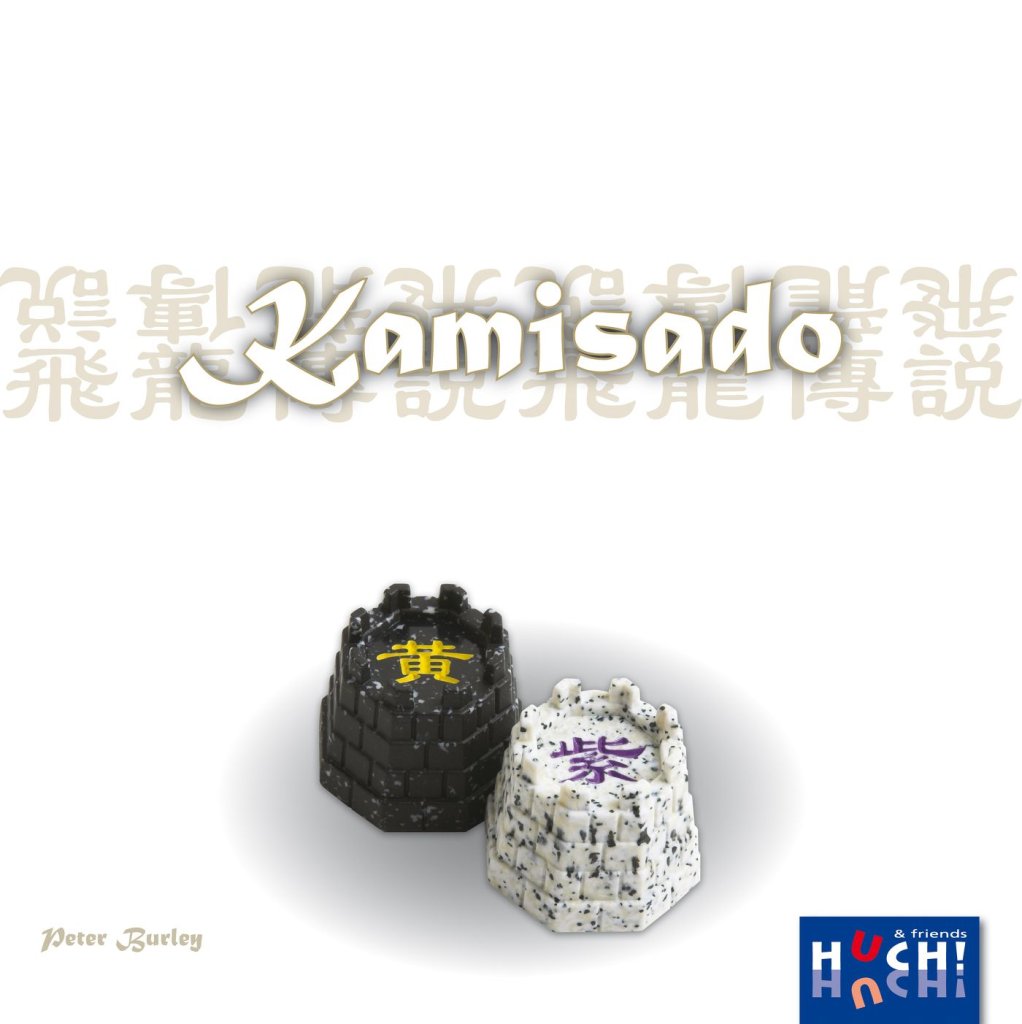
Each round is a race to move one of your octagonal dragon towers to the opposite side of the board. Towers travel in straight lines, moving either forwards or diagonally forwards, but the color of the space your opponent has just occupied determines which of your towers you must move next.
This color-based movement rule makes every turn both an opportunity and a constraint. Routes that appear open can become blocked by enemy towers—or by your own pieces—forcing you to reassess your plans as the position changes.
- No chance elements: every outcome comes from the players’ decisions.
- Color-driven turns: your opponent’s destination space determines your next tower.
- Blocking and forced movement: occupied routes can limit or prevent your options.
- Sumo promotion: advanced towers can push opposing pieces backwards and earn extra turns.
If a tower cannot move, your opponent moves again immediately, using the tower that matches the color of the space occupied by the stymied piece. As the game develops, these forced sequences and blocked paths create increasingly complex tactical situations.
Towers that reach the required stage are promoted to Sumos, gaining the ability to push opposing towers backwards. These pushes can also earn extra turns, adding another layer to the race and making each advance matter.
Players continue across rounds until one accumulates the required winning total and earns the title of Kamisado Grand Master—at least until the next game. First released in 2008, Kamisado combines direct competition, constrained movement, and evolving tactical challenges in a compact head-to-head experience.

Board Game Rules for
Kamisado
To reach your opponent’s “home row” with one of your colored dragon towers. Achieving this in the Single Round (Base Game) wins the game. When playing match games, your tower gets promoted to a “Sumo” dragon tower and is worth one point to its owner. In later rounds the “Sumo” can became a “Double” worth 3 points or “Triple Sumo” worth 7 points. A “Triple Sumo” that gets promoted again scores 15 total points.
The game is offered in the following matchups:
- Single Round (Base Game): where the first player to score 1 point is the winner.
- Standard Match: where the first player to score a total of 3 points is the winner.
- Long Match: where the first player to score a total of 7 points is the winner.
- Marathon Match: where the first player to score a total of 15 points is the winner.
Each player places each tower on their “home row”, matching the tower’s color to their specific square color.
During each round, the players take turns moving a dragon tower, each attempting to be the first to place a dragon tower on a square within their opponent’s “home row” (rear row). The dragon towers are moved according to these 2 rules:
- Rule 1: For the first move only in any round, the player can select any of their eight dragon towers to move.
- Rule 2: For all subsequent moves in that round, each player must move the dragon tower that matches the color of the square on which their opponent’s previous piece has been placed. IE: Player one moves his yellow tower to a purple square. Player two must then move their purple tower to a valid square.
Valid Movement Rules
- Rule 1: Towers must be moved in a straight line, vertically or diagonally forwards. Sideway or backward moves are NEVER allowed (except backward moves made as a result of a “Sumo push”).
- Rule 2: Towers can be moved any number of squares, but may not pass through any square that already contains a tower (player or opponent).
- Rule 3: A tower can only move to an empty square (two towers can’t occupy the same space).
- Rule 4: A tower can move diagonally between two towers which touch corner-to-corner.
- Rule 5: A tower must be moved at least one square, assuming that it is possible to do so.
- Rule 6: If unable to move the required tower in any direction forward that player loses their turn, allowing their opponent to immediately move again.
- Rule 7: The round ends once a player moves a tower to any square within their opponent’s “home row”.
- Rule 8: In rare circumstances, there are occasions where players can find themselves in “deadlock situations”. These circumstance occur when both players have towers which are completely blocked and are unable to be moved OR have two towers that repeat moves indefinitely. In either of these situations, the player who made that final move (creating this occurrence) is considered to have lost the round.
If playing more than one round, players do not immediately reset the board. The order of the “home row” will be partially determined by the finished order of the pieces from the previous game. The initial order, in which they are placed, is determined by the winner of the previous round—choosing to fill from the left or from the right.
Rules Governing Filling from Left or Right
- Rule 1: The player who won the previous round (the “Defender”) chooses in which direction to fill.
- Rule 2: The player who lost the previous round (the “Challenger”) must fill in the same way.
- Rule 3: If filling from the left, fill from brown to orange square; filling from the right, orange to brown square.
- Rule 4: Using the final order of the towers, from the previous game, you begin filling your “home row”. The piece that is closest to “home row” and nearest to the corner the “Defender” selected is placed into this corner space. The next order of pieces are also determined by row first, then the column that is closest to the corner space selected. IE: You choose left to right (start on brown) and your closest two towers are on row 2, one on blue and the other on orange. The one on blue is first since it’s closest to the brown corner starting space.
When a round ends, the piece that landed on their opponents “home row” receives one of the clear plastic “Dragon’s Teeth” for the top of that tower. Now referred to as a “Sumo” piece, it possesses the ability of the “Sumo Push” with the following qualities according to the number of “teeth” it holds:
- 1 “Dragon’s Teeth”:
- Movement is limited to a maximum of 5 spaces
- Can push a regular tower
- Landing on the “home row” gains you 3 points, and a second “Dragon Teeth”.
- 2 “Dragon’s Teeth”:
- Movement is limited to a maximum of 3 spaces
- Can push up to 2 towers at once (up to any combination of “Sumo” or regular tower pieces—2 total)
- Landing on the “home row” gains you 7 points, and a third “Dragon Teeth”
- 3 “Dragon’s Teeth”:
- Movement is now limited to 1 space
- Can push up to 3 towers at once (any combination of “Double Sumo”, “Sumo” or regular pieces—3 total)
- Landing on the “home row” gains you 15 points.
Specific Rules Regarding the “Sumo Push”
- The opponent’s tower must be on the square immediately in front of the Sumo tower.
- The opponent had to end their previous move on a square color that matches the color of the Sumo tower.
- You only push the opponents piece(s) backwards one space in a vertical direction (never diagonally).
- A “Sumo Push” is an option that the player is not obliged to use, assuming there are alternative diagonally forward moves (which bypass the piece) which could be pushed.
- Immediately after the Sumo push, the opponent loses their turn, and the original player (making the Sumo push) moves again using the dragon tower whose color matches the square which the opponents piece was pushed onto. IE: if you pushed your opponents pieces backwards onto the red square, move your red tower.
- There must be an empty square behind the pushed piece (for this piece to be pushed onto) since the color of this square determines what color tower will be moved next.
- “Sumo’s” cannot push a piece if it’s on their opponents home row (cannot push a piece off the board).
- A player can only perform a “Sumo Push” on their opponent’s pieces (never their own pieces).
Object of the Game & Match Types
To reach your opponent’s “home row” with one of your colored dragon towers. Achieving this in the Single Round (Base Game) wins the game. When playing match games, your tower gets promoted to a “Sumo” dragon tower and is worth one point to its owner. In later rounds the “Sumo” can became a “Double” worth 3 points or “Triple Sumo” worth 7 points. A “Triple Sumo” that gets promoted again scores 15 total points.
The game is offered in the following matchups:
- Single Round (Base Game): where the first player to score 1 point is the winner.
- Standard Match: where the first player to score a total of 3 points is the winner.
- Long Match: where the first player to score a total of 7 points is the winner.
- Marathon Match: where the first player to score a total of 15 points is the winner.
Setup
Each player places each tower on their “home row”, matching the tower’s color to their specific square color.
How to Play
During each round, the players take turns moving a dragon tower, each attempting to be the first to place a dragon tower on a square within their opponent’s “home row” (rear row). The dragon towers are moved according to these 2 rules:
- Rule 1: For the first move only in any round, the player can select any of their eight dragon towers to move.
- Rule 2: For all subsequent moves in that round, each player must move the dragon tower that matches the color of the square on which their opponent’s previous piece has been placed. IE: Player one moves his yellow tower to a purple square. Player two must then move their purple tower to a valid square.
Valid Movement Rules
- Rule 1: Towers must be moved in a straight line, vertically or diagonally forwards. Sideway or backward moves are NEVER allowed (except backward moves made as a result of a “Sumo push”).
- Rule 2: Towers can be moved any number of squares, but may not pass through any square that already contains a tower (player or opponent).
- Rule 3: A tower can only move to an empty square (two towers can’t occupy the same space).
- Rule 4: A tower can move diagonally between two towers which touch corner-to-corner.
- Rule 5: A tower must be moved at least one square, assuming that it is possible to do so.
- Rule 6: If unable to move the required tower in any direction forward that player loses their turn, allowing their opponent to immediately move again.
- Rule 7: The round ends once a player moves a tower to any square within their opponent’s “home row”.
- Rule 8: In rare circumstances, there are occasions where players can find themselves in “deadlock situations”. These circumstance occur when both players have towers which are completely blocked and are unable to be moved OR have two towers that repeat moves indefinitely. In either of these situations, the player who made that final move (creating this occurrence) is considered to have lost the round.
Match Play & Continued Setup
If playing more than one round, players do not immediately reset the board. The order of the “home row” will be partially determined by the finished order of the pieces from the previous game. The initial order, in which they are placed, is determined by the winner of the previous round—choosing to fill from the left or from the right.
Rules Governing Filling from Left or Right
- Rule 1: The player who won the previous round (the “Defender”) chooses in which direction to fill.
- Rule 2: The player who lost the previous round (the “Challenger”) must fill in the same way.
- Rule 3: If filling from the left, fill from brown to orange square; filling from the right, orange to brown square.
- Rule 4: Using the final order of the towers, from the previous game, you begin filling your “home row”. The piece that is closest to “home row” and nearest to the corner the “Defender” selected is placed into this corner space. The next order of pieces are also determined by row first, then the column that is closest to the corner space selected. IE: You choose left to right (start on brown) and your closest two towers are on row 2, one on blue and the other on orange. The one on blue is first since it’s closest to the brown corner starting space.
Sumo Dragon Towers & The Sumo Push
When a round ends, the piece that landed on their opponents “home row” receives one of the clear plastic “Dragon’s Teeth” for the top of that tower. Now referred to as a “Sumo” piece, it possesses the ability of the “Sumo Push” with the following qualities according to the number of “teeth” it holds:
- 1 “Dragon’s Teeth”:
- Movement is limited to a maximum of 5 spaces
- Can push a regular tower
- Landing on the “home row” gains you 3 points, and a second “Dragon Teeth”.
- 2 “Dragon’s Teeth”:
- Movement is limited to a maximum of 3 spaces
- Can push up to 2 towers at once (up to any combination of “Sumo” or regular tower pieces—2 total)
- Landing on the “home row” gains you 7 points, and a third “Dragon Teeth”
- 3 “Dragon’s Teeth”:
- Movement is now limited to 1 space
- Can push up to 3 towers at once (any combination of “Double Sumo”, “Sumo” or regular pieces—3 total)
- Landing on the “home row” gains you 15 points.
Specific Rules Regarding the “Sumo Push”
- The opponent’s tower must be on the square immediately in front of the Sumo tower.
- The opponent had to end their previous move on a square color that matches the color of the Sumo tower.
- You only push the opponents piece(s) backwards one space in a vertical direction (never diagonally).
- A “Sumo Push” is an option that the player is not obliged to use, assuming there are alternative diagonally forward moves (which bypass the piece) which could be pushed.
- Immediately after the Sumo push, the opponent loses their turn, and the original player (making the Sumo push) moves again using the dragon tower whose color matches the square which the opponents piece was pushed onto. IE: if you pushed your opponents pieces backwards onto the red square, move your red tower.
- There must be an empty square behind the pushed piece (for this piece to be pushed onto) since the color of this square determines what color tower will be moved next.
- “Sumo’s” cannot push a piece if it’s on their opponents home row (cannot push a piece off the board).
- A player can only perform a “Sumo Push” on their opponent’s pieces (never their own pieces).
