
Olympia 2000 (v. Chr.)
1994
Compete in ancient Olympic events with contrasting athletes, where the winner claims the prize and the loser chooses the next event.
30
minutes
2 - 5
player(s)
9+
Light

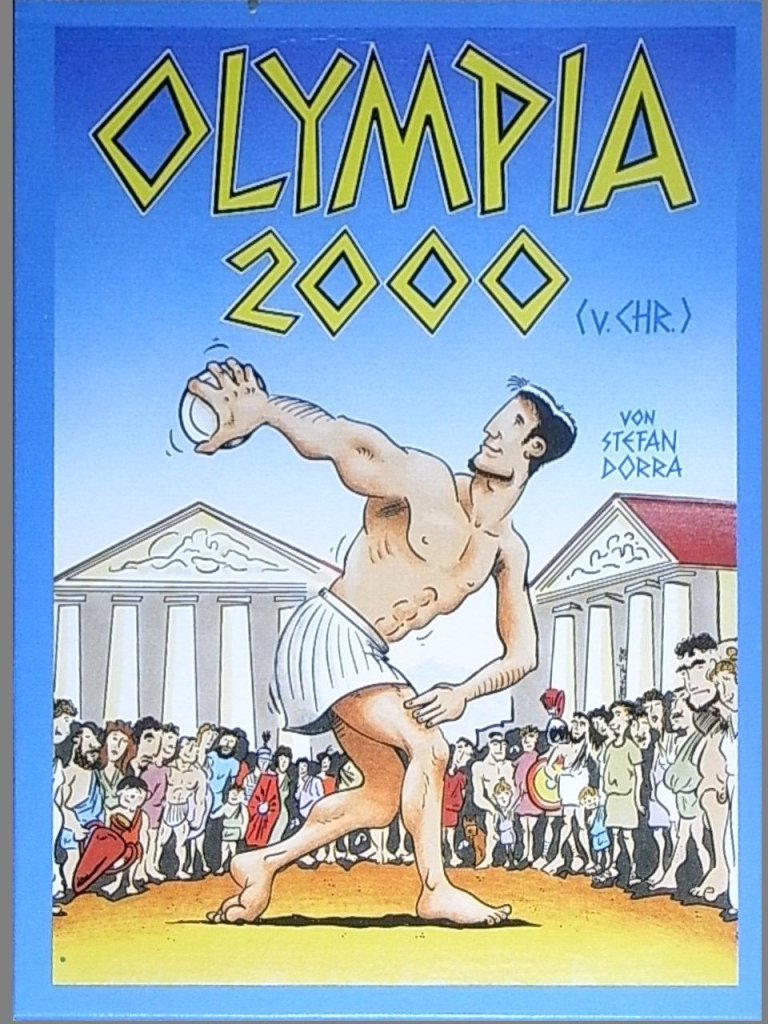
About this board game
Olympia 2000 (v. Chr.) is a simultaneous card-playing game for 2–5 players, with a playing time of about 30 minutes. In this relative of Hols der Geier and Raj, players compete in ancient Olympic events by selecting athletes from their hands.
Each card shows a picture of an athlete alongside ratings for their skills in the different events. An athlete may excel at one contest while performing very poorly in another. The field can include competitors who are simply too inept for words, as well as athletes with almost god-like abilities.
- Long-jump
- Discus
- Archery
Players reveal their chosen cards simultaneously for the current event. The best athlete wins the prize for that contest, but the result has an important twist: the worst athlete gets to choose the upcoming event.
This creates the central challenge of Olympia 2000 (v. Chr.). A powerful athlete may be ideal for the event in progress, yet a weak result can give another player control over what comes next. Using each card wisely means weighing its strengths and weaknesses across the different competitions rather than simply playing the highest rating.
Released in 1994, Olympia 2000 (v. Chr.) turns a small set of simultaneous choices into a contest where victory and event selection are closely connected. Success depends on judging when to commit a standout athlete, when to accept a poor result, and how the current competition may shape the next one.
/pic7182955.jpg)
