
Planet
2018
Build continents from varied terrain, form suitable environments, and gain animal cards by fulfilling the most conditions.
45
minutes
2 - 4
player(s)
8+
Medium Light

About this board game
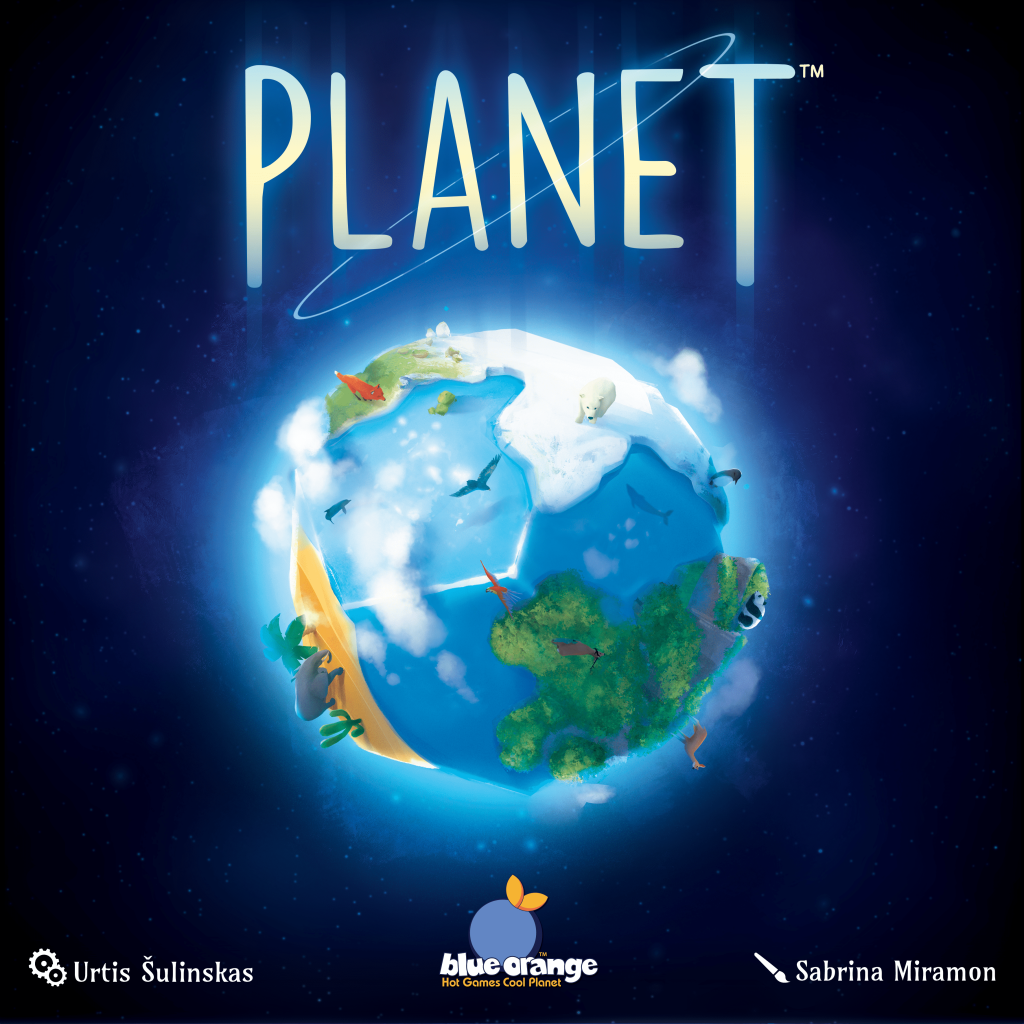
Planet is a tile-placement game for 2–4 players, with play sessions lasting about 45 minutes. Each player begins with a planet core that is completely empty, ready to be shaped into a world capable of supporting animal life.
On each turn, players choose a tile and place it on their planet. Tiles feature mountains, ice, forests, deserts, and water, giving players the materials needed to arrange their own continents and environments.
- Deploy mountain ranges and glaciers.
- Spread deserts, forests, and oceans across the planet.
- Arrange continents to create suitable habitats.
- Fulfill conditions connected to different animals.
The way each planet develops determines which environments can emerge. Players must handle their continents wisely, arranging the available terrain to meet the conditions for the appearance of certain animals.
After players build their environments, the player who fulfills the most conditions for a particular animal gains its card. These animal cards represent the life supported by the planet’s developing landscapes and reward successful habitat creation.
Planet combines accessible tile placement with a clear ecological theme. Every choice contributes to the shape of a personal world, from the position of its oceans and deserts to the spread of its forests, mountains, and ice.
Released in 2018, Planet invites players to turn blank planet cores into densely populated worlds. Build varied landscapes, create environments suitable for animal life, and see whose planet supports the greatest range of life.

Board Game Rules for
Planet
A world is taking shape in the palm of your hands. Spread your mountain ranges and your deserts, expand your forests, oceans and glaciers. Strategically position your continents to form hospitable environments for animal life to develop and try to create the most populated Planet!
2 to 4 players – 8 and up – 30 Minutes
Author: Urtis Šulinskas
Illustrator: Sabrina Miramon
Game Components
- 4 Planet cores
- 50 Continent tiles
- 45 Animal cards
- 5 “Natural Habitat” objective cards
- 1 First Player token
Object of the Game
Throughout the 12 turns that make up the game, strategically position your continent tiles on your Planet’s core to form hospitable environments for animal life to flourish. Win points by completing “Natural Habitat” objectives and by populating your Planet with the most animals possible.
The winner is the player with the highest points total at the end of the game.
- Every player starts with an empty Planet core (without any Continent tiles on its surface).
- Shuffle and place all the Continent tiles in a line of 10 piles, each containing 5 tiles, in the centre of the table, face down.
- Shuffle all Animal Cards. Randomly draw 20 cards. Place the 20 cards face up, following the layout shown in the diagram below. Be careful, it is very important that the cards are set out in rows with the piles of tiles arranged exactly as shown in the diagram.

Positioning the cards below the tiles makes it easier to keep track of each turn.
- Each player receives a “Natural Habitat” objective card and secretly takes note of it before placing it face down in front of them.
- The youngest player takes the First Player token and the game begins.
Note: For a first game experience, see “Variation 1: Beginner Game”.
Every turn is made up of two parts:
- Adding continents
- The origin of life (from the 3rd turn onwards)
1. Adding Continents
- Take the first pile of 5 Continent tiles and spread these out across the centre of the table, face up.
- The first player chooses one tile from these 5 and adds this to a free space on their Planet’s core. The other players then take turns doing the same, moving in a clockwise direction.
- Once every player has selected a tile, place all the remaining tiles face down in the 11th spot in the Continent row. Once this pile has 5 tiles, place the remaining tiles from your rounds in the 12th spot. When this pile has 5 tiles, any additional tiles are discarded and placed in the box.
Example: in a game with 4 players, after the first turn, the one remaining tile is positioned at the end of the row of piles of Continent tiles.

Note: At any time during the game, players can take a look at other players’ planets.
Areas, Regions & Objective Cards
Each “Natural Habitat” objective card can bring you points, at the end of the game, for the total Areas of this “Natural Habitat” present on your Planet.
For example: you would need 11, 12 or 13 Areas of the Glacier Natural Habitat at the end of the game, in order to score 2 points.


2. The Origin of Life
From the third turn onwards, life starts to emerge on the Planets. All players check if their Planet meets the conditions required to host the Animal cards which can be won with each turn.
3 types of requirements for welcoming animals onto a Planet exist:
- Having the most of one kind of Region: Count the number of distinct Regions of the same Natural Habitat across your Planet.
Example: having the most forests to host a Panda. - Having the biggest Region of one kind which touches a specified Habitat: Count the number of Areas of the same type of Natural Habitat which create the biggest Region. The Region needs to be touching at least one Area of another type of Natural Habitat.
Example: in order to host the Elephant, you would need to have the largest desert Region which touches a mountain Area. - Having the biggest Region which is not in contact with a specified Habitat: Count the number of Areas of the same type of Natural Habitat which create the biggest Region. This Region CANNOT be in contact with the specified Natural Habitat.
Example: to host the reindeer, you would need to have the largest glacier Region which DOES NOT touch a desert Area.
The player who possesses the most habitable Planet for the animal takes the card and keeps it in front of them.
Note: At the end of the game, the animal cards bring 1 or 2 points to the player who has kept them. (For scoring, see “End of the Game”).
The player who had the First Player token gives it to the player on their left.
The turn ends and a new turn begins.
In the Case of a Draw
If there is a draw, the animal is not given to any player and the card is placed at the bottom of the column for the next turn. It is then possible for players to win it later.
If one or several animals don’t find a Planet which is habitable for them during the last turn, apply the following rule:
- If the card’s requirement is: “having the most of one kind of Region”, put this card back in the box, no player will win it.
- For the 2 other requirements: players in a draw look at their Planet to see if one of them meets the requirement a second time elsewhere. The player who meets this requirement wins the card.
- If there is still a draw, they check to see if one of them meets the requirement a 3rd time elsewhere on their Planet. In the event of there still being a draw, no one wins the card and it goes back in the box.
Example: Matthew and Celine are competing to house the fox on their Planet. On the last turn, they both had a forest spanning 9 Areas and touching a glacier. However, Celine’s Planet also contains a second 5-Areas forest which touches a glacier, whereas Matthew doesn’t have another. In this case, Céline wins the card.

The game ends after the 12th turn (when the player’s Planets are fully covered) and after the last Animal cards have been won.
- Each player reveals their objective card and checks whether or not they have met their objectives, winning points if they have succeeded.
- Each player then scores:
- 1 point per Animal card whose Natural Habitat is the same as on their objective card, and
- 2 points per Animal card whose Natural Habitat is not the same as that on their objective card (see color codes on the edge of the Animal cards).
Note: Players score points with animals regardless if they have met the minimum “Areas” requirement on their Natural Habitat objective card.
The player with the most points wins the game. In case of a draw, players with the most Animals cards win the game. If there is still a tie, each player remaining in the tie wins.
Variation 1 – Beginner Game
For your first game, or for younger players, simply play without the “Natural Habitat” objective cards. Each animal earns 1 point.
Variation 2 – Mystery Animals
During set up, position the 20 Animal cards in 2 lines of 10 cards in the center of the table. One of the lines is placed face down and the other face up.

After each turn, the next mystery Animal card is revealed. This allows players to discover mystery Animals 3 turns ahead.
Overview
A world is taking shape in the palm of your hands. Spread your mountain ranges and your deserts, expand your forests, oceans and glaciers. Strategically position your continents to form hospitable environments for animal life to develop and try to create the most populated Planet!
2 to 4 players – 8 and up – 30 Minutes
Author: Urtis Šulinskas
Illustrator: Sabrina Miramon
Game Components
- 4 Planet cores
- 50 Continent tiles
- 45 Animal cards
- 5 “Natural Habitat” objective cards
- 1 First Player token
Object of the Game
Throughout the 12 turns that make up the game, strategically position your continent tiles on your Planet’s core to form hospitable environments for animal life to flourish. Win points by completing “Natural Habitat” objectives and by populating your Planet with the most animals possible.
The winner is the player with the highest points total at the end of the game.
Setup
- Every player starts with an empty Planet core (without any Continent tiles on its surface).
- Shuffle and place all the Continent tiles in a line of 10 piles, each containing 5 tiles, in the centre of the table, face down.
- Shuffle all Animal Cards. Randomly draw 20 cards. Place the 20 cards face up, following the layout shown in the diagram below. Be careful, it is very important that the cards are set out in rows with the piles of tiles arranged exactly as shown in the diagram.
Positioning the cards below the tiles makes it easier to keep track of each turn.
- Each player receives a “Natural Habitat” objective card and secretly takes note of it before placing it face down in front of them.
- The youngest player takes the First Player token and the game begins.
Note: For a first game experience, see “Variation 1: Beginner Game”.
How to Play
Every turn is made up of two parts:
- Adding continents
- The origin of life (from the 3rd turn onwards)
1. Adding Continents
- Take the first pile of 5 Continent tiles and spread these out across the centre of the table, face up.
- The first player chooses one tile from these 5 and adds this to a free space on their Planet’s core. The other players then take turns doing the same, moving in a clockwise direction.
- Once every player has selected a tile, place all the remaining tiles face down in the 11th spot in the Continent row. Once this pile has 5 tiles, place the remaining tiles from your rounds in the 12th spot. When this pile has 5 tiles, any additional tiles are discarded and placed in the box.
Example: in a game with 4 players, after the first turn, the one remaining tile is positioned at the end of the row of piles of Continent tiles.
Note: At any time during the game, players can take a look at other players’ planets.
Areas, Regions & Objective Cards
Each “Natural Habitat” objective card can bring you points, at the end of the game, for the total Areas of this “Natural Habitat” present on your Planet.
For example: you would need 11, 12 or 13 Areas of the Glacier Natural Habitat at the end of the game, in order to score 2 points.
2. The Origin of Life
From the third turn onwards, life starts to emerge on the Planets. All players check if their Planet meets the conditions required to host the Animal cards which can be won with each turn.
3 types of requirements for welcoming animals onto a Planet exist:
- Having the most of one kind of Region: Count the number of distinct Regions of the same Natural Habitat across your Planet.
Example: having the most forests to host a Panda. - Having the biggest Region of one kind which touches a specified Habitat: Count the number of Areas of the same type of Natural Habitat which create the biggest Region. The Region needs to be touching at least one Area of another type of Natural Habitat.
Example: in order to host the Elephant, you would need to have the largest desert Region which touches a mountain Area. - Having the biggest Region which is not in contact with a specified Habitat: Count the number of Areas of the same type of Natural Habitat which create the biggest Region. This Region CANNOT be in contact with the specified Natural Habitat.
Example: to host the reindeer, you would need to have the largest glacier Region which DOES NOT touch a desert Area.
The player who possesses the most habitable Planet for the animal takes the card and keeps it in front of them.
Note: At the end of the game, the animal cards bring 1 or 2 points to the player who has kept them. (For scoring, see “End of the Game”).
The player who had the First Player token gives it to the player on their left.
The turn ends and a new turn begins.
In the Case of a Draw
If there is a draw, the animal is not given to any player and the card is placed at the bottom of the column for the next turn. It is then possible for players to win it later.
If one or several animals don’t find a Planet which is habitable for them during the last turn, apply the following rule:
- If the card’s requirement is: “having the most of one kind of Region”, put this card back in the box, no player will win it.
- For the 2 other requirements: players in a draw look at their Planet to see if one of them meets the requirement a second time elsewhere. The player who meets this requirement wins the card.
- If there is still a draw, they check to see if one of them meets the requirement a 3rd time elsewhere on their Planet. In the event of there still being a draw, no one wins the card and it goes back in the box.
Example: Matthew and Celine are competing to house the fox on their Planet. On the last turn, they both had a forest spanning 9 Areas and touching a glacier. However, Celine’s Planet also contains a second 5-Areas forest which touches a glacier, whereas Matthew doesn’t have another. In this case, Céline wins the card.
End of the Game & Scoring
The game ends after the 12th turn (when the player’s Planets are fully covered) and after the last Animal cards have been won.
- Each player reveals their objective card and checks whether or not they have met their objectives, winning points if they have succeeded.
- Each player then scores:
- 1 point per Animal card whose Natural Habitat is the same as on their objective card, and
- 2 points per Animal card whose Natural Habitat is not the same as that on their objective card (see color codes on the edge of the Animal cards).
Note: Players score points with animals regardless if they have met the minimum “Areas” requirement on their Natural Habitat objective card.
The player with the most points wins the game. In case of a draw, players with the most Animals cards win the game. If there is still a tie, each player remaining in the tie wins.
Variations
Variation 1 – Beginner Game
For your first game, or for younger players, simply play without the “Natural Habitat” objective cards. Each animal earns 1 point.
Variation 2 – Mystery Animals
During set up, position the 20 Animal cards in 2 lines of 10 cards in the center of the table. One of the lines is placed face down and the other face up.
After each turn, the next mystery Animal card is revealed. This allows players to discover mystery Animals 3 turns ahead.