The Hunt for Red October
1988
Command Soviet or NATO forces, conceal your units, detect enemy formations, and fight through eight tense naval-combat scenarios.
60
minutes
2 - 2
player(s)
12+
Medium

About this board game
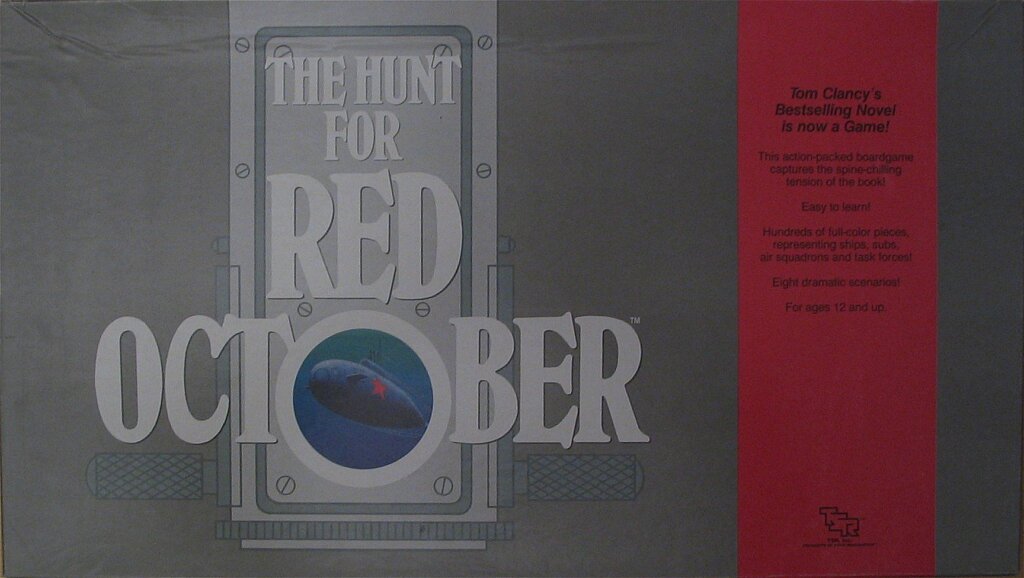
The Hunt for Red October is a two-player naval combat game for a 60-minute session, set in the North Atlantic as Soviet and NATO forces face off. Released in 1988, it uses hidden unit information, detection attempts, movement, and combat to recreate a tense search across sea and coastal spaces.
The map is divided into irregular spaces containing land, shallow sea, or deep sea. Land spaces may feature airbases or ports, while sea spaces can contain standing detection patrols such as SOSUS. Eight scenarios provide different combinations of aircraft, surface ships, and submarines for the opposing players to command.
- Double-sided counters conceal specific unit information from opponents.
- Units have detection and attack ratings, with counters turned sideways when detected.
- Ships and submarines move up to three spaces, while aircraft move one, four, or eight spaces depending on type.
- NATO receives 2+d10 detection attempts each turn; the Soviet player receives 2+d6.
When opposing pieces enter the same space, players spend detection attempts to locate enemy units, usually rolling a d10 against the relevant detection rating. Once units are found, combat may begin, although undetected units can also attack; firing reveals them, making a second-phase attack especially important.
Combat unfolds in two attack phases, with dice rolled against the attacking units’ ratings and hits resolved simultaneously. Ships that did not fire in the first phase may attack in the second. Submarines, small surface ships, and large surface ships require one, two, or three hits respectively to be destroyed, while aircraft are destroyed only when a rolled hit is a 1 or 2.
Scenario conditions determine victory. With optional rules that do not significantly increase complexity, The Hunt for Red October combines concealed forces and variable detection resources into a focused naval duel.
/pic7182955.jpg)
