
Turing Machine
2022
Use perforated cards and clever questions to solve one of more than seven million deduction challenges.
20
minutes
1 - 4
player(s)
14+
Medium


About this board game
Turing Machine is a competitive deduction game for 1–4 players that plays in about 20 minutes. In this cerebral challenge, you must find a secret code before the other players by cleverly questioning a proto-computer that works without electricity or modern technology.
The game creates a distinctive analog computing experience through unique components made from perforated cards. Each question helps you investigate the hidden code, turning the search into a focused contest of logic, deduction, and careful reasoning.
With more than seven million problems, Turing Machine offers challenges ranging from simple puzzles to mind-staggeringly complex combinations. This enormous variety gives the game practically endless replayability while keeping every deduction challenge engaging.
- Competitive mode: Race against the other players to discover the secret code first.
- Team play: Combine your brain power to tackle the challenge together.
- Solo play: Try to beat the game itself in a demanding individual experience.
Released in 2022, Turing Machine provides a unique take on deduction games by replacing electronic technology with an intriguing analog system. Its blend of questioning, code breaking, and intense cerebral play makes it a compelling choice for players ready to test their reasoning.
Designers
Illustrator
/pic7182955.jpg)

Board Game Rules for
Turing Machine
A game by Yoann Levet and Fabien Gridel
British mathematician and cryptanalyst Alan Turing made a significant contribution to the advent of computers. We are offering you a chance to use a proto-computer, working without electricity or electronics, to find secret codes.
Goal of the Game
Be the first to find the only code that will pass the test of all Verifiers. The code is made up of 3 numbers between 1 and 5:
- a
 blue triangle number,
 - a
 yellow square number,
 - and a
 purple circle number.
Each Verifier checks for one CRITERION. For example, “The number is odd.”
Once you have deduced all the criteria, you can figure out the only code that will satisfy them all.
Setup for Your First Game
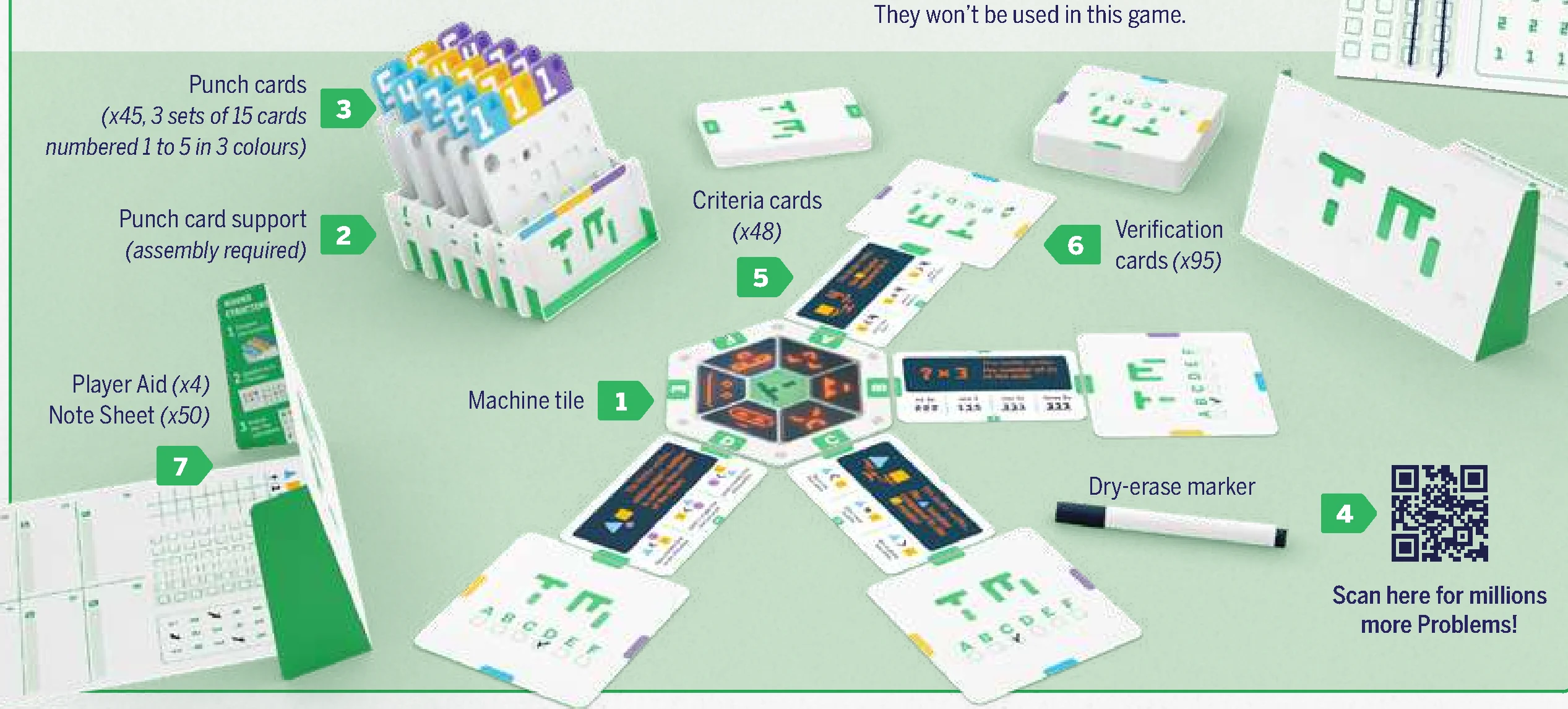
- Place the Machine tile in the centre of the table.
- Assemble the punch-card support. Do not take it apart at the end of the game; store it in the box as is.
- Place the punch cards in the support: all 1 cards in the front, followed by all 2 and so on.
- Choose a Problem to solve. Numbers 01 to 16 are introductory problems, perfect for new players. You can also find millions more problems online. We will use problem 01 for our setup example.
- Place the Criteria cards in front of their assigned Verifier:
- Verifier A: card 4
- Verifier B: card 9
- Verifier C: card 11
- Verifier D: card 14
- Place the Verification cards face down in front of their assigned Verifier (next to the Criteria card):
- A: 447

- B: 646
- C: 566
- D: 322
Note: each Verification card can be used for 4 different numbers and 4 different colours. To avoid mistakes, tick the corresponding letter on the back of each Verification card (A, B, C or D).
- A: 447
- Give a Player Aid (which doubles as a screen) and a note sheet to each player. If you are playing a game from the online app, note down the number of the game. Draw a line through Verifier columns E and F. They won’t be used in this game.
Verifier: In this game, a Verifier is a ‘fictional person’, a form of artificial intelligence. It’s not a player!
Core Gameplay
Unlike many deduction games, you won’t be questioning the other players, but a machine. This machine consists of 4 to 6 Verifiers, a kind of artificial intelligence. Each verifier checks for one single aspect, one single criterion.
Questioning a Verifier consists of asking them if your proposal passes their test. It’s up to you to figure out what you need to do to ‘pass’ their test; which criteria you must respect.
Anatomy of a Criteria Card
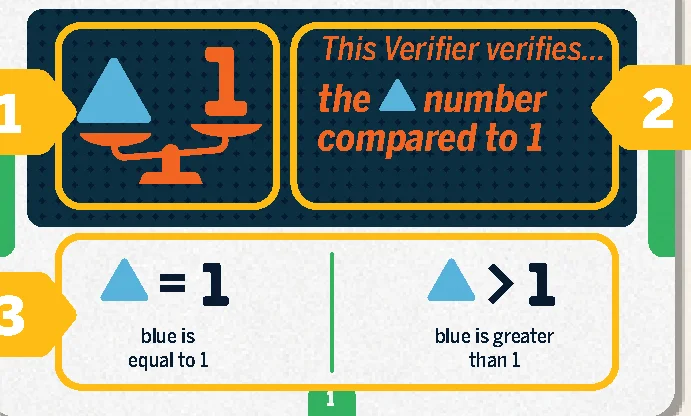
- Icon indicating what the Verifier knows.
- Written explanation of the precise element the Verifier is checking for.
- List of possible criteria this Verifier is checking for. You have to find which is the right one!
Advanced Strategy: All the Verifiers are essential to finding the final code. No Verifier will repeat information given by another. After a few games, you will notice that this bit of information will allow you to be more efficient in your deductions. You will understand, right from setup, that there are certain questions you will not need to ask.
Round Structure
The game is played in rounds, each one identical. All players will, individually and simultaneously, do the following steps:
- Compose your Proposal.
- Question.
- Deduce.
- End of Round.
1. Compose
Compose your 3-digit proposals by overlaying 3 different-coloured cards: a number, a number and a number. In the rare case that a particular card you need is being used by another player, simply wait until they are done before taking it.
2. Question
You will question up to 3 Verifiers over the course of a round, without changing your proposal.
Place the Verifier’s Verification card under your proposal, making sure it is properly lined up with the punch cards using these symbols in the corners: , circle, square, triangle.
Each Verifier will tell you if your proposal passes or fails their test.
The Verifier’s Answer
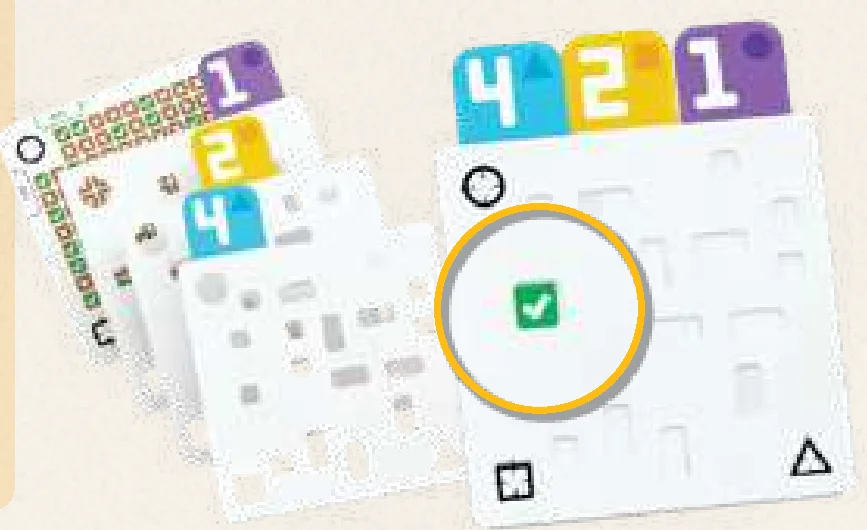
You’ll notice that only one hole appears when you overlap the 3 punch cards to make your proposal. It’s through this hole that you’ll see the Verifier’s answer:
- If the Verifier answers
 , your proposal has passed their test.
 - If the Verifier answers
 , your proposal has failed their test.
Mark a or a in the corresponding space on your note sheet.
Recap
Once you have made your 3-digit proposal, you will decide which Verifiers to question. Questioning a Verifier means asking if your proposal respects their criterion or not; if your proposal passes their test or not. The criteria that each Verifier is checking could be as simple as, “the number is even.” The criterion that will allow you to pass the Verifier’s test is one of those listed on the bottom of each Criteria card.
The answers the Verifier gives you will not give you information about the code, but only about the criteria they are verifying.
Example: Let’s imagine that the criteria of Verifier A is “The number is greater than 3.”
- 4 3 2 →
- 3 2 4 →
- 3 3 3 →
- 4 4 5 →
Only the proposals where the number is GREATER than 3 get a positive answer . The other numbers mean nothing in this example; they are not what is being verified.
3. Deduce
Put your punch cards back in the support and analyse your answers. Write down your deductions on your note sheet. Determine if you have found the code or not.
4. End of Round
Once all players have asked their questions and completed their deductions, everyone extends their closed fist and counts to 3 simultaneously. On 3, point your thumb either up or down at the same time as everyone else:
- Point upwards if you think you have found the code.
- Point downwards if you have not yet found it.
If nobody has pointed upward, start a new round. If one or more players has pointed upward, go to the Verification and End of Game section.
Reminders and Clarifications
- Game Order: Compose your proposal and question Verifiers at the same time as the other players.
- There aren’t enough punch cards: In the rare case that you need an unavailable punch card, simply wait until another player has finished using theirs to take it.
- Don’t get mixed up: Put the Verification cards back in front of the correct Verifier immediately after you have finished questioning the Verifiers!
- Number of Questions per round: You can question a maximum of 3 Verifiers per round, but you can always question fewer than 3.
- Strategy: You will need the criteria of all the Verifiers to find the code. No criterion is superfluous. Only one code respects all the criteria.
- Public and Secret information: Your proposal and the Verifiers you question are visible to everyone. Keep your answers and notes secret.
- You must keep the same proposal for the entire round: It is obligatory to write down on your note sheet your proposals and the answer to ALL the questions you ask. This will serve to determine the winner in case of a tie.
How to Use the Note Sheet
Learn how to take good notes if you want to win!
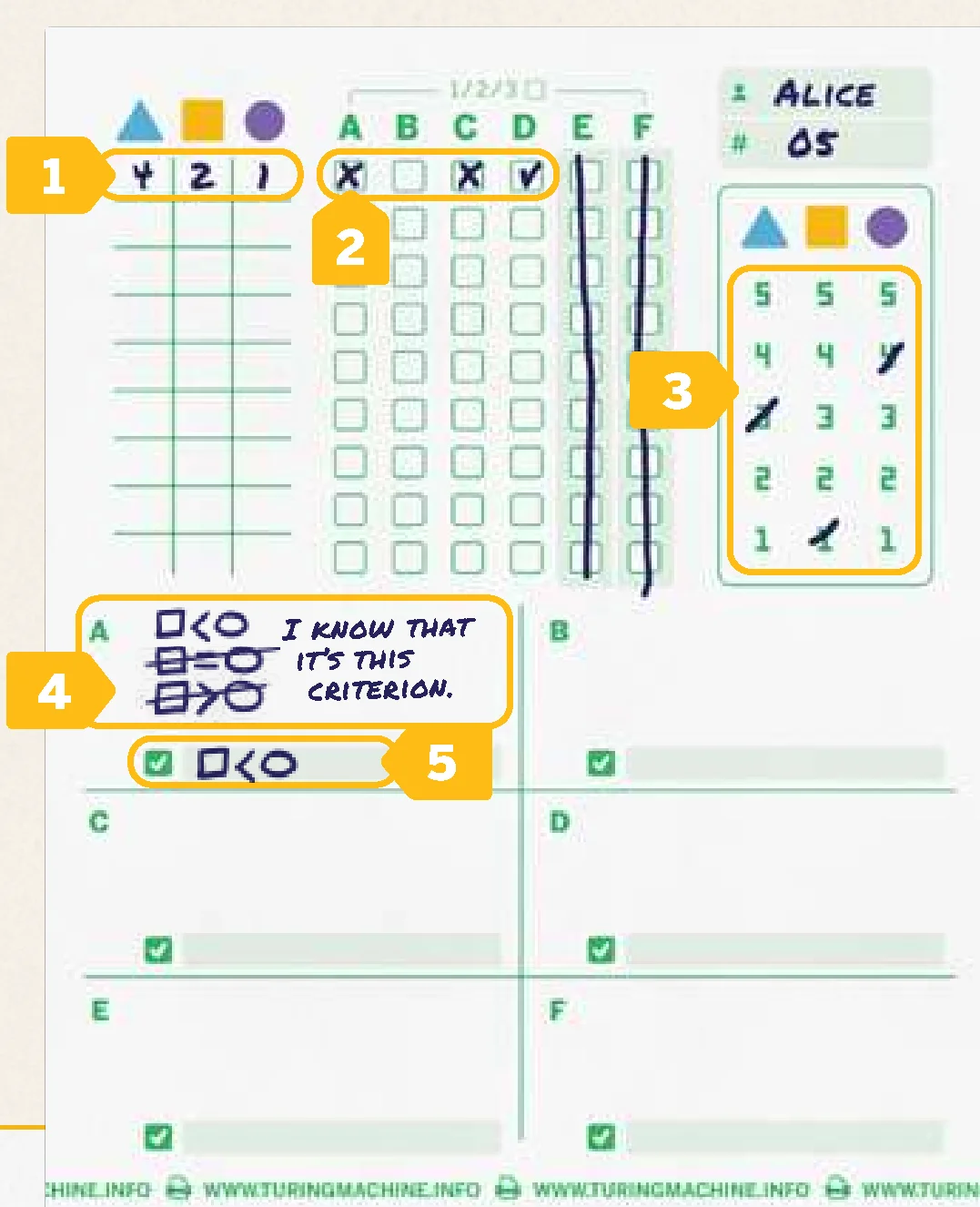
- Each round, write your proposal on the line of the current round.
- Write the answers you got ( or ) from each Verifier in the proper column. This is obligatory, and keeps track of the number of questions you’ve asked.
- Use this section to cross off any numbers you’ve eliminated.
- Use the bottom section to write down all the information you’ve learned about each.
- Write the Verifier’s criterion in this space once you have identified it.
Round Walkthrough
Show this example to anyone who is learning the game. Here is a problem with 4 criteria:
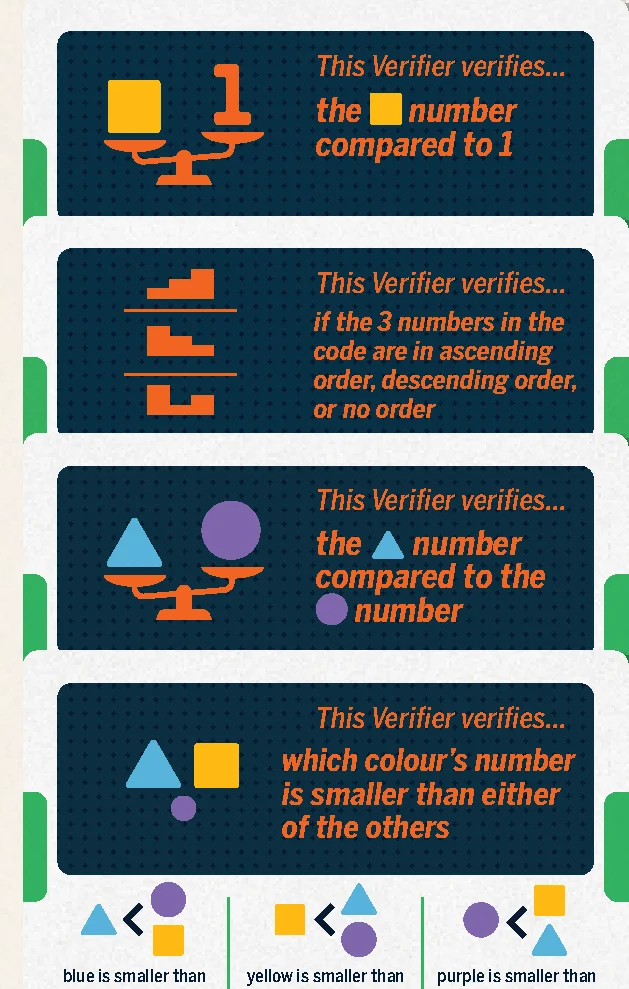
- In the first round, you put together proposal 3 3 2 and write it on your note sheet.
- Verifier A verifies one criterion: either “The number is equal to 1” or “The number is greater than 1.”
- You question A. You place their Verification card under your 3 punch cards. You see in the hole. Your proposal passed! So A’s criterion is “The number is greater than 1,” because your is 3 (> 1). This does NOT mean that the number is 3!
- Write under A on your note sheet. Put the card back face-down.
- You then question Verifier D with the same proposal. They answer . D verifies which of , , is the smallest. In your proposal, is the smallest, which failed. You deduce that the smallest is either or .
- Finally, you question C. C compares to . In your proposal, (3) is greater than (2). C answers . Thus, C’s criterion is NOT “ > ”. Either = or < .
- You cannot ask any more questions this round (maximum 3).
Verification and End of Game
If one or more players think they have found the code, they should write it secretly (and clearly!) on their note sheet. Each one then checks, in turn, the SOLUTIONS section at the bottom of p. 3 in this booklet, or uses the appropriate button in the application, and verifies if their code is correct.
If more than one person is correct, the one who found the code asking THE FEWEST questions wins. This is why keeping track of all your answers is so important (writing or ). If it is still tied, all tied players win. Prove your code is correct by composing it with the punch cards and then making sure it passes the tests of all the Verifiers!
If nobody has found the correct code, the players who were incorrect are eliminated, and the game continues for the other players. If there is only one player remaining, they win by default!
When the game is over, don’t forget to erase the on the back of the Verification cards.
Solo and Cooperative Modes
Take on the Machine!
Go to turingmachine.info and select a problem you’d like to solve. On your own or in a team, solve the problem in the fewest rounds (and questions) possible, using only one note sheet.
When you have found the code, click on MACHINE. You will discover how many rounds and questions our artificial intelligence took to find the code. To win, you must have done as well as or better than the Machine.
Watch out! Like in the regular game, you can only ask a maximum of 3 questions per round.
Handicap System
If an experienced player is playing against newer players, we strongly recommend using this system to level the playing field:
- In the first round (and only the first), the experienced player fills in a number of answer squares. These squares count as questions the player would have asked (leaving fewer for the player to ask in the first round).
- Fill in 1 square if the difference in experience/skill is slight, and 2 squares if the difference is greater.
- For example, in the latter case, the player could only ask one question in the first round, because there are 2 squares already filled in!
Online Problems & Extra Modes
You will also find 2 new, more challenging modes of play:
- Extreme: has 2 cards in front of each Verifier (but only one valid criterion amongst those presented on the 2 cards).
- Nightmare: you do not know which Verifier is associated with which Verification card.
Problems
This booklet contains 20 problems to solve, or 20 games… But you will find literally millions more on the Turing Machine website! Scan the QR code or go to turingmachine.info. For problems that work with the rules as presented here, choose the ‘Classic’ mode.
Problem Directory (Booklet)
- 01: A: 4 (447), B: 9 (646), C: 11 (566), D: 14 (322)
- 02: A: 4 (677), B: 9 (217), C: 13 (634), D: 17 (528)
- 03: A: 3 (564), B: 7 (355), C: 10 (635), D: 14 (720)
- 04: A: 3 (662), B: 9 (790), C: 15 (404), D: 16 (509)
- 05: A: 2 (413), B: 6 (532), C: 14 (596), D: 17 (537)
- 06: A: 2 (437), B: 7 (405), C: 10 (378), D: 13 (797)
- 07: A: 8 (356), B: 12 (695), C: 15 (329), D: 17 (618)
- 08: A: 1 (631), B: 5 (252), C: 9 (219), D: 15 (349), E: 16 (374)
- 09: A: 1 (357), B: 7 (610), C: 10 (463), D: 12 (399), E: 17 (393)
- 10: A: 2 (224), B: 6 (543), C: 8 (793), D: 12 (757), E: 15 (687)
- 11: A: 5 (445), B: 10 (639), C: 11 (289), D: 15 (406), E: 17 (484)
- 12: A: 4 (335), B: 9 (362), C: 18 (421), D: 20 (747)
- 13: A: 11 (279), B: 16 (515), C: 19 (770), D: 21 (523)
- 14: A: 2 (585), B: 13 (228), C: 17 (647), D: 20 (268)
- 15: A: 5 (763), B: 14 (598), C: 18 (223), D: 19 (317), E: 20 (520)
- 16: A: 2 (778), B: 7 (654), C: 12 (614), D: 16 (640), E: 19 (751), F: 22 (485)
- 17: A: 21 (341), B: 31 (432), C: 37 (706), D: 39 (495)
- 18: A: 23 (681), B: 28 (244), C: 41 (440), D: 48 (737)
- 19: A: 19 (237), B: 24 (353), C: 30 (204), D: 31 (423), E: 38 (606)
- 20: A: 11 (287), B: 22 (533), C: 30 (389), D: 33 (486), E: 34 (547), F: 40 (615)
Solutions
01: 241 | 02: 331 | 03: 435 | 04: 345 | 05: 354 | 06: 512 | 07: 241 | 08: 423 | 09: 344 | 10: 242 | 11: 325 | 12: 111 | 13: 111 | 14: 422 | 15: 253 | 16: 243 | 17: 133 | 18: 331 | 19: 224 | 20: 411
Detailed Criteria Explanations
At the beginning of every game, take the time to discuss and understand the meaning of each Criteria card.
 Card 1: To pass the test of this Verifier, you must find if the number is equal to or greater than 1. Watch out! If the number in your proposal is 3 and you get a , this does NOT mean that the number is 3, it only means that it must be greater than 1 (and not equal to it).
 Cards 2 to 4: Work similarly to Card #1, but there are now 3 possibilities: the number can be either less than, equal to, or greater than the number indicated.
 Cards 5 to 7: To pass this test, find if the number has to be even (2 or 4) or odd (1, 3, or 5).
 Cards 8 to 10: The Verifier verifies that there is a precise number (that they know) of 1s in your proposal (e.g. exactly two).
 Cards 11 to 13: Compares two numbers within your proposal (e.g. with ): less than, equal to, or greater than.
 Cards 14 to 15: The Verifier verifies that the number of a particular colour (that they know) is smaller than all the other numbers.
 Card 16: Verifies that there are more of either even (e.g.: 454) or odd (e.g.: 341) numbers in the code.
 Card 17: Verifies that there is a precise number (that they know) of even numbers in the code: zero, one, two, or three.
 Card 18: Verifies that the sum of all the numbers in the code is either even or odd.
 Card 19: Compares the sum of the and numbers to 6 (less than, equal to, or greater than 6).
 Card 20: Verifies if a number repeats itself, and if so, how many times (no repetition, repeats once, or repeats twice).
 Card 21: Verifies that there is either one pair of identical numbers (e.g.: 313), or no pairs of identical numbers (e.g.: 231, or 333).
 Card 22: Verifies that the three numbers are in ascending order, descending order, or neither.
 Card 23: Compares the sum of all the numbers with 6 (less than, equal to, or greater than 6).
 Card 24: Verifies consecutive increasing values in either a 2-digit sequence (e.g.: 312), a 3-digit sequence (e.g.: 345), or none at all.
 Card 25: Verifies increasing or decreasing values in a 2-digit consecutive sequence, a 3-digit consecutive sequence, or none at all.
 Cards 26 to 27: Verifies that the number of a particular colour (that they know) is less than 3.
 Cards 28 to 30: The Verifier verifies that the number of a particular colour (that they know) is 1.
 Cards 31 to 32: The Verifier verifies that the number of a particular colour (that they know) is greater than 1.
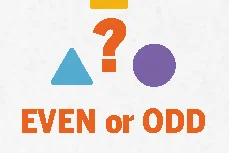 Card 33: The Verifier verifies that the number of a particular colour (that they know) is odd or even.
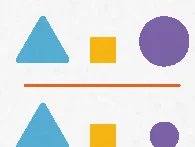 Cards 34 to 35: The Verifier verifies that the number of a particular colour is less than or equal to all the other numbers.
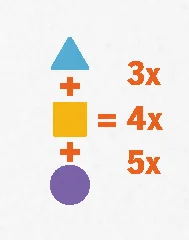 Card 36: The Verifier verifies that the sum of all the numbers in the code is a multiple of 3, a multiple of 4, or a multiple of 5.
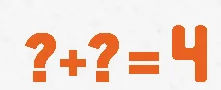 Cards 37 to 38: The Verifier verifies that the sum of two particular numbers (that they know) is 4.
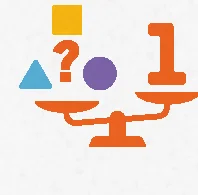 Cards 39 to 41: The Verifier verifies that the number of a particular colour (that they know) is less than, equal to, or greater than 1.
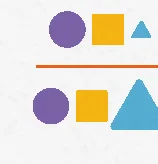 Card 42: The Verifier verifies that the number of a particular colour (that they know) is either less than or greater than either of the others.
 Cards 43 to 44: The Verifier verifies that the number is less than, equal to, or greater than another particular number (that they know).
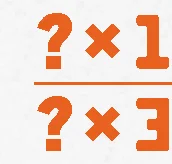 Cards 45 to 47: The Verifier verifies that the number of 1s or the number of 3s in the code is equal to a particular number (that they know).
 Card 48: The Verifier verifies that the number of a particular colour (that they know) is either less than, equal to, or greater than that of another particular colour (that they know).
Credits
Publisher: Christian Lemay
Creative Director: Manuel Sanchez
Graphic Design/Illustration: Sébastien Bizos
Translation: Matthew Legault
Introduction & Goal
A game by Yoann Levet and Fabien Gridel
British mathematician and cryptanalyst Alan Turing made a significant contribution to the advent of computers. We are offering you a chance to use a proto-computer, working without electricity or electronics, to find secret codes.
Goal of the Game
Be the first to find the only code that will pass the test of all Verifiers. The code is made up of 3 numbers between 1 and 5:
- a blue triangle number,
- a yellow square number,
- and a purple circle number.
Each Verifier checks for one CRITERION. For example, “The number is odd.”
Once you have deduced all the criteria, you can figure out the only code that will satisfy them all.
Setup
Setup for Your First Game
- Place the Machine tile in the centre of the table.
- Assemble the punch-card support. Do not take it apart at the end of the game; store it in the box as is.
- Place the punch cards in the support: all 1 cards in the front, followed by all 2 and so on.
- Choose a Problem to solve. Numbers 01 to 16 are introductory problems, perfect for new players. You can also find millions more problems online. We will use problem 01 for our setup example.
- Place the Criteria cards in front of their assigned Verifier:
- Verifier A: card 4
- Verifier B: card 9
- Verifier C: card 11
- Verifier D: card 14
- Place the Verification cards face down in front of their assigned Verifier (next to the Criteria card):
- A: 447
- B: 646
- C: 566
- D: 322
Note: each Verification card can be used for 4 different numbers and 4 different colours. To avoid mistakes, tick the corresponding letter on the back of each Verification card (A, B, C or D).
- A: 447
- Give a Player Aid (which doubles as a screen) and a note sheet to each player. If you are playing a game from the online app, note down the number of the game. Draw a line through Verifier columns E and F. They won’t be used in this game.
Verifier: In this game, a Verifier is a ‘fictional person’, a form of artificial intelligence. It’s not a player!
How to Play
Core Gameplay
Unlike many deduction games, you won’t be questioning the other players, but a machine. This machine consists of 4 to 6 Verifiers, a kind of artificial intelligence. Each verifier checks for one single aspect, one single criterion.
Questioning a Verifier consists of asking them if your proposal passes their test. It’s up to you to figure out what you need to do to ‘pass’ their test; which criteria you must respect.
Anatomy of a Criteria Card
- Icon indicating what the Verifier knows.
- Written explanation of the precise element the Verifier is checking for.
- List of possible criteria this Verifier is checking for. You have to find which is the right one!
Advanced Strategy: All the Verifiers are essential to finding the final code. No Verifier will repeat information given by another. After a few games, you will notice that this bit of information will allow you to be more efficient in your deductions. You will understand, right from setup, that there are certain questions you will not need to ask.
Round Structure
The game is played in rounds, each one identical. All players will, individually and simultaneously, do the following steps:
- Compose your Proposal.
- Question.
- Deduce.
- End of Round.
1. Compose
Compose your 3-digit proposals by overlaying 3 different-coloured cards: a number, a number and a number. In the rare case that a particular card you need is being used by another player, simply wait until they are done before taking it.
2. Question
You will question up to 3 Verifiers over the course of a round, without changing your proposal.
Place the Verifier’s Verification card under your proposal, making sure it is properly lined up with the punch cards using these symbols in the corners: , circle, square, triangle.
Each Verifier will tell you if your proposal passes or fails their test.
The Verifier’s Answer
You’ll notice that only one hole appears when you overlap the 3 punch cards to make your proposal. It’s through this hole that you’ll see the Verifier’s answer:
- If the Verifier answers , your proposal has passed their test.
- If the Verifier answers , your proposal has failed their test.
Mark a or a in the corresponding space on your note sheet.
Recap
Once you have made your 3-digit proposal, you will decide which Verifiers to question. Questioning a Verifier means asking if your proposal respects their criterion or not; if your proposal passes their test or not. The criteria that each Verifier is checking could be as simple as, “the number is even.” The criterion that will allow you to pass the Verifier’s test is one of those listed on the bottom of each Criteria card.
The answers the Verifier gives you will not give you information about the code, but only about the criteria they are verifying.
Example: Let’s imagine that the criteria of Verifier A is “The number is greater than 3.”
- 4 3 2 →
- 3 2 4 →
- 3 3 3 →
- 4 4 5 →
Only the proposals where the number is GREATER than 3 get a positive answer . The other numbers mean nothing in this example; they are not what is being verified.
3. Deduce
Put your punch cards back in the support and analyse your answers. Write down your deductions on your note sheet. Determine if you have found the code or not.
4. End of Round
Once all players have asked their questions and completed their deductions, everyone extends their closed fist and counts to 3 simultaneously. On 3, point your thumb either up or down at the same time as everyone else:
- Point upwards if you think you have found the code.
- Point downwards if you have not yet found it.
If nobody has pointed upward, start a new round. If one or more players has pointed upward, go to the Verification and End of Game section.
Reminders and Clarifications
- Game Order: Compose your proposal and question Verifiers at the same time as the other players.
- There aren’t enough punch cards: In the rare case that you need an unavailable punch card, simply wait until another player has finished using theirs to take it.
- Don’t get mixed up: Put the Verification cards back in front of the correct Verifier immediately after you have finished questioning the Verifiers!
- Number of Questions per round: You can question a maximum of 3 Verifiers per round, but you can always question fewer than 3.
- Strategy: You will need the criteria of all the Verifiers to find the code. No criterion is superfluous. Only one code respects all the criteria.
- Public and Secret information: Your proposal and the Verifiers you question are visible to everyone. Keep your answers and notes secret.
- You must keep the same proposal for the entire round: It is obligatory to write down on your note sheet your proposals and the answer to ALL the questions you ask. This will serve to determine the winner in case of a tie.
Note Sheets
How to Use the Note Sheet
Learn how to take good notes if you want to win!
- Each round, write your proposal on the line of the current round.
- Write the answers you got ( or ) from each Verifier in the proper column. This is obligatory, and keeps track of the number of questions you’ve asked.
- Use this section to cross off any numbers you’ve eliminated.
- Use the bottom section to write down all the information you’ve learned about each.
- Write the Verifier’s criterion in this space once you have identified it.
Example of Play
Round Walkthrough
Show this example to anyone who is learning the game. Here is a problem with 4 criteria:
- In the first round, you put together proposal 3 3 2 and write it on your note sheet.
- Verifier A verifies one criterion: either “The number is equal to 1” or “The number is greater than 1.”
- You question A. You place their Verification card under your 3 punch cards. You see in the hole. Your proposal passed! So A’s criterion is “The number is greater than 1,” because your is 3 (> 1). This does NOT mean that the number is 3!
- Write under A on your note sheet. Put the card back face-down.
- You then question Verifier D with the same proposal. They answer . D verifies which of , , is the smallest. In your proposal, is the smallest, which failed. You deduce that the smallest is either or .
- Finally, you question C. C compares to . In your proposal, (3) is greater than (2). C answers . Thus, C’s criterion is NOT “ > ”. Either = or < .
- You cannot ask any more questions this round (maximum 3).
End of Game & Winning
Verification and End of Game
If one or more players think they have found the code, they should write it secretly (and clearly!) on their note sheet. Each one then checks, in turn, the SOLUTIONS section at the bottom of p. 3 in this booklet, or uses the appropriate button in the application, and verifies if their code is correct.
If more than one person is correct, the one who found the code asking THE FEWEST questions wins. This is why keeping track of all your answers is so important (writing or ). If it is still tied, all tied players win. Prove your code is correct by composing it with the punch cards and then making sure it passes the tests of all the Verifiers!
If nobody has found the correct code, the players who were incorrect are eliminated, and the game continues for the other players. If there is only one player remaining, they win by default!
When the game is over, don’t forget to erase the on the back of the Verification cards.
Game Modes & Variants
Solo and Cooperative Modes
Take on the Machine!
Go to turingmachine.info and select a problem you’d like to solve. On your own or in a team, solve the problem in the fewest rounds (and questions) possible, using only one note sheet.
When you have found the code, click on MACHINE. You will discover how many rounds and questions our artificial intelligence took to find the code. To win, you must have done as well as or better than the Machine.
Watch out! Like in the regular game, you can only ask a maximum of 3 questions per round.
Handicap System
If an experienced player is playing against newer players, we strongly recommend using this system to level the playing field:
- In the first round (and only the first), the experienced player fills in a number of answer squares. These squares count as questions the player would have asked (leaving fewer for the player to ask in the first round).
- Fill in 1 square if the difference in experience/skill is slight, and 2 squares if the difference is greater.
- For example, in the latter case, the player could only ask one question in the first round, because there are 2 squares already filled in!
Online Problems & Extra Modes
You will also find 2 new, more challenging modes of play:
- Extreme: has 2 cards in front of each Verifier (but only one valid criterion amongst those presented on the 2 cards).
- Nightmare: you do not know which Verifier is associated with which Verification card.
Problems & Solutions
Problems
This booklet contains 20 problems to solve, or 20 games… But you will find literally millions more on the Turing Machine website! Scan the QR code or go to turingmachine.info. For problems that work with the rules as presented here, choose the ‘Classic’ mode.
Problem Directory (Booklet)
- 01: A: 4 (447), B: 9 (646), C: 11 (566), D: 14 (322)
- 02: A: 4 (677), B: 9 (217), C: 13 (634), D: 17 (528)
- 03: A: 3 (564), B: 7 (355), C: 10 (635), D: 14 (720)
- 04: A: 3 (662), B: 9 (790), C: 15 (404), D: 16 (509)
- 05: A: 2 (413), B: 6 (532), C: 14 (596), D: 17 (537)
- 06: A: 2 (437), B: 7 (405), C: 10 (378), D: 13 (797)
- 07: A: 8 (356), B: 12 (695), C: 15 (329), D: 17 (618)
- 08: A: 1 (631), B: 5 (252), C: 9 (219), D: 15 (349), E: 16 (374)
- 09: A: 1 (357), B: 7 (610), C: 10 (463), D: 12 (399), E: 17 (393)
- 10: A: 2 (224), B: 6 (543), C: 8 (793), D: 12 (757), E: 15 (687)
- 11: A: 5 (445), B: 10 (639), C: 11 (289), D: 15 (406), E: 17 (484)
- 12: A: 4 (335), B: 9 (362), C: 18 (421), D: 20 (747)
- 13: A: 11 (279), B: 16 (515), C: 19 (770), D: 21 (523)
- 14: A: 2 (585), B: 13 (228), C: 17 (647), D: 20 (268)
- 15: A: 5 (763), B: 14 (598), C: 18 (223), D: 19 (317), E: 20 (520)
- 16: A: 2 (778), B: 7 (654), C: 12 (614), D: 16 (640), E: 19 (751), F: 22 (485)
- 17: A: 21 (341), B: 31 (432), C: 37 (706), D: 39 (495)
- 18: A: 23 (681), B: 28 (244), C: 41 (440), D: 48 (737)
- 19: A: 19 (237), B: 24 (353), C: 30 (204), D: 31 (423), E: 38 (606)
- 20: A: 11 (287), B: 22 (533), C: 30 (389), D: 33 (486), E: 34 (547), F: 40 (615)
Solutions
01: 241 | 02: 331 | 03: 435 | 04: 345 | 05: 354 | 06: 512 | 07: 241 | 08: 423 | 09: 344 | 10: 242 | 11: 325 | 12: 111 | 13: 111 | 14: 422 | 15: 253 | 16: 243 | 17: 133 | 18: 331 | 19: 224 | 20: 411
Criteria Card Explanations
Detailed Criteria Explanations
At the beginning of every game, take the time to discuss and understand the meaning of each Criteria card.
- Card 1: To pass the test of this Verifier, you must find if the number is equal to or greater than 1. Watch out! If the number in your proposal is 3 and you get a , this does NOT mean that the number is 3, it only means that it must be greater than 1 (and not equal to it).
- Cards 2 to 4: Work similarly to Card #1, but there are now 3 possibilities: the number can be either less than, equal to, or greater than the number indicated.
- Cards 5 to 7: To pass this test, find if the number has to be even (2 or 4) or odd (1, 3, or 5).
- Cards 8 to 10: The Verifier verifies that there is a precise number (that they know) of 1s in your proposal (e.g. exactly two).
- Cards 11 to 13: Compares two numbers within your proposal (e.g. with ): less than, equal to, or greater than.
- Cards 14 to 15: The Verifier verifies that the number of a particular colour (that they know) is smaller than all the other numbers.
- Card 16: Verifies that there are more of either even (e.g.: 454) or odd (e.g.: 341) numbers in the code.
- Card 17: Verifies that there is a precise number (that they know) of even numbers in the code: zero, one, two, or three.
- Card 18: Verifies that the sum of all the numbers in the code is either even or odd.
- Card 19: Compares the sum of the and numbers to 6 (less than, equal to, or greater than 6).
- Card 20: Verifies if a number repeats itself, and if so, how many times (no repetition, repeats once, or repeats twice).
- Card 21: Verifies that there is either one pair of identical numbers (e.g.: 313), or no pairs of identical numbers (e.g.: 231, or 333).
- Card 22: Verifies that the three numbers are in ascending order, descending order, or neither.
- Card 23: Compares the sum of all the numbers with 6 (less than, equal to, or greater than 6).
- Card 24: Verifies consecutive increasing values in either a 2-digit sequence (e.g.: 312), a 3-digit sequence (e.g.: 345), or none at all.
- Card 25: Verifies increasing or decreasing values in a 2-digit consecutive sequence, a 3-digit consecutive sequence, or none at all.
- Cards 26 to 27: Verifies that the number of a particular colour (that they know) is less than 3.
- Cards 28 to 30: The Verifier verifies that the number of a particular colour (that they know) is 1.
- Cards 31 to 32: The Verifier verifies that the number of a particular colour (that they know) is greater than 1.
- Card 33: The Verifier verifies that the number of a particular colour (that they know) is odd or even.
- Cards 34 to 35: The Verifier verifies that the number of a particular colour is less than or equal to all the other numbers.
- Card 36: The Verifier verifies that the sum of all the numbers in the code is a multiple of 3, a multiple of 4, or a multiple of 5.
- Cards 37 to 38: The Verifier verifies that the sum of two particular numbers (that they know) is 4.
- Cards 39 to 41: The Verifier verifies that the number of a particular colour (that they know) is less than, equal to, or greater than 1.
- Card 42: The Verifier verifies that the number of a particular colour (that they know) is either less than or greater than either of the others.
- Cards 43 to 44: The Verifier verifies that the number is less than, equal to, or greater than another particular number (that they know).
- Cards 45 to 47: The Verifier verifies that the number of 1s or the number of 3s in the code is equal to a particular number (that they know).
- Card 48: The Verifier verifies that the number of a particular colour (that they know) is either less than, equal to, or greater than that of another particular colour (that they know).
Credits
Credits
Publisher: Christian Lemay
Creative Director: Manuel Sanchez
Graphic Design/Illustration: Sébastien Bizos
Translation: Matthew Legault
