
Tussie Mussie
2019
Choose meaningful flowers, offer one openly and one secretly, and build the highest-scoring bouquet across three rounds.
30
minutes
2 - 4
player(s)
8+
Light

About this board game
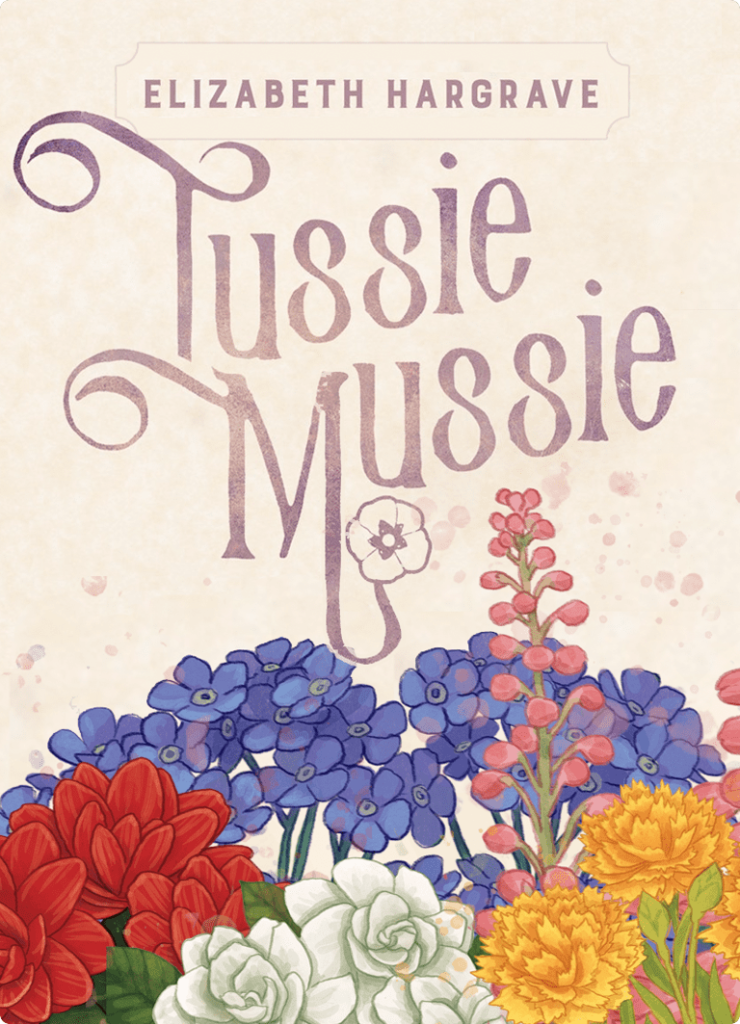
Tussie Mussie is a 2019 microgame for 2–4 players that takes about 30 minutes to play. Inspired by the Victorian custom of assigning meanings to flowers, it challenges you to create a winning tussie mussie of your own.
The game uses an I-Divide-You-Choose drafting system with just 18 cards. On your turn, look at the top two cards of the deck, then offer them to another player: one card is face-up, while the other remains facedown.
The chosen opponent takes one of the offered cards, leaving the other for you. This simple decision creates a distinctive moment of discretion and uncertainty, as the visible flower and the hidden one can each shape the collection you are building.
- 18-card microgame
- 2–4 players
- Three rounds of drafting and scoring
- Four cards per player at the end of each round
A round ends when every player has four cards. Scores are then tallied before the next round begins. After three rounds, the player with the highest score wins.
With its Victorian floral theme and focused card drafting, Tussie Mussie turns a small number of cards into a game of subtle offers and careful choices. Decide what to reveal, judge what another player may want, and assemble the most successful bouquet over the course of the game.
/pic7182955.jpg)
Board Game Rules for
Tussie Mussie
2–4 PLAYERS | AGES 8+ | 30 MINUTES
Tussie mussies exemplified the Victorian custom of assigning meaning to the flowers that friends and lovers exchanged. Inspired by the ideals of elegance and discretion, these bouquets were carefully made to convey subtle messages to their recipients. Now you can choose the right flowers to make a winning tussie mussie of your own!
Components
- 18 Flower Cards
Setup
- Shuffle all 18 cards and place them facedown in a deck. Allow room for a discard pile.
- The player that most recently smelled a flower is the first player.
The game consists of three rounds. Each round, players will take turns offering cards to their neighbor (as described below), followed by Before Scoring actions and Scoring.
Key Terminology
- Offer: A set of two cards, one faceup and one facedown, offered to a recipient. The recipient may not look at the facedown card before choosing a card.
- Arrangement: The set of cards a player has collected, kept on the table in front of them. Cards are added to Arrangements from left to right and cannot be rearranged, as some cards score based on adjacency. Cards must remain faceup or facedown unless affected by another card.
- Keepsakes: The facedown cards in a player’s Arrangement. A player may look at their Keepsakes at any time, then return them facedown to the table in their original positions. Players may not look at other players’ Keepsakes.
- Bouquet: The faceup cards in a player’s Arrangement.
Turn Structure
Each turn, the active player, or offerer, makes an Offer of flowers to the recipient.
- The offerer draws two cards and looks at them. They place one faceup and one facedown on the table as an Offer to the recipient.

For flavor, you can state the faceup flower’s meaning. Example: “You have deceived me”
- The recipient chooses one card from the Offer and adds it as the rightmost card in their Arrangement, keeping its faceup or facedown orientation.
- The offerer takes the other card and adds it as the rightmost card in their Arrangement, keeping its faceup or facedown orientation.
Offer Order
- 2 Players: Players alternate offering cards until both have four cards.
- 3–4 Players: The first player offers cards to the player on their left. That player then offers cards to the player on their left and Offers continue clockwise around the table until all players have two cards. Afterwards, the first player offers cards to the player on their right, and Offers continue counterclockwise around the table until all players have four cards.
Before Scoring
At the end of the round, each Arrangement will have four cards.
Each player moves their facedown Keepsakes closer to them, creating a second row of cards in their original columns.

Then, each player reveals their Keepsakes by flipping them faceup, keeping them in their original columns.
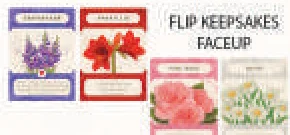
Note: Each card is adjacent to the cards on its left and right, whether they are in your Bouquet or Keepsakes, but some scoring conditions may specify that adjacent cards must be in your Bouquet or Keepsakes.
Players now simultaneously take actions specified on their cards that say, “Before scoring.” Actions may be taken in any order the player chooses.
Scoring
Each player will score their Arrangement, scoring each card from left to right as follows:
- Each heart icon
 is worth 1 Point.
 - Cards may have additional scoring conditions.
Record the scores for each player.
If three rounds have been completed, the game is over. Otherwise, shuffle all 18 cards together and start a new round. For the new round, the first player rotates clockwise to the next player.
Winning the Game
The player with the highest total score after three rounds wins the game.
In a tie, tied players compare their flowers from the final round. The player with the first flower name alphabetically wins.
- Forget-Me-Not: When scoring, adjacent cards may be in your Bouquet or Keepsakes.
- Honeysuckle: When scoring, adjacent cards must be in your Bouquet, but Honeysuckle may be in your Bouquet or Keepsakes.
- Marigold: When you remove a card from your Arrangement, it will have three cards. If the removed card was adjacent to two cards, those two cards are now adjacent to each other.
- Pink Larkspur: If you replace a card in your Arrangement, place the remaining cards from your hand into the discard pile. The Pink Larkspur’s ability may replace itself with another card.
Design: Elizabeth Hargrave
Art: Beth Sobel
Rules Editing: Michael Lee
FAQ and more games at buttonshygames.com

Introduction & Setup
2–4 PLAYERS | AGES 8+ | 30 MINUTES
Tussie mussies exemplified the Victorian custom of assigning meaning to the flowers that friends and lovers exchanged. Inspired by the ideals of elegance and discretion, these bouquets were carefully made to convey subtle messages to their recipients. Now you can choose the right flowers to make a winning tussie mussie of your own!
Components
- 18 Flower Cards
Setup
- Shuffle all 18 cards and place them facedown in a deck. Allow room for a discard pile.
- The player that most recently smelled a flower is the first player.
How to Play
The game consists of three rounds. Each round, players will take turns offering cards to their neighbor (as described below), followed by Before Scoring actions and Scoring.
Key Terminology
- Offer: A set of two cards, one faceup and one facedown, offered to a recipient. The recipient may not look at the facedown card before choosing a card.
- Arrangement: The set of cards a player has collected, kept on the table in front of them. Cards are added to Arrangements from left to right and cannot be rearranged, as some cards score based on adjacency. Cards must remain faceup or facedown unless affected by another card.
- Keepsakes: The facedown cards in a player’s Arrangement. A player may look at their Keepsakes at any time, then return them facedown to the table in their original positions. Players may not look at other players’ Keepsakes.
- Bouquet: The faceup cards in a player’s Arrangement.
Turn Structure
Each turn, the active player, or offerer, makes an Offer of flowers to the recipient.
- The offerer draws two cards and looks at them. They place one faceup and one facedown on the table as an Offer to the recipient.
For flavor, you can state the faceup flower’s meaning. Example: “You have deceived me”
- The recipient chooses one card from the Offer and adds it as the rightmost card in their Arrangement, keeping its faceup or facedown orientation.
- The offerer takes the other card and adds it as the rightmost card in their Arrangement, keeping its faceup or facedown orientation.
Offer Order
- 2 Players: Players alternate offering cards until both have four cards.
- 3–4 Players: The first player offers cards to the player on their left. That player then offers cards to the player on their left and Offers continue clockwise around the table until all players have two cards. Afterwards, the first player offers cards to the player on their right, and Offers continue counterclockwise around the table until all players have four cards.
Scoring & Round End
Before Scoring
At the end of the round, each Arrangement will have four cards.
Each player moves their facedown Keepsakes closer to them, creating a second row of cards in their original columns.
Then, each player reveals their Keepsakes by flipping them faceup, keeping them in their original columns.
Note: Each card is adjacent to the cards on its left and right, whether they are in your Bouquet or Keepsakes, but some scoring conditions may specify that adjacent cards must be in your Bouquet or Keepsakes.
Players now simultaneously take actions specified on their cards that say, “Before scoring.” Actions may be taken in any order the player chooses.
Scoring
Each player will score their Arrangement, scoring each card from left to right as follows:
- Each heart icon is worth 1 Point.
- Cards may have additional scoring conditions.
Record the scores for each player.
If three rounds have been completed, the game is over. Otherwise, shuffle all 18 cards together and start a new round. For the new round, the first player rotates clockwise to the next player.
End of Game
Winning the Game
The player with the highest total score after three rounds wins the game.
In a tie, tied players compare their flowers from the final round. The player with the first flower name alphabetically wins.
Special Card Notes
- Forget-Me-Not: When scoring, adjacent cards may be in your Bouquet or Keepsakes.
- Honeysuckle: When scoring, adjacent cards must be in your Bouquet, but Honeysuckle may be in your Bouquet or Keepsakes.
- Marigold: When you remove a card from your Arrangement, it will have three cards. If the removed card was adjacent to two cards, those two cards are now adjacent to each other.
- Pink Larkspur: If you replace a card in your Arrangement, place the remaining cards from your hand into the discard pile. The Pink Larkspur’s ability may replace itself with another card.
Credits
Design: Elizabeth Hargrave
Art: Beth Sobel
Rules Editing: Michael Lee
FAQ and more games at buttonshygames.com
Expansions for
Tussie Mussie
Tussie Mussie: Greenery
2021
Add a touch of greenery—but too much can cost you points.
30
minutes
Light
View expansion
Tussie Mussie: Ribbons
2021
Add visible ribbon goals to every floral arrangement
30
minutes
Medium Light

View expansion
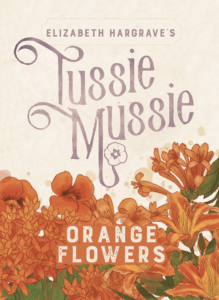
Tussie Mussie: Orange Flowers
2021
Add vibrant orange blooms and clever scoring choices to your arrangement.
30
minutes
Light
View expansion
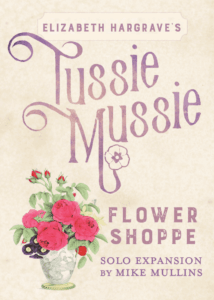
Tussie Mussie: Flower Shoppe
2019
Train a new employee while a six-card challenge steadily raises the stakes.
30
minutes
Medium Light
View expansion
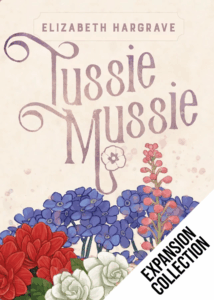
Tussie Mussie: Expansion Collection
2021
Three expansions add negative points, more flowers, and shared goals.
30
minutes
Light
View expansion
