American Carrom
1892
A 2–4 player flicking game with ring-shaped pieces, large pockets, optional cue play, and boards that can support other games.
60
minutes
2 - 4
player(s)
8+
Light

About this board game
American Carrom is a flicking game for 2–4 players with an approximately 60-minute playing time, first released in 1892. Attributed to American Sunday school teacher Henry Haskell, it is a derivative of Carrom in which players aim to send game pieces into pockets.
The object is to flick and strike the Carrom men into the pockets in a manner similar to pool or billiards. A cue can also be used instead of flicking, giving the game another way to direct the pieces across the board.
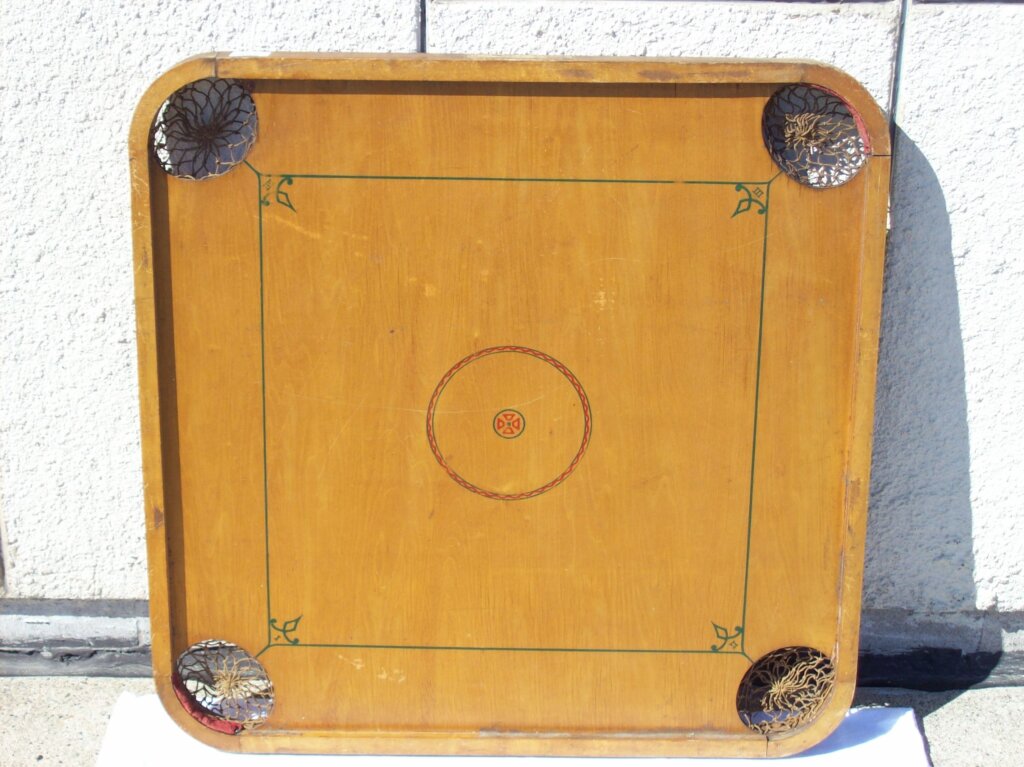
Compared with Carrom, American Carrom has a different board construction, most notably larger pockets. Its striker, or shooter, is the same size as the other pieces, and the game uses rings rather than the solid discs found in Carrom.
- Designed for 2–4 players
- Approximately 60 minutes of play
- Flicking gameplay inspired by pool and billiards
- Optional cue play
- Ring-shaped game pieces and larger pockets
The larger pockets make it easier to pocket pieces, so American Carrom lacks some of the strategy and skill associated with the “proper” version of Carrom. Its boards can also be patterned with checkers, chess, or other board motifs, allowing them to support a variety of additional games.
Many American Carrom boards double as Crokinole boards, adding to the format’s versatility. For players interested in related European games, Korona and H-ring spel are noted as similar games.
With its ring pieces, optional cue, and adaptable board designs, American Carrom offers a distinctive take on the traditional Carrom concept.
/pic7182955.jpg)
