Puerto Rico
2002
Choose roles, develop plantations, manage colonists, and ship goods while timing your path to victory.
150
minutes
3 - 5
player(s)
12+
Medium Heavy


About this board game
Puerto Rico is a strategy board game for 3–5 players, released in 2002, with games lasting about 150 minutes. Players take the roles of colonial governors on the island of Puerto Rico and compete to earn victory points by constructing buildings and shipping goods to Europe.
Each player has a personal board featuring spaces for city buildings, plantations, and resources. Shared supplies include ships, a trading house, resources, and doubloons. Players grow crops, exchange them for points or doubloons, and spend their money on buildings that can support production or provide other abilities.
Buildings and plantations must be manned by colonists before they can work. This makes developing your island a matter of balancing construction, production, and the people available to operate what you own.
During each round, players select role cards such as Trader or Builder. Every player then takes the action associated with the chosen role, while the player who selected it receives a privilege. For example, choosing Builder lets everyone construct a building, while the role’s chooser may build at a discount.
- Grow crops and exchange them for doubloons or victory points.
- Construct buildings that improve production or provide special abilities.
- Ship goods to Europe using the available ships.
- Use colonists to activate plantations and buildings.
Unused roles gain a doubloon bonus, encouraging players to consider the full range of available actions. The governor token passes clockwise, determining who chooses the first role each round.
Victory points come from buildings, shipped goods, and manned large buildings. Shipping chips remain face down, so the exact scores are hidden. As the game progresses, players must weigh their options carefully when choosing a role that may bring the game to its conclusion. Puerto Rico combines open resource information with concealed shipping scores and a flexible phase order that makes every role selection significant.
/pic7182955.jpg)
Board game expansions
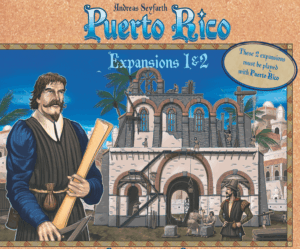
Puerto Rico: Expansions 1&2 – The New Buildings & The Nobles
2019
Two expansions add forests, new buildings, and noble-or-colonist effects.
90
minutes
Medium Heavy
View game

Puerto Rico: Expansion I – New Buildings
2004
Expand Puerto Rico with forests and fourteen distinctive new buildings.
90
minutes
Medium Heavy
View game
