
Twilight Imperium: Fourth Edition
2017
Lead one of 17 unique factions through exploration, warfare, trade, politics, and shifting objectives in a richly variable galactic conquest.
480
minutes
3 - 6
player(s)
14+
Heavy


About this board game
Twilight Imperium: Fourth Edition is a galactic conquest board game for 3–6 players, with games lasting about 480 minutes. Each player leads one of seventeen factions competing for domination through military might, political maneuvering, and economic bargaining.
Every faction offers a distinct approach to victory. The wormhole-hopping Ghosts of Creuss and the trade-focused Emirates of Hacan are just two examples of the different possibilities available as players seek to become the new masters of the galaxy.
No two games begin with the same galaxy. Players construct the board from 51 galaxy tiles, placing planets, supernovas, asteroid fields, gravity rifts, and other features around Mecatol Rex. Strategic tile placement can open routes, create obstacles, or protect an empire from nearby rivals.
- Unique factions: Choose from seventeen races with different play experiences.
- Changing galaxy: Build a new board from 51 tiles at the start of each game.
- Strategy cards: Select from eight cards that determine turn order and provide special actions.
- Political agendas: Gather in a grand council to pass laws and agendas that can reshape the game.
- Dynamic objectives: Complete public and secret objectives to earn victory points.
Each round begins with players choosing strategy cards before moving fleets, claiming planets, and negotiating warfare and trade. After players have passed, the council considers new agendas, creating unpredictable political shifts across the galaxy.
Victory comes through objectives revealed over the course of play. Public goals and personal secret objectives may reward technological progress or taking an opponent’s home system, while the victory track continues until one player reaches ten victory points. In Twilight Imperium, every decision helps shape both the galaxy and the struggle for its throne.
Thematics
Mechanics
Illustrator
Useful links
/pic7182955.jpg) View board game on
View board game onBoard Game Geek
Board Game Rules for
Twilight Imperium: Fourth Edition
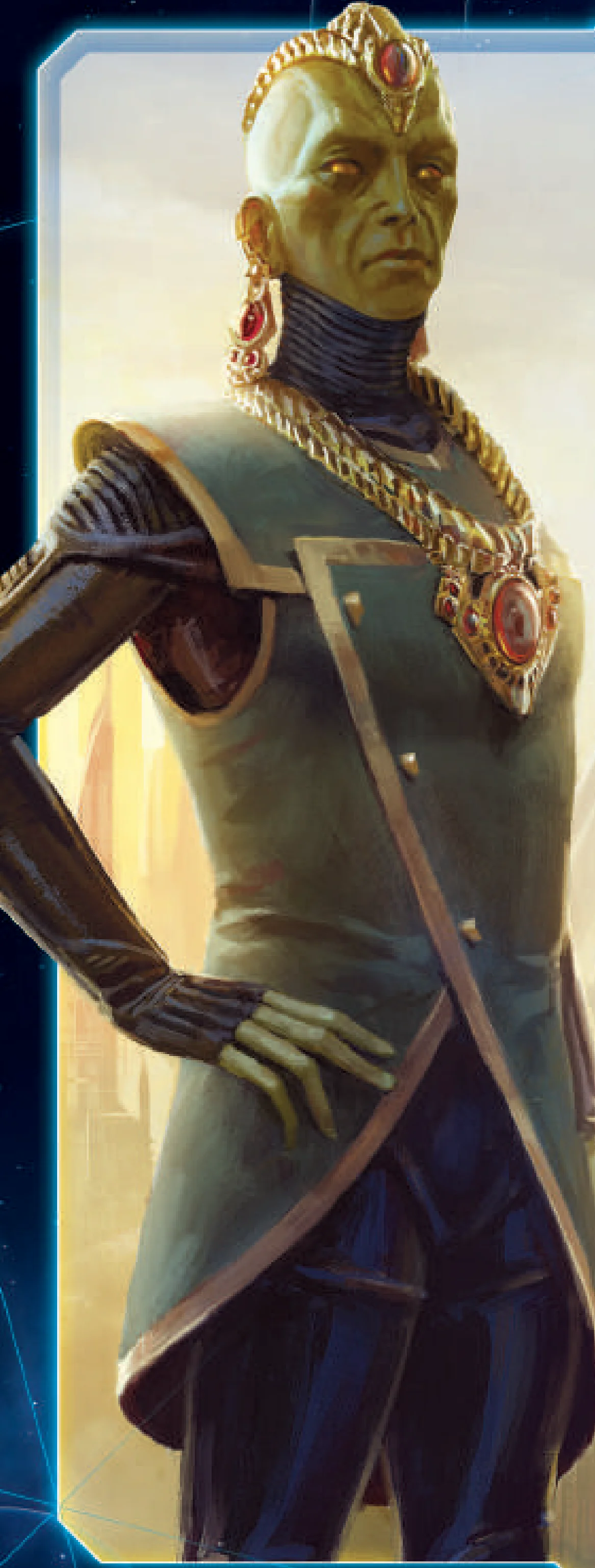
My name is Mahthom Iq Seerva.
I am the Winnaran keeper of the Custodian Chronicle, and I write this from the ancient Tower of Annals in old Mecatol City. Since inheriting the duties of the chronicle from my father, I have enjoyed the inspiring views of great buildings, ancient towers, and the bright lights of life that stretch into the distance. Yet, like the shadow at my feet, I can never escape or forget the lethally finite borders of this city. Less than a thousand leagues from my tower, great shields protect us from the poisonous dust that is the Sea of Desolation, the terrible wasteland that covers most of the planet.
My people, the Winnarans, have kept this city safe for more than three thousand years. Ever since the time of the Great Scourge, we have been the caretakers of the Imperial Throne, the Imperial Records, and the Galactic Council here on Mecatol Rex. We have indeed been faithful to the promise that we made to the last Emperor.
My hands tremble as I write this, for events are now unfolding which I believe to be the harbinger of great change. I foresee that our custodianship will come to an end in my lifetime.
This is why I have contacted you. I will seek to give you a brief yet true summary of the recent history of our galaxy. I give this to you because I know that you will spread this knowledge far and wide. As we enter the dangerous years before us, I fear that the galaxy shall have great need of the past.
It is told that the Lazax Emperors arose from the ashes of the Mahact kings. Little is known of their early ascension, but it is impossible to deny that the Lazax must have been a profoundly intelligent, benevolent, and wise people. After their rise to power, we know that the Lazax chose the central planet of Mecatol Rex as their home world. The year the Lazax first arrived on Mecatol Rex is recorded in the Imperial Chronicle as “first” and marks the beginning of my account.
For ages, the borders of the Lazax Empire expanded outward. As inhabited systems were discovered and annexed into the Empire, the Lazax allowed these newfound civilizations to join the Galactic Council: the governing body that represented the needs and voices of the Empire’s people. The Great Races: Xxcha, Hacan, Letnev, Hylar, Human, and N’orr were all represented in the council, as were hundreds of lesser civilizations and independent systems.
Yet, as the years passed, discoveries of new civilizations and planetary systems slowed. Little by little, the mood of the Empire changed as technological and intellectual growth abated. Craving constant advancement, the Great Races began to look to the power of the Lazax and the resources of their neighbors. Greed and ambition grew in the hearts of statesmen and councilors. The once-noble spirit of the Empire turned suspicious and fearful. It is during this time that the first conflicts between the Great Races are recorded in the Imperial Chronicle. The Galactic Council became a seedbed of intrigue, and the turmoil ushered in a time of spies and assassins. First in secret, and later in public, the Great Races began to build their fleets and armies. Many embarked on territorial expansion that extended beyond their original charter. Border strife and resource disputes proliferated, gnawing at the very foundations of the Empire. This was a time of growing darkness known now as the Age of Dusk.
Throughout most of this age, the Lazax still held authority without question. Except for a few minor and unsuccessful rebellions, few dared to openly challenge the Emperors. Blinded by millennia of unchallenged rule, the Lazax could not perceive the mounting ambition and discontent that grew around them. As centuries passed, tensions between the Great Races grew deeper, and so did their desire for power and control. In the end, hatred was their only common ground: hatred for the Lazax, Imperial rule, and for the benevolent arrogance of the emperors.
A small affair near the Quann Wormhole was the spark that would set the galaxy aflame.
Protesting Imperial trade oversight, the Baron of Letnev began a blockade of traffic through the Quann Wormhole. Because the prickly Letnev had often been troublesome, an unconcerned and unhurried Emperor sought to solve the conflict through the Galactic Council.
However, the blockade obstructed significant Sol trading activities and prevented vital supplies from reaching a handful of Sol colonies that soon were struck by famine and disease. After nearly eight months of fruitless debate in the Galactic Council, the patience of the Sol Federation ran dry. Without warning, the blockading Letnev ships were attacked and annihilated by a Sol task force acting without Imperial mandate, and the Quann Passage was reopened.
Angered by the unilateral militancy of both Letnev and Sol, the Emperor attempted to consolidate his control by issuing the Maandu Edict: a rule which would place all warships under direct Imperial supervision.
The Maandu Edict was the stone that shattered the brittle Empire. The Letnev, Sol, and Jol-Nar civilizations announced their immediate withdrawal from the Council, drawing the galaxy into civil war. The Quann Conflict marks the beginning of the Age of Twilight.
As civilization fought civilization—as a thousand territorial disputes erupted over a few years—the Lazax desperately sought to hold together their crumbling Empire. Imperial fleets fought across the galaxy, but their power was ultimately stretched too thin. In the seventy-third year of the war, an alliance of Sol, Jol-Nar, and Hacan launched a surprise attack on Mecatol Rex itself. The last Lazax Emperor and his entire family were killed during the first Sol bombardments, and no successor was named.
Of all the planets in the galaxy, no planet was more war-torn than Mecatol Rex. Over the course of only a few years, the planet’s ecology was ravaged by bombardments, its population nearly wiped out, and its green fields blasted into a toxic wasteland.
After the death of the Emperor and the loss of the throne-world, Imperial control collapsed. The Lazax became hunted across the galaxy in the vengeful wave of murder that is known now as the Great Scourge. Lasting only twenty years, the scourge resulted in the near-complete annihilation of the Lazax race. Until recently, no Lazax had been seen in the galaxy for more than three thousand years.
The Twilight Wars continued for centuries, but no race was powerful enough to seize the throne and risk suffering a similar fate as the Emperor. Slowly, the strength of great civilizations failed as their economies crumbled and as knowledge and technology was lost in the destruction and strain of long war.
And so the Age of Twilight ended in a slow whisper. The time that followed, now known as the Dark Years, was a period of economic, cultural, and intellectual collapse. The Great Races retreated into their own small, safe areas of space, abandoning what they could no longer hold by force. After several millennia, the Dark Years came to an end, and a calm but uncertain period of rebuilding began.
As I write this, the Great Races of the galaxy have regained elements of their former strength. Here on Mecatol Rex, the Galactic Council is growing in influence once more, while civilizations new and old, are re-colonizing the neighboring systems abandoned during the Dark Years.
Signs of great change are everywhere. This year, as if walking out of ancient prophecy, the Lazax returned from the darkness of history in a foreboding cybernetic form. To me, their coming is like the first wind of a terrible storm. I feel as if the galaxy is waking—as if an ancient beast stirs from slumber in a dark cave.
The day will soon come when a new Empire will rise. For the sake of all, may the new Emperor have not only the power to seize the throne, but the strength to conquer the peace.
If not, I fear that a sea of desolation will drown us all.
Object of the Game
Throughout a game of Twilight Imperium, players will barter, plot, and wage war upon one another to complete objectives. The first player to accumulate 10 victory points claims the Imperial Throne and wins the game.
Using This Booklet
The purpose of this booklet is to teach new players how to play Twilight Imperium. It is recommended that players read this booklet in its entirety before playing for the first time.
This game also includes a Rules Reference, which describes detailed rules and exceptions that are omitted from this booklet. As questions arise during the game, players should consult the Rules Reference rather than this booklet.
Components
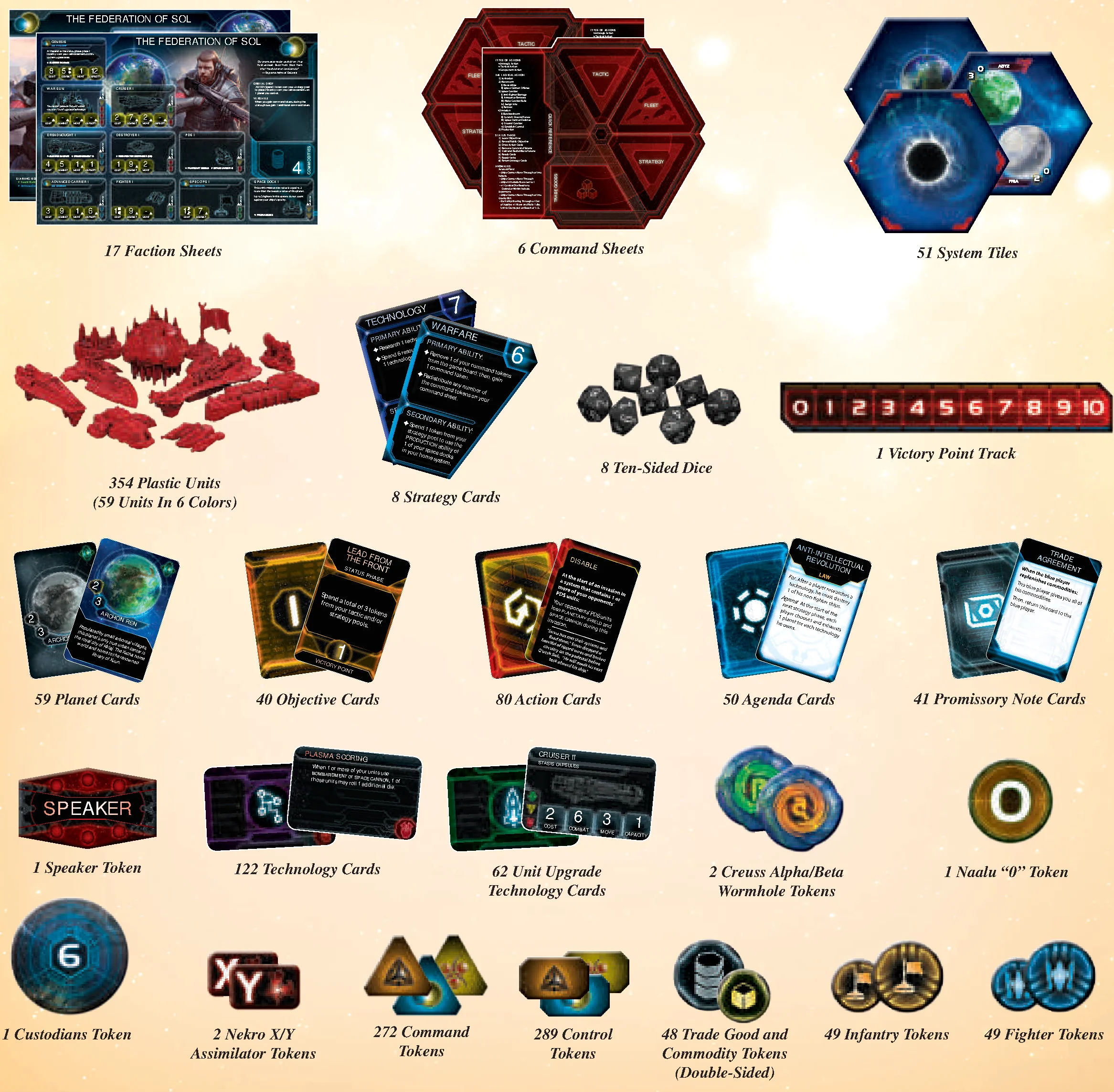
- 17 Faction Sheets
- 6 Command Sheets
- 51 System Tiles
- 354 Plastic Units (59 Units in 6 Colors)
- 8 Strategy Cards
- 8 Ten-Sided Dice
- 1 Victory Point Track
- 59 Planet Cards
- 40 Objective Cards
- 80 Action Cards
- 50 Agenda Cards
- 41 Promissory Note Cards
- 1 Speaker Token
- 122 Technology Cards
- 62 Unit Upgrade Technology Cards
- 2 Creuss Alpha/Beta Wormhole Tokens
- 1 Naalu “0” Token
- 1 Custodians Token
- 2 Nekro X/Y Assimilator Tokens
- 272 Command Tokens
- 289 Control Tokens
- 48 Trade Good and Commodity Tokens (Double-Sided)
- 49 Infantry Tokens
- 49 Fighter Tokens
Units
During a game of Twilight Imperium, each player’s units are represented by plastic figures. There are three types of units: ships, ground forces, and structures.
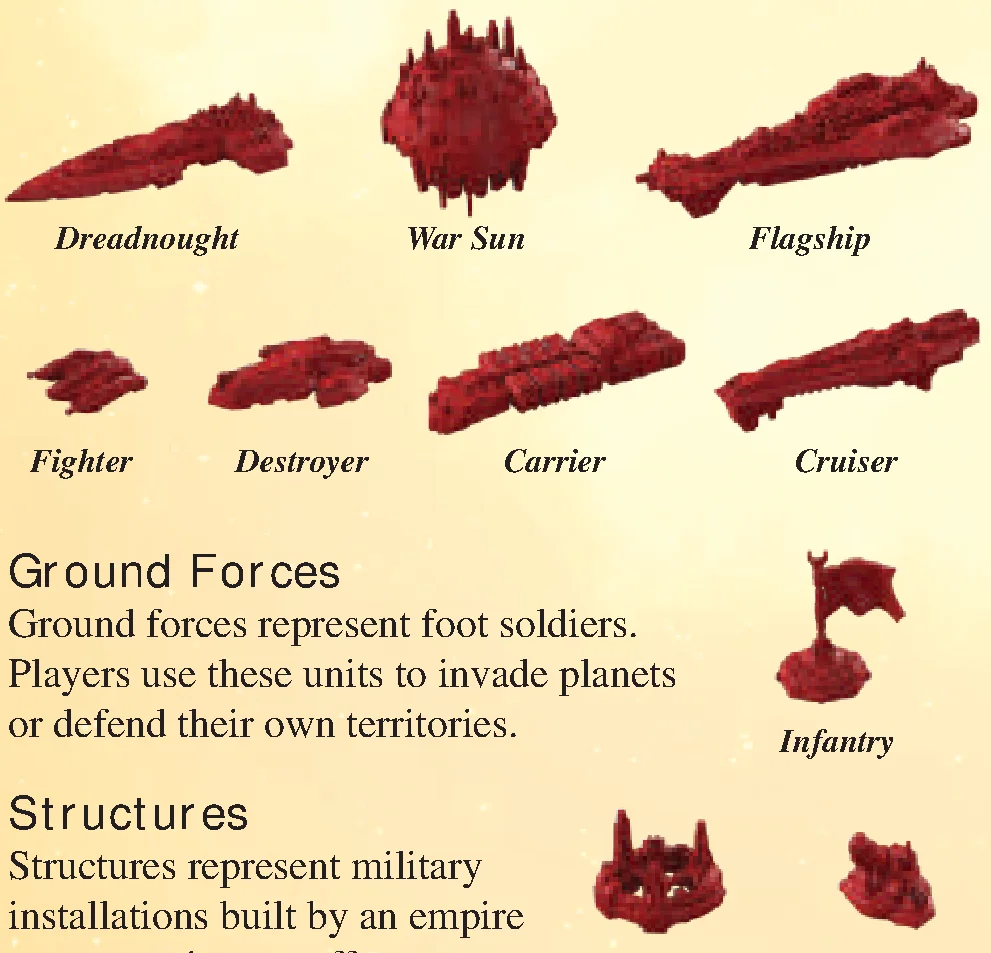
Ships
Ships represent spacefaring units. Players use these units to engage one another in space combat and expand their empires to new systems.
Ground Forces
Ground forces represent foot soldiers. Players use these units to invade planets or defend their own territories.
Structures
Structures represent military installations built by an empire to support its war effort.
Reinforcements
A player’s personal supply of unused units and unused command tokens is his reinforcements. When producing units and gaining command tokens during the game, players will take those components from their reinforcements.
Systems and Planets
The game board for Twilight Imperium is formed using modular system tiles. Each tile represents a single system in the galaxy, which may contain one or more planets or other celestial bodies.
Placing Units on System Tiles
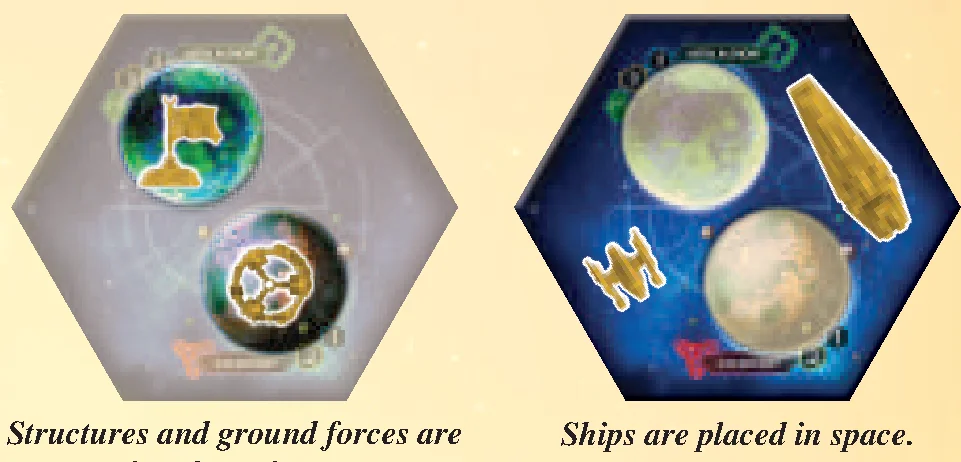
When a unit is placed in a system, it is placed in one of two areas on the tile:
- Structures and ground forces are usually placed on planets.
- Ships are placed in space—the star-filled area surrounding the planets.
Planets
As players move about the galaxy and expand their empire beyond their home systems, they will gain control of new planets.
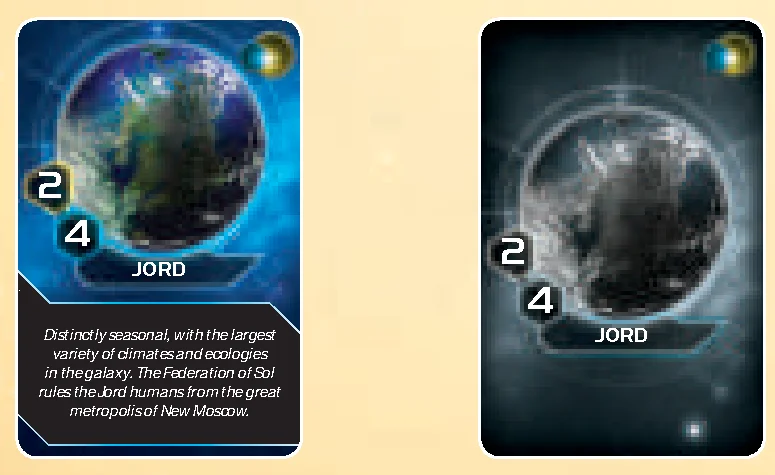
When a player gains control of a planet, he takes that planet’s card from either the deck of planet cards or from the player who controlled it previously and places it facedown in his play area.
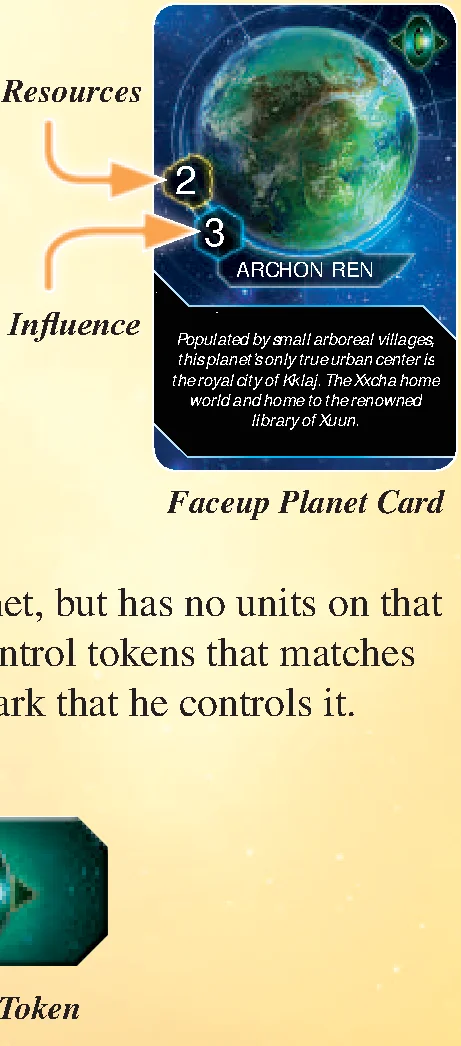
Each planet card displays two values:
- Resources on the left in yellow: spent to acquire new units and technologies.
- Influence on the right in blue: spent to gain command tokens and to vote during the agenda phase.
If a player ever controls a planet, but has no units on that planet, he places one of the control tokens that matches his faction on that planet to mark that he controls it.
Planet Traits
Most planets outside of home systems have a planet trait. There are three types of planets: cultural, hazardous, and industrial. Traits have no inherent game effect, but are referred to by some cards and abilities.
 Cultural Planet
 Hazardous Planet
 Industrial Planet
Spending Resources and Influence
Many effects in Twilight Imperium require a player to spend resources or influence.
To spend a planet’s resources or influence, a player exhausts that planet’s planet card. For example, if a player needs to spend two resources to produce units, he can exhaust a planet that has a resource value of “2” or instead exhaust two planets that each have resource values of “1.” The player could exhaust a planet that has more resources, but the excess resources are lost.
Command Sheet
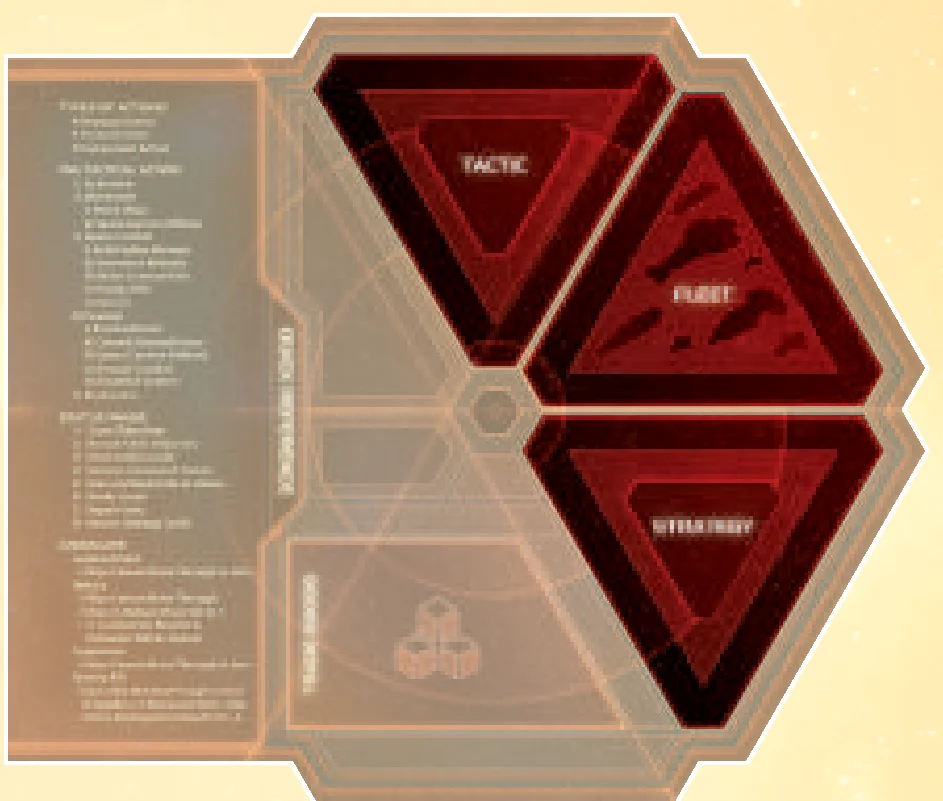
Successfully navigating the action phase in Twilight Imperium requires careful management of command tokens. When a player gains a command token, he places it in any one of three pools: the tactic pool, the fleet pool, or the strategy pool.
Tactic Pool
During the action phase, players may spend command tokens from their tactic pool to perform tactical actions.
Fleet Pool
Players place command tokens in their fleet pool with the ship silhouette faceup. Players do not spend these command tokens like the command tokens in their other pools. Instead, the number of tokens in a player’s fleet pool is the maximum number of ships, excluding fighters, that he can have in each system. If a player ever has more ships in a system than he has tokens in his fleet pool, he must return ships from that system to his reinforcements until the number of ships in that system no longer exceeds the number of tokens in his fleet pool.
Strategy Pool
Most of the secondary abilities on strategy cards require a player to spend a token from his strategy pool to resolve the ability. Players will want to keep tokens in their strategy pool so that they can use the secondary abilities of the other players’ strategy cards.
Readied and Exhausted Cards
Many cards have a readied and an exhausted state:
- An exhausted card is flipped facedown, indicating that the values and abilities on the front of the card cannot be used.
- A readied card is flipped faceup, indicating that the values and abilities on the front of the card can be used.
During the status phase, all exhausted cards are readied.
Setup Steps
When playing for the first time, players perform the following steps to set up the game. Some components are not used during the first game, and are explained in detail at the end of this booklet.
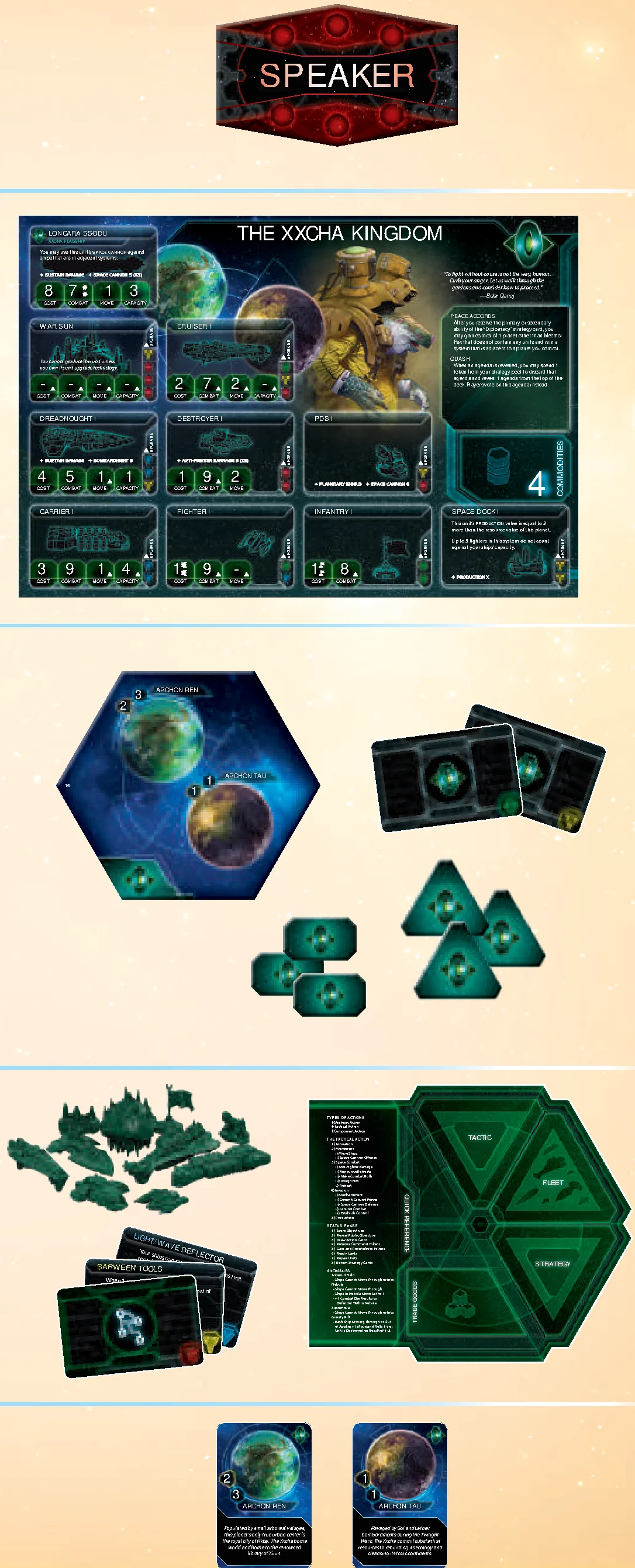
- DETERMINE SPEAKER: Randomly determine one player to take the speaker token. This player is the speaker and will go first when the game begins.
- ASSIGN FACTIONS: Each player controls a faction with unique strengths and weaknesses. Each faction has a sheet which shows the attributes and abilities of that faction’s units as well as abilities unique to the faction itself. Gather the following faction sheets:
- The Xxcha Kingdom
- The Federation of Sol
- The Emirates of Hacan
- The Barony of Letnev
- The Sardakk N’orr
- The Universities of Jol-Nar
The speaker deals one random faction sheet from the list above to each player.
- GATHER FACTION-SPECIFIC COMPONENTS: Each player takes the following components that match his faction:
- 1 home system tile
- 17 control tokens
- 16 command tokens
- 2 technology cards
Each player’s faction-specific components contain a faction symbol that matches the symbol on his faction sheet. Each player places his faction sheet and all of his faction’s components in front of him. Return all unused faction components to the game box.
- CHOOSE COLOR: Each player chooses a color and takes the following components that match his chosen color:
- 59 plastic units
- 1 command sheet
- 25 technology cards
Each player slides the edge of his command sheet under his faction sheet and places the other components nearby.
- GATHER STARTING PLANET CARDS: Each player takes the planet cards that correspond to the planets in his home system and places them faceup near his faction sheet.
- CREATE GAME BOARD: Players create the game board using the diagram that corresponds to the number of players shown on page 22. Experienced players create a custom game board at the start of each game, as explained later.
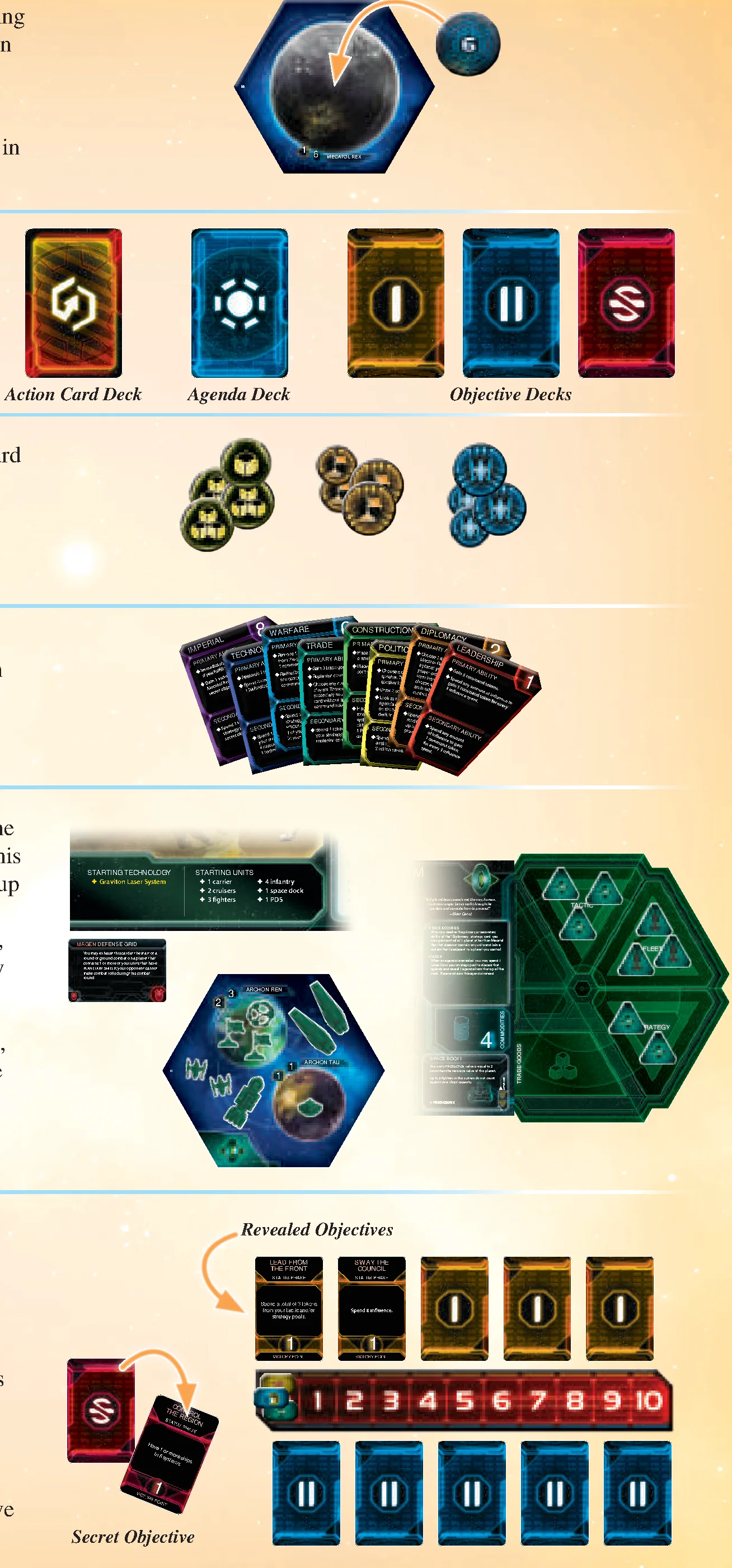
- PLACE CUSTODIANS TOKEN: Place the custodians token in the center of the game board on Mecatol Rex.
- SHUFFLE COMMON DECKS: Shuffle the action, agenda, stage I objective, stage II objective, and secret objective cards into separate decks and place them near the game board.
- CREATE SUPPLY: Create separate piles near the game board for trade good, infantry, and fighter tokens.
- GATHER STRATEGY CARDS: Place each of the eight strategy cards faceup in the common play area within reach of the speaker.
- GATHER STARTING COMPONENTS: Each player takes the starting technology and starting units listed on the back of his faction sheet. Each player places the technology cards faceup near his faction sheet and the starting units in his home system. If a player has multiple planets in his home system, it is recommended that he place his space dock and infantry on the planet with the highest resource value.
Each player places three command tokens in his tactic pool, three command tokens in his fleet pool (ship silhouette side up), and two command tokens in his strategy pool. These pools are located on the player’s command sheet. - PREPARE OBJECTIVES:
- Each player draws one secret objective and keeps it hidden from other players.
- Place the victory point track near the game board with its 0–10 side faceup. Then, each player places one of his control tokens on space “0” of the track.
- The speaker draws five stage I objective cards from the deck and places them facedown in a row above the victory point track. Then, he draws five stage II objective cards from the deck and places them facedown in a row below the victory point track.
- The speaker reveals the first two stage I objectives.
Round Structure
Twilight Imperium is played over a series of game rounds, each of which contains the following four phases that players must resolve in order:
- STRATEGY PHASE: During this phase, each player chooses a strategy card. These cards provide players with powerful abilities to use during the action phase. Each card also has a number that determines turn order for the game round.
- ACTION PHASE: During this phase, the majority of the game’s action occurs. This includes moving units, producing units, resolving combat, and using strategy cards.
- STATUS PHASE: During this phase, players perform cleanup steps in preparation for the next game round.
- AGENDA PHASE: During this phase, players vote on political agendas, which can have lasting ramifications in the game. The agenda phase is added to the game after a player gains control of Mecatol Rex.
These phases repeat in successive game rounds until one player accumulates 10 victory points and wins the game.
The Strategy Phase
During the strategy phase, players take turns selecting a strategy card that provides them with a unique action they can use during the action phase. First-time players may not know which strategy card to choose and should consult the strategy card overviews below.
Beginning with the speaker and continuing clockwise, each player chooses one of the strategy cards from the common play area and places it faceup near his faction sheet. After a player chooses a strategy card, it is not available for other players during this game round.
Each strategy card has a number between “1” and “8” in the upper-right corner. During the action phase, players take turns in order according to the number printed on their chosen strategy card, starting with “1.” This is called initiative order.
After each player has chosen a strategy card, the speaker places one trade good on each strategy card that was not chosen. During future strategy phases, when a player chooses a strategy card that has one or more trade goods on it, he gains those trade goods.
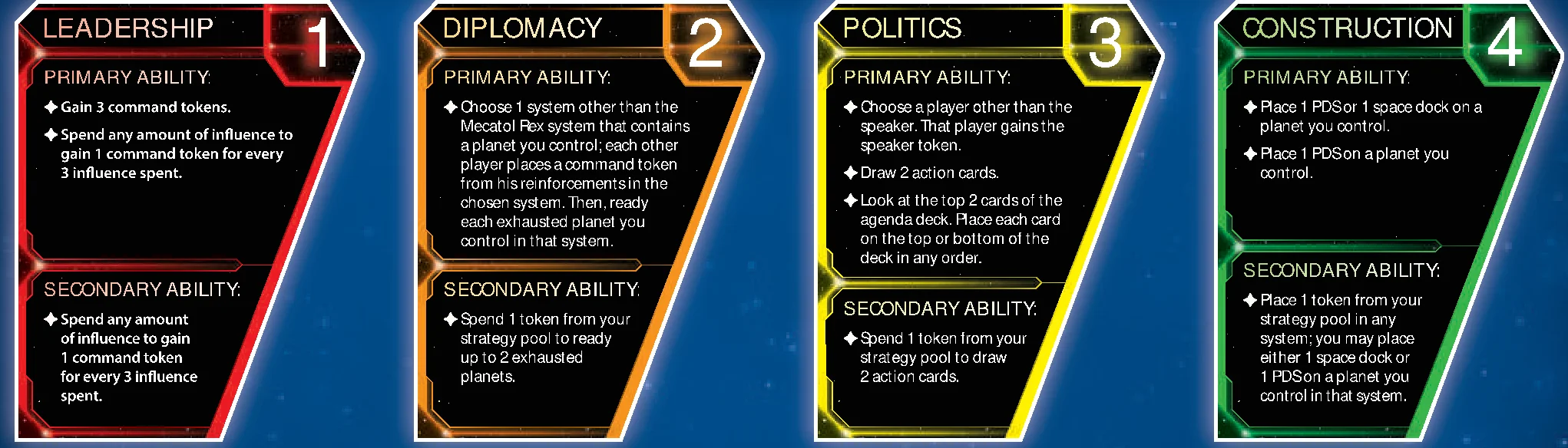
Strategy Card Overview (1 to 4)
- Leadership: A player might choose this card to gain more command tokens, enabling him to perform more actions during the action phase.
- Diplomacy: A player might choose this card if he feels threatened, to prevent other players from attacking his system.
- Politics: A player might choose this card to draw action cards, increasing the variety of abilities that are available to him.
- Construction: A player might choose this card to produce planetary structures, such as space docks and PDS units.
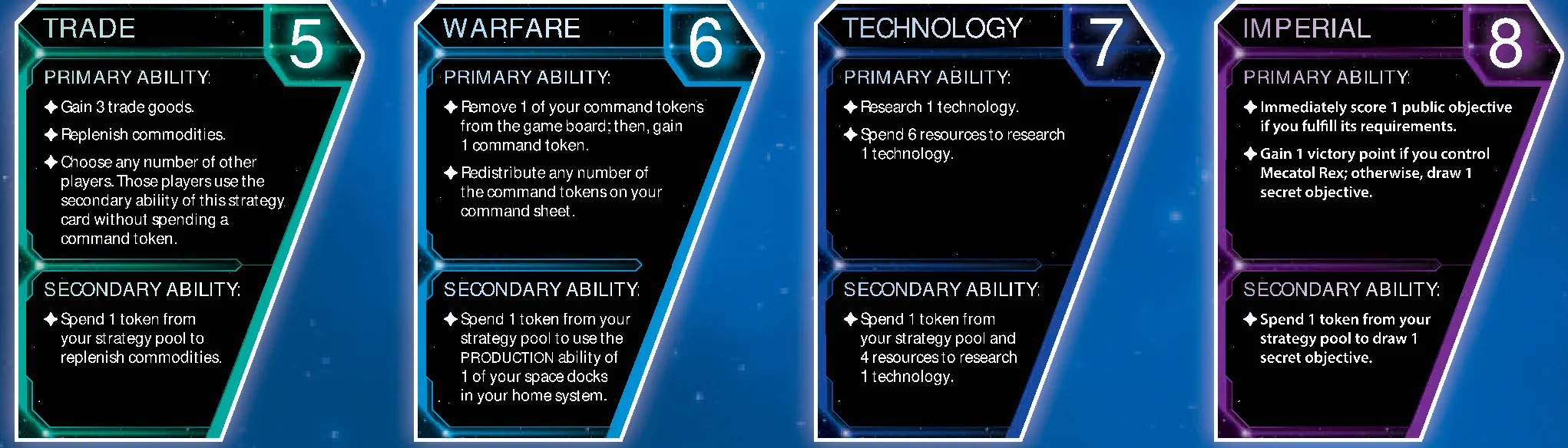
Strategy Card Overview (5 to 8)
- Trade: A player might choose this card to gain trade goods and commodities, which he could use to produce additional units or trade to other players.
- Warfare: A player might choose this card to allow some of his ships to move twice, or to build a unit and move it during the same game round.
- Technology: A player might choose this card to research a new technology that would grant him a new ability or unit upgrade.
- Imperial: A player might choose this card to draw an additional secret objective, granting him additional routes to victory.
Three- and Four-Player Games
When playing the game with three or four players, players implement the following rules:
- THE STRATEGY PHASE: After each player has chosen one strategy card during the strategy phase, players repeat the strategy card selection process until each player has chosen a second strategy card from the available cards.
- INITIATIVE ORDER: Each player’s lowest-numbered strategy card is used to determine his placement in initiative order.
- PASSING: A player cannot pass during the action phase unless both of his strategy cards are exhausted.
Action Phase Overview
The action phase is the main phase of the game, during which players produce units, move ships, enact strategies, and interact with other players.
During the action phase, players take turns in initiative order. While a player is taking a turn, he is the active player, and he can perform one action. After each player has taken a turn, player turns begin again in initiative order. Initiative order may repeat in this manner several times within a single action phase. The action phase does not end until each player has passed.
There are three types of actions:
- Tactical Actions
- Strategic Actions
- Component Actions
If a player does not wish to perform an action during his turn, he may pass. After a player passes, his turn is skipped for the remainder of the action phase. A player cannot pass until he has performed his strategic action. After each player has passed, the game round continues to the status phase.
Tactical Actions Summary
A tactical action allows a player to move ships, initiate combat, invade planets, produce units, and otherwise interact with the game board. The steps of a tactical action are summarized below:
- ACTIVATION: The active player must activate a system by taking a command token from his tactic pool and placing it in that system.
- MOVEMENT: The active player may move ships into a system from any number of other systems. Ships can also transport ground forces from one system to another.
- SPACE COMBAT: If multiple players have ships in the active system, they resolve a space combat.
- INVASION: The active player may commit ground forces to land on planets in the active system. If another player has units on those planets, the players resolve a ground combat.
- PRODUCTION: If the active player has a space dock in the active system, he can produce units by spending resources.
Note: A player might not resolve all of the above steps during every tactical action. For example, a player may choose not to move units during the “Movement” step but may still produce units during the “Production” step.
Strategic Actions
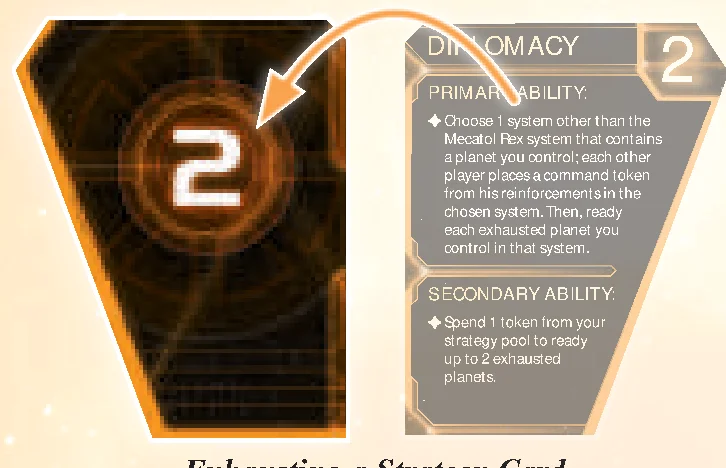
Each strategy card has both a primary ability and a secondary ability.
When a player performs a strategic action, he resolves the primary ability of his strategy card. After resolving this ability, each other player may resolve the secondary ability of that strategy card. The active player cannot resolve the secondary ability of his own strategy card.
After each player has had an opportunity to resolve a strategy card’s secondary ability, the active player exhausts that strategy card by flipping it facedown. Players cannot resolve abilities on exhausted strategy cards, but the exhausted cards’ numbers are still used to determine initiative order.
A player cannot pass during the action phase unless his strategy card is exhausted. This means that each player must perform a strategic action at some point during the action phase, which guarantees that each other player has an opportunity to resolve the secondary ability of that strategy card. A player who has passed during the action phase can still resolve the secondary ability of other players’ strategy cards.
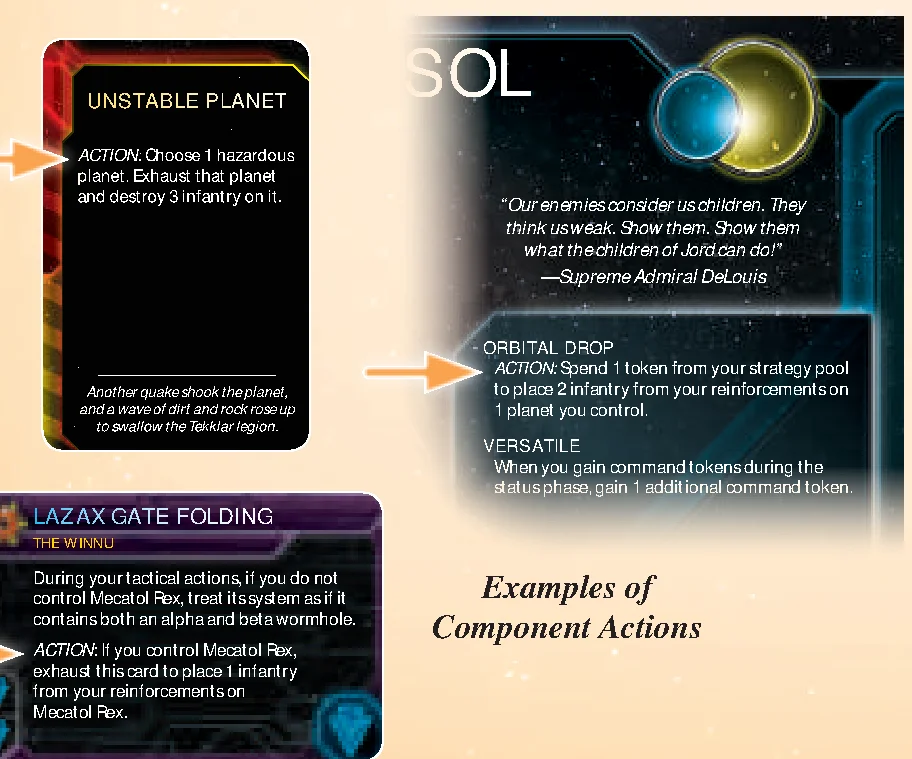
Component Actions
A component action is an action that is printed on a game component. Many action cards, faction sheets, and even some technology cards have component actions. Each of these effects is preceded by the word “Action.”
Action Cards
Throughout the game, players will accumulate action cards. Players can use action cards to resolve powerful one-time abilities.
- Each player can have a maximum of seven action cards in his hand. If a player exceeds this number, he must choose which seven cards he wishes to keep and discard the rest.
- Each action card indicates when it can be used at the top of its card. When an action card is used, the player using it reveals the card, resolves its effect, and discards the card.
- If an action card begins with the word “Action,” it can be used as a component action during a player’s turn of the action phase.
Tactical Action Steps
This section contains detailed rules for performing a tactical action. To perform a tactical action, players follow these steps in order:
- ACTIVATION
- MOVEMENT
- SPACE COMBAT
- INVASION
- PRODUCTION
1. Activation
The active player must choose one system that he would like to make the focus of his tactical action. He activates that system by taking a command token from his tactic pool and placing it on that system. That system is the active system for the remainder of the tactical action.
- A player cannot activate a system that already contains one of his command tokens, but he may activate a system that contains other players’ command tokens.
- A player cannot activate a system if he does not have any command tokens in his tactic pool.
2. Movement
During the movement step of a tactical action, the active player may choose to move some of his units into the active system.
Each ship has a move value printed on its faction sheet. This value indicates how far that ship can travel to reach the active system. For example, a ship with a move value of “1” can only move to adjacent systems.
To resolve this step, the player chooses any of his units that can move into the active system and places them in that system. When moving a ship, a player must obey the following rules:
- A ship must end its movement in the active system.
- A ship cannot pass through a system that contains another player’s ships, excluding fighters.
- A player cannot move units out of a system that contains one of his command tokens.
Capacity and Transport
Some ships have a capacity value printed on their faction sheets. When such a ship moves, it may transport a number of fighters and ground forces, in any combination, up to the ship’s capacity value.
- Transported ground forces and fighters move to the active system along with the ship that is transporting them.
- These units must remain with the ship in the space area, though ground forces may be able to land on planets during the invasion step.
- The active player’s ships may also pick up and transport ground forces and fighters from systems that they pass through that do not contain any of their command tokens.
Capacity Limits
The number of fighters and ground forces that a player has in the space area of a system cannot exceed the combined capacity of that player’s ships in that system. For example, if a player has two carriers in a system, each with a capacity of “4,” that player cannot have a combination of more than eight fighters and ground forces in the space area of that system. Ground forces on planets do not count against this limitation.
- If at any time the number of a player’s fighters and ground forces in the space area of a system exceeds the capacity of his ships in that system, the excess units are destroyed.
- During combat, a player’s fighters and ground forces can exceed his ships’ capacity, but at the end of the combat, any excess units are destroyed.
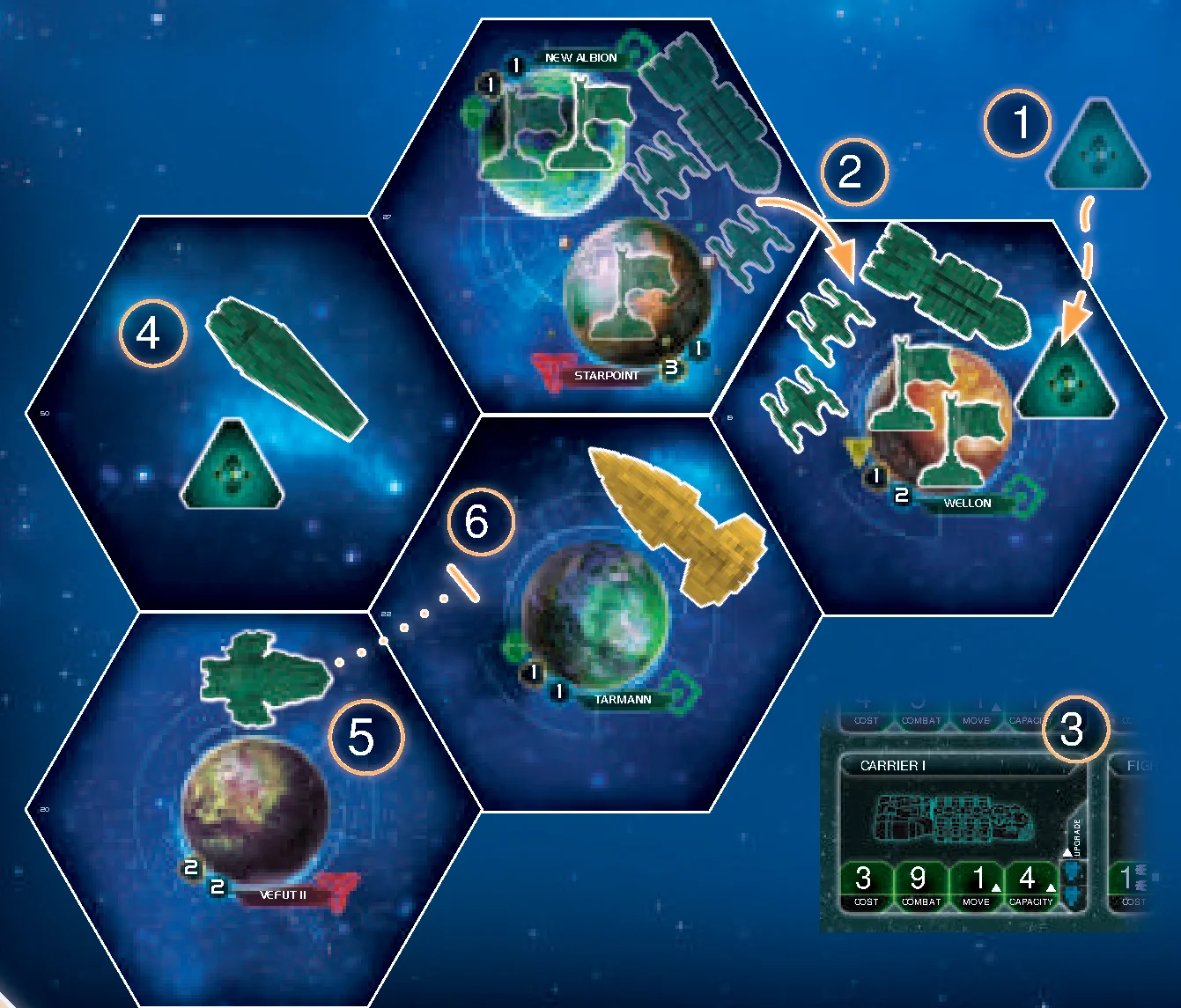
Movement Example
The Xxcha player activates the Wellon system [1]. He intends to move his carrier into that system along with two infantry and two fighters [2]. His carrier can move to the system because it has a move of “1” [3]. It can also transport the infantry and fighters because it has a capacity of “4.”
The Xxcha player has two other ships that have move values that are great enough to reach the active system. However, his cruiser [4] is in a system that has already been activated and his destroyer [5] cannot move through a system that contains another player’s ship [6]. As such, neither ship can move to the activated Wellon system.
Wormholes
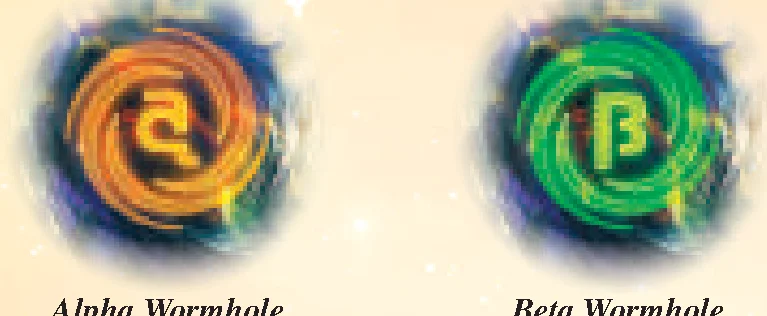
Some system tiles contain wormholes. There are two types of basic wormholes—alpha and beta—as indicated by the wormhole’s symbol. Systems that contain identical wormholes are adjacent to one another for all purposes.
Anomalies
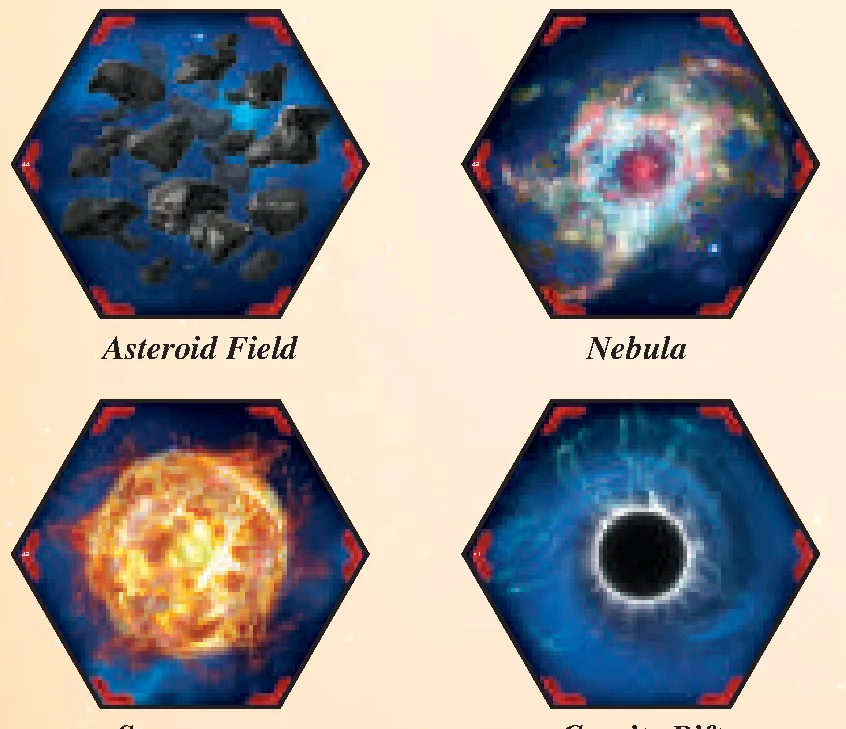
Some system tiles contain anomalies. These systems restrict movement and have special rules governing them:
- Asteroid Field: A ship cannot move through or into an asteroid field.
- Nebula:
- A ship cannot move through, but may move into a nebula.
- A defender’s ship in a nebula applies +1 to the result of each of its combat rolls.
- A ship moving out of a nebula has a move value of 1.
- Supernova: A ship cannot move through or into a supernova.
- Gravity Rift: A ship that moves through or out of a gravity rift applies +1 to its move value and then rolls one die; on a result of 1–3, the ship is destroyed.
Space Cannon Offense
After the active player’s ships move into the active system, each player’s units in the active system may use their “Space Cannon” abilities against the active player’s ships in that system. The active player may also use his units’ “Space Cannon” abilities at this time.
3. Space Combat
If multiple players have ships in the active system, they must resolve a space combat in that system. During combat, the active player is the attacker and the other player is the defender.
Players resolve space combat by performing the following steps in order:
- ANTI-FIGHTER BARRAGE: Each player’s units can use their “Anti-Fighter Barrage” abilities.
- ANNOUNCE RETREAT: Either player may choose to announce a retreat. A retreat will not happen immediately; the units will retreat at the end of the combat round. If a player wishes to retreat with any of his ground forces that are on planets in the active system, he must move them from planets to the space area during this step.
- MAKE COMBAT ROLLS: Each player rolls one die for each ship he has in the active system. If the result of a unit’s die roll is equal to or greater than that unit’s combat value shown on its faction sheet, that roll produces a hit. The total number of hits a player produces will be used in the next step.
If a unit’s combat value contains two or more burst icons, the player rolls this number of dice instead, potentially producing one hit with each die rolled. - ASSIGN HITS: Each player must choose and destroy one of his ships for each hit his opponent produced. A player removes destroyed ships from the game board and places them in his reinforcements. Since players assign hits to their own units, it is a good strategy to assign hits to units that are cheaper to replace (such as fighters used as fodder).
- RETREAT: If a player announced a retreat during the first step of the combat round, he retreats. To retreat, the player takes all of his ships from the combat and places them in an adjacent system. The chosen system cannot contain ships that belong to another player and must contain either a planet he controls or at least one of his units; otherwise, the player cannot retreat. If the chosen system does not contain one of that player’s command tokens, the player must place one token from his reinforcements in that system when he retreats.
End of Space Combat
If both players have units remaining in the combat at the end of the “Retreat” step, they resolve another round of combat starting with the “Announce Retreat” step. After all units on one or both sides of the combat have been destroyed or have retreated, play proceeds to the invasion step.
Some objectives require a player to win a combat; a player has won a space combat if he is the only player with ships remaining in the active system when the combat has ended.
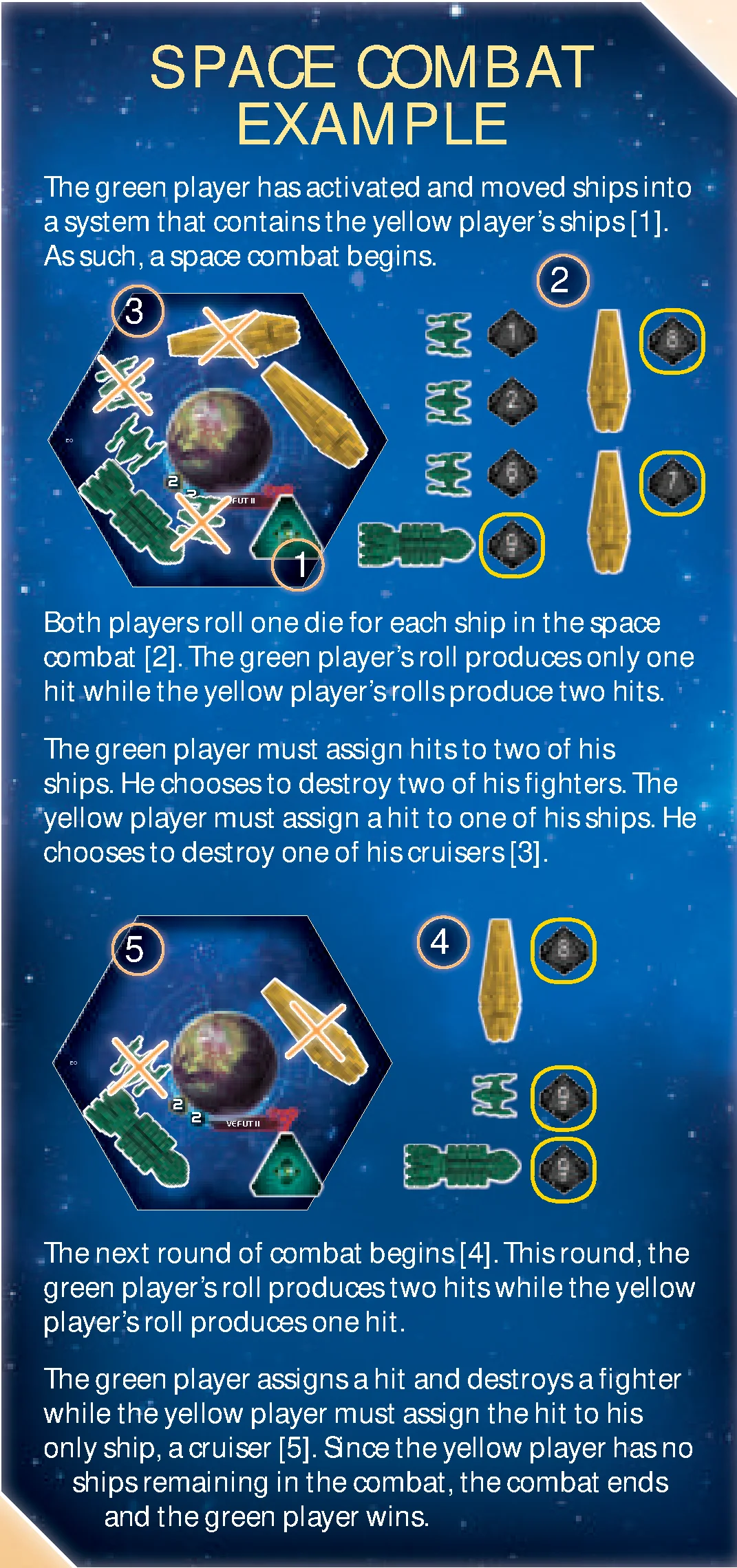
Space Combat Example
The green player has activated and moved ships into a system that contains the yellow player’s ships [1]. As such, a space combat begins.
Both players roll one die for each ship in the space combat [2]. The green player’s roll produces only one hit while the yellow player’s rolls produce two hits. The green player must assign hits to two of his ships. He chooses to destroy two of his fighters. The yellow player must assign a hit to one of his ships. He chooses to destroy one of his cruisers [3].
The next round of combat begins [4]. This round, the green player’s roll produces two hits while the yellow player’s roll produces one hit.
The green player assigns a hit and destroys a fighter while the yellow player must assign the hit to his only ship, a cruiser [5]. Since the yellow player has no ships remaining in the combat, the combat ends and the green player wins.
4. Invasion
The active player can invade planets in the active system. Players resolve an invasion by performing the following steps in order:
- BOMBARDMENT: If any planets in the active system contain another player’s ground forces, the active player may use the “Bombardment” abilities of any of his units in that system. This may allow the active player to destroy some of the defender’s units before landing ground forces.
- COMMIT GROUND FORCES: The active player decides which ground forces he wishes to land on planets. To do so, he takes any of his ground forces that are with his ships in the space area of the active system and places each one on the planet he wishes to invade.
- SPACE CANNON DEFENSE: If another player has a PDS on any of the planets the active player has committed ground forces to, he may be able to destroy some of those ground forces before they land.
- GROUND COMBAT: If multiple players have ground forces on the same planet, those players resolve a ground combat. Ground combats on multiple planets are resolved in the order of the active player’s choice.
Players resolve ground combat over a number of rounds that each consist of two steps, following the same rules as the space combat steps of the same name:- Make Combat Rolls
- Assign Hits
After assigning hits, if multiple players have units remaining on the planet, they resolve another round of ground combat starting with the “Make Combat Rolls” step. After all units on one or both sides of the combat have been destroyed, proceed to the next step.
- ESTABLISH CONTROL: The active player gains control of each invaded planet that still contains at least one of his ground forces. When a player gains control of a planet, he gains its corresponding planet card and places it in his play area exhausted. Then, if the planet contains structures that belong to another player, those structures are destroyed.
5. Production
The active player can produce units using his space docks in the active system. When a player produces units, he may choose to produce any of the units on his faction sheet by spending resources equal to the chosen unit’s cost.
- When a unit is produced, the player takes the unit from his reinforcements and places it in the active system.
- Players always place ships in the space area of the system in which they were produced.
- Players always place ground forces on the planet that contains the space dock that produced them.
- When producing multiple units at a time, the cost values of those units are added together to determine the total cost.
- Each space dock’s “Production” ability has a value that limits the number of units that it can produce during this step. A player cannot produce more units than the combined production values of his units in the active system.
- If a unit’s cost is accompanied by two icons, such as the cost values of fighters and infantry, the player receives two units for the indicated cost. When producing these units, each individual unit counts against the production limit.
- When a player wishes to produce a unit but has no units of that type available in his reinforcements, he may remove one of his units of that type from a system that does not contain one of his command tokens on the game board and return it to his reinforcements.
- When a player produces a fighter or infantry unit, but has none in his reinforcements, he can use fighter or infantry tokens from the supply instead. These tokens function identically to plastic figures of that type; however, they must be accompanied by at least one plastic figure of that type that matches his color.
- If a player’s space docks are in the same system as another player’s ships, those space docks are blockaded. Blockaded space docks cannot produce ships. They may, however, still produce ground forces.
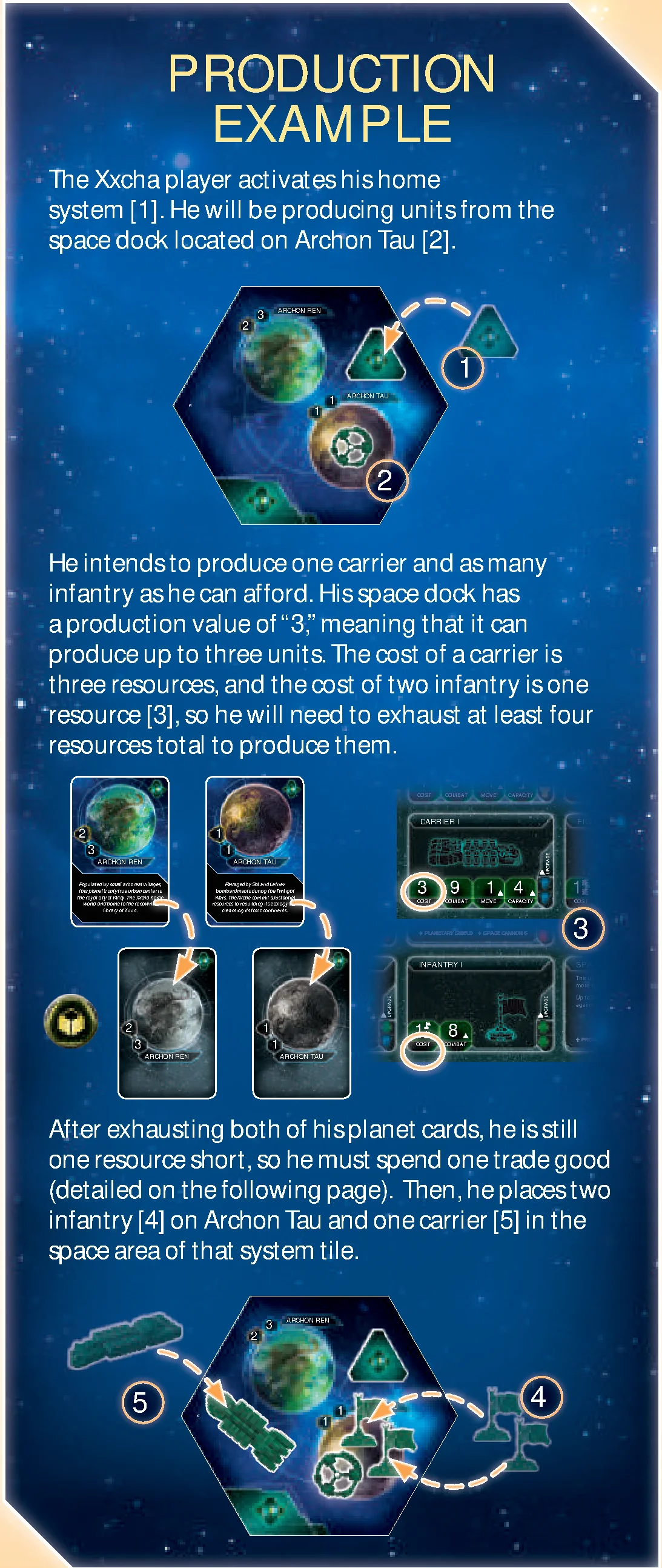
Production Example
The Xxcha player activates his home system [1]. He will be producing units from the space dock located on Archon Tau [2].
He intends to produce one carrier and as many infantry as he can afford. His space dock has a production value of “3,” meaning that it can produce up to three units. The cost of a carrier is three resources, and the cost of two infantry is one resource [3], so he will need to exhaust at least four resources total to produce them.
After exhausting both of his planet cards, he is still one resource short, so he must spend one trade good. Then, he places two infantry [4] on Archon Tau and one carrier [5] in the space area of that system tile.
Unit Abilities
Many units in the game have unit abilities that appear as bulleted keywords on faction sheets and unit upgrade technology cards:
Planetary Shield
If a unit has the “Planetary Shield” ability, the planet where that unit is located is not an eligible target for other units’ “Bombardment” abilities.
Sustain Damage
If a unit has the “Sustain Damage” ability, it can become damaged to cancel one hit. A damaged unit is turned on its side but otherwise functions as it did previously.
A damaged unit cannot use “Sustain Damage” until it is repaired either during the status phase or by another game effect.

Production
A unit with the “Production” ability, such as a space dock, can produce new units. This ability is always followed by a value which dictates the maximum number of units that a unit that has this ability can produce.
Offensive Abilities
The following abilities require a player to roll dice to determine whether or not another player’s units are hit: “Anti-Fighter Barrage,” “Bombardment,” and “Space Cannon.”
These abilities are always followed by a number that determines the minimum die result required to produce a hit. For example, “Bombardment 5” indicates that the player rolls a single die, and if the result is five or greater, it produces one hit.
Some of these abilities are followed by a second number presented inside parentheses. This number indicates how many dice a player rolls. For example, when a player uses an ability that reads “Space Cannon 5 (x3),” he rolls three dice and each die with a result of “5” or higher produces one hit. If an ability that requires a roll does not contain a number inside parentheses, a player only rolls one die.
Hits that are produced by abilities are assigned immediately. When a hit is produced against a player’s units, he chooses and destroys one of his units. Players use each of these abilities at different times and can hit different types of units as described below:
- ANTI-FIGHTER BARRAGE: A player uses this ability during the “Anti-Fighter Barrage” step of the first round of space combat. These hits can only be assigned to fighters.
- BOMBARDMENT: A player uses this ability during the “Bombardment” step of an invasion. These hits can only be assigned by the bombarded player to ground forces on the planet being bombarded. If there are multiple planets in the system, the active player must choose which of his units in the system are bombarding which planets before rolling dice.
- SPACE CANNON: A player can use this ability at two different times:
- After the “Movement” step of a tactical action, all players can use the “Space Cannon” abilities of their units that are in the active system. The player whose units the ability was used against must assign these hits to ships in that system.
- During the “Space Cannon Defense” step of an invasion, the player who controls the planet being invaded can use the “Space Cannon” abilities of his units on that planet. The invading player must assign these hits to his ground forces that are invading the planet.
Trade Goods and Commodities
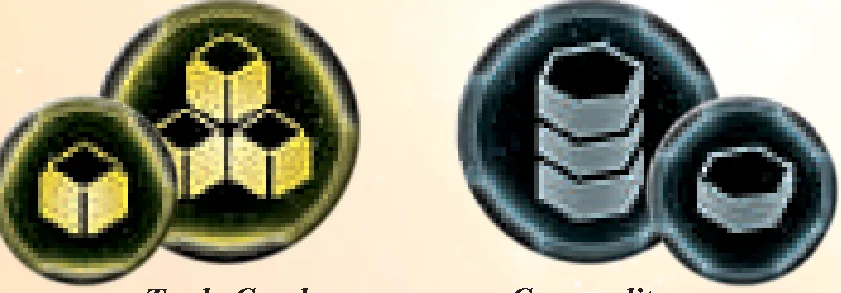
Trade goods are a universal currency that players will use to produce units or bribe other empires. A player may spend a trade good as either one resource or one influence.
Players may also accumulate commodities. A commodity represents a product that is plentiful within a player’s empire. Commodities have no inherent value but become trade goods when given to another player. Both trade goods and commodities are represented by opposite sides of the same token, and exist in values of “1” or “3.”
During the game, players may replenish commodities by using the abilities of the “Trade” strategy card. When a player replenishes commodities, he takes commodity tokens from the supply until he has a number of tokens equal to the commodities value on his faction sheet. A player cannot have more commodities than that printed value.
When a player gives another player a commodity, that commodity converts into a trade good; the player receiving the commodity flips the token to its trade good side. Players are encouraged to replenish commodities through the “Trade” strategy card and trade them to one another in mutually beneficial transactions.
Neighbors, Transactions, and Deals
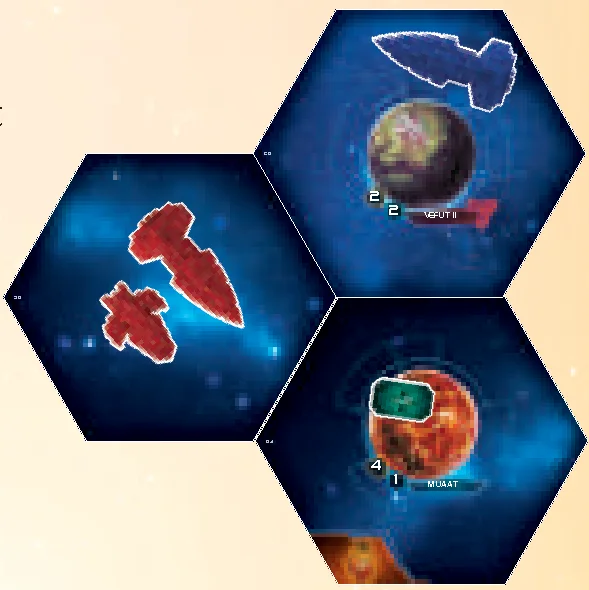
As players move their ships about the galaxy and invade planets, they will undoubtedly come into contact with other players’ empires. While this may often lead to war over planets and systems, it does not have to. Neighboring players can peacefully trade with each other.
If a player has a unit or controls a planet in a system that is adjacent to a system that contains a unit or planet that another player controls, those two players are neighbors.
Transactions
During the active player’s turn, he may negotiate a transaction with one or more of his neighbors, even during a combat. As part of a transaction, the negotiating players may exchange any number of trade goods and commodities.
The active player may negotiate only once with each of his neighbors per turn. After a transaction has been finalized, no other transactions may occur between those players that turn.
Deals
Frequently, players will negotiate transactions that go beyond a simple exchange of goods. These transactions are called deals.
- Binding Deals: For example, the active player might move his ships into a system that contains another player’s PDS, at which point the active player might offer the owner of that PDS a trade good to refrain from using the “Space Cannon” ability. Because the effect can be resolved immediately, this deal is a binding deal. When a deal is binding, a player must honor his end of the bargain.
- Non-Binding Deals: Not all deals are binding. For example, a player might offer another player a trade good to attack a specific player during a later turn. Because the effect cannot be resolved immediately, this deal is a non-binding deal. The player who was given the trade good, despite the terms of the deal, is not required to honor his end of the bargain and may fulfill or ignore the deal as he chooses.
Technology Overview
During the game, players will gain technology in the form of technology cards. Technologies provide players with powerful abilities and allow players to upgrade their units. Each player has an identical deck of technology cards that he may look through at any time, as well as a number of faction technology cards that he set aside during setup.
There are four basic colors of technology. A technology’s color is indicated by a green, red, blue, or yellow symbol located on the lower-right corner of the card:
 Biotic Technology (Green)
 Warfare Technology (Red)
 Propulsion Technology (Blue)
 Cybernetic Technology (Yellow)
Each player begins the game with a number of starting technologies as indicated on the back of his faction sheet. Additionally, a player can research new technologies from his deck during the game. A player places his starting technologies and any technology he researches faceup in his play area.
After a technology is faceup in a player’s play area, that player owns that technology. A player’s owned technologies remain in play for the duration of the game and their abilities can be used as described on the card.
Some technologies have the word “Action” in their card text; players can resolve these cards by using a component action during the action phase.
Unit Upgrade Technologies
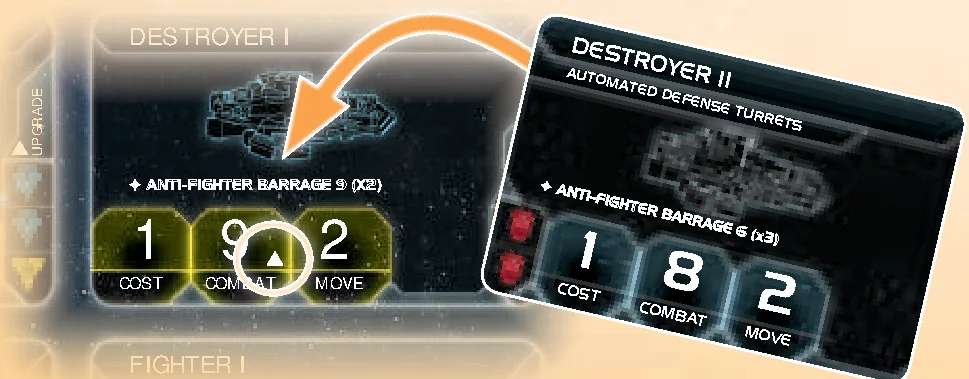
Some technologies are unit upgrade technologies. Unit upgrade technologies match a unit on a player’s faction sheet. When a player gains a unit upgrade technology, he places its card over the corresponding unit on his faction sheet. The white arrows next to an attribute’s value on the faction sheet indicate that the attribute will improve when its unit is upgraded.
When a unit is upgraded, all the player’s units of that type, both on the game board and in his reinforcements, now have the attributes shown on the unit upgrade technology.
Researching Technology
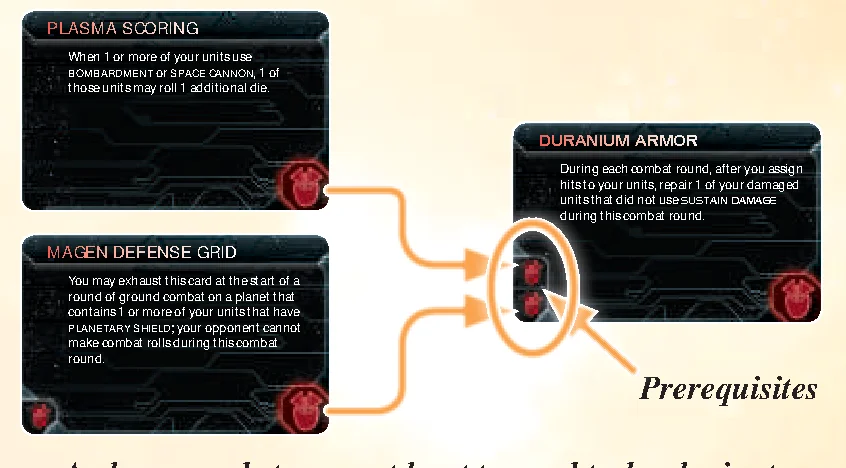
Players gain new technology by researching it, usually by using the “Technology” strategy card. To research a technology, players must satisfy the prerequisites of the technology they wish to research. Prerequisites are printed as a column on the lower-left side of each technology card and contain one or more symbols that correspond to the four basic technology colors. Some technologies have no prerequisites and can be researched without owning any technology.
To satisfy a technology’s prerequisites, a player must own a matching technology for each prerequisite symbol on the card he wishes to research. For example, a player that owns two red technologies may research the red technology “Duranium Armor,” as it has two red prerequisites.
After the player researches the “Duranium Armor” technology, it satisfies another red prerequisite, as indicated on the lower-right corner of the card; the next time that player researches a technology, he may research a technology that has three red symbols as a prerequisite. Unit upgrade technologies, unlike other technologies, may have prerequisites composed of multiple colors. Additionally, unit upgrade technologies do not satisfy prerequisites when researching technology.
Technology Specialties
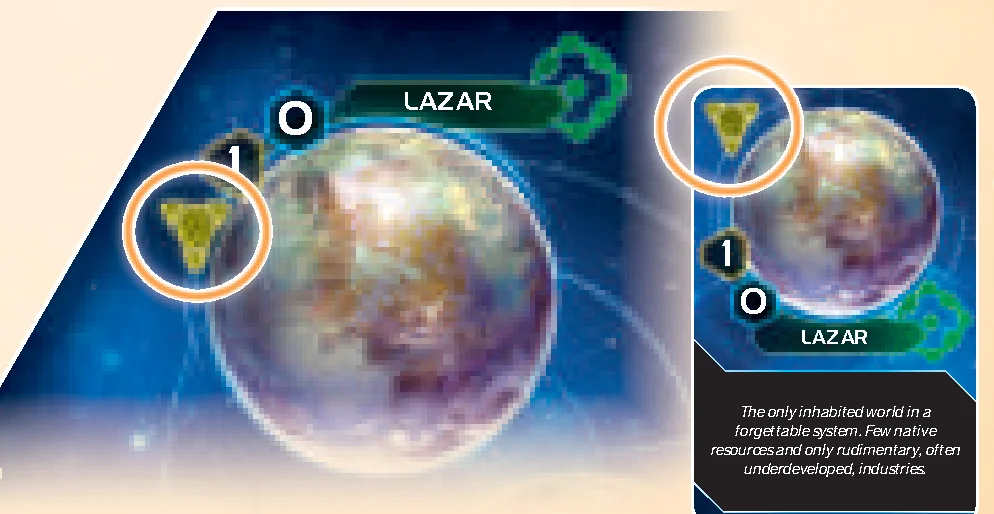
Some planets provide the player with a technology specialty. Technology specialties are extremely valuable and help players research new technologies.
If a player controls a planet that has a technology specialty symbol, he may exhaust that planet when researching technology to ignore a prerequisite that matches that technology specialty. While researching technology, players may exhaust planets for their technology specialty or for their resources, but not for both.
Status Phase Steps
During the status phase, players perform various upkeep tasks, including repairing units and scoring objectives. To resolve the status phase, players perform the following steps in order:
- SCORE OBJECTIVES: In initiative order, each player may score up to one public and one secret objective if he fulfills those cards’ requirements. This is the main way in which players gain the victory points they need to win the game.
- REVEAL PUBLIC OBJECTIVE: The speaker flips the next unrevealed public objective card faceup. The first stage II objective is not revealed until all stage I objectives have been revealed.
- DRAW ACTION CARDS: Each player draws one card from the top of the action card deck.
- REMOVE COMMAND TOKENS: Each player removes all of his command tokens from the game board and returns them to his reinforcements.
- GAIN AND REDISTRIBUTE COMMAND TOKENS: Each player gains two command tokens from his reinforcements. Then, he may redistribute any of the command tokens on his command sheet by moving them between his tactic, fleet, and strategy pools.
- READY CARDS: Each player readies all of his exhausted cards, including planet, technology, and strategy cards.
- REPAIR UNITS: Some units may have been turned on their side during the action phase to mark that they have been damaged. Players repair these units during this step by turning them upright.
- RETURN STRATEGY CARDS: Each player returns his strategy card to the common play area. Then, if the custodians token is no longer on Mecatol Rex (the planet in the center of the game board) the game round continues to the agenda phase. Otherwise, a new game round begins with the strategy phase.
Custodians of Mecatol Rex
The custodians token represents the caretakers that safeguard Mecatol Rex until one of the great races can claim the throne.
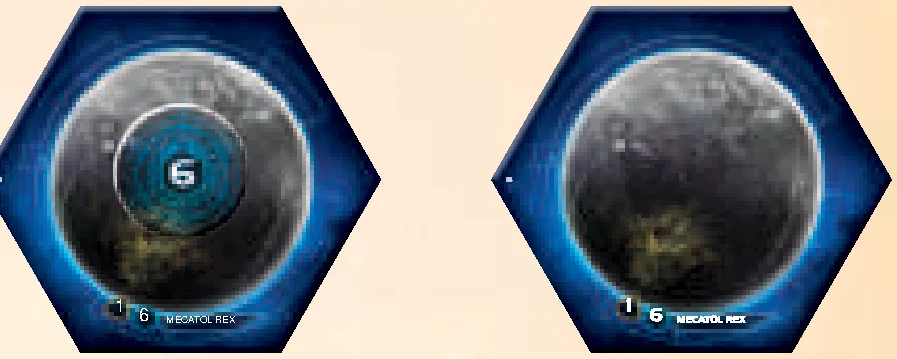
Players may freely move units into the Mecatol Rex system, but cannot land ground forces on the planet while the custodians token is present. To remove this token, the active player must spend six influence immediately before landing ground forces on the planet. If the player cannot spend six influence, he cannot land ground forces on the planet.
When a player removes the custodians token, he places it in his play area and gains one victory point. Since the galactic council can now convene on Mecatol Rex, the agenda phase is added as the last phase of each game round, including the round during which a player gained control of Mecatol Rex.
The Agenda Phase
After the custodians token has been removed from Mecatol Rex, a new phase is added to each round for the remainder of the game: the agenda phase.
During this phase, the galactic council convenes to discuss issues that affect the entire galaxy. Players vote for outcomes on two agendas, establishing laws and policies that have lasting repercussions.
After resolving this phase, a new game round begins with the strategy phase.
To resolve the agenda phase, players perform the following steps in order:
- FIRST AGENDA
- REVEAL AGENDA
- VOTE
- RESOLVE OUTCOME
- SECOND AGENDA
- REVEAL AGENDA
- VOTE
- RESOLVE OUTCOME
- READY PLANETS
1. First Agenda
- Reveal Agenda: The speaker draws one agenda card from the top of the agenda deck and reads it aloud to all players, including its possible outcomes.
- Vote: Each player, starting with the player to the left of the speaker and continuing clockwise, casts votes in favor of a single outcome.
When it is a player’s turn to cast votes, he may exhaust any number of his planets. Each planet contributes a number of votes equal to its influence value.
Outcomes
The outcomes that a player can vote for depend upon the type of agenda:
- FOR OR AGAINST: The player commits his votes “For” or “Against” the agenda. The agenda card will have different results according to the outcome that receives the most votes.
- ELECT PLAYER: The player commits his votes for the player of his choice, including himself.
- ELECT PLANET: The player commits his votes for the planet of his choice. That planet must be controlled by a player unless the agenda specifies otherwise.
When casting votes, the player announces the outcome he is voting for aloud. For example, a player may say, “I’m casting three votes to elect the Hacan player” or “I’m casting three votes against this agenda.”
A player can only vote for one outcome per agenda. For example, he cannot cast votes for two different players. He may, however, choose to abstain from the vote entirely.
Transactions during Agendas
During each vote, players may freely negotiate transactions with other players, even if they are not neighbors with those players. Each player may negotiate up to one transaction with each other player while resolving the vote for each agenda. This often involves convincing players to vote for certain outcomes using trade goods or future promises.
Resolve Outcome
Players count votes and resolve the outcome with the most votes. Each agenda will be one of two types:
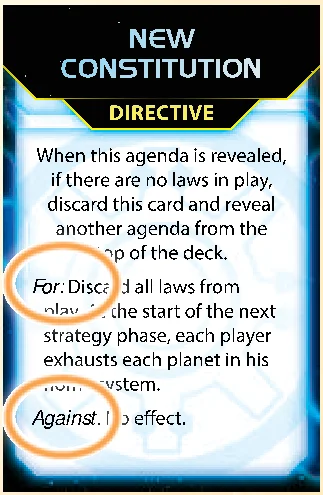
- Directives: When resolving a directive, players resolve the outcome that received the most votes and discard the agenda card immediately.
- Laws: When resolving a law, if a “For” outcome received the most votes, or if the law requires an election, the law’s effect becomes a permanent part of the game. Players resolve the outcome and place the agenda card in the common play area unless the effect specifies otherwise. If an “Against” outcome received the most votes, players resolve the text effect of the outcome and discard the agenda immediately.
Ties
If multiple outcomes receive the same number of votes after all players have voted, the speaker decides which of the tied outcomes is resolved.
2. Second Agenda
Players resolve a second agenda following the same rules and steps for step 1, “First Agenda.”
3. Ready Planets
Each player readies all of his planet cards. Then, the agenda phase ends and players begin a new game round, starting with the strategy phase.
Victory Conditions
A game of Twilight Imperium immediately ends when one player has gained 10 VICTORY POINTS. Players gain victory points by completing objectives. There are two types of objectives:
- PUBLIC OBJECTIVES: During setup, the speaker reveals two public objectives, and more are revealed throughout the game. Any number of players can score each of these objectives.
Important: A player cannot score public objectives if he does not control all of the planets in his home system. - SECRET OBJECTIVES: Each player begins the game with one secret objective that he may look at but must keep hidden from other players. A player can score his own secret objectives but not those belonging to other players.
Important: A player cannot have more than three total scored and unscored secret objectives. If he draws a secret objective and has more than three, he must choose one of his unscored secret objectives and return it to the deck. Then, he shuffles the secret objective deck.
Objective Timing
Each objective specifies when a player can score it, either during the status phase or during the action phase. This timing is indicated directly below a card’s title:
- If a player scores an objective during the status phase, he must fulfill the requirement on the card during the “Score Objectives” step of the status phase to score that objective. For example, if an objective states that a player must control six planets outside of his home system, he must control those planets when he scores the objective—having controlled those planets earlier is not sufficient.
- If an objective’s timing specifies “Action Phase,” a player can score it during the action phase immediately after he fulfills its requirements.
- Players can score some objectives by spending resources, influence, or tokens, as described by the objective card. To score such an objective, a player must pay the specified cost at the time indicated on the card.
Scoring Objectives
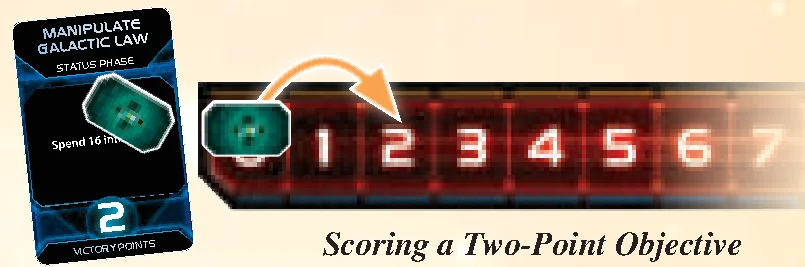
If a player fulfills an objective’s requirements at the time indicated on the card, he can score it. To do so, he advances his token on the victory point track a number of spaces equal to the value of the objective card.
After scoring an objective, a player places a control token from his supply on that objective card to indicate that he has scored it and cannot score it again this game. If he scored a secret objective, he places the card faceup in front of him before placing a control token on it.
Important: Each player can only score one public and one secret objective during each status phase and each step of the action phase.
Imperium Rex
The game can end early if no player has scored 10 victory points and there are no more objectives to reveal. When the speaker would reveal an objective but cannot, the game immediately ends and the player with the most victory points wins the game. If there is a tie, the player among the tied players who is earliest in initiative order wins the game.
Complete Setup
After players have played their first game, they should use the advanced rules found in this section.
This booklet contains rules for an abridged “First-Game Setup” to facilitate players’ first time playing the game. During setup for a standard game, players have a wider array of factions to choose from, many of which are more complex than the factions suggested in the “First-Game Setup.”
During setup, players are dealt a hand of system tiles to create the galaxy instead of using a preset map. Full rules for setup can be found in the “Complete Setup” section on page 2 of the Rules Reference. Additionally, during setup, players will receive promissory notes, a type of card that players can use to facilitate negotiations with other players. Finally, players who wish to play a longer game may use the 14-space side of the victory point track.
Promissory Notes
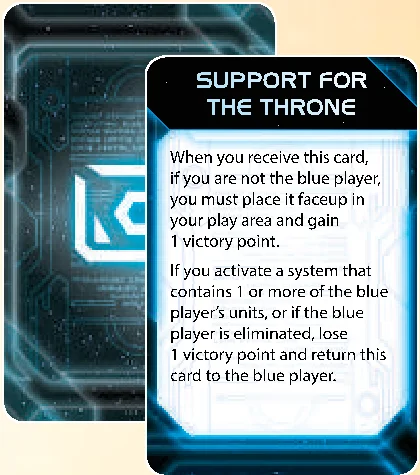
Each player begins the game with five promissory note cards: four of which match his player color, and one faction-specific card. A promissory note helps players negotiate with each other by creating an enforceable contract between them.
- A player can offer a promissory note to another player as part of a transaction. Each promissory note contains text that describes the card’s effect and indicates when the card can be resolved.
- A player cannot resolve his own promissory notes, but he can resolve other players’ notes that he receives from a transaction.
- When a player resolves a promissory note, he reveals the card and resolves its text effect. Though some promissory notes will stay in play after they are resolved, a promissory note is usually returned to its original owner and may again be offered by that player as part of a transaction.
- When a player offers a promissory note to another player as part of a transaction, the offering player may allow the receiving player to view the card being offered if he wishes.
- A player cannot trade more than one promissory note during a single transaction.
- Players can also exchange promissory notes that they have received from other players. This does not require permission from the promissory note’s original owner.
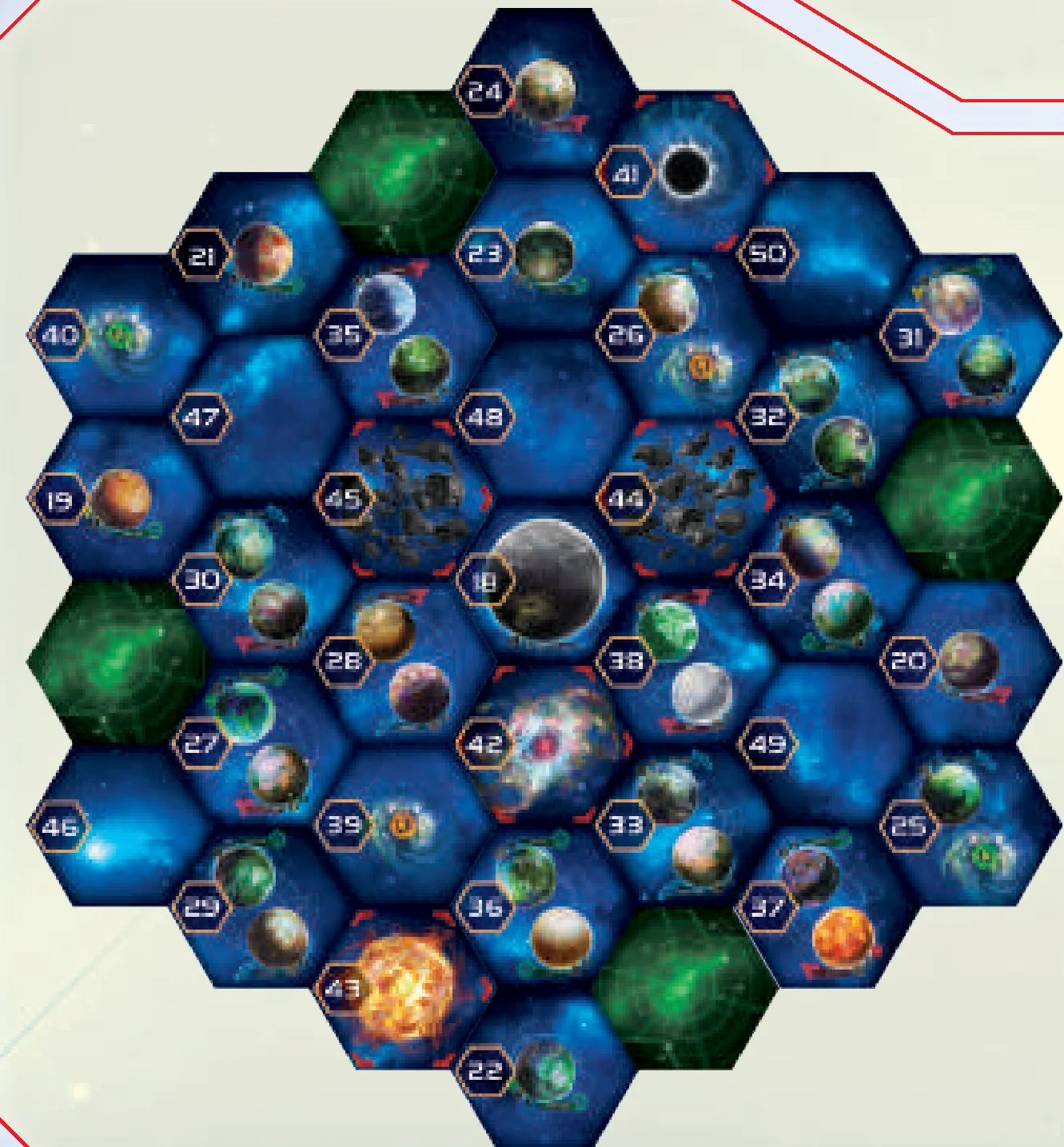
Three-Player Galaxy Setup
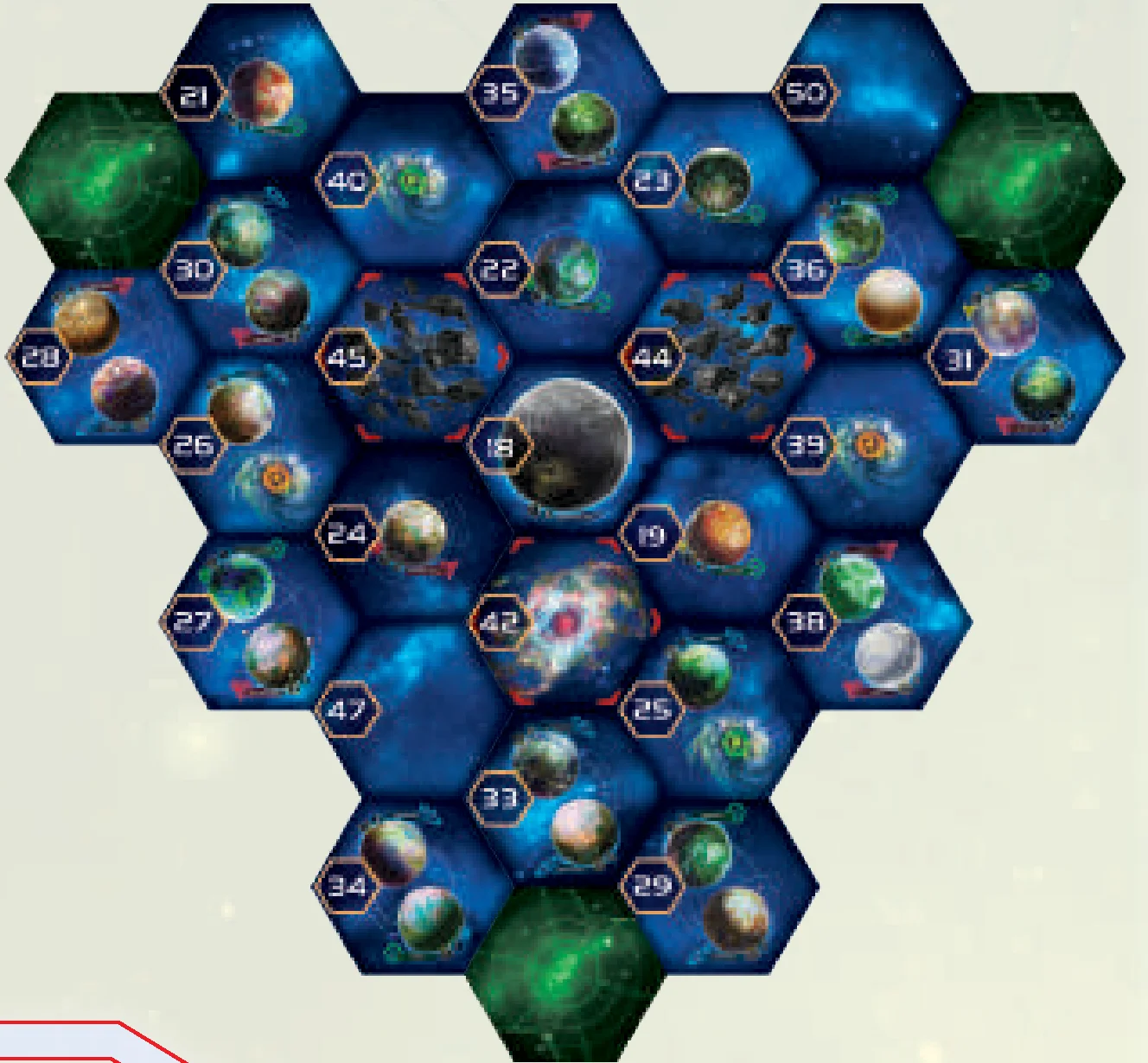
Match the numbers in the leftmost corner of each system tile to the preset map on the right to create the three-player galaxy.
After placing the system tiles of the preset galaxy, each player places his home system in the space indicated on the diagram by the green system tile that is nearest to his position around the table.
Four-Player Galaxy Setup
Match the numbers in the leftmost corner of each system tile to the preset map on the left to create the four-player galaxy.
After placing the system tiles of the preset galaxy, each player places his home system in the space indicated on the diagram by the green system tile that is nearest to his position around the table.
Five-Player Galaxy Setup
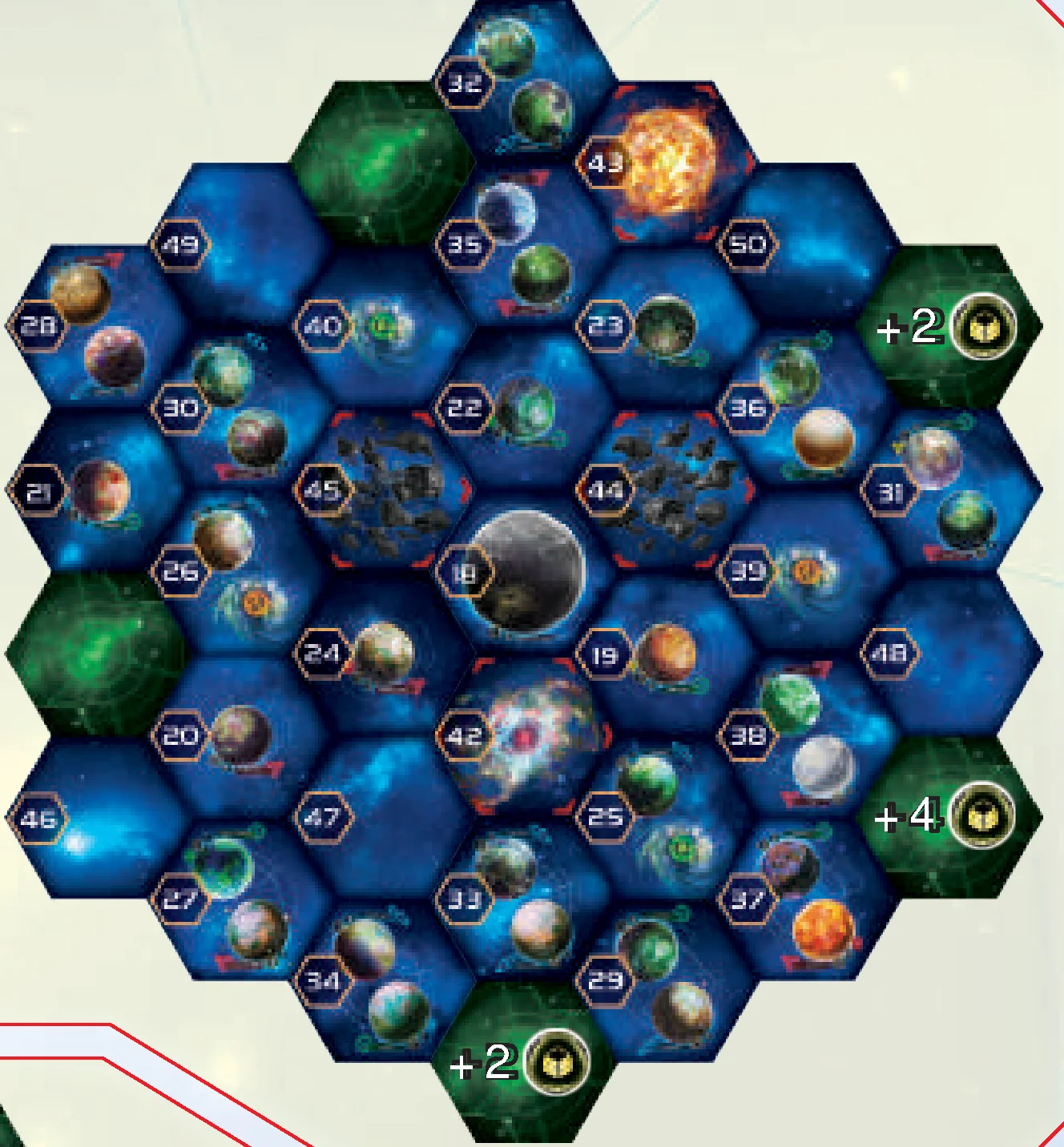
Match the numbers in the leftmost corner of each system tile to the preset map on the right to create the five-player galaxy.
After placing the system tiles of the preset galaxy, each player places his home system in the space indicated on the diagram by the green system tile that is nearest to his position around the table.
During a five-player game, the player who is closest to two other players receives four additional trade goods to start the game. The two players on either side of that player each receive two additional trade goods, and the remaining two players, who are not within two tiles of any other player, do not receive additional trade goods.
Six-Player Galaxy Setup
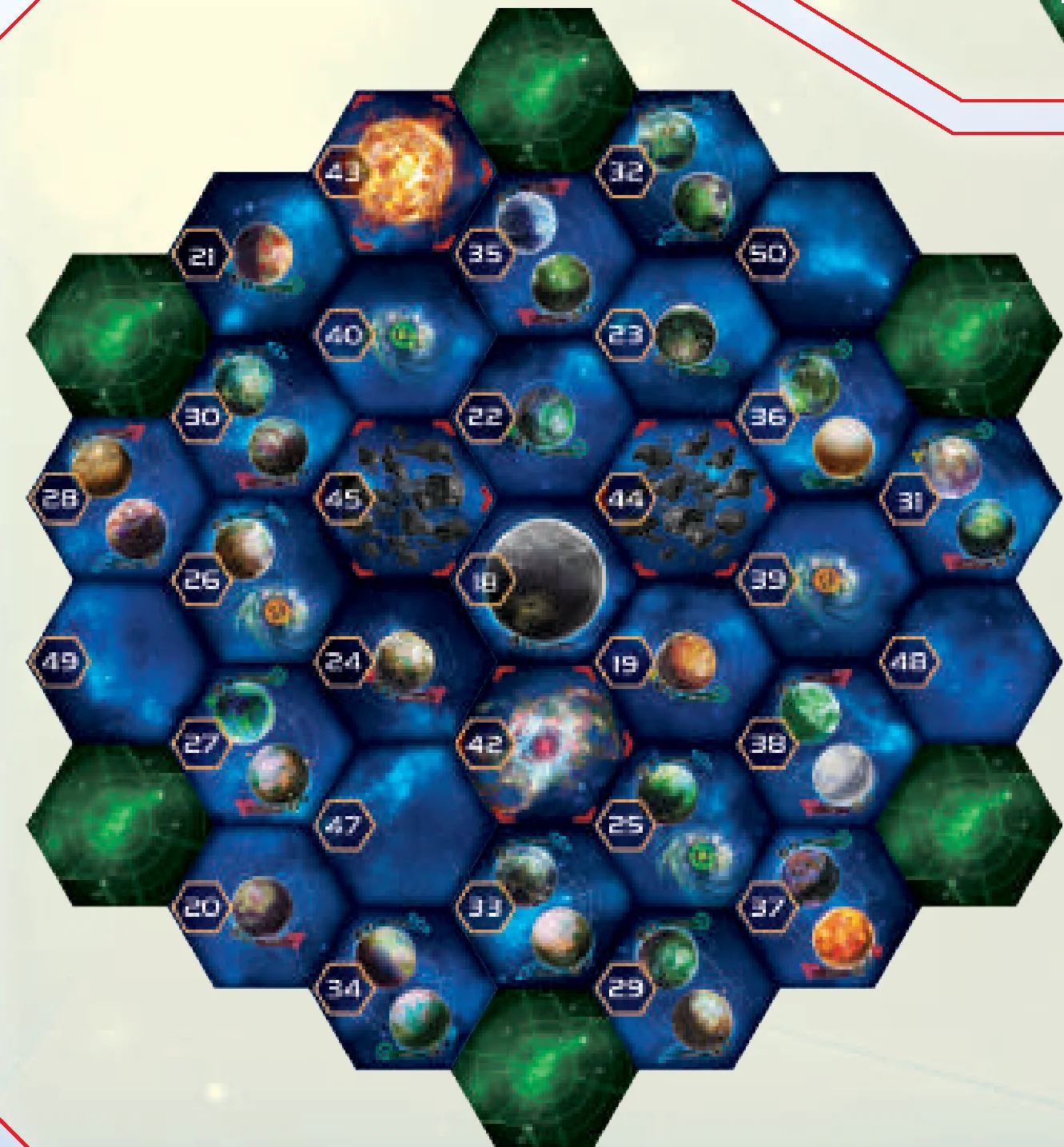
Match the numbers in the leftmost corner of each system tile to the preset map on the left to create the six-player galaxy.
After placing the system tiles of the preset galaxy, each player places his home system in the space indicated on the diagram by the green system tile that is nearest to his position around the table.
Game Overview
- Strategy Phase: Players choose strategy cards starting with the speaker and proceeding clockwise.
- Action Phase: Players take turns in initiative order, repeating until each player has passed.
- Status Phase: Players perform cleanup steps in preparation for the next game round.
- Agenda Phase: Players draw and resolve two agendas.
Actions
There are three types of actions that players may perform during the action phase:
- Strategic Action: A player performs the primary action of his chosen strategy card. Then, other players perform the secondary ability of that card.
- Component Action: A player may perform an action granted to him by his faction sheet, a technology, or an action card.
- Tactical Action: A player may perform a tactical action by spending a command token from his tactic pool. He resolves the following steps:
- Activation
- Movement
- Move Ships
- Space Cannon Offense
- Space Combat
- Anti-Fighter Barrage
- Announce Retreat
- Make Combat Rolls
- Assign Hits
- Retreat
- Invasion
- Bombardment
- Commit Ground Forces
- Space Cannon Defense
- Ground Combat
- Establish Control
- Production
Status Phase
- Score Objectives
- Reveal Public Objective
- Draw Action Cards
- Remove Command Tokens
- Gain and Redistribute Command Tokens
- Ready Cards
- Repair Units
- Return Strategy Cards
Planet Traits
- Cultural
- Hazardous
- Industrial
Frequently Overlooked Rules
- Players do not resolve the agenda phase until any player has removed the custodians token from Mecatol Rex.
- Players cannot pass during the action phase until they have performed a strategic action.
- When performing a strategic action, players cannot use the secondary ability of their own strategy cards.
- Players can produce units at a space dock in the active system during their tactical actions, even if they did not move ships or invade planets.
- Ships can only drop off ground forces in the active system.
- Players can exceed their ships’ capacity during combat.
- Players are limited to two PDS units and one space dock on each planet.
- Unit upgrade technology does not satisfy prerequisites.
- Players can exchange only one promissory note each as part of a single transaction.
- Players with upgraded PDS units in the same system as a wormhole can use those units’ “Space Cannon” abilities to fire through the wormhole.
- Players may trade promissory notes that were given to them by another player.
- A player is limited to three secret objectives, including both scored and unscored secret objectives.
Prologue: The Fall of the Empire
My name is Mahthom Iq Seerva.
I am the Winnaran keeper of the Custodian Chronicle, and I write this from the ancient Tower of Annals in old Mecatol City. Since inheriting the duties of the chronicle from my father, I have enjoyed the inspiring views of great buildings, ancient towers, and the bright lights of life that stretch into the distance. Yet, like the shadow at my feet, I can never escape or forget the lethally finite borders of this city. Less than a thousand leagues from my tower, great shields protect us from the poisonous dust that is the Sea of Desolation, the terrible wasteland that covers most of the planet.
My people, the Winnarans, have kept this city safe for more than three thousand years. Ever since the time of the Great Scourge, we have been the caretakers of the Imperial Throne, the Imperial Records, and the Galactic Council here on Mecatol Rex. We have indeed been faithful to the promise that we made to the last Emperor.
My hands tremble as I write this, for events are now unfolding which I believe to be the harbinger of great change. I foresee that our custodianship will come to an end in my lifetime.
This is why I have contacted you. I will seek to give you a brief yet true summary of the recent history of our galaxy. I give this to you because I know that you will spread this knowledge far and wide. As we enter the dangerous years before us, I fear that the galaxy shall have great need of the past.
It is told that the Lazax Emperors arose from the ashes of the Mahact kings. Little is known of their early ascension, but it is impossible to deny that the Lazax must have been a profoundly intelligent, benevolent, and wise people. After their rise to power, we know that the Lazax chose the central planet of Mecatol Rex as their home world. The year the Lazax first arrived on Mecatol Rex is recorded in the Imperial Chronicle as “first” and marks the beginning of my account.
For ages, the borders of the Lazax Empire expanded outward. As inhabited systems were discovered and annexed into the Empire, the Lazax allowed these newfound civilizations to join the Galactic Council: the governing body that represented the needs and voices of the Empire’s people. The Great Races: Xxcha, Hacan, Letnev, Hylar, Human, and N’orr were all represented in the council, as were hundreds of lesser civilizations and independent systems.
Yet, as the years passed, discoveries of new civilizations and planetary systems slowed. Little by little, the mood of the Empire changed as technological and intellectual growth abated. Craving constant advancement, the Great Races began to look to the power of the Lazax and the resources of their neighbors. Greed and ambition grew in the hearts of statesmen and councilors. The once-noble spirit of the Empire turned suspicious and fearful. It is during this time that the first conflicts between the Great Races are recorded in the Imperial Chronicle. The Galactic Council became a seedbed of intrigue, and the turmoil ushered in a time of spies and assassins. First in secret, and later in public, the Great Races began to build their fleets and armies. Many embarked on territorial expansion that extended beyond their original charter. Border strife and resource disputes proliferated, gnawing at the very foundations of the Empire. This was a time of growing darkness known now as the Age of Dusk.
Throughout most of this age, the Lazax still held authority without question. Except for a few minor and unsuccessful rebellions, few dared to openly challenge the Emperors. Blinded by millennia of unchallenged rule, the Lazax could not perceive the mounting ambition and discontent that grew around them. As centuries passed, tensions between the Great Races grew deeper, and so did their desire for power and control. In the end, hatred was their only common ground: hatred for the Lazax, Imperial rule, and for the benevolent arrogance of the emperors.
A small affair near the Quann Wormhole was the spark that would set the galaxy aflame.
Protesting Imperial trade oversight, the Baron of Letnev began a blockade of traffic through the Quann Wormhole. Because the prickly Letnev had often been troublesome, an unconcerned and unhurried Emperor sought to solve the conflict through the Galactic Council.
However, the blockade obstructed significant Sol trading activities and prevented vital supplies from reaching a handful of Sol colonies that soon were struck by famine and disease. After nearly eight months of fruitless debate in the Galactic Council, the patience of the Sol Federation ran dry. Without warning, the blockading Letnev ships were attacked and annihilated by a Sol task force acting without Imperial mandate, and the Quann Passage was reopened.
Angered by the unilateral militancy of both Letnev and Sol, the Emperor attempted to consolidate his control by issuing the Maandu Edict: a rule which would place all warships under direct Imperial supervision.
The Maandu Edict was the stone that shattered the brittle Empire. The Letnev, Sol, and Jol-Nar civilizations announced their immediate withdrawal from the Council, drawing the galaxy into civil war. The Quann Conflict marks the beginning of the Age of Twilight.
As civilization fought civilization—as a thousand territorial disputes erupted over a few years—the Lazax desperately sought to hold together their crumbling Empire. Imperial fleets fought across the galaxy, but their power was ultimately stretched too thin. In the seventy-third year of the war, an alliance of Sol, Jol-Nar, and Hacan launched a surprise attack on Mecatol Rex itself. The last Lazax Emperor and his entire family were killed during the first Sol bombardments, and no successor was named.
Of all the planets in the galaxy, no planet was more war-torn than Mecatol Rex. Over the course of only a few years, the planet’s ecology was ravaged by bombardments, its population nearly wiped out, and its green fields blasted into a toxic wasteland.
After the death of the Emperor and the loss of the throne-world, Imperial control collapsed. The Lazax became hunted across the galaxy in the vengeful wave of murder that is known now as the Great Scourge. Lasting only twenty years, the scourge resulted in the near-complete annihilation of the Lazax race. Until recently, no Lazax had been seen in the galaxy for more than three thousand years.
The Twilight Wars continued for centuries, but no race was powerful enough to seize the throne and risk suffering a similar fate as the Emperor. Slowly, the strength of great civilizations failed as their economies crumbled and as knowledge and technology was lost in the destruction and strain of long war.
And so the Age of Twilight ended in a slow whisper. The time that followed, now known as the Dark Years, was a period of economic, cultural, and intellectual collapse. The Great Races retreated into their own small, safe areas of space, abandoning what they could no longer hold by force. After several millennia, the Dark Years came to an end, and a calm but uncertain period of rebuilding began.
As I write this, the Great Races of the galaxy have regained elements of their former strength. Here on Mecatol Rex, the Galactic Council is growing in influence once more, while civilizations new and old, are re-colonizing the neighboring systems abandoned during the Dark Years.
Signs of great change are everywhere. This year, as if walking out of ancient prophecy, the Lazax returned from the darkness of history in a foreboding cybernetic form. To me, their coming is like the first wind of a terrible storm. I feel as if the galaxy is waking—as if an ancient beast stirs from slumber in a dark cave.
The day will soon come when a new Empire will rise. For the sake of all, may the new Emperor have not only the power to seize the throne, but the strength to conquer the peace.
If not, I fear that a sea of desolation will drown us all.
Overview & Components
Object of the Game
Throughout a game of Twilight Imperium, players will barter, plot, and wage war upon one another to complete objectives. The first player to accumulate 10 victory points claims the Imperial Throne and wins the game.
Using This Booklet
The purpose of this booklet is to teach new players how to play Twilight Imperium. It is recommended that players read this booklet in its entirety before playing for the first time.
This game also includes a Rules Reference, which describes detailed rules and exceptions that are omitted from this booklet. As questions arise during the game, players should consult the Rules Reference rather than this booklet.
Components
- 17 Faction Sheets
- 6 Command Sheets
- 51 System Tiles
- 354 Plastic Units (59 Units in 6 Colors)
- 8 Strategy Cards
- 8 Ten-Sided Dice
- 1 Victory Point Track
- 59 Planet Cards
- 40 Objective Cards
- 80 Action Cards
- 50 Agenda Cards
- 41 Promissory Note Cards
- 1 Speaker Token
- 122 Technology Cards
- 62 Unit Upgrade Technology Cards
- 2 Creuss Alpha/Beta Wormhole Tokens
- 1 Naalu “0” Token
- 1 Custodians Token
- 2 Nekro X/Y Assimilator Tokens
- 272 Command Tokens
- 289 Control Tokens
- 48 Trade Good and Commodity Tokens (Double-Sided)
- 49 Infantry Tokens
- 49 Fighter Tokens
Key Concepts
Units
During a game of Twilight Imperium, each player’s units are represented by plastic figures. There are three types of units: ships, ground forces, and structures.
Ships
Ships represent spacefaring units. Players use these units to engage one another in space combat and expand their empires to new systems.
Ground Forces
Ground forces represent foot soldiers. Players use these units to invade planets or defend their own territories.
Structures
Structures represent military installations built by an empire to support its war effort.
Reinforcements
A player’s personal supply of unused units and unused command tokens is his reinforcements. When producing units and gaining command tokens during the game, players will take those components from their reinforcements.
Systems and Planets
The game board for Twilight Imperium is formed using modular system tiles. Each tile represents a single system in the galaxy, which may contain one or more planets or other celestial bodies.
Placing Units on System Tiles
When a unit is placed in a system, it is placed in one of two areas on the tile:
- Structures and ground forces are usually placed on planets.
- Ships are placed in space—the star-filled area surrounding the planets.
Planets
As players move about the galaxy and expand their empire beyond their home systems, they will gain control of new planets.
When a player gains control of a planet, he takes that planet’s card from either the deck of planet cards or from the player who controlled it previously and places it facedown in his play area.
Each planet card displays two values:
- Resources on the left in yellow: spent to acquire new units and technologies.
- Influence on the right in blue: spent to gain command tokens and to vote during the agenda phase.
If a player ever controls a planet, but has no units on that planet, he places one of the control tokens that matches his faction on that planet to mark that he controls it.
Planet Traits
Most planets outside of home systems have a planet trait. There are three types of planets: cultural, hazardous, and industrial. Traits have no inherent game effect, but are referred to by some cards and abilities.
- Cultural Planet
- Hazardous Planet
- Industrial Planet
Spending Resources and Influence
Many effects in Twilight Imperium require a player to spend resources or influence.
To spend a planet’s resources or influence, a player exhausts that planet’s planet card. For example, if a player needs to spend two resources to produce units, he can exhaust a planet that has a resource value of “2” or instead exhaust two planets that each have resource values of “1.” The player could exhaust a planet that has more resources, but the excess resources are lost.
Command Sheet
Successfully navigating the action phase in Twilight Imperium requires careful management of command tokens. When a player gains a command token, he places it in any one of three pools: the tactic pool, the fleet pool, or the strategy pool.
Tactic Pool
During the action phase, players may spend command tokens from their tactic pool to perform tactical actions.
Fleet Pool
Players place command tokens in their fleet pool with the ship silhouette faceup. Players do not spend these command tokens like the command tokens in their other pools. Instead, the number of tokens in a player’s fleet pool is the maximum number of ships, excluding fighters, that he can have in each system. If a player ever has more ships in a system than he has tokens in his fleet pool, he must return ships from that system to his reinforcements until the number of ships in that system no longer exceeds the number of tokens in his fleet pool.
Strategy Pool
Most of the secondary abilities on strategy cards require a player to spend a token from his strategy pool to resolve the ability. Players will want to keep tokens in their strategy pool so that they can use the secondary abilities of the other players’ strategy cards.
Readied and Exhausted Cards
Many cards have a readied and an exhausted state:
- An exhausted card is flipped facedown, indicating that the values and abilities on the front of the card cannot be used.
- A readied card is flipped faceup, indicating that the values and abilities on the front of the card can be used.
During the status phase, all exhausted cards are readied.
First-Game Setup
Setup Steps
When playing for the first time, players perform the following steps to set up the game. Some components are not used during the first game, and are explained in detail at the end of this booklet.
- DETERMINE SPEAKER: Randomly determine one player to take the speaker token. This player is the speaker and will go first when the game begins.
- ASSIGN FACTIONS: Each player controls a faction with unique strengths and weaknesses. Each faction has a sheet which shows the attributes and abilities of that faction’s units as well as abilities unique to the faction itself. Gather the following faction sheets:
- The Xxcha Kingdom
- The Federation of Sol
- The Emirates of Hacan
- The Barony of Letnev
- The Sardakk N’orr
- The Universities of Jol-Nar
The speaker deals one random faction sheet from the list above to each player.
- GATHER FACTION-SPECIFIC COMPONENTS: Each player takes the following components that match his faction:
- 1 home system tile
- 17 control tokens
- 16 command tokens
- 2 technology cards
Each player’s faction-specific components contain a faction symbol that matches the symbol on his faction sheet. Each player places his faction sheet and all of his faction’s components in front of him. Return all unused faction components to the game box.
- CHOOSE COLOR: Each player chooses a color and takes the following components that match his chosen color:
- 59 plastic units
- 1 command sheet
- 25 technology cards
Each player slides the edge of his command sheet under his faction sheet and places the other components nearby.
- GATHER STARTING PLANET CARDS: Each player takes the planet cards that correspond to the planets in his home system and places them faceup near his faction sheet.
- CREATE GAME BOARD: Players create the game board using the diagram that corresponds to the number of players shown on page 22. Experienced players create a custom game board at the start of each game, as explained later.
- PLACE CUSTODIANS TOKEN: Place the custodians token in the center of the game board on Mecatol Rex.
- SHUFFLE COMMON DECKS: Shuffle the action, agenda, stage I objective, stage II objective, and secret objective cards into separate decks and place them near the game board.
- CREATE SUPPLY: Create separate piles near the game board for trade good, infantry, and fighter tokens.
- GATHER STRATEGY CARDS: Place each of the eight strategy cards faceup in the common play area within reach of the speaker.
- GATHER STARTING COMPONENTS: Each player takes the starting technology and starting units listed on the back of his faction sheet. Each player places the technology cards faceup near his faction sheet and the starting units in his home system. If a player has multiple planets in his home system, it is recommended that he place his space dock and infantry on the planet with the highest resource value.
Each player places three command tokens in his tactic pool, three command tokens in his fleet pool (ship silhouette side up), and two command tokens in his strategy pool. These pools are located on the player’s command sheet. - PREPARE OBJECTIVES:
- Each player draws one secret objective and keeps it hidden from other players.
- Place the victory point track near the game board with its 0–10 side faceup. Then, each player places one of his control tokens on space “0” of the track.
- The speaker draws five stage I objective cards from the deck and places them facedown in a row above the victory point track. Then, he draws five stage II objective cards from the deck and places them facedown in a row below the victory point track.
- The speaker reveals the first two stage I objectives.
Game Round & Strategy Phase
Round Structure
Twilight Imperium is played over a series of game rounds, each of which contains the following four phases that players must resolve in order:
- STRATEGY PHASE: During this phase, each player chooses a strategy card. These cards provide players with powerful abilities to use during the action phase. Each card also has a number that determines turn order for the game round.
- ACTION PHASE: During this phase, the majority of the game’s action occurs. This includes moving units, producing units, resolving combat, and using strategy cards.
- STATUS PHASE: During this phase, players perform cleanup steps in preparation for the next game round.
- AGENDA PHASE: During this phase, players vote on political agendas, which can have lasting ramifications in the game. The agenda phase is added to the game after a player gains control of Mecatol Rex.
These phases repeat in successive game rounds until one player accumulates 10 victory points and wins the game.
The Strategy Phase
During the strategy phase, players take turns selecting a strategy card that provides them with a unique action they can use during the action phase. First-time players may not know which strategy card to choose and should consult the strategy card overviews below.
Beginning with the speaker and continuing clockwise, each player chooses one of the strategy cards from the common play area and places it faceup near his faction sheet. After a player chooses a strategy card, it is not available for other players during this game round.
Each strategy card has a number between “1” and “8” in the upper-right corner. During the action phase, players take turns in order according to the number printed on their chosen strategy card, starting with “1.” This is called initiative order.
After each player has chosen a strategy card, the speaker places one trade good on each strategy card that was not chosen. During future strategy phases, when a player chooses a strategy card that has one or more trade goods on it, he gains those trade goods.
Strategy Card Overview (1 to 4)
- Leadership: A player might choose this card to gain more command tokens, enabling him to perform more actions during the action phase.
- Diplomacy: A player might choose this card if he feels threatened, to prevent other players from attacking his system.
- Politics: A player might choose this card to draw action cards, increasing the variety of abilities that are available to him.
- Construction: A player might choose this card to produce planetary structures, such as space docks and PDS units.
Strategy Card Overview (5 to 8)
- Trade: A player might choose this card to gain trade goods and commodities, which he could use to produce additional units or trade to other players.
- Warfare: A player might choose this card to allow some of his ships to move twice, or to build a unit and move it during the same game round.
- Technology: A player might choose this card to research a new technology that would grant him a new ability or unit upgrade.
- Imperial: A player might choose this card to draw an additional secret objective, granting him additional routes to victory.
Three- and Four-Player Games
When playing the game with three or four players, players implement the following rules:
- THE STRATEGY PHASE: After each player has chosen one strategy card during the strategy phase, players repeat the strategy card selection process until each player has chosen a second strategy card from the available cards.
- INITIATIVE ORDER: Each player’s lowest-numbered strategy card is used to determine his placement in initiative order.
- PASSING: A player cannot pass during the action phase unless both of his strategy cards are exhausted.
The Action Phase: Overview & Action Types
Action Phase Overview
The action phase is the main phase of the game, during which players produce units, move ships, enact strategies, and interact with other players.
During the action phase, players take turns in initiative order. While a player is taking a turn, he is the active player, and he can perform one action. After each player has taken a turn, player turns begin again in initiative order. Initiative order may repeat in this manner several times within a single action phase. The action phase does not end until each player has passed.
There are three types of actions:
- Tactical Actions
- Strategic Actions
- Component Actions
If a player does not wish to perform an action during his turn, he may pass. After a player passes, his turn is skipped for the remainder of the action phase. A player cannot pass until he has performed his strategic action. After each player has passed, the game round continues to the status phase.
Tactical Actions Summary
A tactical action allows a player to move ships, initiate combat, invade planets, produce units, and otherwise interact with the game board. The steps of a tactical action are summarized below:
- ACTIVATION: The active player must activate a system by taking a command token from his tactic pool and placing it in that system.
- MOVEMENT: The active player may move ships into a system from any number of other systems. Ships can also transport ground forces from one system to another.
- SPACE COMBAT: If multiple players have ships in the active system, they resolve a space combat.
- INVASION: The active player may commit ground forces to land on planets in the active system. If another player has units on those planets, the players resolve a ground combat.
- PRODUCTION: If the active player has a space dock in the active system, he can produce units by spending resources.
Note: A player might not resolve all of the above steps during every tactical action. For example, a player may choose not to move units during the “Movement” step but may still produce units during the “Production” step.
Strategic Actions
Each strategy card has both a primary ability and a secondary ability.
When a player performs a strategic action, he resolves the primary ability of his strategy card. After resolving this ability, each other player may resolve the secondary ability of that strategy card. The active player cannot resolve the secondary ability of his own strategy card.
After each player has had an opportunity to resolve a strategy card’s secondary ability, the active player exhausts that strategy card by flipping it facedown. Players cannot resolve abilities on exhausted strategy cards, but the exhausted cards’ numbers are still used to determine initiative order.
A player cannot pass during the action phase unless his strategy card is exhausted. This means that each player must perform a strategic action at some point during the action phase, which guarantees that each other player has an opportunity to resolve the secondary ability of that strategy card. A player who has passed during the action phase can still resolve the secondary ability of other players’ strategy cards.
Component Actions
A component action is an action that is printed on a game component. Many action cards, faction sheets, and even some technology cards have component actions. Each of these effects is preceded by the word “Action.”
Action Cards
Throughout the game, players will accumulate action cards. Players can use action cards to resolve powerful one-time abilities.
- Each player can have a maximum of seven action cards in his hand. If a player exceeds this number, he must choose which seven cards he wishes to keep and discard the rest.
- Each action card indicates when it can be used at the top of its card. When an action card is used, the player using it reveals the card, resolves its effect, and discards the card.
- If an action card begins with the word “Action,” it can be used as a component action during a player’s turn of the action phase.
The Tactical Action (Detailed)
Tactical Action Steps
This section contains detailed rules for performing a tactical action. To perform a tactical action, players follow these steps in order:
- ACTIVATION
- MOVEMENT
- SPACE COMBAT
- INVASION
- PRODUCTION
1. Activation
The active player must choose one system that he would like to make the focus of his tactical action. He activates that system by taking a command token from his tactic pool and placing it on that system. That system is the active system for the remainder of the tactical action.
- A player cannot activate a system that already contains one of his command tokens, but he may activate a system that contains other players’ command tokens.
- A player cannot activate a system if he does not have any command tokens in his tactic pool.
2. Movement
During the movement step of a tactical action, the active player may choose to move some of his units into the active system.
Each ship has a move value printed on its faction sheet. This value indicates how far that ship can travel to reach the active system. For example, a ship with a move value of “1” can only move to adjacent systems.
To resolve this step, the player chooses any of his units that can move into the active system and places them in that system. When moving a ship, a player must obey the following rules:
- A ship must end its movement in the active system.
- A ship cannot pass through a system that contains another player’s ships, excluding fighters.
- A player cannot move units out of a system that contains one of his command tokens.
Capacity and Transport
Some ships have a capacity value printed on their faction sheets. When such a ship moves, it may transport a number of fighters and ground forces, in any combination, up to the ship’s capacity value.
- Transported ground forces and fighters move to the active system along with the ship that is transporting them.
- These units must remain with the ship in the space area, though ground forces may be able to land on planets during the invasion step.
- The active player’s ships may also pick up and transport ground forces and fighters from systems that they pass through that do not contain any of their command tokens.
Capacity Limits
The number of fighters and ground forces that a player has in the space area of a system cannot exceed the combined capacity of that player’s ships in that system. For example, if a player has two carriers in a system, each with a capacity of “4,” that player cannot have a combination of more than eight fighters and ground forces in the space area of that system. Ground forces on planets do not count against this limitation.
- If at any time the number of a player’s fighters and ground forces in the space area of a system exceeds the capacity of his ships in that system, the excess units are destroyed.
- During combat, a player’s fighters and ground forces can exceed his ships’ capacity, but at the end of the combat, any excess units are destroyed.
Movement Example
The Xxcha player activates the Wellon system [1]. He intends to move his carrier into that system along with two infantry and two fighters [2]. His carrier can move to the system because it has a move of “1” [3]. It can also transport the infantry and fighters because it has a capacity of “4.”
The Xxcha player has two other ships that have move values that are great enough to reach the active system. However, his cruiser [4] is in a system that has already been activated and his destroyer [5] cannot move through a system that contains another player’s ship [6]. As such, neither ship can move to the activated Wellon system.
Wormholes
Some system tiles contain wormholes. There are two types of basic wormholes—alpha and beta—as indicated by the wormhole’s symbol. Systems that contain identical wormholes are adjacent to one another for all purposes.
Anomalies
Some system tiles contain anomalies. These systems restrict movement and have special rules governing them:
- Asteroid Field: A ship cannot move through or into an asteroid field.
- Nebula:
- A ship cannot move through, but may move into a nebula.
- A defender’s ship in a nebula applies +1 to the result of each of its combat rolls.
- A ship moving out of a nebula has a move value of 1.
- Supernova: A ship cannot move through or into a supernova.
- Gravity Rift: A ship that moves through or out of a gravity rift applies +1 to its move value and then rolls one die; on a result of 1–3, the ship is destroyed.
Space Cannon Offense
After the active player’s ships move into the active system, each player’s units in the active system may use their “Space Cannon” abilities against the active player’s ships in that system. The active player may also use his units’ “Space Cannon” abilities at this time.
3. Space Combat
If multiple players have ships in the active system, they must resolve a space combat in that system. During combat, the active player is the attacker and the other player is the defender.
Players resolve space combat by performing the following steps in order:
- ANTI-FIGHTER BARRAGE: Each player’s units can use their “Anti-Fighter Barrage” abilities.
- ANNOUNCE RETREAT: Either player may choose to announce a retreat. A retreat will not happen immediately; the units will retreat at the end of the combat round. If a player wishes to retreat with any of his ground forces that are on planets in the active system, he must move them from planets to the space area during this step.
- MAKE COMBAT ROLLS: Each player rolls one die for each ship he has in the active system. If the result of a unit’s die roll is equal to or greater than that unit’s combat value shown on its faction sheet, that roll produces a hit. The total number of hits a player produces will be used in the next step.
If a unit’s combat value contains two or more burst icons, the player rolls this number of dice instead, potentially producing one hit with each die rolled. - ASSIGN HITS: Each player must choose and destroy one of his ships for each hit his opponent produced. A player removes destroyed ships from the game board and places them in his reinforcements. Since players assign hits to their own units, it is a good strategy to assign hits to units that are cheaper to replace (such as fighters used as fodder).
- RETREAT: If a player announced a retreat during the first step of the combat round, he retreats. To retreat, the player takes all of his ships from the combat and places them in an adjacent system. The chosen system cannot contain ships that belong to another player and must contain either a planet he controls or at least one of his units; otherwise, the player cannot retreat. If the chosen system does not contain one of that player’s command tokens, the player must place one token from his reinforcements in that system when he retreats.
End of Space Combat
If both players have units remaining in the combat at the end of the “Retreat” step, they resolve another round of combat starting with the “Announce Retreat” step. After all units on one or both sides of the combat have been destroyed or have retreated, play proceeds to the invasion step.
Some objectives require a player to win a combat; a player has won a space combat if he is the only player with ships remaining in the active system when the combat has ended.
Space Combat Example
The green player has activated and moved ships into a system that contains the yellow player’s ships [1]. As such, a space combat begins.
Both players roll one die for each ship in the space combat [2]. The green player’s roll produces only one hit while the yellow player’s rolls produce two hits. The green player must assign hits to two of his ships. He chooses to destroy two of his fighters. The yellow player must assign a hit to one of his ships. He chooses to destroy one of his cruisers [3].
The next round of combat begins [4]. This round, the green player’s roll produces two hits while the yellow player’s roll produces one hit.
The green player assigns a hit and destroys a fighter while the yellow player must assign the hit to his only ship, a cruiser [5]. Since the yellow player has no ships remaining in the combat, the combat ends and the green player wins.
4. Invasion
The active player can invade planets in the active system. Players resolve an invasion by performing the following steps in order:
- BOMBARDMENT: If any planets in the active system contain another player’s ground forces, the active player may use the “Bombardment” abilities of any of his units in that system. This may allow the active player to destroy some of the defender’s units before landing ground forces.
- COMMIT GROUND FORCES: The active player decides which ground forces he wishes to land on planets. To do so, he takes any of his ground forces that are with his ships in the space area of the active system and places each one on the planet he wishes to invade.
- SPACE CANNON DEFENSE: If another player has a PDS on any of the planets the active player has committed ground forces to, he may be able to destroy some of those ground forces before they land.
- GROUND COMBAT: If multiple players have ground forces on the same planet, those players resolve a ground combat. Ground combats on multiple planets are resolved in the order of the active player’s choice.
Players resolve ground combat over a number of rounds that each consist of two steps, following the same rules as the space combat steps of the same name:- Make Combat Rolls
- Assign Hits
After assigning hits, if multiple players have units remaining on the planet, they resolve another round of ground combat starting with the “Make Combat Rolls” step. After all units on one or both sides of the combat have been destroyed, proceed to the next step.
- ESTABLISH CONTROL: The active player gains control of each invaded planet that still contains at least one of his ground forces. When a player gains control of a planet, he gains its corresponding planet card and places it in his play area exhausted. Then, if the planet contains structures that belong to another player, those structures are destroyed.
5. Production
The active player can produce units using his space docks in the active system. When a player produces units, he may choose to produce any of the units on his faction sheet by spending resources equal to the chosen unit’s cost.
- When a unit is produced, the player takes the unit from his reinforcements and places it in the active system.
- Players always place ships in the space area of the system in which they were produced.
- Players always place ground forces on the planet that contains the space dock that produced them.
- When producing multiple units at a time, the cost values of those units are added together to determine the total cost.
- Each space dock’s “Production” ability has a value that limits the number of units that it can produce during this step. A player cannot produce more units than the combined production values of his units in the active system.
- If a unit’s cost is accompanied by two icons, such as the cost values of fighters and infantry, the player receives two units for the indicated cost. When producing these units, each individual unit counts against the production limit.
- When a player wishes to produce a unit but has no units of that type available in his reinforcements, he may remove one of his units of that type from a system that does not contain one of his command tokens on the game board and return it to his reinforcements.
- When a player produces a fighter or infantry unit, but has none in his reinforcements, he can use fighter or infantry tokens from the supply instead. These tokens function identically to plastic figures of that type; however, they must be accompanied by at least one plastic figure of that type that matches his color.
- If a player’s space docks are in the same system as another player’s ships, those space docks are blockaded. Blockaded space docks cannot produce ships. They may, however, still produce ground forces.
Production Example
The Xxcha player activates his home system [1]. He will be producing units from the space dock located on Archon Tau [2].
He intends to produce one carrier and as many infantry as he can afford. His space dock has a production value of “3,” meaning that it can produce up to three units. The cost of a carrier is three resources, and the cost of two infantry is one resource [3], so he will need to exhaust at least four resources total to produce them.
After exhausting both of his planet cards, he is still one resource short, so he must spend one trade good. Then, he places two infantry [4] on Archon Tau and one carrier [5] in the space area of that system tile.
Unit Abilities
Many units in the game have unit abilities that appear as bulleted keywords on faction sheets and unit upgrade technology cards:
Planetary Shield
If a unit has the “Planetary Shield” ability, the planet where that unit is located is not an eligible target for other units’ “Bombardment” abilities.
Sustain Damage
If a unit has the “Sustain Damage” ability, it can become damaged to cancel one hit. A damaged unit is turned on its side but otherwise functions as it did previously.
A damaged unit cannot use “Sustain Damage” until it is repaired either during the status phase or by another game effect.
Production
A unit with the “Production” ability, such as a space dock, can produce new units. This ability is always followed by a value which dictates the maximum number of units that a unit that has this ability can produce.
Offensive Abilities
The following abilities require a player to roll dice to determine whether or not another player’s units are hit: “Anti-Fighter Barrage,” “Bombardment,” and “Space Cannon.”
These abilities are always followed by a number that determines the minimum die result required to produce a hit. For example, “Bombardment 5” indicates that the player rolls a single die, and if the result is five or greater, it produces one hit.
Some of these abilities are followed by a second number presented inside parentheses. This number indicates how many dice a player rolls. For example, when a player uses an ability that reads “Space Cannon 5 (x3),” he rolls three dice and each die with a result of “5” or higher produces one hit. If an ability that requires a roll does not contain a number inside parentheses, a player only rolls one die.
Hits that are produced by abilities are assigned immediately. When a hit is produced against a player’s units, he chooses and destroys one of his units. Players use each of these abilities at different times and can hit different types of units as described below:
- ANTI-FIGHTER BARRAGE: A player uses this ability during the “Anti-Fighter Barrage” step of the first round of space combat. These hits can only be assigned to fighters.
- BOMBARDMENT: A player uses this ability during the “Bombardment” step of an invasion. These hits can only be assigned by the bombarded player to ground forces on the planet being bombarded. If there are multiple planets in the system, the active player must choose which of his units in the system are bombarding which planets before rolling dice.
- SPACE CANNON: A player can use this ability at two different times:
- After the “Movement” step of a tactical action, all players can use the “Space Cannon” abilities of their units that are in the active system. The player whose units the ability was used against must assign these hits to ships in that system.
- During the “Space Cannon Defense” step of an invasion, the player who controls the planet being invaded can use the “Space Cannon” abilities of his units on that planet. The invading player must assign these hits to his ground forces that are invading the planet.
Trade & Player Interaction
Trade Goods and Commodities
Trade goods are a universal currency that players will use to produce units or bribe other empires. A player may spend a trade good as either one resource or one influence.
Players may also accumulate commodities. A commodity represents a product that is plentiful within a player’s empire. Commodities have no inherent value but become trade goods when given to another player. Both trade goods and commodities are represented by opposite sides of the same token, and exist in values of “1” or “3.”
During the game, players may replenish commodities by using the abilities of the “Trade” strategy card. When a player replenishes commodities, he takes commodity tokens from the supply until he has a number of tokens equal to the commodities value on his faction sheet. A player cannot have more commodities than that printed value.
When a player gives another player a commodity, that commodity converts into a trade good; the player receiving the commodity flips the token to its trade good side. Players are encouraged to replenish commodities through the “Trade” strategy card and trade them to one another in mutually beneficial transactions.
Neighbors, Transactions, and Deals
As players move their ships about the galaxy and invade planets, they will undoubtedly come into contact with other players’ empires. While this may often lead to war over planets and systems, it does not have to. Neighboring players can peacefully trade with each other.
If a player has a unit or controls a planet in a system that is adjacent to a system that contains a unit or planet that another player controls, those two players are neighbors.
Transactions
During the active player’s turn, he may negotiate a transaction with one or more of his neighbors, even during a combat. As part of a transaction, the negotiating players may exchange any number of trade goods and commodities.
The active player may negotiate only once with each of his neighbors per turn. After a transaction has been finalized, no other transactions may occur between those players that turn.
Deals
Frequently, players will negotiate transactions that go beyond a simple exchange of goods. These transactions are called deals.
- Binding Deals: For example, the active player might move his ships into a system that contains another player’s PDS, at which point the active player might offer the owner of that PDS a trade good to refrain from using the “Space Cannon” ability. Because the effect can be resolved immediately, this deal is a binding deal. When a deal is binding, a player must honor his end of the bargain.
- Non-Binding Deals: Not all deals are binding. For example, a player might offer another player a trade good to attack a specific player during a later turn. Because the effect cannot be resolved immediately, this deal is a non-binding deal. The player who was given the trade good, despite the terms of the deal, is not required to honor his end of the bargain and may fulfill or ignore the deal as he chooses.
Technology
Technology Overview
During the game, players will gain technology in the form of technology cards. Technologies provide players with powerful abilities and allow players to upgrade their units. Each player has an identical deck of technology cards that he may look through at any time, as well as a number of faction technology cards that he set aside during setup.
There are four basic colors of technology. A technology’s color is indicated by a green, red, blue, or yellow symbol located on the lower-right corner of the card:
- Biotic Technology (Green)
- Warfare Technology (Red)
- Propulsion Technology (Blue)
- Cybernetic Technology (Yellow)
Each player begins the game with a number of starting technologies as indicated on the back of his faction sheet. Additionally, a player can research new technologies from his deck during the game. A player places his starting technologies and any technology he researches faceup in his play area.
After a technology is faceup in a player’s play area, that player owns that technology. A player’s owned technologies remain in play for the duration of the game and their abilities can be used as described on the card.
Some technologies have the word “Action” in their card text; players can resolve these cards by using a component action during the action phase.
Unit Upgrade Technologies
Some technologies are unit upgrade technologies. Unit upgrade technologies match a unit on a player’s faction sheet. When a player gains a unit upgrade technology, he places its card over the corresponding unit on his faction sheet. The white arrows next to an attribute’s value on the faction sheet indicate that the attribute will improve when its unit is upgraded.
When a unit is upgraded, all the player’s units of that type, both on the game board and in his reinforcements, now have the attributes shown on the unit upgrade technology.
Researching Technology
Players gain new technology by researching it, usually by using the “Technology” strategy card. To research a technology, players must satisfy the prerequisites of the technology they wish to research. Prerequisites are printed as a column on the lower-left side of each technology card and contain one or more symbols that correspond to the four basic technology colors. Some technologies have no prerequisites and can be researched without owning any technology.
To satisfy a technology’s prerequisites, a player must own a matching technology for each prerequisite symbol on the card he wishes to research. For example, a player that owns two red technologies may research the red technology “Duranium Armor,” as it has two red prerequisites.
After the player researches the “Duranium Armor” technology, it satisfies another red prerequisite, as indicated on the lower-right corner of the card; the next time that player researches a technology, he may research a technology that has three red symbols as a prerequisite. Unit upgrade technologies, unlike other technologies, may have prerequisites composed of multiple colors. Additionally, unit upgrade technologies do not satisfy prerequisites when researching technology.
Technology Specialties
Some planets provide the player with a technology specialty. Technology specialties are extremely valuable and help players research new technologies.
If a player controls a planet that has a technology specialty symbol, he may exhaust that planet when researching technology to ignore a prerequisite that matches that technology specialty. While researching technology, players may exhaust planets for their technology specialty or for their resources, but not for both.
The Status Phase
Status Phase Steps
During the status phase, players perform various upkeep tasks, including repairing units and scoring objectives. To resolve the status phase, players perform the following steps in order:
- SCORE OBJECTIVES: In initiative order, each player may score up to one public and one secret objective if he fulfills those cards’ requirements. This is the main way in which players gain the victory points they need to win the game.
- REVEAL PUBLIC OBJECTIVE: The speaker flips the next unrevealed public objective card faceup. The first stage II objective is not revealed until all stage I objectives have been revealed.
- DRAW ACTION CARDS: Each player draws one card from the top of the action card deck.
- REMOVE COMMAND TOKENS: Each player removes all of his command tokens from the game board and returns them to his reinforcements.
- GAIN AND REDISTRIBUTE COMMAND TOKENS: Each player gains two command tokens from his reinforcements. Then, he may redistribute any of the command tokens on his command sheet by moving them between his tactic, fleet, and strategy pools.
- READY CARDS: Each player readies all of his exhausted cards, including planet, technology, and strategy cards.
- REPAIR UNITS: Some units may have been turned on their side during the action phase to mark that they have been damaged. Players repair these units during this step by turning them upright.
- RETURN STRATEGY CARDS: Each player returns his strategy card to the common play area. Then, if the custodians token is no longer on Mecatol Rex (the planet in the center of the game board) the game round continues to the agenda phase. Otherwise, a new game round begins with the strategy phase.
The Galactic Council (Agenda Phase)
Custodians of Mecatol Rex
The custodians token represents the caretakers that safeguard Mecatol Rex until one of the great races can claim the throne.
Players may freely move units into the Mecatol Rex system, but cannot land ground forces on the planet while the custodians token is present. To remove this token, the active player must spend six influence immediately before landing ground forces on the planet. If the player cannot spend six influence, he cannot land ground forces on the planet.
When a player removes the custodians token, he places it in his play area and gains one victory point. Since the galactic council can now convene on Mecatol Rex, the agenda phase is added as the last phase of each game round, including the round during which a player gained control of Mecatol Rex.
The Agenda Phase
After the custodians token has been removed from Mecatol Rex, a new phase is added to each round for the remainder of the game: the agenda phase.
During this phase, the galactic council convenes to discuss issues that affect the entire galaxy. Players vote for outcomes on two agendas, establishing laws and policies that have lasting repercussions.
After resolving this phase, a new game round begins with the strategy phase.
To resolve the agenda phase, players perform the following steps in order:
- FIRST AGENDA
- REVEAL AGENDA
- VOTE
- RESOLVE OUTCOME
- SECOND AGENDA
- REVEAL AGENDA
- VOTE
- RESOLVE OUTCOME
- READY PLANETS
1. First Agenda
- Reveal Agenda: The speaker draws one agenda card from the top of the agenda deck and reads it aloud to all players, including its possible outcomes.
- Vote: Each player, starting with the player to the left of the speaker and continuing clockwise, casts votes in favor of a single outcome.
When it is a player’s turn to cast votes, he may exhaust any number of his planets. Each planet contributes a number of votes equal to its influence value.
Outcomes
The outcomes that a player can vote for depend upon the type of agenda:
- FOR OR AGAINST: The player commits his votes “For” or “Against” the agenda. The agenda card will have different results according to the outcome that receives the most votes.
- ELECT PLAYER: The player commits his votes for the player of his choice, including himself.
- ELECT PLANET: The player commits his votes for the planet of his choice. That planet must be controlled by a player unless the agenda specifies otherwise.
When casting votes, the player announces the outcome he is voting for aloud. For example, a player may say, “I’m casting three votes to elect the Hacan player” or “I’m casting three votes against this agenda.”
A player can only vote for one outcome per agenda. For example, he cannot cast votes for two different players. He may, however, choose to abstain from the vote entirely.
Transactions during Agendas
During each vote, players may freely negotiate transactions with other players, even if they are not neighbors with those players. Each player may negotiate up to one transaction with each other player while resolving the vote for each agenda. This often involves convincing players to vote for certain outcomes using trade goods or future promises.
Resolve Outcome
Players count votes and resolve the outcome with the most votes. Each agenda will be one of two types:
- Directives: When resolving a directive, players resolve the outcome that received the most votes and discard the agenda card immediately.
- Laws: When resolving a law, if a “For” outcome received the most votes, or if the law requires an election, the law’s effect becomes a permanent part of the game. Players resolve the outcome and place the agenda card in the common play area unless the effect specifies otherwise. If an “Against” outcome received the most votes, players resolve the text effect of the outcome and discard the agenda immediately.
Ties
If multiple outcomes receive the same number of votes after all players have voted, the speaker decides which of the tied outcomes is resolved.
2. Second Agenda
Players resolve a second agenda following the same rules and steps for step 1, “First Agenda.”
3. Ready Planets
Each player readies all of his planet cards. Then, the agenda phase ends and players begin a new game round, starting with the strategy phase.
Winning the Game & Objectives
Victory Conditions
A game of Twilight Imperium immediately ends when one player has gained 10 VICTORY POINTS. Players gain victory points by completing objectives. There are two types of objectives:
- PUBLIC OBJECTIVES: During setup, the speaker reveals two public objectives, and more are revealed throughout the game. Any number of players can score each of these objectives.
Important: A player cannot score public objectives if he does not control all of the planets in his home system. - SECRET OBJECTIVES: Each player begins the game with one secret objective that he may look at but must keep hidden from other players. A player can score his own secret objectives but not those belonging to other players.
Important: A player cannot have more than three total scored and unscored secret objectives. If he draws a secret objective and has more than three, he must choose one of his unscored secret objectives and return it to the deck. Then, he shuffles the secret objective deck.
Objective Timing
Each objective specifies when a player can score it, either during the status phase or during the action phase. This timing is indicated directly below a card’s title:
- If a player scores an objective during the status phase, he must fulfill the requirement on the card during the “Score Objectives” step of the status phase to score that objective. For example, if an objective states that a player must control six planets outside of his home system, he must control those planets when he scores the objective—having controlled those planets earlier is not sufficient.
- If an objective’s timing specifies “Action Phase,” a player can score it during the action phase immediately after he fulfills its requirements.
- Players can score some objectives by spending resources, influence, or tokens, as described by the objective card. To score such an objective, a player must pay the specified cost at the time indicated on the card.
Scoring Objectives
If a player fulfills an objective’s requirements at the time indicated on the card, he can score it. To do so, he advances his token on the victory point track a number of spaces equal to the value of the objective card.
After scoring an objective, a player places a control token from his supply on that objective card to indicate that he has scored it and cannot score it again this game. If he scored a secret objective, he places the card faceup in front of him before placing a control token on it.
Important: Each player can only score one public and one secret objective during each status phase and each step of the action phase.
Imperium Rex
The game can end early if no player has scored 10 victory points and there are no more objectives to reveal. When the speaker would reveal an objective but cannot, the game immediately ends and the player with the most victory points wins the game. If there is a tie, the player among the tied players who is earliest in initiative order wins the game.
Advanced Rules & Galaxy Setup
Complete Setup
After players have played their first game, they should use the advanced rules found in this section.
This booklet contains rules for an abridged “First-Game Setup” to facilitate players’ first time playing the game. During setup for a standard game, players have a wider array of factions to choose from, many of which are more complex than the factions suggested in the “First-Game Setup.”
During setup, players are dealt a hand of system tiles to create the galaxy instead of using a preset map. Full rules for setup can be found in the “Complete Setup” section on page 2 of the Rules Reference. Additionally, during setup, players will receive promissory notes, a type of card that players can use to facilitate negotiations with other players. Finally, players who wish to play a longer game may use the 14-space side of the victory point track.
Promissory Notes
Each player begins the game with five promissory note cards: four of which match his player color, and one faction-specific card. A promissory note helps players negotiate with each other by creating an enforceable contract between them.
- A player can offer a promissory note to another player as part of a transaction. Each promissory note contains text that describes the card’s effect and indicates when the card can be resolved.
- A player cannot resolve his own promissory notes, but he can resolve other players’ notes that he receives from a transaction.
- When a player resolves a promissory note, he reveals the card and resolves its text effect. Though some promissory notes will stay in play after they are resolved, a promissory note is usually returned to its original owner and may again be offered by that player as part of a transaction.
- When a player offers a promissory note to another player as part of a transaction, the offering player may allow the receiving player to view the card being offered if he wishes.
- A player cannot trade more than one promissory note during a single transaction.
- Players can also exchange promissory notes that they have received from other players. This does not require permission from the promissory note’s original owner.
Three-Player Galaxy Setup
Match the numbers in the leftmost corner of each system tile to the preset map on the right to create the three-player galaxy.
After placing the system tiles of the preset galaxy, each player places his home system in the space indicated on the diagram by the green system tile that is nearest to his position around the table.
Four-Player Galaxy Setup
Match the numbers in the leftmost corner of each system tile to the preset map on the left to create the four-player galaxy.
After placing the system tiles of the preset galaxy, each player places his home system in the space indicated on the diagram by the green system tile that is nearest to his position around the table.
Five-Player Galaxy Setup
Match the numbers in the leftmost corner of each system tile to the preset map on the right to create the five-player galaxy.
After placing the system tiles of the preset galaxy, each player places his home system in the space indicated on the diagram by the green system tile that is nearest to his position around the table.
During a five-player game, the player who is closest to two other players receives four additional trade goods to start the game. The two players on either side of that player each receive two additional trade goods, and the remaining two players, who are not within two tiles of any other player, do not receive additional trade goods.
Six-Player Galaxy Setup
Match the numbers in the leftmost corner of each system tile to the preset map on the left to create the six-player galaxy.
After placing the system tiles of the preset galaxy, each player places his home system in the space indicated on the diagram by the green system tile that is nearest to his position around the table.
Quick Reference
Game Overview
- Strategy Phase: Players choose strategy cards starting with the speaker and proceeding clockwise.
- Action Phase: Players take turns in initiative order, repeating until each player has passed.
- Status Phase: Players perform cleanup steps in preparation for the next game round.
- Agenda Phase: Players draw and resolve two agendas.
Actions
There are three types of actions that players may perform during the action phase:
- Strategic Action: A player performs the primary action of his chosen strategy card. Then, other players perform the secondary ability of that card.
- Component Action: A player may perform an action granted to him by his faction sheet, a technology, or an action card.
- Tactical Action: A player may perform a tactical action by spending a command token from his tactic pool. He resolves the following steps:
- Activation
- Movement
- Move Ships
- Space Cannon Offense
- Space Combat
- Anti-Fighter Barrage
- Announce Retreat
- Make Combat Rolls
- Assign Hits
- Retreat
- Invasion
- Bombardment
- Commit Ground Forces
- Space Cannon Defense
- Ground Combat
- Establish Control
- Production
Status Phase
- Score Objectives
- Reveal Public Objective
- Draw Action Cards
- Remove Command Tokens
- Gain and Redistribute Command Tokens
- Ready Cards
- Repair Units
- Return Strategy Cards
Planet Traits
- Cultural
- Hazardous
- Industrial
Frequently Overlooked Rules
- Players do not resolve the agenda phase until any player has removed the custodians token from Mecatol Rex.
- Players cannot pass during the action phase until they have performed a strategic action.
- When performing a strategic action, players cannot use the secondary ability of their own strategy cards.
- Players can produce units at a space dock in the active system during their tactical actions, even if they did not move ships or invade planets.
- Ships can only drop off ground forces in the active system.
- Players can exceed their ships’ capacity during combat.
- Players are limited to two PDS units and one space dock on each planet.
- Unit upgrade technology does not satisfy prerequisites.
- Players can exchange only one promissory note each as part of a single transaction.
- Players with upgraded PDS units in the same system as a wormhole can use those units’ “Space Cannon” abilities to fire through the wormhole.
- Players may trade promissory notes that were given to them by another player.
- A player is limited to three secret objectives, including both scored and unscored secret objectives.
Expansions for
Twilight Imperium: Fourth Edition
Twilight Imperium: Fourth Edition – Twilight Codex Volume III: Vigil
2022
A web-based Codex volume packed with new Twilight Imperium content.
480
minutes
Heavy
View expansion
Twilight Imperium: Fourth Edition – Twilight Codex Volume II: Affinity
2021
A web-based codex featuring new cards, alliances, and community maps
480
minutes
Heavy
View expansion
Twilight Imperium: Fourth Edition – Twilight Codex Volume I: Ordinian
2020
Expand the galaxy with new content, scenarios, cards, technologies, and rules updates.
480
minutes
Medium Heavy

View expansion
Twilight Imperium: Fourth Edition – Thunder’s Edge
2025
Push the galaxy to the brink with new factions, worlds, and shifting events.
480
minutes
Heavy
View expansion

Twilight Imperium: Fourth Edition – Prophecy of Kings
2020
Expand the galaxy with new factions, leaders, mechs, discoveries, and relics.
480
minutes
Heavy
View expansion
