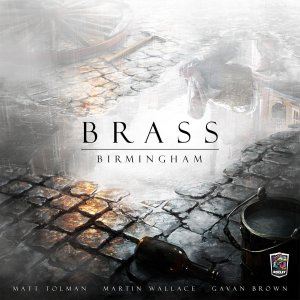
Brass: Birmingham
2018
Build, connect and sell your way through Birmingham’s industrial revolution.
120
minutes
Medium Heavy

View game

Rules made simple, fun made easy!
The Loans mechanic allows players to gain immediate funds or resources by taking on debt that must be repaid later, typically with interest or end-game penalties. It lets players accelerate their plans in the present at the expense of future flexibility and scoring potential.
56 results
At its core, taking a loan trades future stability for present-day opportunity. Instead of spending several turns slowly gathering capital, a player can take on debt to buy powerful assets, construct key infrastructure, or trigger high-value actions immediately. This injection of resources helps players jumpstart their economic engines earlier than their natural income would allow.
The tension comes from the obligation attached to the borrowed funds. Loans demand ongoing interest payments, consume vital end-game resources to settle, or deduct flat victory points if left unpaid. Deciding precisely when to borrow—and calculating whether the returns on the investment will outpace the cost of servicing the debt—forms a core strategic challenge at the table.
lets players bid currency, resources, or actions to win contested items like cards, tiles, or abilities.
1,105 gamesPlayers wager resources and may deceive opponents.
401 gamesPlayers can buy items later at a different cost.
154 gamesOne player divides resources, and the other chooses their portion first.
97 gamesA game where players buy and sell resources, often with fluctuating prices.
323 gamesPlayers exchange resources or items, sometimes through negotiation.
555 gamesThis mechanism appeals most to analytical players who enjoy financial planning, risk calculation, and tight efficiency puzzles. Because managing borrowed capital requires careful forecasting and razor-thin margin management, games featuring loans generally lean toward medium to medium-heavy complexity, with very few appearing in the lighter weight brackets.
2018
Build, connect and sell your way through Birmingham’s industrial revolution.
120
minutes
Medium Heavy
View game

2007
Build an industrial empire across canals, railways, and cotton markets.
120
minutes
Medium Heavy
View game
2008
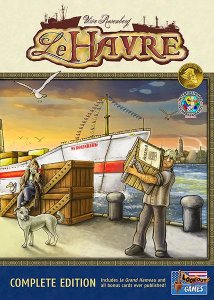
Gather goods, use buildings, and build a fortune from your final tally.
150
minutes
Medium Heavy
View game

2018
Build landmarks, balance virtue, and outmaneuver rival architects.
80
minutes
Medium

View game

2002
Build routes, chase shipments, and survive aggressive creditors.
120
minutes
Medium Heavy
View game

2016
Build vineyards, produce quality wines, and become Portugal’s top winemaker.
180
minutes
Medium Heavy
View game
2005
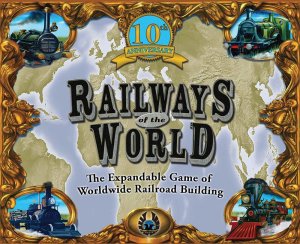
Build a railroad empire across North America in the Age of Steam.
120
minutes
Medium Heavy
View game
2009
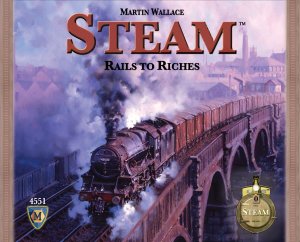
Build railways, deliver goods, and balance investment against victory.
90
minutes
Medium Heavy
View game
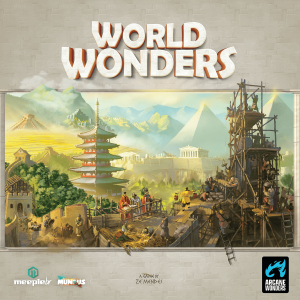
2023
Build a thriving ancient city through clever spending and careful placement.
70
minutes
Medium
View game

2009
Plant, trade, and invest your earnings to reach the top of the scoring track.
120
minutes
Medium Heavy
View game

2017
Rebuild a city, balance loans, and manage poverty after the Great Fire.
90
minutes
Medium
View game

2009
Build factories, read demand, and outmaneuver rivals in the early U.S. auto industry.
120
minutes
Medium Heavy
View game
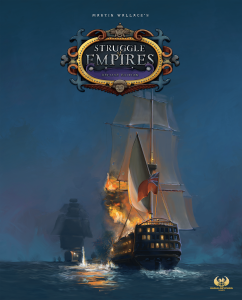
2004
Build an empire, forge alliances, and fight for dominance in the eighteenth century.
240
minutes
Medium Heavy
View game

2014
Build an industrial empire through factories, markets, ships, and shares.
240
minutes
Heavy

View game

2019
Shape your dice, chase inventions, and make a splash at the 1851 World Fair.
150
minutes
Medium Heavy
View game

2010
Build a fashion empire and fight for every star on the runway.
90
minutes
Medium Heavy
View game

2017
Build, upgrade, and defend the theme park that earns the most points.
125
minutes
Medium
View game

2024
Guide sinners through Hell while building power in Florence.
120
minutes
Medium Heavy
View game

2005
Bet on risky cargo runs as dice decide which ships reach Manila.
60
minutes
Medium
View game

2009
Bid, build, and manage nine resources across ten demanding rounds.
90
minutes
Medium Heavy
View game
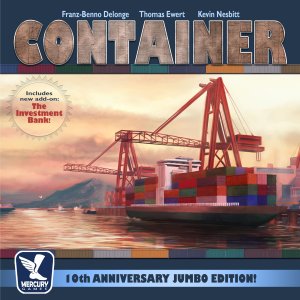
2018
Build, ship, and profit in a player-driven economy of factories, warehouses, and huge ships.
90
minutes
Medium
View game

2010
Build industrial wealth through goods, resources, railways, and regional opportunity.
120
minutes
Medium Heavy
View game
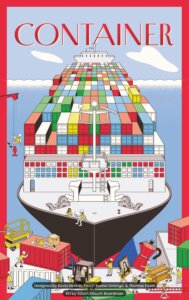
2026
Build, price, sail, and outmaneuver rivals in a fiercely closed economy.
90
minutes
Medium
View game

2015
Keep your fraudulent empire afloat before the promised rewards overwhelm you.
90
minutes
Medium
View game

2023
A versatile collection of eight Age of Steam maps for varied player counts.
120
minutes
Medium Heavy
View expansion

2023
Six mounted maps expand Age of Steam Deluxe with fresh settings and player counts.
120
minutes
Heavy
View expansion
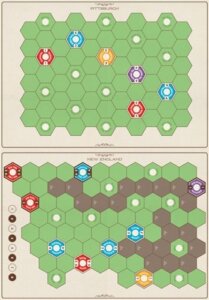
2019
Three updated maps bring New England, Pittsburgh, and Switzerland to the table.
180
minutes
Medium Heavy
View expansion

2019
Expand the frontier with new events, auctions, buildings, and resources.
90
minutes
Medium
View expansion
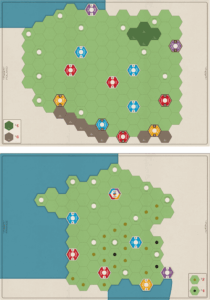
2019
A two-sided expansion featuring France and Poland in Deluxe style
180
minutes
Medium Heavy
View expansion

2024
Seven mounted maps bring fresh Age of Steam scenarios to your table.
120
minutes
Heavy
View expansion
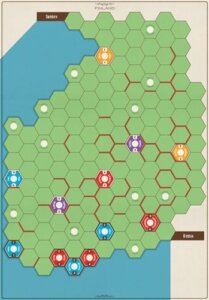
2019
Explore two new railway maps across Hungary and Finland.
180
minutes
Heavy
View expansion
2026
Negotiate loans, upgrade containers, and profit from trucking.
View expansion
The loans mechanic gives players an immediate cash or resource infusion that must be paid back later, usually with interest or scoring penalties. It acts as financial leverage, enabling you to build infrastructure or secure advantages early when baseline income is too slow. The core tension lies in ensuring that the returns from your early spending exceed the recurring cost of servicing the debt.
While regular income provides free funds every round, loans represent borrowed capital carrying future obligations. Taking a loan instantly boosts your spending power, but it burdens you with ongoing interest, lower end-game scores, or compulsory repayments during upkeep. This makes debt a strategic choice to accelerate your engine rather than a passive reward.
Most loan-driven games target hobbyists because managing debt requires strict math and long-term foresight. However, lighter titles like The Builders: Antiquity introduce borrowing concepts in an accessible format suitable for ages 10 and up. For general family game nights, standard resource collection games without debt penalties are usually more forgiving.
Accessible gateway games like The Builders: Antiquity offer a gentle introduction to taking debt to meet immediate construction needs in roughly 30 minutes. If you are comfortable stepping up to medium complexity, Manila and Architects of the West Kingdom introduce debt cards and mortgages without overwhelming new players with intricate bookkeeping.
Experienced players appreciate loans because borrowing exposes razor-thin profit margins and rewards calculated risks. In heavy economic designs like Brass: Birmingham and Age of Steam, taking debt is often essential rather than optional, allowing experts to convert early capital into game-winning board presence before rivals can react.
Yes, loan mechanics function well at lower counts because the debt equation is primarily an efficiency puzzle between you and the bank. For solo enthusiasts, Architects of the West Kingdom and Le Havre fully support 1 player, while games like Brass: Lancashire provide intensely tight financial maneuvering specifically scaled down to 2 players.
The most common pitfall is borrowing money to fund low-yield purchases that do not generate enough revenue to cover interest. When players spend borrowed capital on defensive moves or incremental upgrades, ongoing service fees can trigger a crippling debt spiral. Taking debt should almost always aim at jumpstarting an engine component that pays for itself quickly.
Repayment rules depend entirely on the specific game’s design. In titles like London (Second Edition) and Le Havre, you can finish the match in debt, but you face steep deductions that can easily cost you the win. Other games treat unpaid obligations as game-losing bankruptcy if you fail mandatory upkeep payments.
Playtime varies widely depending on economic depth and complexity. Lighter options run between 30 and 45 minutes, while medium-weight designs such as World Wonders take around 50 to 70 minutes. Heavy financial titles like Arkwright and 1817 can easily run from two to nine hours.
Borrowing is usually most effective in the opening rounds when the acquired funds have the maximum number of turns to generate compound returns. Taking debt near the end of a match is generally dangerous, unless the capital secures a critical high-value objective whose points outweigh the final penalty for holding unpaid debt.
