
Vol de nuit
2021
Cooperate through storms and fog to reach dawn.
90
minutes
Medium

View game

Rules made simple, fun made easy!
Multiple Maps is a board game mechanic where gameplay takes place across two or more separate boards or play areas that players can travel between or operate in simultaneously. Instead of being confined to a single arena, participants manage movement and objectives across distinct environments that represent different locations, scales, or tactical layers.
151 results
At its core, the Multiple Maps mechanic divides the play space into separate, distinct zones that each feature their own spatial rules, terrain, or objectives. Players might guide characters through an overland wilderness on one board before plunging into a localized subterranean dungeon on another, or they might coordinate global logistics while resolving tactical skirmishes on a secondary map. Switching between or managing multiple spaces expands the operational scope of the game beyond a single physical frame.
At the table, this mechanic creates dynamic shifts in focus and strategy. Rather than crowding all components onto a crowded central surface, it lets games balance macro-level planning with micro-level execution. Players must constantly weigh whether to commit resources to their immediate surroundings or position units across transit thresholds to influence alternate theaters of play.
This mechanic strongly appeals to players who love grand tactical sweeps, multi-layered adventure, and high-agency operational puzzles. In terms of complexity, titles using this system lean heavily toward medium to medium-heavy weights, offering rich, multi-tiered decisions without necessarily reaching extreme administrative overload. Groups that enjoy sweeping narrative journeys or multi-front conflicts will find the expanded scope rewarding, provided they have the table space to accommodate multiple play surfaces.
2021
Cooperate through storms and fog to reach dawn.
90
minutes
Medium
View game
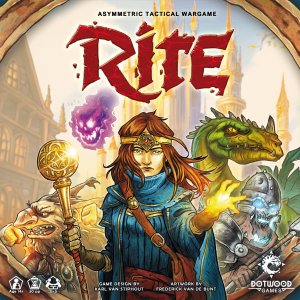
2024
Command an asymmetric faction and complete your rite in a deadly volcanic crater.
150
minutes
Medium Heavy

View game
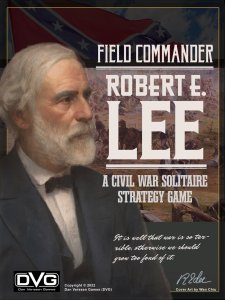
2025
Command the Army of Northern Virginia through five Civil War campaigns.
180
minutes
Medium Heavy
View game
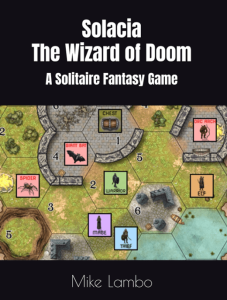
2023
Lead four Heroes through a replayable solo campaign to defeat evil.
120
minutes
Medium Light

View game
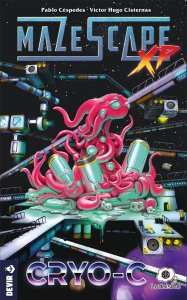
2023
A solo sci-fi maze of shifting paths, hidden treasures, and escalating challenges.
15
minutes
Medium
View game
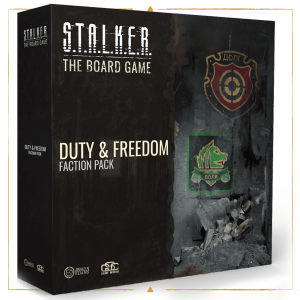
2025
Choose a faction, explore new missions, and expand your tactical options.
180
minutes
View expansion
2021
Take the Brotherhood into a canon modern-day adventure in Tokyo.
120
minutes
Medium Heavy
View expansion
The Multiple Maps mechanic means gameplay takes place across two or more separate boards or play areas that participants can move between or manage simultaneously. Instead of confining all movement and conflict to a single shared grid, games use distinct surfaces to represent different geographical regions, vertical building floors, or distinct strategic scales. This structure lets players execute localized actions in one theater while coordinating broader goals across others.
While modular boards assemble individual tiles into a single interconnected play surface, multiple maps maintain separate, independent areas with their own distinct spatial boundaries. In a modular game, newly placed tiles expand or reshape one unified map. In contrast, multiple maps require players to cross transit points or divide their operational attention across physically detached boards that often use different rules or scales.
Yes, multi-map games generally demand a larger physical footprint than single-board games because you must lay out several distinct surfaces at once. Spreading out separate boards can also create sightline challenges, making it harder for players to clearly inspect information from across the table. Many titles mitigate this footprint by using compact boards, spiral-bound map books, or layered vertical stands.
Yes, the mechanic works exceptionally well in solitaire titles because managing multiple zones provides an engaging operational puzzle without requiring hidden opponent actions. Solo puzzle games like Mazescape: Labýrinthos challenge single players to trace routes through folding maps, while One Card Dungeon condenses multi-floor exploration into a minimal footprint. Solitaire roll-and-write adventures like Voyages also give individual navigators full control over their branching journeys across different sheets.
Beginners should look for lighter titles that keep rules simple and turns swift, avoiding the administrative load of heavy multi-board titles. For family-friendly sessions, Takenokolor offers an approachable coloring challenge for ages 8 and up that plays in under 30 minutes. If you prefer a quick competitive area-majority game across separated landmasses, Eight-Minute Empire: Legends plays in just 8 to 20 minutes for up to four players.
Players usually transition between maps by moving a pawn or miniature onto designated transit nodes, such as staircases, portals, or border spaces. Once on that threshold, the rules typically require spending movement points or taking a dedicated transfer action to place the figure onto the destination board. In games with layered environments, actions resolved on one board can also open gates or unlock passage onto an adjacent map.
Cooperative games frequently use multiple maps to simulate multilevel buildings or episodic dungeon delves. In Burgle Bros., players coordinate a simultaneous heist across three distinct floors of a building, tracking patrol guards on each level. Similarly, Mice and Mystics leads heroes through narrative chapters that transition between castle rooms and subterranean tunnels.
Experienced players should seek out titles that intertwine multiple theaters of conflict with layered tactical or economic systems. Games like Gloomhaven utilize scenario books and modular tiles to structure multi-room combat encounters, while Khronos challenges players to build simultaneously across three separate boards representing distinct historical eras. For high-complexity strategy, grand historical titles like Era of Tribes combine multi-region continental expansion with deep civilization management.
The most common strategic pitfall is falling victim to tunnel vision by focusing entirely on one board while neglecting developments on the others. Because turns can be easily absorbed by immediate local skirmishes, players often fail to notice an opponent advancing toward a win condition in a secondary theater. Successful players consistently monitor cross-map triggers and position their pieces to pivot between boards before a crisis develops.
Designers use multiple maps to represent different environmental scales, vertical levels, or disconnected theaters of operation that would feel cluttered on a single surface. It enables distinct zones to enforce different spatial rules, such as overland travel hazards versus close-quarters indoor combat, without causing confusion. Splitting the action also creates dramatic tension, as players must deliberately spend resources to cross boundaries rather than roaming freely across one open space.
Not necessarily, because total play time depends much more on rule complexity and turn structure than on the number of physical boards. Fast-paced titles like Toy Battle resolve in just 15 minutes, whereas deep simulations like World in Flames span hours across massive global maps. The presence of separate boards expands the scope of decisions, but it does not inherently slow down individual turn execution.
