
Tzolk’in: The Mayan Calendar
2012
Place workers, turn the gears, and guide your tribe toward victory.
90
minutes
Medium Heavy

View game

Rules made simple, fun made easy!
Bias is a game mechanic where rules, hidden components, or game states inherently lean toward specific outcomes, favoring certain choices, strategies, or players over others.
72 results
At its core, Bias introduces an intentional asymmetry into the game’s systems rather than treating every option or player neutrally. Whether created through secret allegiances, tilted probability decks, or shifting board incentives, the game actively pulls players toward certain decisions by rewarding specific behaviors or skewing results.
At the table, this mechanic forces participants to look beneath the surface. Instead of assuming every path holds identical odds or neutral ground, players must read the underlying current, deduce what the game system secretly favors, and either lean into that advantage or work to counteract it.
Players use logic to solve hidden information.
554 gamesPlayer movements are concealed from opponents.
134 gamesPlayers’ scores are not revealed until the end.
151 gamesPlayers must remember hidden or revealed information to gain an advantage.
677 gamesPlayers place units in secret locations.
594 gamesThis mechanic is best suited for strategic groups and hobbyists who enjoy hidden information, deducing system behaviors, and adapting to asymmetric incentives. Most titles featuring this mechanic fall squarely into the medium-weight spectrum, striking a balance between accessible tactical rules and rich, layered planning that rewards close attention to underlying odds.
2012
Place workers, turn the gears, and guide your tribe toward victory.
90
minutes
Medium Heavy
View game

2016
Program your mechs and unite against a marauding minion army.
120
minutes
Medium

View game
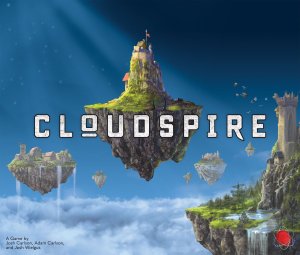
2019
Build towers, command armies, and battle for the precious source.
180
minutes
Heavy

View game

2024
Craft, age, and sell exceptional cheese in a rotating worker-placement game.
45
minutes
Medium
View game

2019
Shape a kingdom’s fate while pursuing your house’s ambitions.
60
minutes
Medium
View game

2010
Trade, plunder, and pursue glory across the dangerous Caribbean.
180
minutes
Medium Heavy
View game

2013
Coordinate, endure the storm, and recover the legendary flying machine.
45
minutes
Medium
View game

1994
Program your robot, outmaneuver rivals, and survive a chaotic factory race.
120
minutes
Medium
View game
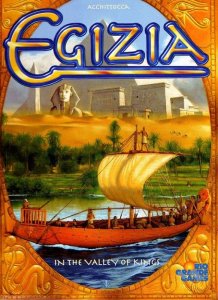
2009
Build monuments, manage the Nile, and outscore rival builders.
90
minutes
Medium
View game
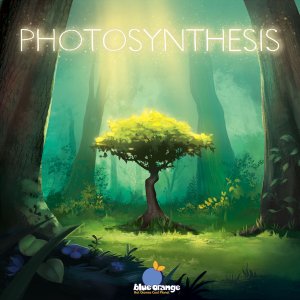
2017
Grow your forest wisely as sunlight and shadows shape every decision.
60
minutes
Medium
View game

2022
Grow a thriving planet by balancing forests, fertility, and sunlight.
45
minutes
Medium
View game

2019
Guide humanity’s last hope through alien encounters and ravager attacks.
120
minutes
Medium Heavy
View game

2023
Guide pilgrims, grow habitats, and shape a thriving ecosystem.
120
minutes
Medium Heavy
View game

2025
Craft, age, and sell cheese in a rotating Italian creamery challenge.
45
minutes
Medium
View game

1997
Guide an evolving amoeboid species through a shifting ecosystem.
90
minutes
Medium
View game

2016
Build influence, master the marketplace, and shape Ulm’s historic rise.
75
minutes
Medium
View game

2016
Program your robot, dodge factory hazards, and race through a chaotic course.
120
minutes
Medium
View game
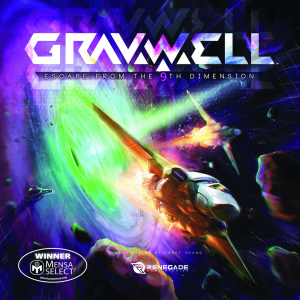
2013
Draft hidden movement cards and slingshot your ship toward the warp gate.
45
minutes
Medium Light

View game

2018
Deliver essential goods across a world locked in eternal day and night.
45
minutes
Medium
View game
2017
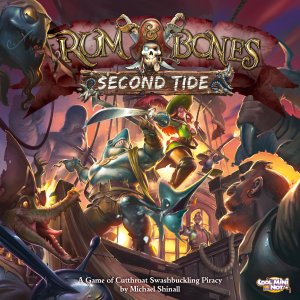
Pirate heroes clash, level up, and raid enemy ships in MOBA-style battles.
60
minutes
Medium
View game

2019
Build a chocolate factory, master the conveyor belt, and fulfill valuable orders.
90
minutes
Medium
View game

2019
Navigate a shifting Nile, gather resources, and raise Egypt’s iconic monuments.
90
minutes
Medium
View game

2004
Race the rapids, claim five jewels, and survive the falls.
45
minutes
Medium Light
View game
2009
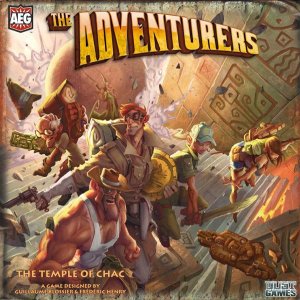
Race through a deadly temple, grab treasure, and outrun the boulder.
45
minutes
Medium Light
View game

2019
Two new curses open fresh adventures above and below the Continent.
1000
minutes
Medium Heavy
View expansion
2013
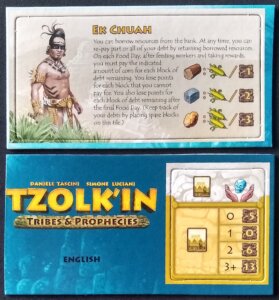
Add Ek Chuah and a new prophecy to your Tzolk'in experience.
90
minutes
Medium Heavy
View expansion

2023
Add pines and cacti for new light-and-shadow challenges in Evergreen.
45
minutes
Medium
View expansion

2024
Grow giant trees and master the shadows with mushrooms.
45
minutes
Medium
View expansion

2025
Two modular expansions for richer forests and new scoring strategies
60
minutes
View expansion
2026
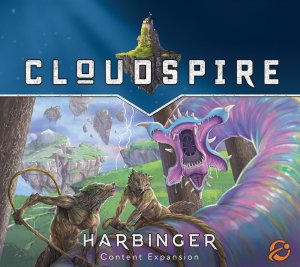
New hero upgrades, landmarks, markets, and solo scenarios await.
180
minutes
View expansion
Bias is a mechanic where game rules, environmental forces, or hidden systems inherently tilt outcomes toward particular choices or board states rather than treating every option neutrally. Instead of operating on a flat playing field, the game exerts a directional pull—such as drifting currents, shifting weather, or rotating incentives—that players must anticipate. Winning requires reading this underlying systemic tilt and deciding whether to ride its momentum or spend resources fighting against it.
While player asymmetry gives each participant distinct starting abilities or goals, bias resides within the game environment itself. An asymmetric game differentiates the players, whereas a game with bias introduces systemic skews that influence the board, odds, or movement rules for everyone interacting with that space. For example, a river current or a moving sun affects all nearby pieces according to the environment’s internal preferences, rather than being a unique character perk.
Light and accessible titles with physical or clear environmental drift offer the clearest introductions to this mechanism. In Niagara, the physical current of the river constantly pushes canoes toward the waterfall, forcing players to manage the water’s natural momentum alongside their paddling. Another approachable option is Gravwell: Escape from the 9th Dimension, where movement is fundamentally biased toward pulling toward or bouncing away from the nearest ship.
Yes, many games featuring directional or systemic bias excel specifically at two players. Titles like Perry Rhodan: The Cosmic League are designed strictly for two players and resolve in about 30 minutes. In heavy, highly strategic designs like Cloudspire, two players is voted the ideal count for dueling across terrain with built-in pathing and defensive biases.
Yes, provided you choose family-friendly titles with visible, intuitive representations of the mechanic. Games such as Niagara and Lost Valley of the Dinosaurs have minimum age recommendations of 8 and play in under an hour, making them accessible to younger audiences. Their systemic hazards are clearly telegraphed on the board, avoiding the frustration of hidden mathematical skews.
Experienced players generally enjoy titles where systemic bias introduces deep temporal planning or complex spatial logistics. In Tzolk’in: The Mayan Calendar, interconnected gears bias action values to grow stronger the longer workers remain placed, demanding long-term timing. Similarly, heavy strategy games like Cloudspire incorporate rigid minion pathing and terrain limitations that reward mastery over the board’s automated behavioral tendencies.
Bias frequently appears as directional momentum, forcing pieces to drift, turn, or follow environmental currents regardless of standard move speeds. In RoboRally, conveyor belts, pushers, and board gears inject non-negotiable movement biases into every register phase. Similarly, the rotating sun in Photosynthesis casts directional shadows across the forest, biasing which trees can collect light based on angles rather than distance alone.
The most effective strategy is to align your basic actions with the game’s natural trajectory rather than wasting resources constantly resisting it. In cooperative games like Forbidden Desert, fighting directly against the shifting sands without shelter quickly drains your water; smart players track how the storm tile biases drift and move in sympathy with the wind. Save high-impact, expensive actions for moments when you must intentionally break the system’s tilt.
The most frequent mistake is treating the board as a static, neutral grid and planning moves as though the environment will remain passive. Players who overlook how systems drift often find their pieces stranded or swept away, leading to a false sense that the game is unfairly punishing them. Always inspect the underlying board currents or event thresholds before committing to a multi-turn path.
Playtime varies widely based on complexity, spanning anywhere from 20 minutes to three hours. Lighter titles like Cazamanzanas and Gravwell: Escape from the 9th Dimension wrap up in roughly 20 to 45 minutes. By contrast, deep thematic or economic sandboxes like Merchants & Marauders feature layered wind, nation, and pirate biases that extend playtime to around 180 minutes.
