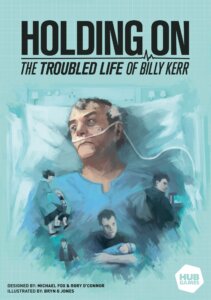
Holding On: The Troubled Life of Billy Kerr
2018
Care for a dying patient while uncovering a lifetime of memories.
60
minutes
Medium

View game

Rules made simple, fun made easy!
The Medical theme encompasses board games focused on healthcare, treating illnesses, managing hospital operations, or containing biological outbreaks. Players take on roles such as doctors, researchers, or administrators working against time, disease, or competing clinics to save lives.
90 results
Medical games center around the high-stakes world of human health and clinical science. Whether players are racing across a global map to eradicate spreading viruses, diagnosing rare symptoms, or balancing the logistics of a bustling emergency room, the theme provides an inherent sense of urgency and purpose.
At the table, this setting naturally fosters strong collaboration and critical problem-solving. Because the opponent is often a relentless biological threat or a mounting queue of critical patients, players must coordinate specialized roles, weigh triage trade-offs, and manage limited medical resources before conditions deteriorate past recovery.
Medical games are an outstanding fit for cooperative groups, couples, and solo gamers who enjoy collective problem-solving under pressure rather than direct conflict. In terms of weight, the genre tilts solidly toward accessible, medium-complexity experiences that offer rich tactical depth without bogging players down in arcane rulebooks, though light family titles and heavy administrative simulations also exist.
2018
Care for a dying patient while uncovering a lifetime of memories.
60
minutes
Medium
View game

2022
Plan, publish, and compete to earn Galenus's respect in Imperial Rome.
120
minutes
Medium Heavy

View game

2023
Draft dinosaurs, roll treatments, and race to cure your prehistoric patients.
60
minutes
Medium Light

View game
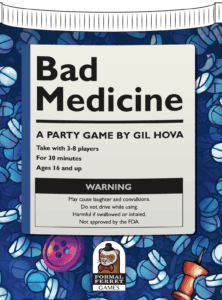
2015
Create questionable cures, pitch hidden side effects, and win the vote.
30
minutes
Light

View game

2023
Schedule risky medical spectacles and chase fame in a bizarre age of medicine.
75
minutes
Medium
View game
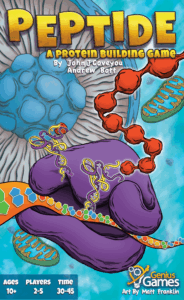
2014
Draft organelles, gather resources, and build a scoring peptide chain.
45
minutes
Medium Light
View game
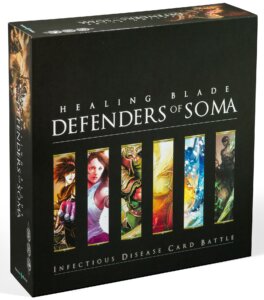
2016
Outwit bacterial threats with strategic antibiotic defense.
45
minutes
Medium
View game

2021
Race rival labs to identify three molecules and create the antidote.
45
minutes
Medium Light
View game
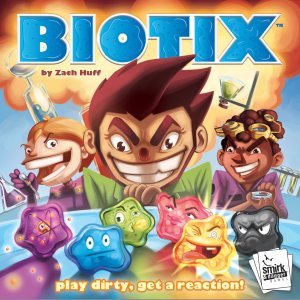
2017
Grow volatile microbes, trigger explosive reactions, and sabotage rival cultures.
40
minutes
Light
View game

2018
Draft compounds, build poker-style formulas, and race to profit in the market.
30
minutes
Medium Light
View game

2024
Heal a plague-stricken region while facing monsters, bandits, and rising danger.
30
minutes
Medium
View game
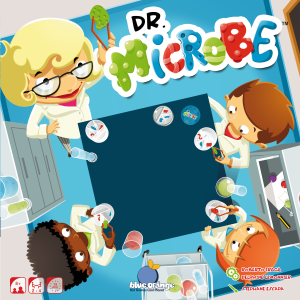
2017
Race to build the right microbe combination before your opponents!
15
minutes
Light
View game
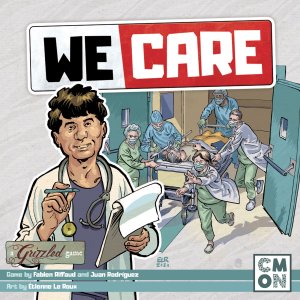
2021
Work together on the front lines against disease, stress, and scarce resources.
30
minutes
Medium
View game

2023
Manage a cooperative hospital where every patient is counted in dollars—and cubes matter.
45
minutes
Medium
View game
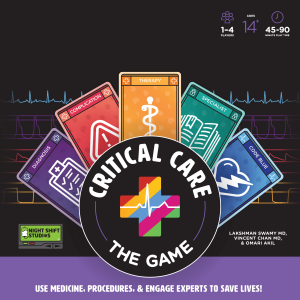
2024
Work together to stabilize ICU patients before a deadly Code Blue strikes.
120
minutes
Medium
View game

2011
Build a hospital deck, cure heroes, and outmaneuver rival nurses.
50
minutes
Medium
View game
2014
Race to ten prestige points through medicine, skills, exams, and risky choices.
60
minutes
Medium Light
View game
2019
Build a bacterial pathogen deck and attack the human body through real biology.
60
minutes
Medium
View game
2018
Treat patients, deploy staff, and earn the highest reputation.
90
minutes
Medium
View game

2009
Expand the outbreak with new roles, events, and three demanding challenges.
45
minutes
Medium
View expansion

2013
Race through the lab to sequence diseases, test cures, and save humanity.
60
minutes
Medium
View expansion
2015
Face three escalating challenges in this demanding Pandemic expansion.
45
minutes
Medium
View expansion

2016
A fifth virus and Hot Zones make the global fight even tougher.
Medium
View expansion
2018
New viruses, action cards, and variants for the Virus card game.
20
minutes
Light
View expansion

2020
Bring bats, monsters, and mutant organs to your next hospital crisis.
20
minutes
Light
View expansion
2018
Enhance your hospital with 3D ambulances, new medicine upgrades, and more
90
minutes
Medium
View expansion
2019
A comprehensive medical expansion packed with new rules, tiles, tokens, and layouts.
120
minutes
Heavy

View expansion
2019
Evolve devastating diseases and compete to bring the world to its knees.
75
minutes
Medium
View expansion
2020
Expand hospital care with city patients, maternity cases, and custom improvements.
90
minutes
Medium Heavy
View expansion
2021
Take your clinic to a demanding new level with 13 expansions and a variant.
120
minutes
Medium Heavy
View expansion
2020
A two-sided basement addition with special double-sided tiles.
150
minutes
Medium Heavy
View expansion
Medical board games place players in the roles of healthcare providers, scientists, or clinic directors dealing with human health challenges. Gameplay revolves around treating ill patients, researching cures, stopping contagious outbreaks, or constructing functional medical facilities. These titles rely heavily on cooperative problem-solving, triage trade-offs, and managing critical timers before health crises get out of hand.
While many medical games are cooperative, competitive titles also exist within the genre. In cooperative games like Pandemic, players work together to prevent global outbreaks, whereas competitive games like Virus! pit players against one another to assemble healthy organs while infecting rivals. Other competitive options focus on managing rival healthcare facilities or racing to synthesize an antidote.
For newcomers and casual groups, Pandemic: Hot Zone – North America is an ideal starting point that plays in about 30 minutes for 2 to 4 players. It introduces core medical crisis management and team communication without overwhelming rules. Another fast-paced, accessible option is Virus!, a light card game for 2 to 6 players that takes just 20 minutes to play.
Yes, several medical games feature accessible mechanics and lighthearted themes suited for family play. For young children, Hideous Abomination accommodates ages 5 and up for 2 to 6 players in games lasting 10 to 30 minutes. Older kids can enjoy the quick dexterity and pattern-matching of Dr. Microbe, which supports 2 to 4 players ages 8 and up.
Medical games are exceptionally well suited for solo play because biological hazards and patient queues are usually driven by automated game systems. Titles like Dice Hospital support 1 to 4 players, allowing a single player to solve the puzzle of stabilizing incoming ambulances of dice. Complex Euro-style designs like Unconscious Mind also feature dedicated solo modes for deep administrative or therapeutic strategy.
Medical games frequently excel at two players because reduced player counts allow for tighter coordination and faster turn cycles. For instance, Pandemic: Hot Zone – North America lists 2 as its best player count, making it a great bite-sized duel against disease. On the heavier end, psychological strategy title Unconscious Mind is also voted best with 2 players for a focused, head-to-head experience.
Heavy medical board games move past simple disease containment to simulate detailed logistics and clinical administration. Clinic: Deluxe Edition tasks 1 to 4 players with building multi-floor hospitals, hiring doctors, organizing patient transit, and managing parking across 60 to 150 minutes. Similarly, Messina 1347 blends worker placement with quarantining citizens and rescuing a plague-ridden city.
Game length varies widely depending on whether the design is a frantic real-time puzzle or a full-scale hospital simulation. Quick party games like Doctor Panic take roughly 12 minutes, while standard cooperative titles like Iberia average around 45 minutes. Deep economic or thematic games such as Clinic can easily extend to 120 minutes or more.
The golden rule of medical crisis games is balancing immediate triage against root-cause progress. Spending every action treating visible symptoms will temporarily keep players alive, but the team will eventually lose if no resources are allocated toward cures or preventative infrastructure. Coordinating asymmetric character skills and planning two or three turns ahead ensures you address emerging threats before chain-reaction outbreaks occur.
The most common issue in cooperative medical games is “quarterbacking,” where an experienced player directs everyone else’s turns because all patient information and threat tracks are visible. To combat this, groups should actively encourage each player to propose solutions for their own specialist role rather than letting one person dictate the board. Another trap is tunnel vision—focusing so heavily on clearing a single critical zone that neighboring regions quietly build toward catastrophe.
