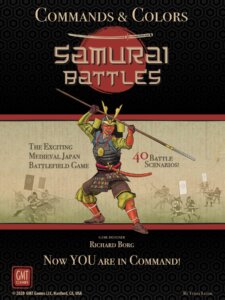
Commands & Colors: Samurai Battles
2021
Portray important Japanese historical engagements with flexible battle scale.
60
minutes
Medium

View game

Rules made simple, fun made easy!
The Civil War board game theme centers on internal conflicts where opposing factions within the same nation or territory fight for control, political survival, or ideological dominance. These games emphasize operational maneuvering, supply management, and the high-stakes political and social tensions of fractured states.
152 results
At its core, the Civil War theme places players in command of divided factions locked in a struggle over a shared homeland. Rather than fighting across distant borders, battles unfold across familiar terrain, rail networks, and contested regional capitals. The setting naturally brings asymmetric victory conditions, where one side often fights to preserve existing order or institutions while the other attempts to outlast or exhaust their opponent.
At the table, this dynamic produces deeply tense operational gameplay. Players must balance frontline tactical engagements with long-term strategic logistics, public morale, and resource attrition. The theme makes every territorial loss feel personal and significant, forcing commanders to make painful trade-offs between holding symbolic ground and preserving dwindling armies.
This theme is best suited for dedicated strategy enthusiasts, wargamers, and history buffs who enjoy head-to-head operational challenges. The vast majority of these titles sit firmly in the medium to medium-heavy complexity range, meaning they reward careful study and patience rather than quick, casual table sessions. While multiplayer options exist, the theme predominantly thrives as a deeply focused two-player duel.
2021
Portray important Japanese historical engagements with flexible battle scale.
60
minutes
Medium
View game
1988
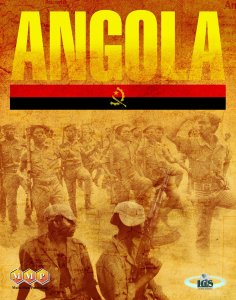
A tense Cold War strategy game of secret orders and shifting battle lines
480
minutes
Medium Heavy

View game
2008
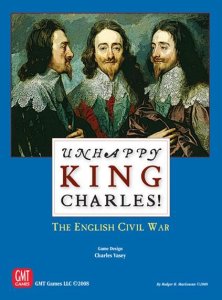
Fight for England through cards, shifting control, sieges, and hard-fought battles.
240
minutes
Medium Heavy
View game
2011
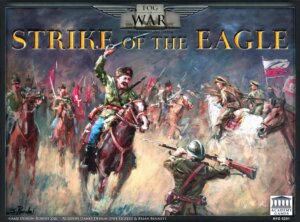
Command hidden armies through the fog of war in the Polish-Soviet War.
240
minutes
Medium Heavy
View game
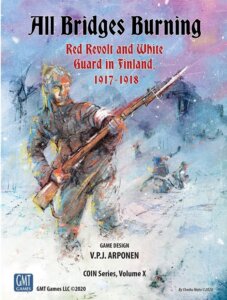
2020
Navigate revolt, civil war, and the struggle for Finland’s independence.
360
minutes
Medium Heavy
View game

2013
Defend Parliament through three escalating English Civil Wars
60
minutes
Medium
View game

2007
Recreate the Spanish Civil War through cards, combat, and operational strategy.
180
minutes
Medium
View game

2024
A 2250 struggle for Martian self-rule beneath the red dust.
240
minutes
Heavy

View game

2012
Push your troops forward through enemy fire in a five-turn solitaire test.
60
minutes
Medium Light

View game

2019
A card-driven Vietnam conflict game of guerrillas, politics, and shifting control
360
minutes
Medium
View game
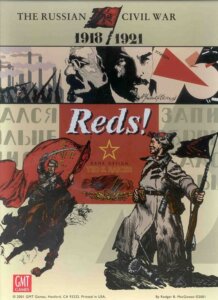
2001
Command rival forces across the sprawling Russian Civil War
360
minutes
Medium Heavy
View game

2023
Forge an uneasy alliance against fascism while pursuing your faction’s agenda.
90
minutes
Medium
View game
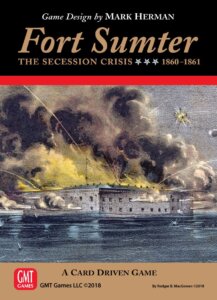
2018
Shape the secession crisis through political maneuvering and escalating tension.
40
minutes
Medium Light
View game
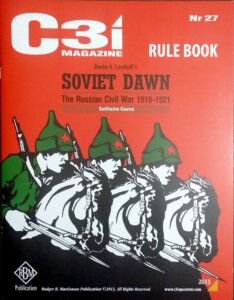
2009
Defend the revolution as White Fronts converge on Moscow.
60
minutes
Medium Light
View game
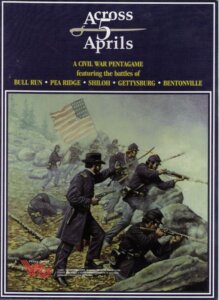
1992
A two-player Civil War tactical wargame spanning five major battles
360
minutes
Medium
View game
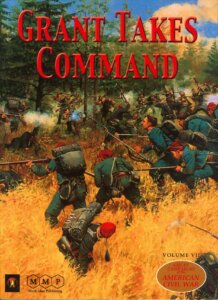
2001
Command Union and Confederate forces through Grant’s pivotal 1864 campaign.
120
minutes
Medium Heavy
View game
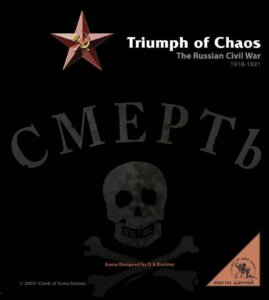
2005
Command Red or White forces through the Russian Civil War
480
minutes
Heavy
View game
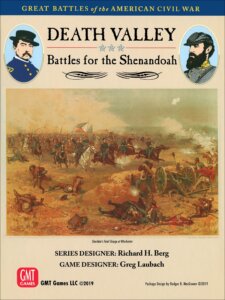
2019
Command pivotal Shenandoah battles through interactive regimental-scale play.
1200
minutes
Heavy
View game
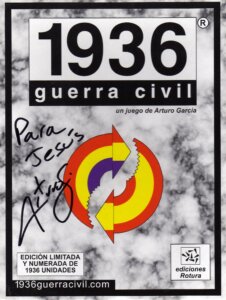
2006
Build your side’s deck and fight for Spain’s political and military objectives.
90
minutes
Medium Heavy
View game
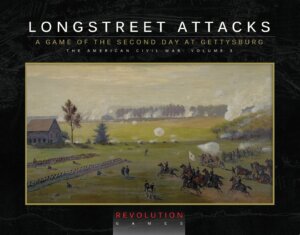
2018
Command Longstreet’s assault amid fog, friction, and battlefield surprises.
720
minutes
Medium Heavy
View game
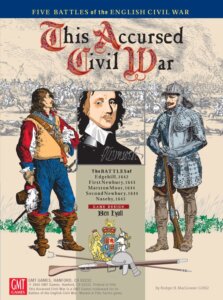
2002
Command five pivotal battles of the First English Civil War
240
minutes
Medium Heavy
View game

1988
Command Union or Confederate forces across the historic Gettysburg battlefield.
90
minutes
Medium Light
View game

2015
Command Jackson or Banks in a tense Battle of Cedar Mountain wargame.
180
minutes
Medium Heavy
View game
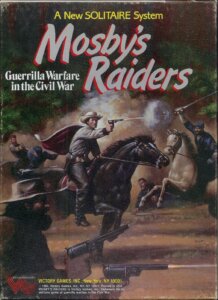
1985
Lead a Confederate raiding band deep behind Union lines.
120
minutes
Medium
View game

2007
Evolve Rome’s legions and reshape ancient battlefield tactics.
60
minutes
Medium
View expansion
1977
Expand Kingmaker with variant events, optional rules, and blank cards
Medium
View expansion
2023
Take the conflict back to 1961 and shape the road to escalation.
180
minutes
Medium Heavy
View expansion
2002
Command American War of Independence naval actions from frigates to great fleets.
240
minutes
Medium Heavy
View expansion
2007
An 80-page companion packed with counters, variants, history, and strategy
480
minutes
Medium Heavy
View expansion
2012
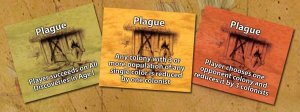
Three plague buildings add fresh variety across all three ages.
120
minutes
Medium
View expansion
1999
Updated rules, new counters, and four American Civil War scenarios
Medium Heavy
View expansion
2012
Expand six-faction play with new cards, powers, and deeper combat rules.
110
minutes
Medium
View expansion

2008
Expand the campaign with naval units, 24 cards, and advanced naval rules.
180
minutes
Medium
View expansion
2003
A 56-page GCACW support magazine with scenarios, articles, maps, and counters
600
minutes
Medium Heavy
View expansion
The Civil War theme portrays internal conflicts where opposing factions within the same territory or nation clash for sovereignty, political survival, or ideological control. Instead of invading foreign empires, players maneuver across shared homelands, balancing military clashes with strained domestic supply lines and shifting political resolve. This setting frequently incorporates asymmetrical goals, pitting an established authority against an insurgent or break-away movement.
While traditional wargames often depict symmetrical clashes between distinct foreign powers over borders, Civil War games focus on fractured domestic infrastructure and ideological attrition. Operations unfold along internal rail networks, rivers, and domestic capitals where public morale and resource exhaustion matter just as much as battlefield victories. Victory conditions are also frequently asymmetric, requiring one side to reconquer a nation while the other merely fights to survive long enough to exhaust the opponent.
Yes, several introductory titles offer the operational tension of internal conflict without overwhelming rules or long playtimes. Fast-playing options like Caesar!: Seize Rome in 20 Minutes! resolve in just 20 minutes with accessible area-majority mechanics. Another accessible entry point is Fort Sumter: The Secession Crisis, 1860-61, which covers the pre-war political buildup in under 40 minutes for two players.
Two-player setups are the natural sweet spot for this theme, as most historical domestic conflicts pit two primary ideological sides against each other. Head-to-head duels such as Sekigahara: The Unification of Japan and A House Divided: War Between the States 1861-65 shine specifically at a two-player count. These titles deliver intense psychological tension, hidden information, and tight operational maneuvering without downtime.
Yes, several Civil War titles include dedicated solo modes or are designed exclusively for a single player. Solitaire games like Resist! challenge you to lead partisan resistance cells against entrenched forces, while Soviet Dawn: The Russian Civil War, 1918-1921 puts you alone in command of defending the Soviet state across multiple fronts. Additionally, multi-sided historical games often feature automated bot systems to govern rival domestic factions.
While many titles focus on two factions, several games expand the conflict into multi-sided civil wars or feudal power struggles. For instance, Rumble Nation plays smoothly with up to 4 players competing for territory in feudal Japan. For deeper group experiences, Kingmaker supports up to 7 players maneuvering royal claimants, while Rex: Final Days of an Empire is best with 6 players fighting over the core of a collapsing galactic capital.
Game length varies dramatically depending on the scale and complexity of the simulation. Quick card-driven games and regional contests like Battle Cry can wrap up in 45 minutes or less. In contrast, heavy operational campaign simulations like For the People and Triumph of Chaos: The Russian Civil War 1918-1921 can run anywhere from 2 to 6 hours or more.
Dedicated grognards looking for intricate operational logistics and historical fidelity gravitate toward complex simulations of prolonged conflict. Titles such as Fire in the Lake and Red Dust Rebellion deliver layered counter-insurgency and factional strife with extensive rulesets. Tactical enthusiasts also turn to comprehensive operational systems like Death Valley: Battles for the Shenandoah for meticulous battle management across multi-hour sessions.
A frequent mistake is focusing entirely on chasing down enemy field armies while neglecting critical supply lines and regional political control. Because Civil War games simulate fractured states, holding industrial centers, rail junctions, and major cities is often what fuels your war effort and sustains political morale. Overextending deep into hostile territory without securing your rear logistics will quickly leave your forces isolated, out of supply, and vulnerable to sudden collapse.
Most games in this category are designed for older teens and experienced adults due to their heavy historical themes, layered rules, and intense competitive focus. However, lighter and faster-paced options like Rumble Nation feature an age rating of 10 and simple dice-placement mechanics that work well in a family setting. For the broader genre, expect titles rated 12 to 14 and up that prioritize careful study and extended playtime over casual fun.
