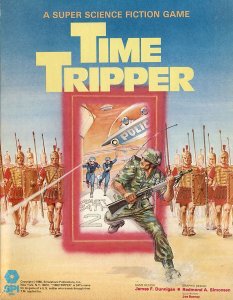
TimeTripper
1980
A time-warping wargame of survival against foes from every era
45
minutes
Medium

View game

Rules made simple, fun made easy!
The American Civil War board game theme centers on the 1861–1865 conflict between the United States and the Confederacy, challenging players to manage military strategy, supply, and political will across historic campaigns.
158 results
At its core, this theme explores the military and political struggle of a nation divided against itself. Games cast players as high-ranking commanders or entire governments, tasking them with coordinating massive armies, managing naval blockades, and navigating intense battlefield skirmishes across the Eastern and Western theaters.
At the table, the theme delivers pronounced asymmetric tension. The Union player typically commands superior industrial capacity and manpower but faces the burden of offensive conquest, while the Confederate player must leverage defensive positioning and rapid tactical strikes to erode their opponent’s resolve before resources run dry.
This theme primarily appeals to dedicated wargamers, history enthusiasts, and pairs who love tense head-to-head strategy. Most designs sit firmly in the medium to medium-heavy complexity range, demanding patience for procedural rules, tactical maneuvering, and prolonged sessions rather than quick, casual play.
1980
A time-warping wargame of survival against foes from every era
45
minutes
Medium
View game
1979
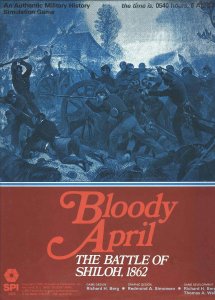
A detailed regimental-level simulation of Shiloh’s two-day Civil War battle.
1200
minutes
Heavy

View game
2010
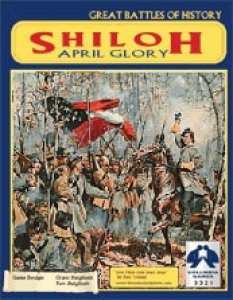
Command brigades through the Civil War’s pivotal two-day battle.
180
minutes
Medium
View game
2010
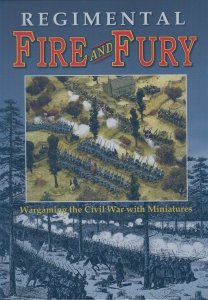
Command regiments and batteries in detailed Civil War miniature battles.
180
minutes
Medium
View game
2023
Command through confusion in the fierce Battle of Perryville.
360
minutes
Medium Heavy

View game
1998
A richly detailed Gettysburg battle game driven by morale and command.
480
minutes
Heavy
View game
1993
A tactical Antietam wargame of movement, artillery, combat, and hard-fought objectives.
240
minutes
Medium
View game
2022
A tense Chancellorsville wargame of uncertain orders and battlefield chaos.
480
minutes
Medium
View game
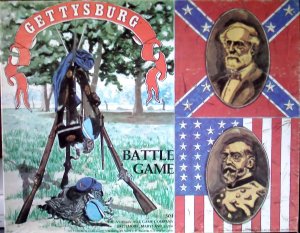
1977
A classic Civil War battle in three escalating levels of strategy
120
minutes
Medium Heavy
View game
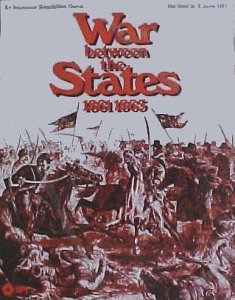
1977
Command land, rail, and naval forces in a detailed Civil War simulation.
360
minutes
Medium Heavy
View game
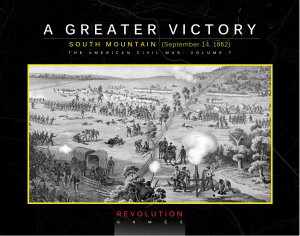
2022
A tense regimental-scale struggle across South Mountain
480
minutes
Medium Heavy
View game
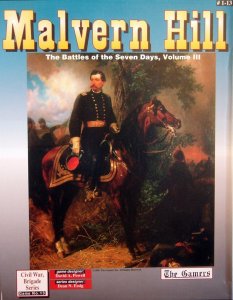
1999
Recreate the Glendale and Malvern Hill battles in the Seven Days campaign.
240
minutes
Medium Heavy
View game
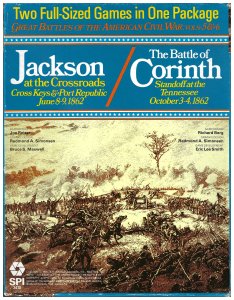
1981
Command Jackson’s Valley stand across two pivotal Civil War battles
240
minutes
Medium Heavy
View game
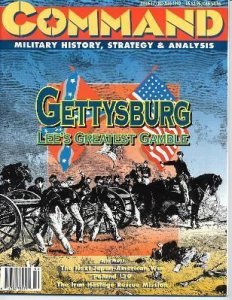
1992
Command the battle of Gettysburg in a focused two-player Civil War simulation.
180
minutes
Medium
View game
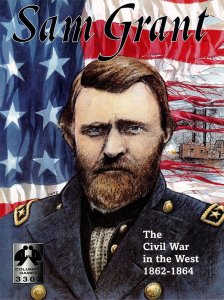
1997
Command the western Civil War with hidden-strength blocks and tactical battles.
180
minutes
Medium
View game
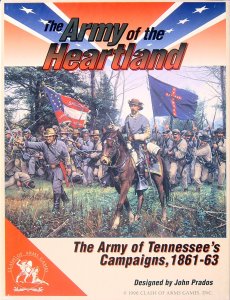
1996
A strategic-operational Civil War simulation of the Army of Tennessee's campaigns
Medium Heavy
View game
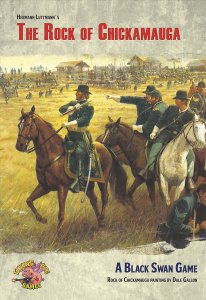
2025
Command Corps and Divisions in the Battle of Chickamauga
Medium
View game
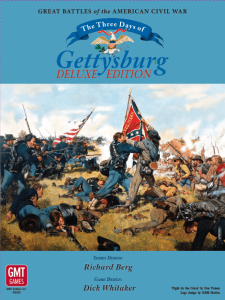
2026
Command Gettysburg through chaotic, detailed regimental-level battles.
1500
minutes
Heavy
View game
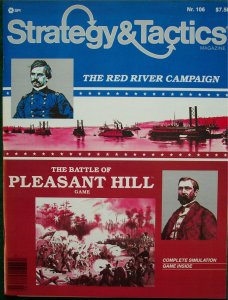
1986
Command a tense Civil War defensive battle across the Red River valley.
300
minutes
Medium Heavy
View game
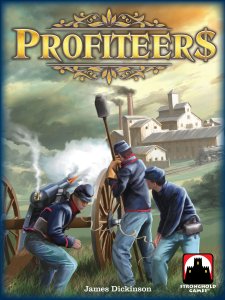
2018
Profit from factories, war bonds, and a conflict you can help prolong.
45
minutes
Medium
View game
2024
A seven-scenario Blind Swords game spanning large and compact battle maps
600
minutes
Medium Heavy
View game
2006
Command the Peninsula Campaign and forge an army in battle
180
minutes
Medium
View game
1992
Command brigades through Spring Hill and Franklin in a flexible Civil War campaign.
960
minutes
Medium
View game
2011
Outmaneuver three Union forces in Stonewall Jackson’s audacious Valley Campaign.
180
minutes
Medium
View game
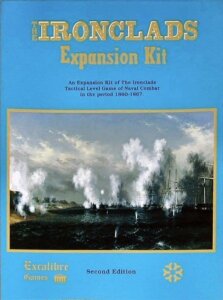
1980
Expand naval combat from the Civil War era through 1879
120
minutes
Medium Heavy
View expansion
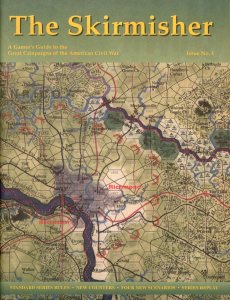
1999
Updated rules, new counters, and four American Civil War scenarios
Medium Heavy
View expansion
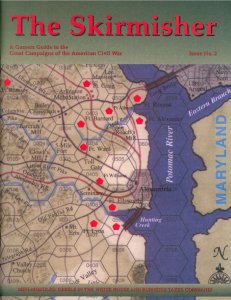
2003
A 56-page GCACW support magazine with scenarios, articles, maps, and counters
600
minutes
Medium Heavy
View expansion
American Civil War board games simulate the 1861–1865 conflict between the United States and the Confederacy through historical strategy, operational logistics, and battlefield combat. Players typically take command of military units or entire national administrations to resolve campaigns across the Eastern and Western theaters. These titles stand out for their strong asymmetry, pitting Northern industrial superiority and offensive requirements against Southern defensive maneuvering and survival goals.
Accessible titles in the Medium Light category offer manageable rule sets and short playtimes, making them ideal starting points. Test of Fire: Bull Run 1861 plays in about 45 minutes for two players aged 10 and up, introducing basic command and combat mechanics without heavy operational overhead. For players interested in the political prelude rather than battlefield maneuvers, Fort Sumter: The Secession Crisis, 1860-61 provides a brisk, card-driven duel running just 20 to 40 minutes.
Yes, several games in this theme accommodate solo play, including dedicated solitaire designs. For example, In Magnificent Style: Pickett’s Charge at Gettysburg is built specifically for a single player, playing in roughly 60 minutes as you push Confederate brigades across open ground. Additionally, many classic two-player hex-and-counter systems lack hidden information, making them practical to play two-handed against yourself.
While the historical two-sided conflict makes two players the standard format, some games support larger groups. Cooperative titles like Freedom: The Underground Railroad accommodate one to four players (voted best with three) working together to guide enslaved people north to freedom. Large-scale tactical battle simulations such as Terrible Swift Sword: Battle of Gettysburg Game scale up to six players, allowing participants to divide command of corps and divisions.
Tactical games focus on individual engagements across a single battlefield, while strategic games encompass the entire nation over multiple years. In tactical systems, you manage formations, morale, and line of sight on a local scale during actions like Bull Run, Shiloh, or Gettysburg. Strategic designs instead require you to balance rail transport, naval blockades, recruitment, and coordinated multi-theater maneuvers from Washington down to the Gulf Coast.
Playtime varies dramatically based on scope, ranging from under an hour to multi-session campaigns. Fast card-driven or introductory games like Fort Sumter: The Secession Crisis, 1860-61 wrap up in 20 to 40 minutes. In contrast, comprehensive theater-wide simulations like For the People regularly require around 360 minutes, while massive multi-map historical battle games can span entire weekends.
Experienced players looking for deep operational and strategic simulation should look to Medium Heavy and Heavy systems. For the People is a classic card-driven strategic duel that tests command priorities, political resolve, and theater management over extended sessions. If you prefer high tactical fidelity with regiment-level detail across historic campaigns, Death Valley: Battles for the Shenandoah offers exhaustive historical depth.
Asymmetry reflects the unequal resources and differing victory conditions of the historical conflict. The Union player typically wields greater industrial output, larger reinforcements, and naval superiority, but is burdened with invading and holding vast hostile territory. The Confederate player usually commands interior rail lines and strong tactical leaders, aiming to defend key strongholds, execute spoiling attacks, and erode the North’s political will before supply shortages become fatal.
New players often rush headlong into frontal assaults without protecting their supply corridors or considering terrain benefits. In nineteenth-century warfare, entrenched defenders receive major advantages, making hasty attacks costly in both casualties and morale. Neglecting rail junctions, river networks, or line-of-communication rules will quickly leave your best field armies out of supply and vulnerable to counterattacks.
Yes, lighter designs with streamlined rules provide an accessible way for families and older kids to explore the period. Test of Fire: Bull Run 1861 has a printed minimum age of 10 and uses intuitive dice and action cards to move units across the board in 45 minutes. Sticking to introductory battle games avoids the dense procedural charts, supply calculations, and prolonged playtimes found in traditional grognard wargames.
