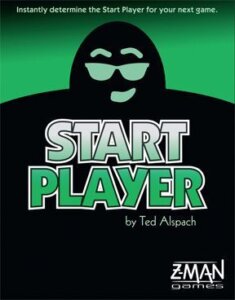
Start Player
2008
Choose the first player in seconds with a single revealing card.
1
minutes
Light

View game

Rules made simple, fun made easy!
The Comic Book / Strip theme encompasses board games inspired by graphic novels, superhero serials, and syndicated comic strips. These games emphasize character-driven narratives, dynamic confrontations, and bold, illustrated visual styles.
585 results
Games in this category translate the kinetic storytelling of illustrated publications onto the tabletop. Players frequently step into the roles of larger-than-life heroes, notorious villains, or quirky syndicated personalities, navigating tactical showdowns, urban skirmishes, or sprawling episodic campaigns.
At the table, the theme directly drives high-energy interaction and distinct role differentiation. Distinctive visual paneling, speech bubbles, and iconic art styles immerse players in fast-paced scenarios where individual abilities and thematic set pieces dictate the momentum of play.
This category suits casual groups, families, and hobbyists who enjoy high-energy conflict, cooperative challenges, and strong thematic hooks. Most titles sit comfortably in the moderate complexity range, offering tactical depth through card play and movement without requiring burdensome rules memorization, though lighter party options and heavier multi-hour campaign options also exist.
2008
Choose the first player in seconds with a single revealing card.
1
minutes
Light
View game

2019
Explore perilous islands, solve riddles, and shape an immersive shared adventure.
45
minutes
Light
View game

2020
Battle through comic-inspired missions as heroes face the Foot Clan and more.
150
minutes
Medium Heavy

View game
2011
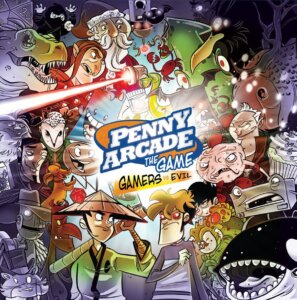
Build your ideal Penny Arcade deck and battle the forces of Evil.
45
minutes
Medium

View game

2009
Bet on suicidal lemmings and race them to the lake!
20
minutes
Light
View game
1988
Plan interplanetary campaigns and seize the Inner Solar System.
120
minutes
Medium
View game

2025
Unite Gotham’s heroes against Hush and a mind-controlled Man of Steel.
30
minutes
Medium
View game
2018
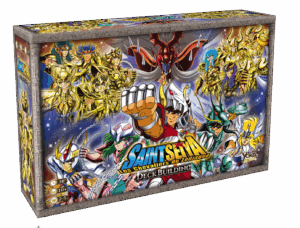
Build your team of Bronze Knights before the Clock's final flame goes out.
60
minutes
Medium
View game

2025
Team up, build unstoppable combos, and face escalating supervillain threats.
60
minutes
Medium
View game
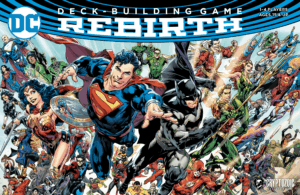
2019
Move, build your deck, and protect the city from dangerous Villains.
90
minutes
Medium
View game

2021
A tense Minions-themed card game of risky draws, clever tricks, and explosive surprises.
15
minutes
Light
View game
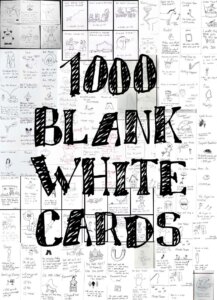
1996
Invent the cards, reshape the rules, and embrace delightful chaos.
60
minutes
Light
View game
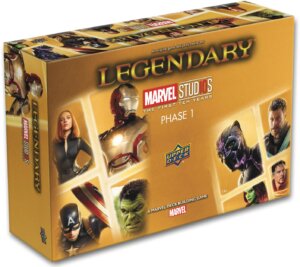
2018
Build a Marvel hero deck and battle villains before their schemes succeed.
60
minutes
Medium
View game

2019
Cooperate as iconic BPRD members against Hellboy's most famous foes.
90
minutes
Medium
View game
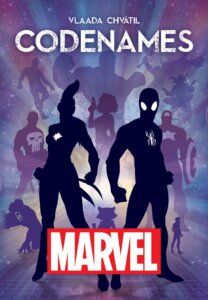
2017
Give clever clues, find Marvel agents, and avoid the assassin.
15
minutes
Light
View game
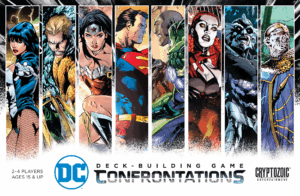
2017
A standalone 2v2 team game featuring iconic DC rivalries
30
minutes
Medium
View game
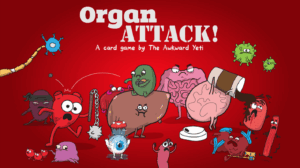
2016
Protect your organs, unleash afflictions, and outlast every opponent.
15
minutes
Medium Light

View game
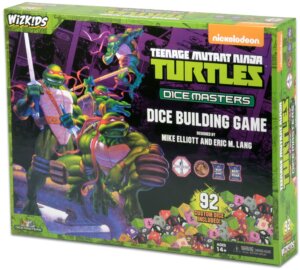
2016
Build your team, roll custom character dice, and battle to zero life.
30
minutes
Medium
View game
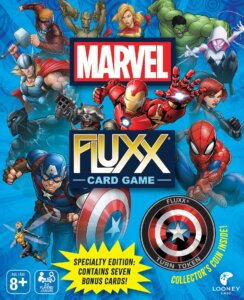
2019
Change the rules, play Marvel cards, and discover how to win.
30
minutes
Light
View game
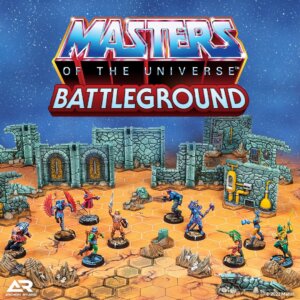
2022
Epic two-player clashes where fate, magic, and combat decide Eternia's battle.
120
minutes
Medium
View game

2024
Roll, scheme, and unleash Marvel powers in a fast-paced dice battle
40
minutes
Medium
View game

2019
Lead the Judges through a radioactive wasteland of dinosaurs, mutants, and danger.
50
minutes
Medium
View game
2021
Face dangerous Encounters, manage Heat and Juice, and find a safe haven.
15
minutes
Medium
View game

2024
A branching cyberpunk dungeon crawl where choices shape Neo Eden.
120
minutes
Medium Heavy
View game

2023
Secret strategies and super-powered team battles across New York
60
minutes
Medium Heavy
View expansion
2024
Meet Iceman, the X-Men prankster who commands the cold.
60
minutes
Medium Heavy
View expansion
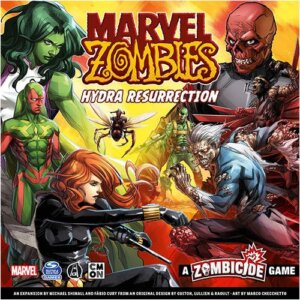
2023
Face Red Skull and his deadly Hydra legion across two iconic locations.
60
minutes
Medium
View expansion
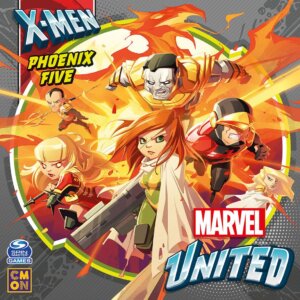
2022
Face five transformed heroes in a cascading Phoenix Force campaign.
40
minutes
Medium
View expansion

2023
Join space-dwelling heroes against zombie Thanos and the Infinity Stones.
60
minutes
Medium Heavy
View expansion
2015
Face judgment from an ancient AI and its merciless executioners.
60
minutes
Medium
View expansion

2015
A steel-plated villain who hears machines and hunts the world's weak points.
60
minutes
Medium
View expansion
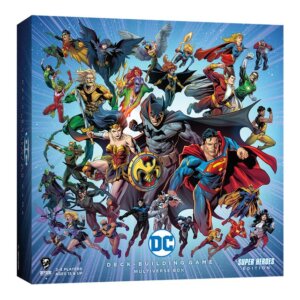
2017
Store every DC Deck-Building Game card together and combine past games.
Medium
View expansion
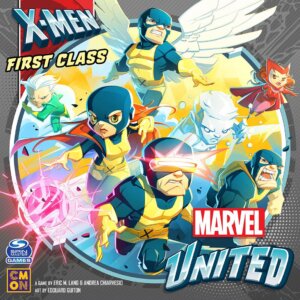
2022
Relive the X-Men’s earliest days with raw heroes, twin villains, and the Danger Room.
40
minutes
Medium
View expansion

2016
Face impossible villains and secret agendas in a cooperative DC deck-building challenge.
Medium
View expansion

2023
Battle floor by floor through the Baxter Building in Hero or Zombie Mode.
60
minutes
Medium
View expansion
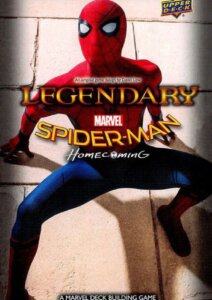
2017
Bring the MCU’s Spider-Man Homecoming story to your Legendary deck.
60
minutes
Medium
View expansion
This theme covers board games inspired by graphic novels, serialized superhero comics, and illustrated syndicated strips. Games translate the visual storytelling of panels, speech bubbles, and larger-than-life heroes into tabletop mechanisms like asymmetric character abilities and dramatic card or dice battles. Rather than using generic fantasy or sci-fi, these titles lean heavily into iconic character lore and episodic confrontations.
Beginners should look for fast-playing card games or accessible cooperative titles with straightforward rule sets. Infinity Gauntlet: A Love Letter Game offers rapid, 15-minute deduction rounds for 2 to 6 players, while Splendor: Marvel delivers intuitive engine building that plays in about 30 minutes. Another great starting point is Marvel United, which features simple cooperative action-chaining ideal for newer players.
Yes, many games in this category offer dedicated solo modes or are designed primarily around solitary play. Batman: The Dark Knight Returns – The Game is designed specifically for 1 to 2 players and is community-voted best as a solo experience over its 90-minute run time. Cooperative titles like Marvel Champions: The Card Game and Legendary: A Marvel Deck Building Game also scale down seamlessly to a single player managing hero decks against an automated villain.
Head-to-head skirmishes and tactical card battlers excel at two players because they mirror the one-on-one showdowns of classic comic issues. The miniature skirmish game Marvel: Crisis Protocol Core Set and the dice-building duel Marvel Dice Masters: Avengers vs. X-Men are both designed exclusively for 2 players. Additionally, asymmetric tactical games like Harrow County: The Game of Gothic Conflict and Batman: Gotham City Chronicles are voted best with a 2-player count.
Many titles suit family game nights, provided you check the age recommendations and tone beforehand. Games like Exploding Kittens (min age 7) and Sentinels of the Multiverse (min age 8) feature family-friendly gameplay and art. However, some webcomic titles such as Joking Hazard carry an 18+ age rating due to mature adult humor, so reviewing the box rating is essential.
Play times vary widely based on complexity, ranging from 15-minute filler games to two-hour strategic skirmishes. Quick card games like Marvel: Remix and Love Letter: Batman take 15 to 20 minutes to complete. Mid-weight deck builders typically run 30 to 60 minutes, while deeper scenario-based games like Marvel Heroes can take around 120 minutes.
While both feature supernatural powers and epic conflicts, comic book games emphasize modern serialized pacing, panel-style visual flair, and deeply specialized individual personas. Fantasy titles often focus on broad archetypes—such as elves, wizards, or rogue factions—competing for territory or dungeon treasure. Comic designs instead recreate specific canonical storylines, personal rivalries, urban battlegrounds, and hero-versus-villain showdowns driven by custom signature decks.
Deck building, asymmetric player powers, and dice-driven combat are the most frequent mechanisms in this category. Deck-building designs like DC Deck-Building Game simulate heroes acquiring gear, superpowers, and allies over the course of an encounter. Cooperative mechanics are also widely used, allowing players to coordinate diverse superpower sets against automated scenario masterminds.
A common mistake is neglecting team coordination in favor of playing individual ‘hero ball.’ In cooperative games, winning requires synchronizing turns to mitigate villain threats and clear environmental obstacles rather than solely focusing on doing maximum personal damage. Players should also account for output randomness from dice and card draws by maintaining defensive backup plans rather than relying on risky, all-or-nothing attacks.
More experienced hobbyists should explore Medium Heavy titles that feature tactical movement, resource management, and high asymmetry. Batman: Gotham City Chronicles challenges players with complex energy allocation and modular mission objectives on detailed maps. Similarly, Harrow County: The Game of Gothic Conflict delivers intricate tactical combat driven by novel cube-tower mechanics and diverging faction goals.
