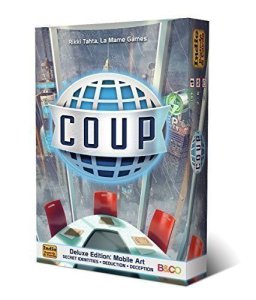
Coup Deluxe: Mobile Edition
2015
A compact Coup edition with Reformation expansions and mobile-app artwork.
15
minutes
Medium

View game

Rules made simple, fun made easy!
Deduction board games challenge players to solve mysteries or uncover hidden truths using logic, cross-referencing clues, and eliminating false possibilities.
1,199 results
At its heart, deduction revolves around incomplete knowledge. Players start with limited facts and must piece together the full picture by observing card plays, asking targeted questions, or tracking subtle movements across the board. Every piece of revealed data alters what is mathematically or logically possible, turning the game into an active mental puzzle.
At the table, this dynamic creates intense focus and distinct “aha!” moments. Instead of relying purely on board control or economic management, victory stems from keen observation, clever note-taking, and correctly interpreting what other players are—or are not—doing.
Deduction games are ideal for analytical thinkers, puzzle enthusiasts, and groups that enjoy focused conversation over high-conflict combat. In terms of weight, most titles in this space sit comfortably in the light to medium complexity range, making them approachable for casual gatherings and game nights, though deeper medium-heavy options exist for those craving dense logic puzzles.
2015
A compact Coup edition with Reformation expansions and mobile-app artwork.
15
minutes
Medium
View game
2018
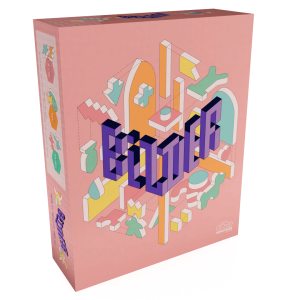
Build imaginative scenes, guess the creations, and collect every B-I-L-D-E-R letter.
60
minutes
Medium
View game

2018
A tense two-player battle of wits between Holmes and Moriarty
45
minutes
Medium
View game

2019
Draw constellations, spark imaginations, and guess what others see in the stars.
20
minutes
Medium Light

View game
2016
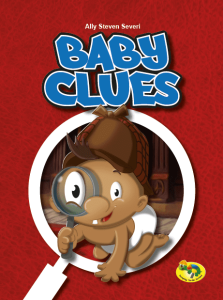
Unmask rival babies, hide your identity, and steal five bottles of milk.
30
minutes
Light

View game

2017
Explain a hidden Japanese loanword without using any Katakana words.
45
minutes
Light
View game
2019
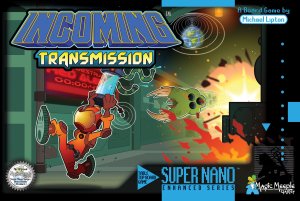
Decode scrambled orders and escape the doomed space station before time runs out.
40
minutes
Medium
View game
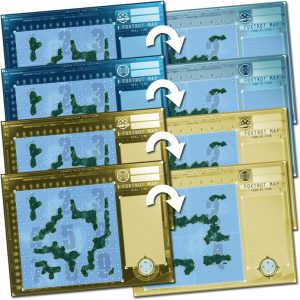
2016
A challenging bonus map shaped by large islands
60
minutes
Medium
View expansion

2023
Expand your escape plans with a warden, new places, and fresh strategies.
60
minutes
Medium Heavy

View expansion

2015
A risky Coup role that turns hidden influence into high-stakes coin gambles.
30
minutes
Light
View expansion
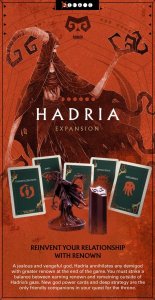
2025
Move a feared being, disrupt the score, and make every point a risky choice.
90
minutes
View expansion
2019
Uncover 32 exclusive cases, secrets, stories, and artwork insights.
75
minutes
Medium
View expansion

2020
Add a sixth Fireworks display with a challenging black powder twist.
30
minutes
Medium
View expansion

2023
Two new warriors, signature abilities, and solo decks for battles in Japan.
20
minutes
View expansion

2012
Race to find Charles Goode and thwart Faust’s evil plans.
120
minutes
Medium Heavy
View expansion
2017
Add 20 Polish codenames across 10 new cards to several Codenames games.
30
minutes
View expansion

2020
Solve riddles and escape alive beneath the Western sun.
60
minutes
Medium
View expansion

2015
A frosty Baker Street mystery begins with a doctor’s shocking murder.
Medium
View expansion
2017
Add six new means cards to your next 4–12 player game.
30
minutes
View expansion
A deduction board game challenges players to uncover hidden truths or solve mysteries by interpreting clues and logically ruling out impossibilities. Unlike games focused purely on resource management or board control, victory hinges on keen observation, tracking player behavior, and synthesizing incomplete information. Over the course of play, each revealed piece of data narrows down the possibilities until a player or team deduces the correct solution.
Pure deduction relies primarily on objective logic, physical clues, and mathematical elimination, whereas social deduction focuses on reading player behavior, bluffing, and sussing out hidden loyalties. In a cooperative logic game like Hanabi, you deduce your own cards through concrete hints and strict process of elimination. By contrast, titles like The Resistance: Avalon require you to identify secret evil players by analyzing voting patterns, spoken arguments, and behavioral tells.
Beginners should look for light games with simple elimination rules, brief playtimes, and minimal setup. A great starting point is Love Letter, a 20-minute card game where players deduce which character opponents hold by tracking cards played from a small 16-card deck. Another approachable option is Codenames, which challenges two teams to identify secret agent cards using concise, one-word contextual clues.
Yes, narrative-driven mysteries and investigative puzzle games work exceptionally well for solo players and couples because they do not require hidden traitor mechanics. For example, Sherlock Holmes Consulting Detective: The Thames Murders & Other Cases plays from 1 to 8 players but is best with 2, giving partners space to discuss case books and follow leads together. Similarly, Chronicles of Crime offers an engaging 60- to 90-minute digital-hybrid case investigation that shines at 1 or 2 players.
Yes, many deduction titles feature accessible rules and family-friendly formats suitable for players as young as 8 years old. The cooperative word game Just One plays in 20 to 60 minutes for ages 8 and up, asking a single guesser to deduce a mystery word from clues provided by the table. For a slightly more competitive family option, Saboteur supports 3 to 10 players ages 8 and up as miners deduce who among them is secretly sabotaging the tunnel.
Large groups benefit most from social deduction games featuring fast simultaneous play and minimal downtime for 7 or more participants. Secret Hitler accommodates 5 to 10 players (best with 8) in roughly 45 minutes of tense policy voting, debate, and hidden role discovery. Another strong choice is The Resistance, a 30-minute game for 5 to 10 players where the group must deduce which operatives are deliberately failing secret missions.
The strongest strategy is to pay close attention not only to what players reveal, but also to what options they intentionally pass up. Watching what an opponent avoids doing often tells you exactly which cards, roles, or resources they are missing. Additionally, maintain clear and disciplined notes whenever the game provides a tracking sheet, as relying strictly on memory will cause you to overlook critical constraints.
The most frequent pitfall is treating an intuitive hunch or premature assumption as an established fact. In deduction games, a single false mark on your tracking grid will derail your entire logic chain and guarantee an incorrect final conclusion. To protect against this vulnerability, always clearly separate confirmed evidence from working theories before committing to an answer.
Experienced hobbyists should look for medium-heavy titles that combine complex logical grids with board movement, resource management, and longer playtimes. In Alchemists, players spend around 120 minutes testing potion ingredients via an app and cross-referencing outcomes to deduce the chemical makeup of elements. For one-versus-many cat-and-mouse tension, Fury of Dracula (Third/Fourth Edition) delivers a 120- to 180-minute hunt across Europe as players deduce Dracula’s trail through city encounters.
Playtimes vary from 15-minute card fillers to three-hour investigative sagas depending on rules complexity and group size. Fast-paced elimination games like Coup finish in just 15 minutes, allowing groups to play multiple rounds in one sitting. On the deeper end, expansive medium-heavy experiences like Battlestar Galactica: The Board Game run between 120 and 180 minutes due to extended crises and complex loyalty checks.
Cooperative deduction games unite all players against a mystery system by placing restrictions on how information can be shared. In Hanabi, you hold your cards facing outward toward your teammates, forcing you to deduce your own hand using only the limited color and number hints they give you. Similarly, Mysterium tasks a silent ghost player with guiding psychic detectives to identify suspects and crime scenes using only dreamlike illustrated vision cards.
