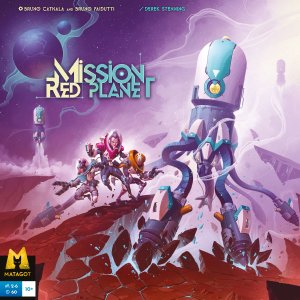
Mission: Red Planet (Second/Third Edition)
2015
Race to Mars, claim its riches, and outmaneuver rival mining corporations.
90
minutes
Medium

View game

Rules made simple, fun made easy!
Area Movement is a board game mechanic where pieces travel between distinct, predefined zones on a map rather than along linear tracks, hexes, or square grids. Movement is typically defined by adjacency, allowing players to shift forces directly into neighboring territories, seas, or rooms.
1,349 results
Unlike abstract grids that measure distance in uniform steps, games using Area Movement divide the board into thematic spaces of varying shapes and sizes, such as provinces, ocean zones, or fortress corridors. Entering a new region simply requires moving across a shared boundary, shifting the focus from counting individual steps to controlling meaningful geography.
At the table, this creates clear tactical fronts and natural choke points. Because territories represent distinct strategic locations, players spend less time measuring precise ranges and more time evaluating the consequences of committing presence to contested regions.
This mechanism is an ideal fit for tactical thinkers, wargamers, and groups who enjoy grand strategy, direct confrontation, and territorial struggle. The vast majority of titles featuring this system lean toward medium to medium-heavy complexity, requiring thoughtful planning and border management while avoiding the micro-level geometric calculations of strict tactical simulations.
2015
Race to Mars, claim its riches, and outmaneuver rival mining corporations.
90
minutes
Medium
View game

2018
Build a prestigious Roman district through clever tile choices and scoring.
75
minutes
Medium
View game
2018
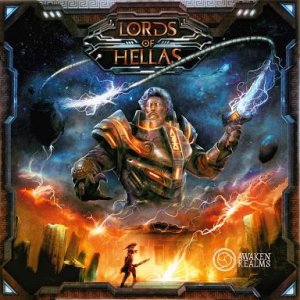
Command asymmetric heroes, build godly monuments, and hunt monsters to seize victory.
90
minutes
Medium Heavy

View game
2013
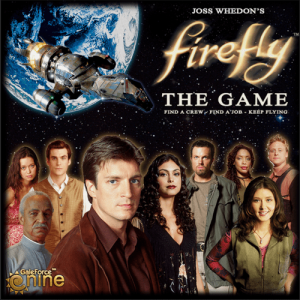
Take risky jobs, outrun Reavers, and build the crew that gets you paid.
240
minutes
Medium
View game
1980
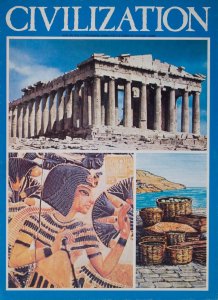
Guide an ancient people from agriculture to the emergence of Rome.
360
minutes
Medium Heavy
View game
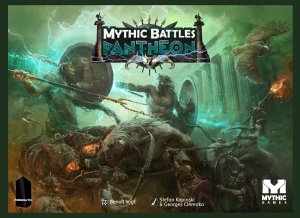
2017
Lead a mythic warband through a shattered Greece in pursuit of divine power.
90
minutes
Medium Heavy
View game

2017
Lead immortal heroes through tactical, story-driven battles against evil.
150
minutes
Heavy

View game
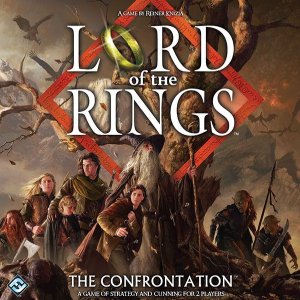
2005
A tense 30-minute clash of bluffing and strategy in Middle-earth
30
minutes
Medium
View game
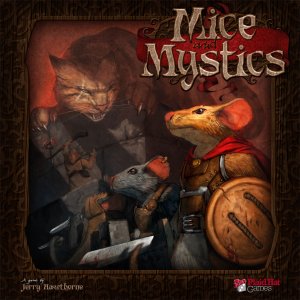
2012
Cooperate as courageous mice in a perilous castle adventure.
90
minutes
Medium
View game

2018
Defend the school, complete missions, and unlock new powers as zombies evolve.
15
minutes
Light

View game

2024
Bid for divine favor, build your cities, and race to control three metropolises.
90
minutes
Medium
View game

1979
Negotiate, bluff, and battle for control of a deadly desert world.
180
minutes
Medium Heavy
View game

2019
Master six schools of magic and battle for the Black Rose throne.
90
minutes
Medium Heavy
View game
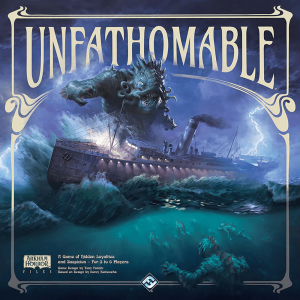
2021
Defend a doomed steamship while hidden hybrids sabotage the voyage.
240
minutes
Medium Heavy
View game

2011
Uncover dark secrets while monsters and madness close in.
180
minutes
Medium Heavy
View game

2011
Build a world that changes permanently with every campaign decision.
60
minutes
Medium
View game
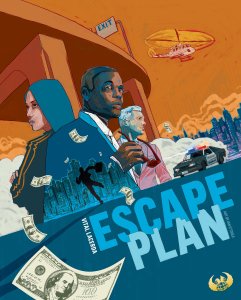
2019
Race the lockdown, recover your loot, and escape with the most cash.
120
minutes
Medium Heavy
View game

2019
Solve noir murders while a hidden saboteur twists every lead.
150
minutes
Medium
View game

2011
Claim subterranean regions with creature-and-power combinations.
90
minutes
Medium
View game
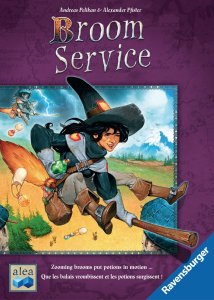
2015
Bluff, gather, and deliver potions to claim victory across a magical realm.
75
minutes
Medium
View game
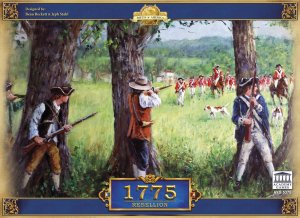
2013
Lead four factions through a fast-moving struggle for control of America.
120
minutes
Medium
View game
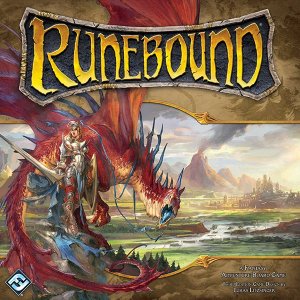
2015
Explore Terrinoth, face deadly quests, and rise against awakening evil.
180
minutes
Medium
View game
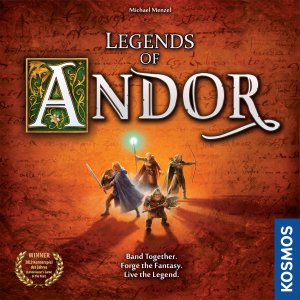
2012
Cooperative fantasy quests where heroes defend Andor from invading hordes.
90
minutes
Medium
View game

2007
Command armies, shape the battlefield, and fight for galactic domination.
240
minutes
Medium Heavy
View game
2008
Preview four ghosts, reorder the deck, and claim a Tao token.
Medium
View expansion
2016
Claim forgotten ruins and unlock a monument tied to the island.
90
minutes
Medium Heavy
View expansion
2019
Unleash Skeld's savage strength as a relentless Slayer or furious Berserker.
90
minutes
View expansion
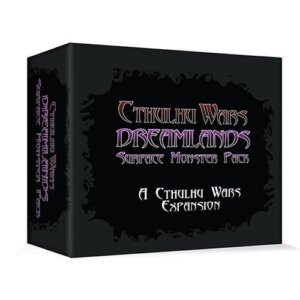
2015
Add nine Dreamlands monsters with powers that reshape movement and victory.
90
minutes
Medium Heavy
View expansion
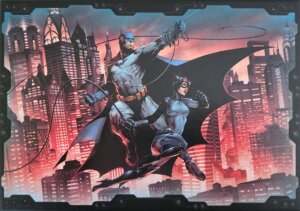
2023
Take on Gotham’s missions with AI-driven solo or cooperative play.
90
minutes
Medium
View expansion
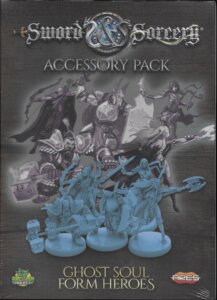
2018
Optional talents and replacement miniatures for heroes in ghost soul form.
90
minutes
Heavy
View expansion
2015
Three monster types bring the Dreamlands Underworld to any map.
90
minutes
Medium Heavy
View expansion
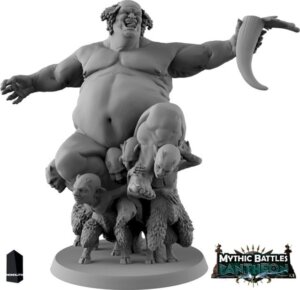
2018
Disrupt the battlefield with opulence, chaos, and intoxicating control.
90
minutes
View expansion
2019
Face apocalyptic heralds and explore the Good Place Inn in exclusive scenarios.
90
minutes
Medium Heavy
View expansion
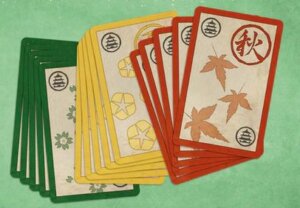
2019
Seasonal cards emphasizing strongholds and area control
120
minutes
Medium Heavy
View expansion
2025
Turn dungeon fires into a resource before Emberlings burn everything down.
40
minutes
View expansion
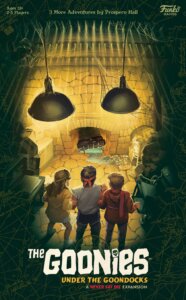
2021
Stop Troy and uncover a thrilling new chapter beneath the Goondocks.
50
minutes
Medium
View expansion
Area Movement is a mechanism where figures or markers travel between distinct, named zones or territories rather than stepping through a uniform grid or hex map. Each zone represents an irregular space such as a region, room, or ocean sector, and units advance by crossing shared borders. This setup shifts player focus away from precise distance measuring toward macro-level positioning and territorial borders.
Unlike grid or hex systems that divide the board into uniform tiles of identical size and distance, Area Movement splits the board into irregular thematic regions. Grid-based games emphasize micro-tactics, sightlines, and counting individual steps. In contrast, Area Movement simplifies navigation by making every shared boundary a single step, turning attention toward border control and regional chokepoints.
Great entry points feature straightforward boundary rules and brief playing times. A fast-paced choice is Eight-Minute Empire, which delivers quick continental maneuvers and area control in just 8 to 20 minutes for 2 to 5 players. For those who enjoy classic fantasy exploration, Dungeon! lets 1 to 8 players roam interconnected rooms of an escalating dungeon in 30 to 60 minutes.
Yes, several titles adapt zone-based movement into simple, highly engaging formats for children. Zombie Kidz Evolution is designed for ages 7 and up, letting players cooperatively clear zombies across school rooms in quick 15-minute sessions. For younger players aged 6 and up, ICECOOL uses interconnected classroom boxes where players flick penguins through doorways from room to room.
Area Movement works exceptionally well at two players, especially in titles focused on head-to-head operational duels. For instance, Risk: Star Wars Edition plays best with 2 players in 30 to 45 minutes, focusing conflict across distinct operational sectors. For a heavier experience, War of the Ring: Second Edition delivers an epic two-player territorial confrontation across Middle-earth that spans 150 to 240 minutes.
Yes, many games with area-based maps provide robust solo modes, particularly cooperative survival and narrative titles. In Robinson Crusoe: Adventures on the Cursed Island, which is voted best as a solo game, you explore uncharted island tiles and manage encampments against harsh elements. Heavy economic designs like The Colonists also support solitary play, directing your steward across regional upgrade spaces.
Experienced players looking for deep tactical depth often prefer titles that pair regional movement with asymmetric factions or grand historical campaigns. In Root, 2 to 4 players vie for control of woodland clearings, each using completely different movement rules and strategic priorities. For grand scope, War of the Ring: Second Edition tasks players with maneuvering massive armies across connected regions over 150 to 240 minutes.
Area Movement often serves as the logistical delivery system for Area Majority games, though they remain distinct mechanisms. Area Movement defines how your pieces traverse the board from zone to zone, while Area Majority determines who scores points for having the dominant presence in those zones. Many games seamlessly combine both mechanisms so that repositioning units directly reshapes territorial dominance.
The most important tactical consideration is identifying and securing bottlenecks where multiple regions funnel through a single territory. Controlling these chokepoints lets you anchor a defensive line or dictate when and where neighboring players can advance. Spreading forces too thin across broad, multi-bordered areas leaves your flanks exposed to counterattacks from multiple directions.
A frequent problem is adjacency ambiguity caused by stylized map artwork, where two irregular territories meet at a corner and leave players unsure if they share a border. Another common physical issue is component crowding, where small printed territories struggle to accommodate large stacks of miniatures or cardboard tokens. Clarifying corner connections before starting play and using off-board staging tracks can help alleviate these snags.
Game length varies widely depending on complexity, ranging from 15-minute micro-games to epic four-hour strategy campaigns. Quick titles such as Eight-Minute Empire resolve in 8 to 20 minutes, while complex wargames like War of the Ring: Second Edition frequently take 150 to 240 minutes. Most medium-weight area games comfortably wrap up in 60 to 90 minutes.
