
Colorful
2019
Match your group's ideas to colors across five revealing rounds.
15
minutes
Light

View game

Rules made simple, fun made easy!
A semi-cooperative game is a format where players must work together to prevent a shared loss, but only a single player with the highest score or completed secret objective can claim victory. If the group fails the collective objective, everyone loses together.
154 results
In a semi-cooperative game, survival is collective, but victory is selfish. Players face systematic threats, crises, or countdown timers that require shared effort to manage. However, contributing resources to the group’s survival often comes at the direct expense of building your personal engine, scoring points, or advancing your private agenda.
This dynamic introduces sharp social friction and precarious alliances to the table. Every participant constantly weighs how much they can slack off or hoard for themselves without causing the entire group to fail, creating intense moments of negotiation, bluffing, and risk calculation.
This mechanic suits gaming groups that love psychological tension, sharp negotiation, and player-driven drama over pure, friendly teamwork. Most titles featuring this system sit in the moderate to medium-heavy complexity range, demanding thoughtful resource allocation while balancing collective defense. Groups that get frustrated by intentional self-sabotage, spite plays, or mutual losses may want to look elsewhere, but it is an ideal fit for players who enjoy social deduction alongside deeper strategy.
2019
Match your group's ideas to colors across five revealing rounds.
15
minutes
Light
View game
2018
Explore shifting catacombs, battle monsters, and decide whom to trust.
60
minutes
Medium Light

View game

2020
Fight Deadites, search the cabin, and uncover who serves evil.
60
minutes
Medium

View game
2026
Lead Marvel heroes, build your deck, and stop an evil Mastermind.
60
minutes
Medium
View game
2023
Build boldly, then see if the Guesser can decode your creation!
20
minutes
Light
View game

2026
Build a heroic deck and unite against a Mastermind’s deadly Scheme.
60
minutes
Medium
View game

2023
Journey through the spirit world to gather wisdom and claim the Universe.
75
minutes
Medium
View game

2024
Roll dice, collect rings, and battle through classic Sonic Zones.
60
minutes
Medium
View game
2023
Raid, command, and cast spells to claim 10 Power before your rivals.
60
minutes
Medium
View game
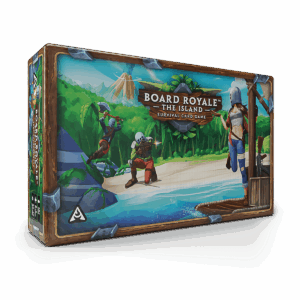
2020
Gather resources, craft useful items, and outlast your rivals.
60
minutes
Light
View game
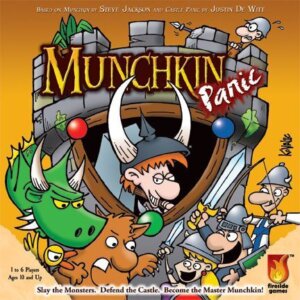
2014
Defend the castle, claim the treasure, and outscore your fellow heroes.
60
minutes
Medium
View game
2013
Diplomacy, deprivation, and deadly choices shape humanity’s last chance.
90
minutes
Medium
View game
2021
A tactical quiz of smart questions, shifting teamwork, and clever predictions.
60
minutes
Medium Light
View game

2023
Guide a fragile starship through decades of survival, risk, and rivalry.
240
minutes
Heavy

View game
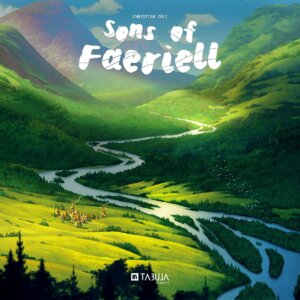
2022
Guide tiny heroes, resist Corruption, and shape a different ending every game.
120
minutes
Medium Heavy

View game

2021
Run, push, and sacrifice your way across a sinking ship.
45
minutes
Medium Light
View game

2020
Embalm the dead, uncover the murderer, and survive the suspicion.
10
minutes
Medium Light
View game

2017
Build a raft, resist hunger, and survive the island's supernatural curse.
30
minutes
Medium Light
View game

2021
Work together, uncover the saboteur, and stop a bomb-laden train.
30
minutes
Medium
View game
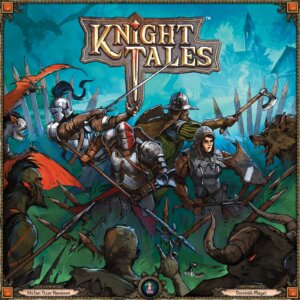
2022
Defend a remote village through three days of monsters, quests, and hard choices.
90
minutes
Medium
View game
2024
A chaotic deck-building battle of wizards, demons, and Satanic mayhem.
90
minutes
Medium
View game

2024
Shape a fractured revolution before war, coups, and the guillotine decide your fate.
120
minutes
Medium Heavy
View game
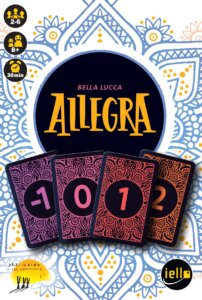
2020
A low-scoring card game where every neighbor can change your hand.
40
minutes
Medium Light
View game
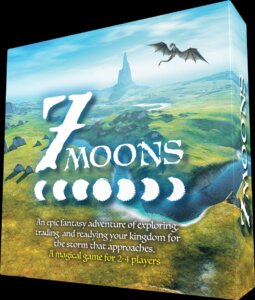
2021
Trade, recruit, and prepare Dragon Reach before the Shadow Army arrives.
60
minutes
Medium Light
View game

2023
Bring the Infinity Saga to your Legendary collection with iconic Marvel heroes and villains.
120
minutes
View expansion

2020
A compact cooperative expansion featuring COVID-19 components
180
minutes
Heavy
View expansion
2022
An apprentice-level quest to stop Zargon's minions before they escape
120
minutes
View expansion
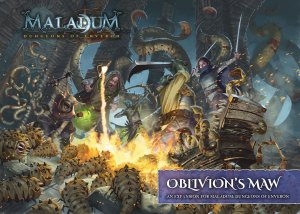
2025
Six quests, ancient relics, and choices that shape the campaign.
120
minutes
View expansion
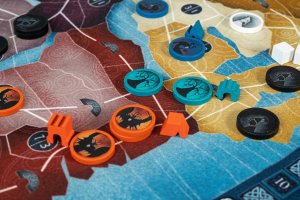
2026
Add Lugh, new enemy clans, maps, and dangerous token effects.
45
minutes
View expansion
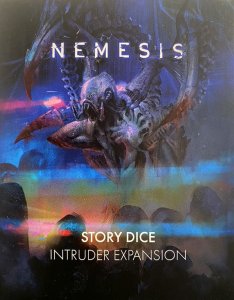
2024
Add risky new Noise and Combat rolls to your Nemesis games.
180
minutes
View expansion
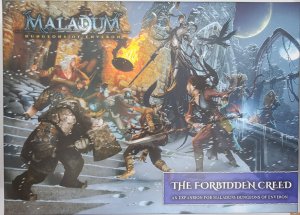
2024
A six-quest struggle against forbidden magic and the corrupted maladaar
120
minutes
View expansion
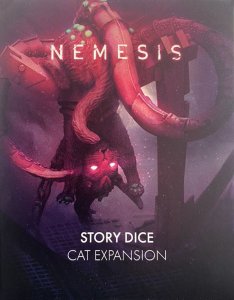
2024
Roll for story, noise, and combat with two themed Space Cat dice.
180
minutes
View expansion
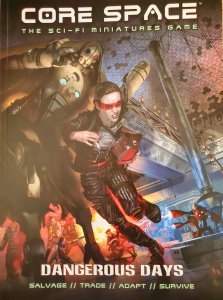
2020
Push your crew through a galaxy of desperate choices and dangerous missions.
180
minutes
View expansion
In a semi-cooperative game, players must work together to avoid a shared defeat, but only one individual player can win the game. If the group fails to beat the game’s systemic threats, everyone loses together with no winner crowned. This framework forces every player to contribute just enough to collective survival while secretly prioritizing their own personal victory conditions.
Fully cooperative games result in a shared victory or loss for the entire table, whereas semi-cooperative games crown a single individual winner out of surviving participants. In a pure co-op, every move is calculated to optimize group survival. Semi-cooperative designs introduce competitive tension, because players frequently withhold resources or exploit crises to gain an edge over their peers.
In a traitor game, an antagonistic player actively works to bring about the group’s defeat, whereas pure semi-cooperative games feature players who all want the group to survive so they can win individually. However, some games blend both styles, such as Dead of Winter: A Crossroads Game, where players balance selfish private goals alongside the lurking possibility of a true betrayer. In games without traitors, failure simply occurs because players are too selfish or miscalculate the danger.
No, semi-cooperative games naturally prevent quarterbacking—where a dominant player dictates moves to everyone else—because incentives are fundamentally misaligned. Because secret objectives and individual scoring remain private, no single participant can calculate what is truly optimal for another player. Players are far less receptive to bossy advice when they know the person giving it is ultimately playing for their own selfish win.
For newcomers and family game nights, accessible titles with clear stakes and light rules make the mechanic easy to grasp. In Hellapagos (recommended for ages 8 and up), players work together to gather supplies and build a raft, but must vote to eliminate one another whenever water or food runs short. Another family-friendly option is Castle Panic, which lets players defend a shared fortress while playfully competing for the title of Master Slayer by landing the final blow on invading monsters.
Semi-cooperative mechanics are rarely satisfying solo, as the defining tension of the genre comes from negotiating and second-guessing other humans. While titles like Nemesis offer solo rules, the experience shifts into a survival puzzle rather than a true semi-cooperative contest. At two players, the dynamic can become zero-sum and brittle, making the genre best suited for tables with three or more participants.
Experienced hobbyists who want deep strategy, high player interaction, and intense paranoia thrive with medium-heavy and heavy titles. In Nemesis, players must keep a derelict spaceship functioning while navigating alien encounters and completing secret, often contradictory corporate agendas. For heavy economic planning, CO₂: Second Chance tasks players with building renewable power infrastructure to stop catastrophic global pollution while battling for prestige.
The biggest risk is kingmaking or spite play, where a player who realizes they cannot win intentionally causes the shared loss condition so that everyone loses. When a participant abandons collective defense out of frustration, it can lead to an anticlimactic ending that invalidates hours of careful play. Groups must share a social contract where everyone tries their best to keep the game alive until a legitimate win is decided.
The most reliable strategy is to contribute only the bare minimum required to keep the group afloat while dedicating the rest of your actions to your personal objective. If you play entirely selflessly, an opponent will hoard points and take the crown; if you do nothing, the group collapses into a shared defeat. Winning relies on testing how much danger your opponents can endure before their own survival instincts force them to pitch in.
Playtimes range widely depending on weight, spanning from 20-minute social games to three-hour thematic marathons. Quick deduction and card-driven games like Bristol 1350 wrap up in roughly 20 to 40 minutes, making them easy to repeat in an evening. By contrast, thematic and strategic designs like Dead of Winter: A Crossroads Game typically demand 60 to 120 minutes as negotiations and deliberations unfold.
Many players find semi-cooperative games frustrating because shared losses can feel unsatisfying and render personal progress meaningless. People who enjoy pure teamwork often dislike the paranoia and backstabbing, while competitive purists dislike that an opponent’s blunder can end the match prematurely for everyone. The genre is polarizing because it demands players who appreciate tense social drama and psychological pressure over guaranteed, tidy resolution.
