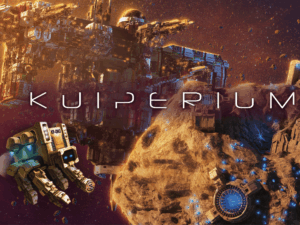
Kuiperium
2024
Mine a priceless new element in a tense two-player race for control.
90
minutes
Medium

View game

Rules made simple, fun made easy!
Tech Trees and Tech Tracks are progression systems where players spend resources to unlock advanced abilities, passive bonuses, or new actions along branching or linear upgrade paths. They structure long-term growth by requiring prerequisites before players can access more powerful technologies.
243 results
At its core, this mechanic translates historical or scientific advancement into concrete game terms. Whether represented as a branching flowchart of prerequisites or a series of linear progression meters, unlocking a technology permanently alters how a player interacts with the rules. Lower-tier advances usually provide small economic efficiencies, while late-tier upgrades unlock potent asymmetric powers or high-scoring end-game conditions.
At the table, tech systems drive long-term strategic divergence. Even when players start with identical factions, their tech choices quickly set them apart, rewarding foresight and focused planning. Choosing which path to prioritize forces meaningful trade-offs between immediate board presence and compounding future capabilities.
Resources accumulate over time without player intervention.
57 gamesPlayers invest in resources, aiming to profit from price fluctuations.
274 gamesPlayers complete specific agreements for rewards.
561 gamesPlayers receive extra points or rewards based on specific conditions met by the end of the game.
946 gamesPlayers earn resources or currency periodically.
476 gamesUnused resources become more valuable over time.
113 gamesPlayers allocate resources to generate future returns.
92 gamesPlayers control certain game elements, affecting strategy.
138 gamesPlayers periodically reset their progress while keeping accumulated points.
140 gamesPlayers buy and sell shares, influencing company value.
294 gamesThis mechanic is ideal for planners, engine-building enthusiasts, and players who enjoy guiding a civilization or empire from modest beginnings to advanced supremacy. Games featuring structured upgrade paths lean predominantly toward the medium to medium-heavy end of the spectrum, with a notable presence of very heavy designs; casual or light-game groups may find the extensive planning and prerequisite tracking too cumbersome.
2024
Mine a priceless new element in a tense two-player race for control.
90
minutes
Medium
View game
2023
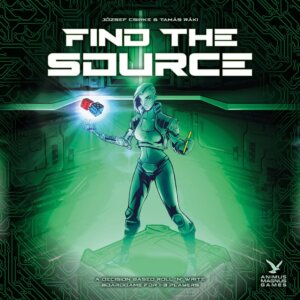
Roll, write, and uncover the hidden Source before its energy runs out.
30
minutes
Medium
View game
2024
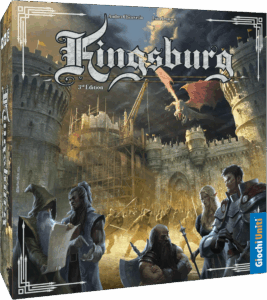
Influence the council, develop your province, and survive five years of invasions.
120
minutes
Medium
View game
2023
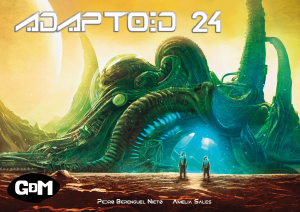
A tense 20-minute duel of hiding, guessing, hunting, and escape.
20
minutes
Medium Light

View game

2027
Pursue revolutionary knowledge while evading the Inquisition's watchful eye.
120
minutes
Medium Heavy

View game
2026
Explore, expand, exploit resources, and battle for victory in a compact 4X game.
150
minutes
Medium
View game

2022
Restore ruined biomes, guide wildlife, and outscore rival Shapers.
90
minutes
Medium Heavy
View game
2024
Build a Nordic family legacy across generations before the centuries run out.
120
minutes
Medium Heavy
View game
2025
Forge alliances, manage water, and fight for Jerusalem in a shifting holy war.
180
minutes
Medium Heavy
View game
2023
Program intelligent Bots, control territory, and uncover the truth of the Singularity.
150
minutes
Medium Heavy
View game

2003
Cooperate across a collapsing galaxy before the Creature reaches your home worlds.
60
minutes
Medium
View game
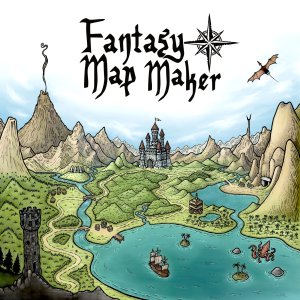
2027
Build a unique fantasy world through terrain, buildings, and discovery.
60
minutes
Medium
View game

1979
Unite humanity against alien machines that are transforming Earth’s atmosphere.
90
minutes
Medium Light
View game

2015
Two maps, new technology and company shares reshape the ride
75
minutes
Medium
View expansion

2020
Claim Senate chambers, gain benefits, and pursue an automatic majority victory.
30
minutes
Medium
View expansion

2018
Command fleets, explore distant isles, and prepare for naval conflict.
40
minutes
Medium
View expansion

2020
New civilizations, personal achievements, and sly interaction in Tapestry.
120
minutes
Medium Heavy
View expansion

2024
Explore a lost fleet, discover new sectors, and expand Gaia Project with four factions.
150
minutes
Heavy

View expansion

2024
Harness shipping lanes, build coal mines, and power Australia's revolution.
150
minutes
Heavy
View expansion

2025
Explore Valenwood with new quests, skills, classes, enemies, and equipment.
240
minutes
Medium Heavy
View expansion

2023
A massive expansion packed with miniatures, cards, rules, and new encounters
180
minutes
Heavy
View expansion
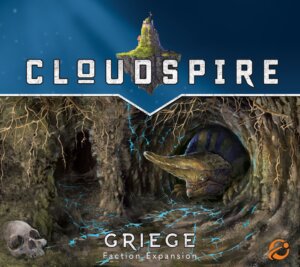
2019
Command the Griege swarm and overwhelm Ankar through strength in numbers.
180
minutes
Heavy
View expansion

2024
Expand your industrial empire with innovations, airships, patents, and new strategies.
120
minutes
Medium Heavy
View expansion

2021
Expand your Ares Expedition collection with 17 Kickstarter promo cards.
60
minutes
Medium
View expansion
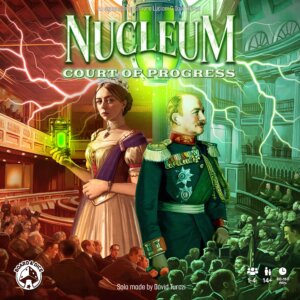
2024
Enter the halls of power and shape the nuclear revolution.
150
minutes
Medium Heavy
View expansion
A tech tree or tech track is a progression system where players spend resources to unlock permanent capabilities, passive bonuses, or new actions along ordered upgrade paths. Early advancements offer modest economic boosts or utility, which then act as prerequisites to unlock high-impact late-stage powers. This structure simulates scientific or cultural advancement and ensures that players’ strategies diverge as the game progresses.
A tech tree features branching paths with multiple prerequisites, whereas a tech track is a linear meter where players advance sequentially along a single path. Tech trees offer broader freedom to build customized, asymmetric combinations or skip certain disciplines altogether. In contrast, linear tracks emphasize racing opponents to reach shared milestone tiers and unlock incremental bonuses.
While tech tracks are a form of engine building, they strictly require players to meet specific prerequisites before gaining access to advanced components. General engine building often allows players to purchase any available card or power in a market as long as they can pay its direct cost. Tech systems introduce a mandatory hierarchy, forcing players to plan structured foundational steps before reaching powerful end-game abilities.
Most tech tree games lean toward medium-heavy or heavy complexity, but lighter options exist that introduce the mechanic without overwhelming rulebooks. For example, Little Factory introduces progressive production chains and upgrades in just 20 to 40 minutes for players aged 12 and up. For younger or casual groups, managing complex prerequisite flowcharts can cause analysis paralysis, so starting with accessible card-based progression is ideal.
Lighter games with short play times and focused rules provide the best starting point for exploring upgrade systems. A great option is Cyberion, which supports 1 to 2 players (ages 10 and up) and plays in 20 to 40 minutes with clear system upgrade objectives. Another accessible entry is Perry Rhodan: The Cosmic League, a streamlined 30-minute progression game designed specifically for 2 players.
Yes, progression tracks and upgrade trees translate naturally to solo play because navigating developmental milestones is inherently rewarding even without live opponents. For instance, Cyberion is rated best as a 1-player game, giving you 20 to 40 minutes to upgrade machinery and solve technical challenges. Solo modes in progression games typically challenge you to achieve specific technological milestones before a turn limit expires.
Tech progression games work exceptionally well at two players because divergent upgrade paths create stark, engaging contrasts in capabilities. Dedicated two-player titles like Perry Rhodan: The Cosmic League offer fast-paced upgrade choices within a 30-minute play time. For a longer head-to-head experience, Invasion of the Air-eaters provides a 90-minute struggle where research advances directly alter the two players’ capabilities.
Heavy strategy titles feature deep, sprawling trees where developmental paths heavily influence your empire’s trajectory. In Twilight Imperium: Fourth Edition, players navigate intricate scientific disciplines over a 240-to-480-minute galactic conflict to unlock advanced ship designs and faction abilities. Similarly, Gaia Project provides six separate research disciplines for 1 to 4 players, governing everything from economy and movement to planetary terraforming.
Session length varies widely depending on design scope, spanning from under an hour to an entire afternoon. Compact progression games such as Little Factory wrap up in 20 to 40 minutes. On the heavy end of the spectrum, massive empire builders like Twilight Imperium: Fourth Edition require 240 to 480 minutes to explore high-tier technologies and galactic milestones.
The most common mistake is researching expensive, high-tier technologies too late in the game to recoup their purchase cost. Technologies are long-term investments that generate value over time, so an unlock made in the final rounds rarely repays the heavy resources required to acquire it. Another frequent error is diversifying too broadly, which leaves you without the powerful, specialized capstones that drive winning engines.
Specializing in one or two synergistic branches is generally stronger than scattering investments evenly across all options. Pushing deeply along a focused path unlocks top-tier perks and dominant advantages earlier than opponents can adapt to them. That said, completely ignoring basic economy or movement advances can leave your engine fragile, making a modest initial dip into baseline utilities well worth the cost.
