
Anno 1800: The Board Game
2020
Build industry, trade across worlds, and satisfy a growing population.
120
minutes
Medium Heavy

View game

Rules made simple, fun made easy!
The Napoleonic board game theme centers on the European conflicts of the early nineteenth century, pitting France against shifting coalitions of rival nations. These games emphasize grand strategy, combined-arms tactics, and the logistical challenges of commanding massive armies during the age of black powder.
250 results
Games using the Napoleonic theme immerse players in the drama of early 1800s warfare and diplomacy. Rather than focusing solely on individual combat, the setting typically highlights the tension between grand continental campaigns and detailed battlefield maneuvers involving infantry lines, cavalry charges, and artillery batteries.
At the table, this theme creates an environment where positioning and timing are critical. Players must balance aggressive territorial expansion with fragile alliances, managing smoke-filled battlefields where battlefield friction and morale often determine victory more than raw numbers alone.
This setting strongly appeals to history enthusiasts, strategic wargamers, and competitive groups who enjoy operational depth and tactical maneuvering. Games in this category overwhelmingly sit in the medium to medium-heavy complexity range, meaning they demand focused attention and comfort with rulebooks that account for terrain, supply, and leadership effects. Casual players looking for light, fast-paced skirmishes may find the detail daunting, but those who appreciate deliberate, immersive military simulations will feel right at home.
2020
Build industry, trade across worlds, and satisfy a growing population.
120
minutes
Medium Heavy
View game
2010
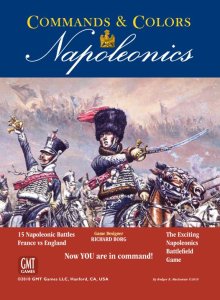
Re-fight Napoleonic battles through tactical cards, terrain, and unit orders.
90
minutes
Medium

View game
2007
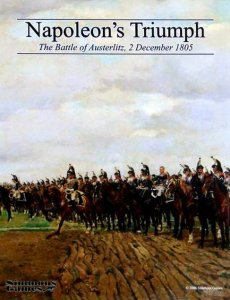
Recreate Austerlitz with bold decisions, hidden information, and no dice
180
minutes
Medium Heavy
View game
1991
Guide rising empires through seven epochs of conquest and decline.
270
minutes
Medium
View game

2023
Shape a European empire through diplomacy, discovery, development, and conquest.
300
minutes
Heavy

View game
2012
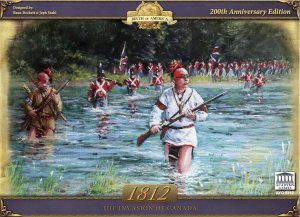
Cooperate, invade, and seize enemy objectives in the War of 1812.
120
minutes
Medium
View game
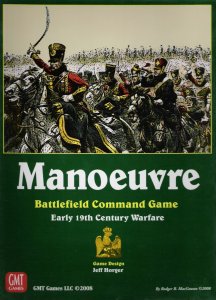
2008
Command an early 19th-century army and outmanoeuvre your opponent.
60
minutes
Medium
View game
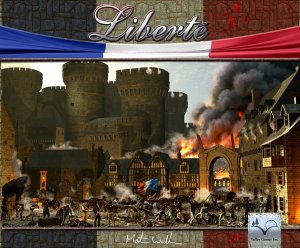
1998
Shape revolutionary France through faction control, elections, and sudden-death upheaval.
90
minutes
Medium Heavy
View game
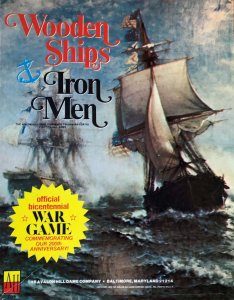
1974
Command ships and clash in tactical Age of Sail fleet battles.
300
minutes
Medium Heavy
View game
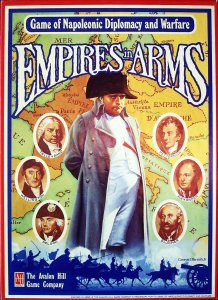
1983
Command a European power through diplomacy, economics, and Napoleonic warfare.
12000
minutes
Heavy
View game
1974
Recreate Napoleon’s final campaign with hidden forces and wooden blocks.
120
minutes
Medium
View game
2011
Take command of forces and shape campaigns in a focused solitaire experience.
180
minutes
Medium
View game

2008
Recreate Madrid’s 1808 uprising in a tense two-player struggle.
20
minutes
Medium
View game

2013
Plan secret maneuvers and unleash broadsides in the Age of Sails.
45
minutes
Medium
View game
2003
Command named ships through fast, tactical Age of Sail battles.
240
minutes
Medium Heavy
View game
2008
Shape the fate of Europe through cards, diplomacy, maneuver, and battle
240
minutes
Medium Heavy
View game
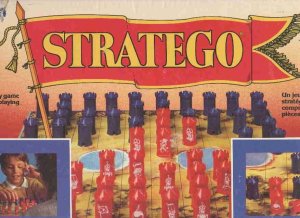
1946
Hide your army, outmaneuver your rival, and capture the enemy flag.
45
minutes
Medium Light

View game

2003
A fast-playing recreation of Napoleon’s dramatic victory at Marengo.
120
minutes
Medium Heavy
View game
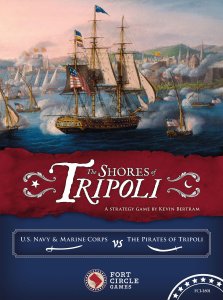
2020
Fight for control of the Mediterranean in the First Barbary War.
60
minutes
Medium
View game
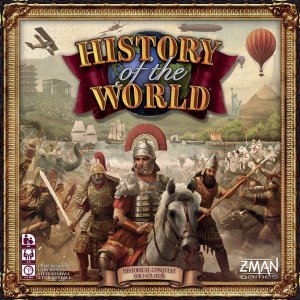
2018
Guide mighty empires through an epic journey across human history.
180
minutes
Medium
View game
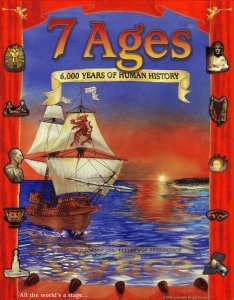
2004
Guide empires through 6,000 years of world history.
480
minutes
Medium Heavy
View game
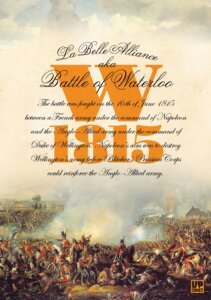
2015
A fast tactical Waterloo battle where every corps activation matters.
20
minutes
Light

View game
2022
Build railways, manage peat, and shape a historic district.
75
minutes
Medium
View game

2003
A two-player clash of conquest, diplomacy, and card-driven events.
60
minutes
Medium Heavy
View game

2013
Command the Russian Army across 18 battles from 1806 to 1814.
60
minutes
Medium
View expansion

2013
Command the Austrian Army across 20 historical Napoleonic battles.
90
minutes
Medium
View expansion
2011
18 Peninsular War scenarios spotlight Spain's hard-fought victories and resistance
90
minutes
Medium
View expansion
2015
Command famous leaders across 18 Napoleonic battles and sharpen your battlefield tactics.
180
minutes
Medium Light
View expansion
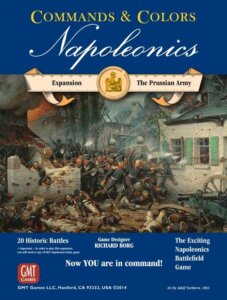
2014
Command the Prussians through 18 battles of the Napoleonic Wars
90
minutes
Medium
View expansion
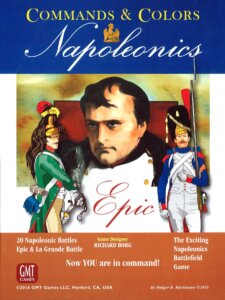
2016
Command massive Napoleonic battles across expanded battlefields
240
minutes
Medium
View expansion
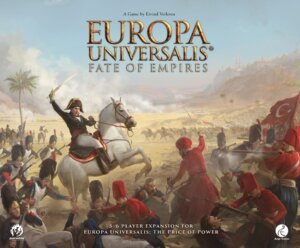
2023
Lead a nation through discovery, diplomacy, conquest, and four dramatic Ages
300
minutes
Heavy
View expansion
2009
Recreate major Age of Sail fleet actions across sixteen detailed scenarios.
240
minutes
Medium Heavy
View expansion
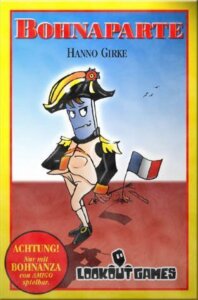
2004
Turn bean profits into conquest in a strategic Bohnanza expansion.
90
minutes
Medium
View expansion
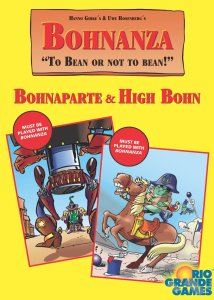
2015
Conquer the Bohnreich and outwit rivals with powerful new bean strategies.
90
minutes
Medium
View expansion
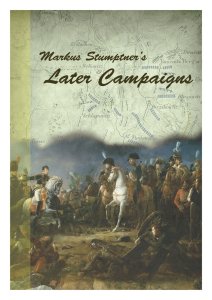
2004
A fast, historically focused Napoleonic wargame with solo support
60
minutes
Medium Heavy
View expansion
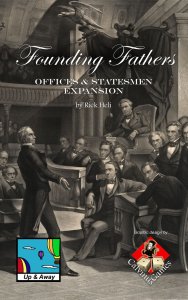
2014
Expand the election with new Statesmen, Offices, Actions, and solo rules.
120
minutes
Medium Heavy
View expansion
The Napoleonic theme encompasses board games depicting early nineteenth-century European warfare, politics, and society during the reign of Napoleon Bonaparte. These titles emphasize combined-arms combat between infantry, cavalry, and artillery, alongside high-stakes diplomatic shifting and continent-wide logistics. While military simulations predominate, the period also inspires naval fleet engagements and thematic historical card games.
Napoleonic titles distinctly focus on the strict battlefield doctrines and fragile formations of the black-powder era, such as infantry squares resisting cavalry charges and line versus column assaults. Unlike World War II games that highlight mechanization and ranged armor, or American Civil War games shaped by rifled muskets and entrenched lines, Napoleonic combat requires tight tactical coordination among three distinct military arms within relatively short engagement distances. Strategic titles also emphasize shifting multinational coalitions opposing a single dominant power, rather than fixed global alliances.
Yes, approachable entry points exist even though the genre has a reputation for intense rulesets. Beginners can explore classic bluffing and hidden ranks in Stratego, or try fast, accessible historical engagements like W1815, which plays in just 15 to 20 minutes. These titles offer a taste of tactical maneuver and theme without the heavy bookkeeping found in advanced campaign simulations.
Yes, several titles support dedicated solo play or play well solitaire due to open-information systems. Dedicated solitaire options like War of 1812: Solitaire Travel Game provide concise, single-player historical challenges in roughly 30 minutes. In addition, grand strategy titles such as Europa Universalis: The Price of Power include official solo modes for handling extensive territorial and geopolitical campaigns.
Many titles in the genre are explicitly designed for head-to-head competition, reflecting historic clashes between French forces and their rivals. Battlefield systems like Commands & Colors: Napoleonics and Manoeuvre shine at exactly two players, creating tight tactical duels over terrain control and unit morale. However, larger diplomatic simulations allow three or more players to contest shifting multi-nation alliances across Europe.
Yes, multiplayer titles exist that capture the wider alliance networks and coalition politics of the Napoleonic era. For instance, 1812: The Invasion of Canada accommodates up to 5 players divided into opposing factions, playing best at that full count. For sweeping, grand strategic depth, Empires in Arms expands to 7 players managing diplomatic, economic, and military warfare across the entire continent.
Play times vary dramatically depending on whether a game depicts a single skirmish or an entire continent-spanning war. Micro-games and tactical card games can finish in under 30 minutes, but medium-weight titles like Napoleon at Waterloo generally take between 60 and 120 minutes. Heavy, traditional wargames such as La Bataille des Quatre Bras demand 6 to 8 hours or more to simulate complex tactical maneuvers.
Experienced hobbyists looking for deep operational and tactical challenges should examine medium-heavy or heavy historical designs. Napoleon’s Triumph: The Battle of Austerlitz, 2 December 1805 delivers intricate, diceless maneuver and line-of-sight warfare using wooden blocks. Those seeking monumental operational detail can turn to The Struggle of Nations or War and Peace for rigorous strategic combat.
The key to success is coordinating your unit types rather than attacking piecemeal with single arms. Soften up enemy battlelines with artillery bombardments before committing infantry, and hold your cavalry in reserve to counterattack exposed flanks or pursue broken units. Maintaining an unbroken line also protects your flanks and prevents the enemy from severing your lines of retreat or supply.
A frequent error is overextending an aggressive vanguard without securing safe retreats or defensive support. Charging unsupported cavalry into formed infantry or marching infantry directly into artillery crossfire will quickly deplete your forces and trigger morale collapse. Players also frequently overlook supply rules, allowing powerful field armies to waste away through attrition before reaching critical objectives.
Yes, the period inspires games centered on high society, economic development, and social intrigue rather than battle lines. For example, Marrying Mr. Darcy offers a light, character-building card game set against the Regency social scene of early nineteenth-century England. These titles capture the cultural atmosphere and domestic tensions of the era without requiring any military maneuvers.
