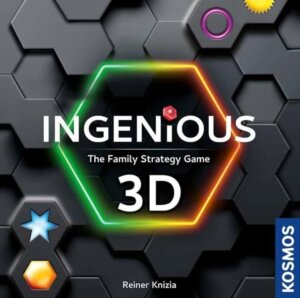
Ingenious 3D
2024
Stack colorful tiles in three dimensions and balance every color's score.
45
minutes
Medium

View game

Rules made simple, fun made easy!
Layering is a board game mechanic where components such as cards, tiles, or tokens are stacked on top of one another to alter, obscure, or combine their visual or functional properties. By placing one piece over another, players modify existing spaces, unlock new abilities, or change the game state dynamically.
206 results
At its core, layering introduces physical depth to a flat play surface. Rather than replacing a piece entirely or moving across empty grid squares, players physically place new components over existing ones. This overlap might leave transparent sections exposed, alter resource outputs, or cover up vulnerabilities while revealing stronger actions underneath.
At the table, this mechanic creates satisfying visual and tactical progression. Every decision physically alters what came before, turning personal player boards or shared maps into evolving collages where spatial positioning directly dictates your capabilities and scoring potential.
Players physically flick pieces to move them.
87 gamesPlayers cover or control grid spaces.
205 gamesPlayers move their pieces on a grid.
2,267 gamesThe game board is composed of hexagonal spaces, allowing for multi-directional movement.
2,207 gamesPlayers use a set number of points to move.
601 gamesPlayers create specific patterns to score points.
954 gamesPlayers identify and respond to visual or logical patterns.
322 gamesPlayers collect and transport goods to different locations.
707 gamesPlayers move between fixed locations on a map or board.
1,071 gamesPieces are slid or pushed across the board.
68 gamesPlayers progress along a track.
566 gamesPlayers place tiles to form a board or map.
2,423 gamesPlayers progress along a predefined track, often gaining rewards or triggering events.
286 gamesLayering games are ideal for visual thinkers and fans of spatial puzzles who enjoy building tangible, customized engines. Most titles featuring this mechanic lean comfortably in the light-to-medium complexity range, offering accessible rules with approachable tactical depth, though heavier options exist for players seeking deeply calculated, multi-tiered optimization.
2024
Stack colorful tiles in three dimensions and balance every color's score.
45
minutes
Medium
View game

2005
Stack spice crates, cover rats, and outmaneuver your rival.
30
minutes
Light

View game

2018
Build a line through stacked tiles and aim for the highest score.
40
minutes
Medium
View game

2015
Build civilizations, wage war, and outmaneuver rivals across the ages.
60
minutes
Medium
View game
2019
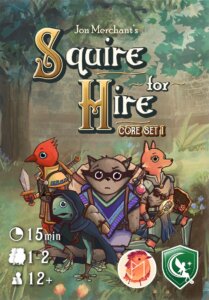
Pack the perfect loot bag and prove your worth as a legendary adventurer’s squire.
25
minutes
Medium Light

View game

2019
Build a thriving produce stand while outgrowing the competition.
20
minutes
Light
View game

2024
Stack colorful lunch-box tiles, unlock chai bonuses, and deliver for tips.
45
minutes
Medium Light
View game
2019
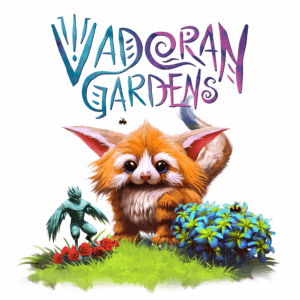
Build enchanting gardens, connect areas, and complete clever scoring objectives.
40
minutes
Medium
View game

2015
A silent, cooperative journey of empathy, balance, and shared objectives.
45
minutes
Medium Light
View game
2023
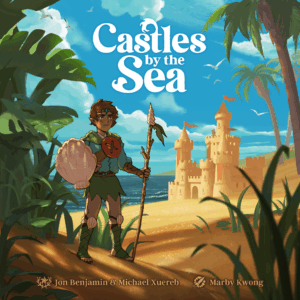
Build a seaside kingdom, outscore rivals, and survive the hazards.
60
minutes
Medium
View game

2022
Draft, trade, and build towering surfboards for beachside glory.
30
minutes
Light
View game

2015
Secretly select three colors and compete to build the most valuable sections.
10
minutes
Light
View game

2018
Shape a happy tree through clever card placement and spirit-powered scoring.
30
minutes
Medium Light
View game

2018
Build a civilization, wield powerful fields, and outmaneuver every rival.
60
minutes
Medium
View game

2017
Collect colorful acorns, grow your sets, and let squirrels multiply your points.
15
minutes
Light
View game
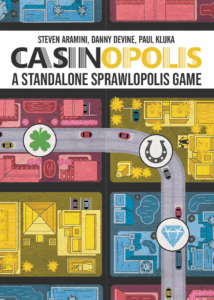
2025
Build a casino strip, align lucky symbols, and beat the target score.
15
minutes
Medium Light
View game

2020
A fast tactical puzzle of patterns, symbols, and clever card placement.
15
minutes
Light
View game

2019
Capture Provence’s lavender fields, sunflowers, and golden wheat in vibrant photos.
30
minutes
Medium Light
View game

2026
Explore water-linked wildlife and new terrain in a North American forest game.
60
minutes
Medium
View game

2010
Build an economy, bid for powerful cards, and reach 40 victory points.
45
minutes
Medium
View game

2022
Shape the Cold War through strategy, technology, espionage, and brinkmanship.
420
minutes
Heavy

View game

2025
Build colorful costumes, collect sweets, and unleash tricks before the final house!
30
minutes
Medium Light
View game

2023
Place tiles, guide workers, and raise pyramids for points.
90
minutes
Medium
View game

2021
Draft transparent cards, grow dragon islands, and chase the most visitors.
30
minutes
Medium Light
View game

2022
Create beautiful stone patterns with a powerful new set of wild cards.
30
minutes
Medium
View expansion
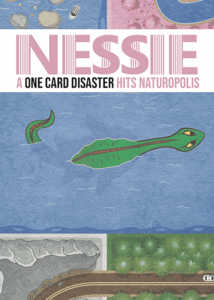
2023
A one-card monster challenges your landscape with a river-based threat.
20
minutes
Light
View expansion

2011
Add shadowy new actions and marker-driven effects to the base game.
45
minutes
Medium
View expansion
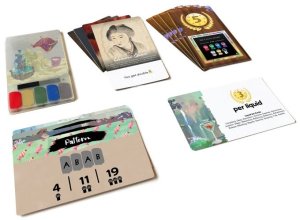
2025
Fresh Canvas content with new art, scoring, awards, and painter cards
30
minutes
Medium
View expansion
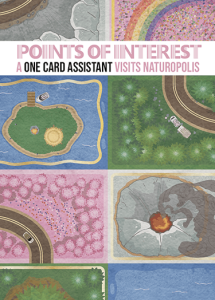
2023
Surround the rainbow road to boost your score
20
minutes
Medium
View expansion
2022
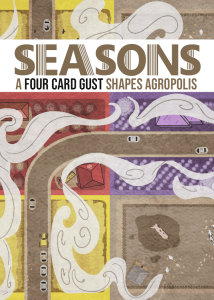
Add seasonal scoring and placement rules to Agropolis.
20
minutes
Medium
View expansion
2023
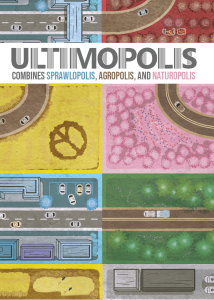
Combine three terrain decks in a streamlined, card-drafting city puzzle.
15
minutes
Medium Heavy

View expansion
2021
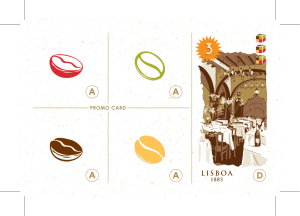
Add Leão de Ouro and trade three beans for 3 victory points.
45
minutes
Medium
View expansion
2023
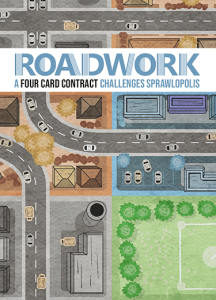
Add challenging road cards and keep your city moving.
20
minutes
Light
View expansion
2025
Add 12 new Sea Dog cards from the Port of Call campaign.
View expansion
2025
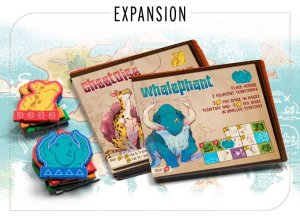
Add the whalephant and cheetoise for extra replayability.
40
minutes
Medium
View expansion
2023
Add psionic powers, muck lands, and a new chip-based system.
90
minutes
View expansion
Layering is a board game mechanic where components like cards, tiles, or tokens are stacked on top of one another to modify, cover, or enhance their visual or functional traits. Rather than occupying only a flat grid, pieces build vertically into physical stacks that change what icons or actions remain active. This gives games a dynamic, evolving play area where physical positioning directly dictates your capabilities.
Standard tile placement expands horizontally across a table, whereas layering introduces vertical depth and component overlapping. Placing a new piece physically alters or covers previous tiles, hiding liabilities or multiplying values. In games like Akropolis, placing city tiles on higher levels multiplies their point values rather than merely spreading outward.
Approachable titles like NMBR 9 and Canvas are great starting points because they pair straightforward rules with intuitive visual stacking. In NMBR 9, players stack numbered tiles on top of solid foundations to score higher multipliers on upper levels. In Canvas, players slide transparent illustration cards into sleeves to construct unique scoring paintings in roughly 30 minutes.
Yes, games such as Marrakech and Loony Quest are well suited for family play with younger children. Marrakech supports children as young as age 6 for a 30-minute match of overlapping fabric rugs on a shared market board. Loony Quest, designed for ages 8 and up, has players draw navigation paths on transparent overlays that layer over obstacle maps.
Layering mechanics work exceptionally well for solo play because the spatial optimization puzzle remains engaging without opponents. Orchard: 9 card solitaire game is a dedicated 1-player game that plays in just 5 to 10 minutes as you overlap matching fruit trees to increase dice values. Similarly, the microgame Sprawlopolis is voted best as a solo challenge, tasking you with stacking urban zones to meet shifting scoring criteria.
Transparent card games use clear plastic sheets printed with specific icons and illustrations that show through when stacked. In games like Gloom and Canvas, placing a card covers certain symbols on the layer below while leaving other sections clearly visible. This allows players to build custom composite cards without requiring separate stat trackers or pencil-and-paper adjustments.
Experienced players looking for deep spatial optimization will enjoy titles like Cooper Island and Teotihuacan: City of Gods. In Cooper Island, players build stacks of landscape tiles up to five levels high to produce higher-value goods over a tight 60- to 120-minute session. In Teotihuacan: City of Gods, players cooperatively construct a tiered central pyramid using precise multi-level tile placement for big victory point payouts.
The most common mistake is burying valuable production icons or open connection points before maximizing their value. Players frequently rush to place pieces on higher tiers without establishing a wide enough foundation, which severely restricts their placement options on later turns. Successful play requires balancing immediate layer-completion bonuses with the long-term utility of the symbols you are covering.
Physical fragility and hidden information fatigue are the two primary downsides to watch out for. Table bumps can easily nudge delicate stacks out of place, obscuring crucial symbols or shifting tiles off their valid placements. Additionally, when cards or tiles are completely covered, it can be easy to lose track of what bonuses or prerequisites are buried underneath.
Many layering games shine at two players, including dedicated head-to-head designs like The Lord of the Rings: Duel for Middle-earth. Another strong option is Forest Shuffle, which plays best at a 2-player count as participants tuck animal and plant cards beneath trees to trigger cascading scoring pairs.
Play times range from 10-minute microgames to 2-hour strategic games depending on the rules overhead. Fast card games like Orchard: 9 card solitaire game run 5 to 10 minutes, while mid-weight options like Cacao wrap up in roughly 45 minutes. Heavier tile-layering games like Java typically require a full 120 minutes to complete.
