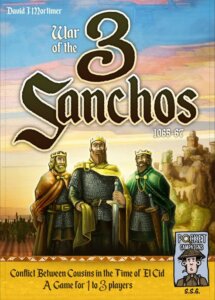
War of the 3 Sanchos 1065-67
2024
Fortify castles and towers to outscore rival Sanchos.
45
minutes
Medium

View game

Rules made simple, fun made easy!
Move Through Deck is a card-driven mechanic where players systematically advance through, manipulate, and cycle cards in a deck to trigger actions, uncover narrative beats, or track progress.
153 results
At its core, this mechanic treats a stack of cards as a journey or finite timeline rather than a purely randomized supply. As you play, you reveal, discard, sift through, or reorder cards to find critical tools and trigger sequential events. Managing the rate at which you burn through the pile is central to your strategy.
At the table, this creates natural momentum and tension. Players gain a clear sense of pacing as the deck dwindles, forcing meaningful trade-offs between rushing ahead to access powerful options and conserving key resources before the deck exhausts or resets with a penalty.
This mechanism shines with solo players and cooperative groups who enjoy methodical puzzle-solving, narrative progression, and hand optimization. Most titles built around this system sit comfortably in the light to medium weight range, offering accessible turn structures with deep tactical depth, though a few heavier designs challenge experienced tacticians with rigorous resource management.
2024
Fortify castles and towers to outscore rival Sanchos.
45
minutes
Medium
View game
2021
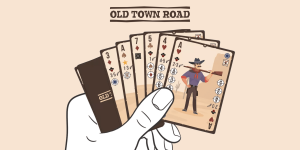
A compact solo card game of outlaws, poker hands, and Old Town showdowns.
20
minutes
Medium Light

View game
2019
A fast, deceptive memory game where every card and discard matters.
180
minutes
Medium
View game
2023
Build a winning poker hand and survive the horrors of Reckoning.
30
minutes
Medium
View game

2024
Serve picky nobles, complete their meals, and score points at Louis XIV’s feast.
20
minutes
Light

View game

2022
A deterministic solo card brawl with nine cards and surprising depth
20
minutes
Medium
View game
2025
Turn lost tricks into false tricks and chase perfectly multiplied points.
30
minutes
Medium Light
View game
2022
Match colors, build a layered grid, and leap across tokens to score.
60
minutes
Medium Light
View game

2021
Work together on the front lines against disease, stress, and scarce resources.
30
minutes
Medium
View game
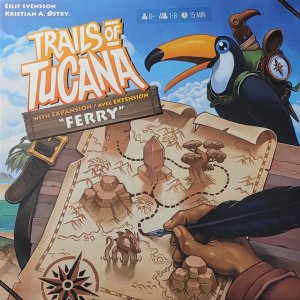
2024
Build island networks, connect harbors, and chart your route to victory.
15
minutes
View game

2025
Guide a unique amoeba-like bunny to its goal before anyone else.
60
minutes
Medium
View game

2022
Replay basketball’s decisive moments in a fast, 20-minute card-driven game.
30
minutes
Medium
View game
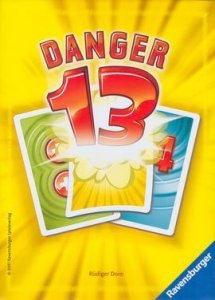
2007
Keep your total low, pass risky cards, and try not to hit 13.
30
minutes
Light
View game
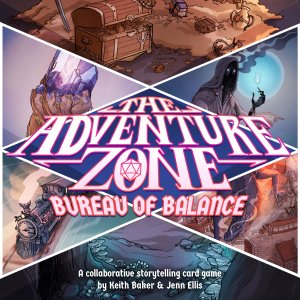
2020
Team up for a hilarious, artifact-hunting adventure of heroic storytelling
90
minutes
Medium Light
View game
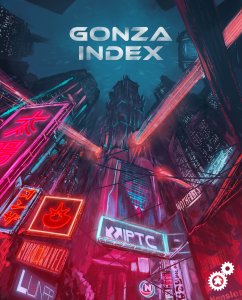
2023
Roll, reroll, and outmaneuver rivals in a volatile futuristic stock market.
60
minutes
Medium
View game
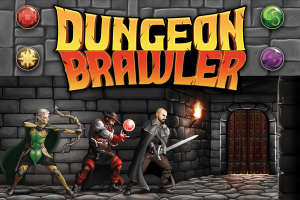
2019
A fast-moving dungeon crawl with deck-building tactics and arcade brawling
45
minutes
Medium Light
View game

2025
Flee a dying world, survive five realms, and seek revenge against the gods.
300
minutes
Medium Heavy

View game
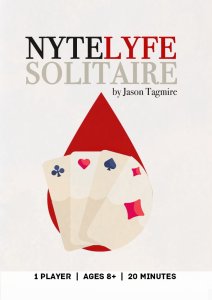
2020
Survive a dangerous Las Vegas night with a standard deck.
20
minutes
Light
View game
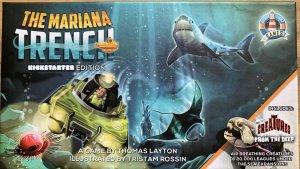
2021
Explore the deep and compete for valuable research points.
20
minutes
Light
View game
In this mechanic, players systematically advance through, manipulate, and cycle cards in a deck to trigger actions, discover narrative events, or manage a visible timeline. Rather than serving as a purely random draw pile, the deck functions as a journey, an encounter zone, or an impending countdown. Managing how fast or slow you churn through these cards is central to winning the game.
While deck building focuses on buying new cards to permanently customize and grow your draw deck, moving through a deck centers on navigating and expending an existing stack of cards. In games with this mechanic, the deck often serves as an objective path, a timer, or an obstacle course that depletes as you play. Your primary goal is usually to reach key cards or survive until the end rather than continually drafting upgrades.
Beginners should look for light, accessible card games with quick turn cycles and straightforward rules. In Port Royal, players push their luck flipping cards from a shared deck to hire crew and gain gold in 20 to 50 minutes. Another great option is Trails of Tucana, a 15-minute game where players reveal terrain cards from a small deck to draw connecting paths across island maps.
Yes, this mechanic is particularly popular in solo games because a structured deck provides an organic, automated timer and challenge system without needing an artificial opponent. The pocket-sized card game Palm Island plays in 15 minutes for 1 to 2 players (voted best solo), tasking you with rotating and cycling a 17-card deck to upgrade an island village. Similarly, Onirim (Second Edition) is a 15-minute solo puzzle centered entirely on manipulating and sifting through an escape labyrinth deck.
Yes, several titles with this mechanic offer intuitive rules that work wonderfully for children and family game nights. Designed for kids as young as age 4, Enchanted Forest plays in 30 to 60 minutes and uses a fairy-tale treasure deck that players work through one card at a time. For families with players aged 8 and up, Diamant offers exciting 20 to 40-minute cavern treks where the group pushes their luck revealing danger and treasure cards from the deck.
Experienced players looking for deep tactical sequencing can explore medium-heavy and heavy civilization games with multi-layered card management. In Imperium: Classics, players spend 40 to 160 minutes carefully cycling their nation deck from barbarian beginnings into a refined empire. For an even heavier strategic challenge, Imperium: Horizons expands on this framework with intricate faction-specific decks and demanding card management for ages 14 and up.
Yes, many titles use a dwindling deck to represent a shared obstacle, enemy horde, or common timer for a team of players. In the somber cooperative card game The Grizzled, players coordinate in 30-minute rounds to empty a trials deck without letting their collective morale collapse. For a more frantic experience, 5-Minute Dungeon challenges 2 to 5 players to work together and blast through a deck of monsters in rapid-fire sessions.
The key strategic skill is balancing your cycle speed against long-term resource efficiency. Cycling rapidly through cards helps you find critical tools quickly, but burning through your stack too early can trigger penalties or leave you vulnerable when the deck runs out. Strong players track which cards have already been discarded so they can accurately calculate the odds of what will turn up next.
A frequent error is burning through cards to solve minor, immediate issues without planning for the late game. In many titles, reaching the bottom of a deck triggers game-ending conditions, reshuffle penalties, or round resets. If you deplete your options too quickly without accomplishing core objectives, you may find yourself unprepared for the harder challenges waiting in the reshuffle.
Game lengths vary widely based on complexity, spanning from 15-minute card microgames to multi-hour narrative adventures. Quick-playing options like Linko wrap up in roughly 20 minutes of swift card cycling. On the other end of the spectrum, expansive campaign titles like Earthborne Rangers feature in-depth deck manipulation sessions that last between 60 and 240 minutes.