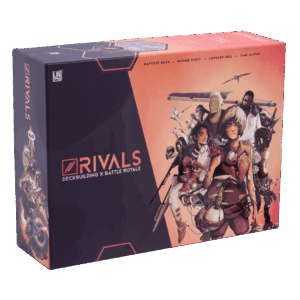
Rivals
2025
Build your deck, master the shifting arena, and outlast every rival.
120
minutes
Medium

View game

Rules made simple, fun made easy!
Resource to Move is a board game mechanic where players must spend specific in-game currencies, goods, or action tokens to move their pieces across the board. Instead of receiving free or fixed movement each turn, every step carries an explicit material cost.
106 results
In games using this mechanic, travel is treated as an economic transaction rather than a guaranteed phase of your turn. Whether you are paying coal to propel a train, rations to march an army across harsh terrain, or coins to hire transport, navigating the map directly consumes the supplies you gather. This ties spatial positioning closely to inventory management, making every hex or space traveled a deliberate budget calculation.
At the table, this dynamic transforms navigation into a strategic puzzle. Players cannot simply dash toward objectives or flee threats without forward planning, because running out of supplies leaves your pieces stranded. It elevates positioning from a tactical afterthought to a major engine of play, rewarding players who can balance supply production with efficient route optimization.
Players spend points to perform actions.
2,097 gamesPlayers pre-plan a sequence of actions that are executed in order.
701 gamesPlayers must retrieve spent actions or workers to use them again.
158 gamesActions trigger subsequent actions in a chain reaction.
147 gamesPlayers can mimic or react to another player’s action.
96 gamesPlayers act simultaneously rather than in turns.
355 gamesPlayers select actions from a circular track, with movement restrictions.
193 gamesPlayers secretly choose their actions and reveal them at the same time.
1,557 gamesPlayers spend or gain victory points to perform actions.
214 gamesThis mechanism appeals most to strategic thinkers and planners who enjoy logistical puzzles, resource balancing, and spatial optimization. Most titles utilizing this system sit squarely in the medium to medium-heavy complexity range, offering deep tactical choices without requiring overwhelming rules overhead. Casual players or groups seeking fast, carefree exploration may find the constant supply tax restrictive, but fans of economic engines and calculated risk will appreciate the weight it gives to every step on the board.
2025
Build your deck, master the shifting arena, and outlast every rival.
120
minutes
Medium
View game
2015
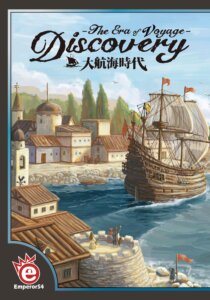
Lead your fleet, trade across new seas, and build a prosperous family legacy.
45
minutes
Medium
View game
2022
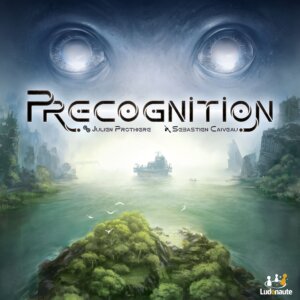
See the future, save Humans, and survive the journey down the Great River.
60
minutes
Medium
View game

2022
Work together to care for animals and overcome crises at a lively Canadian zoo.
30
minutes
Medium Light

View game
2023
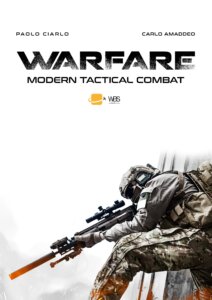
Command modern forces through intense urban and rural tactical scenarios.
180
minutes
Medium
View game
2024
Conquer, build, and defend Rome in a tense solo challenge.
15
minutes
Medium Light
View game
2004
Pilot fast-moving ships through realistic 3-D space combat.
240
minutes
Heavy

View game
2025
Build a trading network, transport cargo, and rise to commercial glory.
90
minutes
Medium
View game
2025
Explore the nine circles of Hell in a cooperative narrative boss battler.
120
minutes
Medium Heavy

View game

2025
Explore a shifting solar system, outwit rivals, and race to 10 points.
90
minutes
Medium
View game
2023
Build upward, earn divine favor, and become Olympus’s Chief Builder.
60
minutes
Medium
View game
2024
Repair a drifting spaceship before a white dwarf goes nova.
45
minutes
Medium
View game
2026
Draft tiles, power elements, and hatch dragons into a connected domain.
45
minutes
Medium
View game
2021
Lead Rome through war, intrigue, crises, and changing imperial dynasties.
720
minutes
Medium Heavy
View game
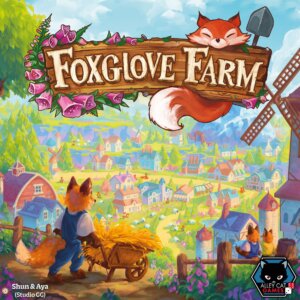
2026
Build a fox town, connect its trails, and turn goods into points.
60
minutes
Medium
View game

2020
Revive Renaissance Amalfi through trade, navigation, and strategic investment.
180
minutes
Medium Heavy
View game

2022
Build your route, master your skills, and make the greatest ascent.
90
minutes
Medium
View game
2022
Build your fighter, unleash devastating attacks, and outplay every defense.
30
minutes
Medium
View game
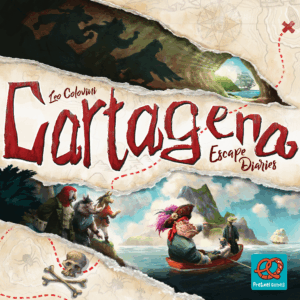
2023
Lead six animal pirates through the tunnels and escape before everyone else.
45
minutes
Medium Light
View game
2021
Build your fighter, outplay your rival, and unleash a brutal card-driven battle.
30
minutes
Medium
View game
2023
Build a floating labyrinth, outwit your rival, and claim all four seals.
40
minutes
Medium
View game
2021
Build your fighter, unleash your strategy, and battle for victory.
30
minutes
Medium
View game
2026
Shape your own medieval adventure through skill, story, and daring choices.
320
minutes
Medium Heavy
View game
2024
Build your rocket, shape your crew, and race to be first on Mars.
90
minutes
Medium
View game
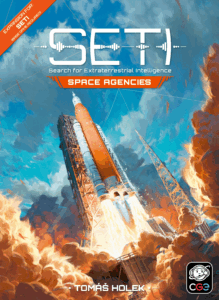
2025
Lead an asymmetric space organization in a deeper search for alien life.
160
minutes
Medium Heavy
View expansion
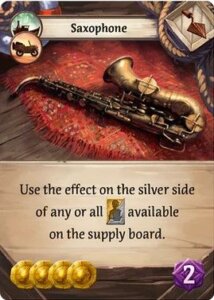
2021
A 2021 promo card affecting available Assistant Tiles
120
minutes
Medium
View expansion
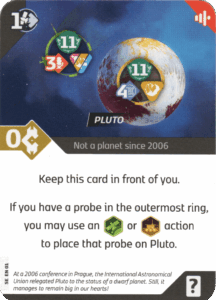
2024
Send a probe to Pluto from the outermost ring.
160
minutes
Medium
View expansion

2021
Copy an opponent’s card effect, then return their card to the top of its deck.
120
minutes
Medium
View expansion

2020
Protect an undroppable loot companion with unpredictable powers.
120
minutes
Heavy
View expansion
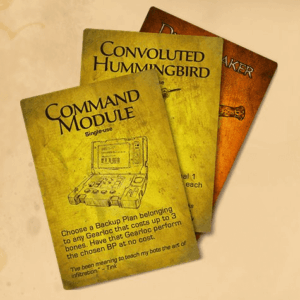
2023
A hilarious three-card crossover featuring burncycle and Cloudspire references.
120
minutes
View expansion
Resource to Move is a game mechanic where players must spend items, currencies, or action tokens to move their pieces across the board. Instead of receiving free or fixed movement each round, every step incurs a concrete material cost such as fuel, rations, or specific cards. This turns movement into an economic decision that directly impacts how you budget your overall supplies.
Standard movement systems typically grant players an allotted speed each turn or rely on dice rolls without taking away inventory. In contrast, Resource to Move treats travel as an ongoing expense where advancing requires discarding cards or spending accumulated goods. If your supply runs dry, your pieces simply stall out on the board until you gather what is needed to travel again.
Accessible racing titles like The Quest for El Dorado and Cartagena are ideal starting points. In these games, players discard cards matching terrain icons or symbols to advance along a track rather than doing heavy arithmetic. Both feature easy-to-learn rules, play in under an hour, and work well for players starting around age 8 to 10.
Yes, paying to move often creates very tight two-player dynamics because travel efficiency becomes a direct head-to-head race. Dedicated two-player games like Odin’s Ravens (Second Edition) and Dustbiters deliver fast 10-to-30-minute duels where card management dictates how quickly you advance. The system also shines in tactical skirmish titles like Unmatched: Cobble & Fog, which plays best at two.
Many games using this system include dedicated solo modes where managing transit supplies serves as an engaging personal puzzle. For example, Lost Ruins of Arnak plays 1 to 4 players and requires solo explorers to spend boots, ships, planes, or coins to uncover new exploration sites. Medium-heavy titles like Too Many Bones also support solo play where movement and tactical positioning demand careful spending of dice and skill resources.
In complex games, travel costs form a critical logistical bottleneck that players must build their whole engine around. For instance, The Voyages of Marco Polo demands large payments of coins and camels simply to push an explorer between trading outposts. On the heaviest end, High Frontier 4 All models rocket propulsion and propellant mass, making every burn and navigational maneuver an intricate mathematical calculation.
The premier classic implementation is the 1973 game Hare & Tortoise. Players spend carrots to move forward, with the cost escalating dramatically the further you choose to sprint in a single turn. It forces players to alternate between rapid, costly dashes and tactical pauses or backward steps to harvest fresh carrots.
The most common error is spending all your resources on a rapid forward march without planning how to replenish them upon arrival. Players who sprint deep into the board often find themselves stranded at lucrative locations with nothing left to interact or claim objectives. Effective play requires calculating the cost of the return journey or identifying nearby resupply points before setting out.
Maintain a reserve buffer of flexible travel resources instead of spending every token for immediate distance. Always map out one or two turns ahead to ensure your destination will generate enough supplies to fund your next trip. If an opponent can block your intended path, holding redundant movement goods prevents you from getting caught off guard by a detour.
Playtimes range widely depending on how deeply the movement cost integrates into the broader economy. Ultra-compact titles like Dustbiters: Pocket Edition take around 15 minutes, while medium-light games like Thunder Road: Vendetta finish in 45 to 75 minutes. In contrast, sprawling cooperative games like Eldritch Horror can take 120 to 240 minutes as investigators buy train and ship tickets to travel the world.
Yes, many games feature this mechanic with visual matching instead of complex math, making them accessible to children. In Cartagena, which is rated for ages 8 and up, players simply match symbols on cards to hop between matching underground tunnel spaces. These light titles introduce younger players to basic budgeting and forward planning without feeling punitive.
