
Micro Dojo
2021
A pocket-sized tactical duel of precise movement, resources, and timing
30
minutes
Medium

View game

Rules made simple, fun made easy!
A square grid is a board layout divided into a network of equal four-sided spaces used to regulate piece placement, movement, and spatial relationships. It provides a standardized framework where distance, adjacency, and area control can be clearly measured across orthogonal and diagonal lines.
554 results
At its core, a square grid organizes the play area into rows and columns of identical squares. Unlike freeform movement with rulers or abstract point-to-point tracks, this system gives every piece an unambiguous coordinate. Players navigate spaces step by step, using the grid to calculate movement costs, establish lines of sight, and measure proximity to objectives or opponents.
At the table, this structure transforms the board into a transparent tactical puzzle. Because the geometry is intuitive, players can easily read the game state at a glance and anticipate threat zones. Whether simulating tactical dungeon crawls, historical battlefield maneuvers, or abstract territory control, the four-sided grid keeps spatial rules consistent and easy to adjudicate.
Players physically flick pieces to move them.
89 gamesPlayers cover or control grid spaces.
207 gamesPlayers move their pieces on a grid.
2,296 gamesThe game board is composed of hexagonal spaces, allowing for multi-directional movement.
2,248 gamesMultiple game elements interact in a stacked fashion.
211 gamesPlayers use a set number of points to move.
612 gamesPlayers create specific patterns to score points.
971 gamesPlayers identify and respond to visual or logical patterns.
327 gamesPlayers collect and transport goods to different locations.
713 gamesPlayers move between fixed locations on a map or board.
1,091 gamesPieces are slid or pushed across the board.
71 gamesPlayers place tiles to form a board or map.
2,451 gamesPlayers progress along a predefined track, often gaining rewards or triggering events.
286 gamesSquare grids appeal to tactical thinkers who enjoy clear geometric boundaries and precise spatial maneuvering. Most titles built around this system fall into the medium to medium-light complexity range, offering approachable entry points for families while still providing satisfying depth for strategy fans. It is an ideal mechanic for groups that want readable, predictable board states without the measurement disputes common in open-table miniatures games.
2021
A pocket-sized tactical duel of precise movement, resources, and timing
30
minutes
Medium
View game

2022
A clever cooperative card puzzle of timing, trust, and limited communication.
10
minutes
Light

View game

2024
Build Rome’s most glorious city and outshine rival architects
60
minutes
Medium
View game

2025
A high-stakes miniatures battle where every move and bullet matters.
90
minutes
Medium Heavy

View game

2024
Lead Spartans or Banished Elites in tactical arena combat.
90
minutes
Medium
View game
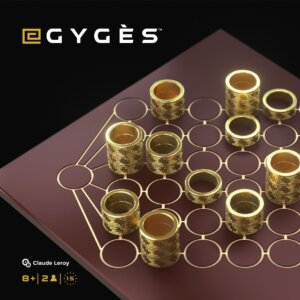
1985
Chain jumps, clever bumps, and a race to the opposing throne.
15
minutes
Medium
View game

1980
A two-player tile-laying duel of loops, lines, and forced plays.
10
minutes
Medium
View game
2024
Coordinate elite Operators in a tense, asymmetric assault and defense game.
60
minutes
Medium Heavy
View game

2020
Team up as unusual crabs in a clever cooperative beach rescue.
15
minutes
Medium Light

View game
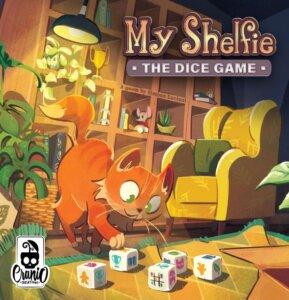
2024
Roll clever combinations to claim shelves, columns, and valuable space.
20
minutes
Light
View game

2022
Outwit your rival in a tense, card-driven tactical skirmish.
20
minutes
Medium
View game

2024
Build the map, gather resources, and keep the walkers in check.
20
minutes
Medium Light
View game

-2600
A 2-player ancient race game of dice, rosettes, and tactical captures.
30
minutes
Light
View game
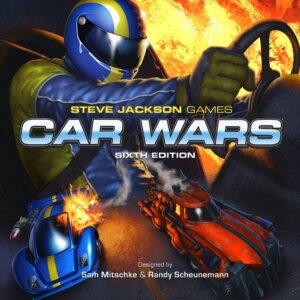
2021
Build, arm, and drive into futuristic arenas and freeways.
180
minutes
Medium
View game

2023
Survive the zombie-plagued ruins of 1942 Stalingrad.
40
minutes
Medium Heavy
View game
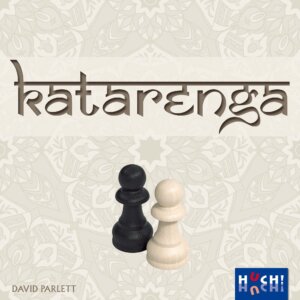
2017
A shifting chess-inspired battlefield where every square changes your move
20
minutes
Medium
View game

2015
Outwit rival forces in a dark wartime battle against the Cult of the Black Sun.
30
minutes
Medium
View game
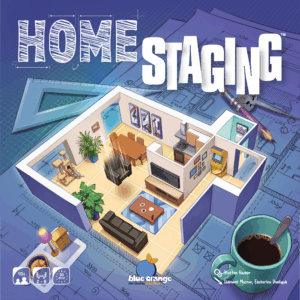
2023
Design smart floor plans and fit every piece of furniture into place.
30
minutes
Medium
View game
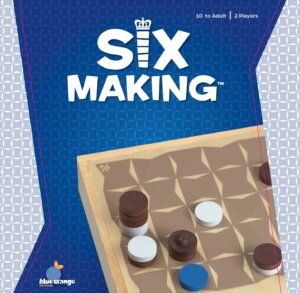
2013
Stack chess pieces, outbuild your opponent, and claim victory at six.
25
minutes
Medium Light
View game

1998
Secret choices, clever guesses, and seven rounds of token-moving tension.
20
minutes
Light
View game

2022
Command angels or demons in a battle for a human soul.
120
minutes
Medium
View game

2012
Renew a fading city, hire specialists, and turn hidden projects into prestige.
45
minutes
Medium
View game

2012
Build a Macedonian or Persian army and fight across three shifting fronts.
30
minutes
Medium Light
View game
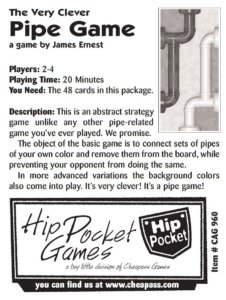
1996
Connect pipes, close sections, and claim the most cards.
20
minutes
Medium Light
View game
2021
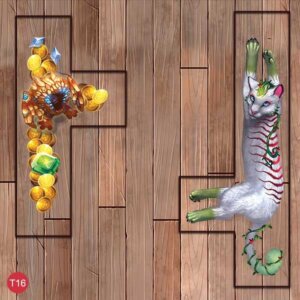
Add curious Oshax and an Earthshaker rare treasure to your tile selection.
90
minutes
View expansion
2021
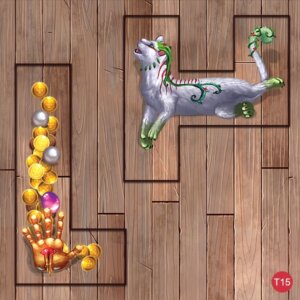
Add happy Oshax and rare Vesh treasure tiles for more options
90
minutes
View expansion
2021
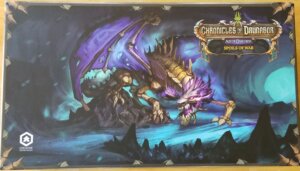
Expand your adventures with new heroes, classes, monsters, pets, and more.
Medium Heavy
View expansion
2005
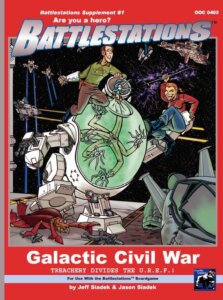
Expand Battlestations with a complete rebellion campaign and new modules.
120
minutes
Medium Heavy
View expansion
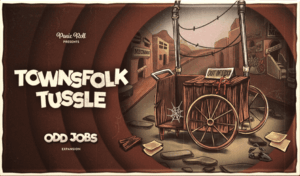
2024
Scavenge, work odd jobs, and survive with clever new gear.
200
minutes
Medium Heavy
View expansion
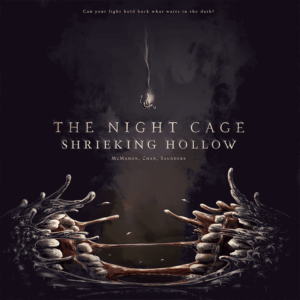
2024
Face a rising horror where candlelight is the only thing holding it back.
60
minutes
Medium
View expansion
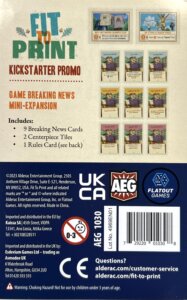
2023
Bend the rules with new tiles, cards, and spatial challenges.
30
minutes
Medium
View expansion
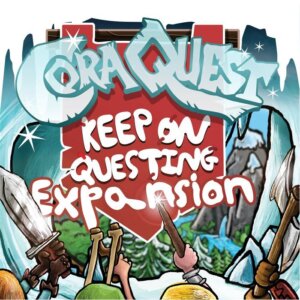
2023
Add campaigns, character progression, and new dungeon content to every quest.
60
minutes
Medium Heavy
View expansion

2019
Command late-war air battles with new aircraft, scenarios, and a Rabaul campaign.
180
minutes
Medium Heavy
View expansion
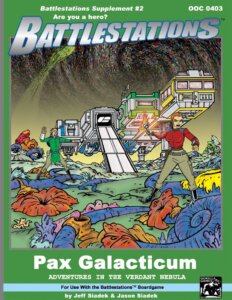
2006
Add intrigue, rescue, puzzles, and missions of mercy to your campaign.
180
minutes
Medium Heavy
View expansion

2023
Four previously released expansions in one solo collection
15
minutes
Medium Light
View expansion
2023
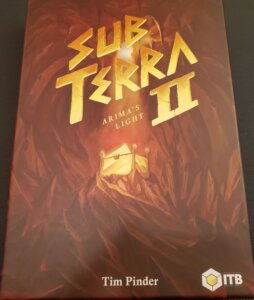
Meet five unusual explorers and confront new hazards in a prequel adventure.
60
minutes
Medium
View expansion
A square grid is a board layout divided into identical four-sided spaces that regulates where pieces move, stand, and interact. This network organizes the play area into predictable rows and columns, giving every location an exact coordinate. Because the geometry is immediately readable, players can easily calculate distances, track lines of sight, and identify threat zones without needing measuring tapes or complex gauges.
A square grid connects each space to four direct orthogonal neighbors and four diagonal corners, whereas a hex grid connects each space to six equidistant adjacent hexagons. Because moving diagonally across a square covers more physical distance than moving orthogonally, square grids often require special rules to balance diagonal costs. Square grids excel at representing indoor corridors, modular rotating rooms, and rigid right-angle architectures.
Games typically handle diagonals by either forbidding them entirely, treating them as normal single steps, or charging extra movement points to traverse them. Some rule sets restrict pieces to orthogonal paths (up, down, left, right) to prevent geometric distortion and keep defensive lines solid. Other designs allow diagonal travel freely to boost unit mobility, though this can make cornering or blocking opponents more challenging.
Approachable titles like Outfoxed! (recommended for ages 5 and up) and Labyrinth offer intuitive movement across changing or fixed grid layouts in just 20 minutes. Families seeking collaborative play can try Forbidden Island, where players race across a sinking grid of tiles to recover treasures. For tactical head-to-head fun, Santorini provides clean, fast-paced 3D building on a compact 5×5 board.
Yes, the square grid is one of the most effective frameworks for two-player duels because tight spatial boundaries generate constant tactical friction. Classic games like Chess and modern abstracts like boop. rely entirely on grid positions to create tense, direct interaction. Dedicated two-player titles such as Patchwork and Targi also use grid spaces to drive tile drafting and worker placement.
Yes, many square grid titles feature dedicated solo rules or are designed entirely as single-player experiences. The quick card game Food Chain Island offers a pure spatial puzzle on a square card layout in about 15 minutes. For a much deeper challenge, heavy games like A Feast for Odin allow solo players to spend up to two hours solving intricate polyomino placement puzzles on their personal grids.
Experienced hobbyists looking for deep campaign play can turn to Kingdom Death: Monster or League of Dungeoneers, both of which feature high-stakes tactical combat lasting 90 to 180 minutes. For intense economic strategy, Antiquity uses individual square grids where city zoning, harvesting, and pollution containment require tight calculation. These titles demand careful advance planning because a single misplaced unit or building can cause major setbacks.
Yes, square grids are frequently used for tile-laying, pattern-building, and inventory management rather than simple pawns moving around a map. In Carcassonne, players gradually build a sprawling countryside by locking square tiles together edge-to-edge. Similarly, games like Azul and Scrabble use fixed square matrices to determine valid placement patterns, spatial adjacencies, and scoring multipliers.
Focus on controlling choke points, central squares, and intersecting orthogonal lines rather than merely advancing forward. Controlling the center of a square grid maximizes your pieces’ reach across both rows and columns, giving you superior coverage over the board. Additionally, creating defensive lines that prevent diagonal penetration forces your opponent to take longer, less efficient detours.
The most common mistake is allowing pieces to get trapped against the outer edges or corners of the board. Being on a border cuts your available movement directions in half, making it remarkably easy for opponents to hem you in. Players also frequently overlook diagonal threat ranges, forgetting that diagonal attackers can sometimes bypass straight defensive shields unless the game rules strictly block them.
