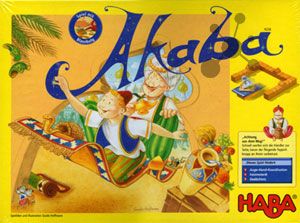
Akaba
2004
Blow flying carpets across the board and collect every present first.
20
minutes
Light

View game

Rules made simple, fun made easy!
The Arabian board game theme covers games inspired by the history, folklore, and landscapes of the Middle East, ranging from medieval trade routes and desert travel to One Thousand and One Nights mythology.
84 results
Games in this setting draw heavily on iconic imagery: bustling souks, desert caravans, grand palaces, and mystical folklore. Players often find themselves bartering rare spices, guiding camel trains across harsh dunes, or maneuvering for political and economic influence in prosperous historical cities.
At the table, the theme typically provides rich flavor for resource conversion, navigation, and tactical interaction. Whether navigating shifting sands or haggling over precious goods, the backdrop lends a vibrant narrative texture to traditional strategy and adventure designs.
This theme appeals broadly to strategy enthusiasts, trade-focused gamers, and players who enjoy evocative historical or mythical settings. In terms of weight, the vast majority of titles sit in the accessible light-to-medium and solid medium complexity range, offering thoughtful tactical depth without requiring overwhelming rules overhead, though a few heavy historical simulations also exist for dedicated strategists.
2004
Blow flying carpets across the board and collect every present first.
20
minutes
Light
View game
2009
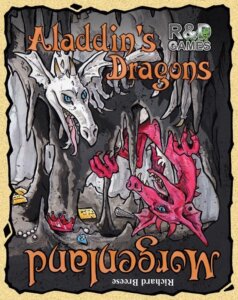
Compete for dragon treasures, palace privileges, and magical artifacts.
30
minutes
Medium Light

View game
2017
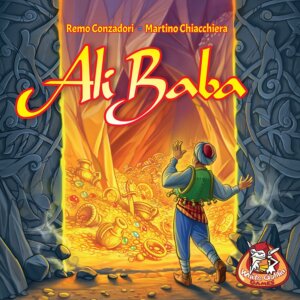
Gather dazzling treasures and use clever tile effects to outscore your rivals.
20
minutes
Medium Light
View game
2025
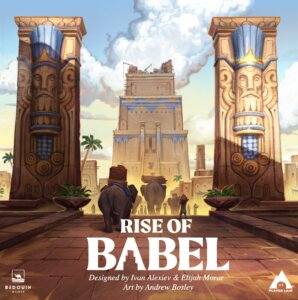
Build the greatest tower with elephants, resources, cards, and influence.
90
minutes
Medium

View game
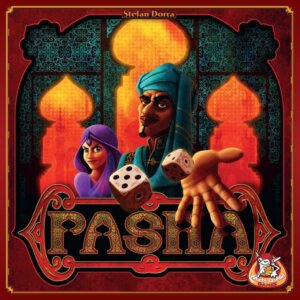
2013
Roll five dice, outplay rivals, and claim the most valuable card.
30
minutes
Light
View game
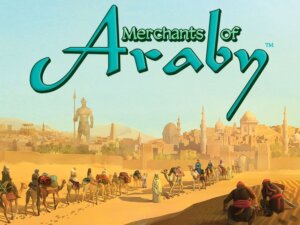
2017
Build your entourage, invest in caravans, and become Araby's richest merchant.
90
minutes
Medium
View game
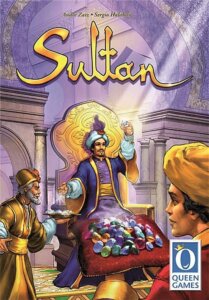
2007
Outbid rival candidates in a glittering test of jewels and fortune.
45
minutes
Light
View game
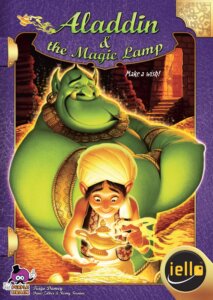
2016
Choose your greed, race to the genie, and brave the scorpions.
20
minutes
Light
View game
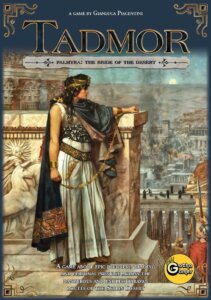
2017
Trade, build and outwit marauders across the Syrian Desert
120
minutes
Medium Heavy

View game
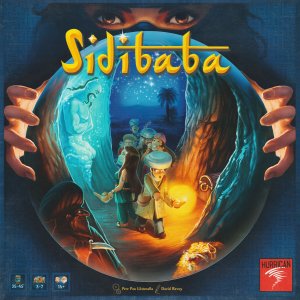
2008
Race through a maze before your oil lamps go out.
45
minutes
Medium
View game
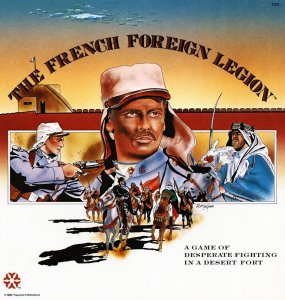
1982
Defend a desert fort against relentless assaults, sabotage, and mutiny.
60
minutes
Medium Light
View game
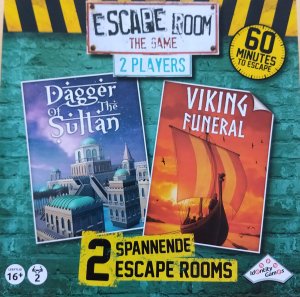
2021
Two escape room adventures for a focused two-player challenge.
60
minutes
Medium
View game
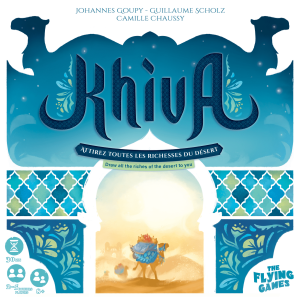
2024
Guide caravans toward wealth in a tense desert tug of war
30
minutes
Light
View game
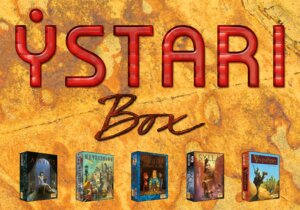
2009
A collection of expansions adding new cards, boards, characters, and more.
Medium
View expansion

2017
A promo Djinn with a resource-drawing trigger
60
minutes
Medium
View expansion
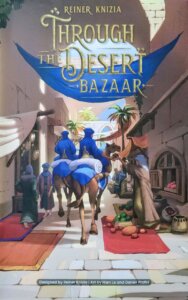
2024
Four modular twists bring fresh challenges to an elegant desert classic.
45
minutes
Medium
View expansion
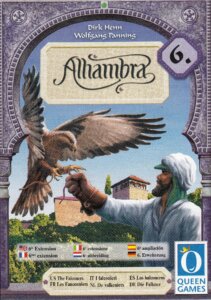
2013
Expand Alhambra with falcons, portals, building sites, and stored change.
60
minutes
Medium
View expansion
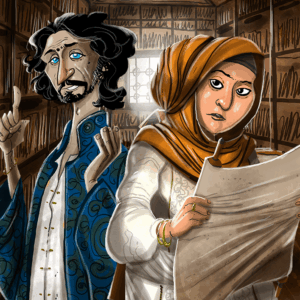
2023
Eight translator promo cards for the Scholars of the South Tigris card stacks.
90
minutes
Medium
View expansion
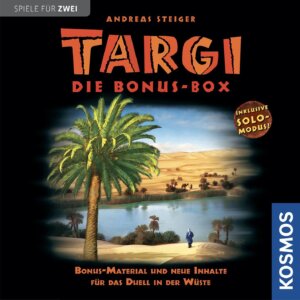
2022
A tenth-anniversary collection of tokens, cards, and solo play.
60
minutes
Medium
View expansion
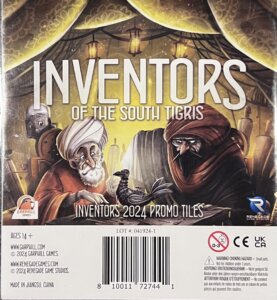
2024
A 2024 Kickstarter promo set with nine new tiles for Inventors.
120
minutes
Heavy

View expansion
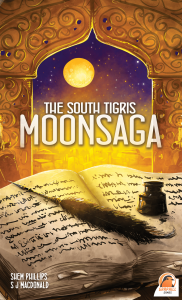
2025
A linked South Tigris journey with special goals and a branching solo campaign
360
minutes
Medium Heavy
View expansion
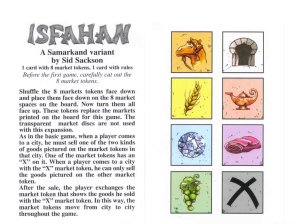
1999
A free expansion that sends commodity demand around the board.
30
minutes
Medium
View expansion
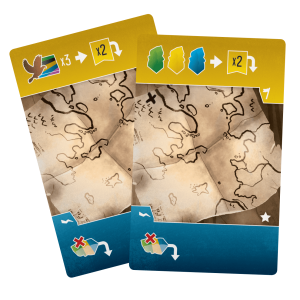
2023
Two 2023 promo cards with distinct requirements for your supply and upgrades
90
minutes
Medium
View expansion
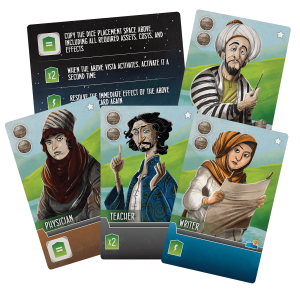
2023
Four promo cards that amplify dice, vista, and open-water effects
90
minutes
Medium Heavy
View expansion
Arabian-themed board games draw inspiration from the history, geography, and folklore of the Middle East and its historical trade corridors. They frequently center on desert caravan expeditions, lively market bazaars, grand architecture, or mythical tales from One Thousand and One Nights. Rather than focusing strictly on combat, these titles often emphasize commerce, navigation, and regional influence.
Accessible designs like Jaipur and Camel Up provide great entry points to the setting. Jaipur offers a fast, two-player trading duel that plays in about 30 minutes, while Camel Up delivers an entertaining camel-racing experience for up to eight players. Both feature intuitive rules that newcomers can grasp within minutes.
For dedicated two-player sessions, Jaipur and Targi stand out as community favorites designed specifically for pairs. While Jaipur is a fast-paced card game about managing commodity markets, Targi offers a deeper, 60-minute tactical worker-placement puzzle across a shifting desert grid. Both titles deliver tight, interactive decision-making without downtime.
Yes, several titles feature gentle rules and tactile components suitable for younger kids. For example, Marrakech carries a minimum age of 6 and has players roll dice to move an inspector while laying down colorful cloth rugs across a market board. Another light choice is Straw, an easy-to-learn card game for ages 8 and up about loading cargo onto a camel without breaking its back.
Experienced strategists looking for complex systems can turn to Scholars of the South Tigris or Merv: The Heart of the Silk Road. Scholars of the South Tigris delivers heavy dice manipulation, color mixing, and manuscript translation set in Golden Age Baghdad. Meanwhile, Merv: The Heart of the Silk Road challenges players to build economic influence along the Silk Road while preparing defenses against invading armies.
Yes, several modern strategy games in this setting include dedicated solo modes right out of the box. Titles like Wayfarers of the South Tigris and Inventors of the South Tigris support 1 to 4 players and feature automated opponent systems that simulate a competitive rival. These solo variants allow you to explore complex resource management and cartography puzzles at your own pace.
Market trading, route navigation, and worker movement are the most prevalent mechanics found across Arabian designs. Titles like Istanbul use modular grid movement where merchants drop off assistants at city locations to trade goods. Other designs, such as Five Tribes: The Djinns of Naqala, rely on spatial mancala-style movement across oasis and village tiles to claim territory and trigger scoring actions.
Playtimes range widely depending on complexity, running from 20-minute card games to multi-hour strategic simulations. Fast titles like Istanbul: The Dice Game wrap up in 20 to 40 minutes, whereas mid-weight strategy titles like Through the Desert typically take about 45 minutes. For deep, asymmetric games like Crescent Moon, sessions can extend to 150 to 180 minutes.
While economic trading and logistics dominate the genre, rich adventure games also exist within the setting. For instance, Tales of the Arabian Nights focuses almost entirely on narrative exploration, destiny, and mythological encounters driven by an extensive story book. However, the majority of titles emphasize merchant economics, route-building across dunes, and resource conversion.
A frequent mistake is hoarding goods for too long instead of timing market sales to maximize profits. In trading games, early sales often reward premium payouts before prices depreciate as other players saturate the market. Another common pitfall is ignoring spatial board control, which can leave your caravan paths blocked or lock you out of high-value oasis routes.
