1857
2015
An Argentine 18xx game with persistent privates and blocking stations
240
minutes
Medium Heavy

View game

Rules made simple, fun made easy!
The train theme centers on laying track, managing locomotives, and connecting distant locations to transport passengers or cargo. These games frequently emphasize logistics, shared infrastructure, and economic expansion across a geographic map.
495 results
Train games range from accessible family races across colorful maps to cutthroat economic simulations involving corporate stocks and regional monopolies. At their core, these titles ask players to establish efficient transit lines, balance construction costs against transport profits, and expand outward before rivals claim crucial corridors.
At the table, this creates immediate spatial tension. Because track lines exist out in the open on a shared board, every piece placed permanently alters the landscape for everyone else, turning geographic choke points and shared rail networks into focal points for player interaction.
This theme suits players who enjoy spatial planning, logistics, and watching a tangible network grow turn by turn. In terms of weight, train titles span the full spectrum, but the majority sit firmly in the moderate to medium-heavy complexity bracket. Casual players can easily find accessible gateway titles focused on simple card collection and line building, while dedicated strategists have access to deeply involved financial simulations involving complex auctions and route arithmetic.
2015
An Argentine 18xx game with persistent privates and blocking stations
240
minutes
Medium Heavy
View game
2010
A pure battle of financial wits in a shifting railroad market.
45
minutes
Medium Heavy
View game
2011
Build rail networks, grow businesses, and compete for New England’s wealth.
180
minutes
Medium Heavy
View game
2007
An 18xx railway game featuring company types, subsidies, and mergers.
360
minutes
Heavy

View game
2014
Draft train cars, claim objectives, and turn a secret contract into points.
20
minutes
Light

View game
2007
Build railway wealth across the Rhineland in a 3–6 player 18xx game.
240
minutes
Medium Heavy
View game
2018
Connect Europe’s emblematic cities and chase a same-color London–Istanbul bonus.
30
minutes
Medium Light

View game
2025
Build railways, move gold, and compete in Colorado’s Royal Gorge wars.
180
minutes
Medium Heavy
View game
2021
Roll, draw, connect, and race to build the most rewarding network.
30
minutes
Light
View game
1975
Race around the world with clever advantages—and watch for Dastardly Dan!
60
minutes
Light
View game
2005
Railroading, mergers, ferries, and diesels across the Great Lakes
300
minutes
Heavy
View game
2011
Guide lost souls homeward while building—and disrupting—ethereal railways.
60
minutes
Medium

View game
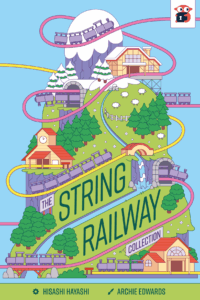
2025
Build vibrant string railways across changing maps and transport networks.
45
minutes
Medium Light
View game
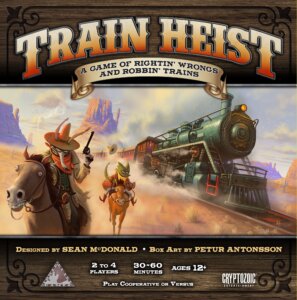
2013
Work together to rob the train and escape the Sheriff before justice catches up.
60
minutes
Medium
View game
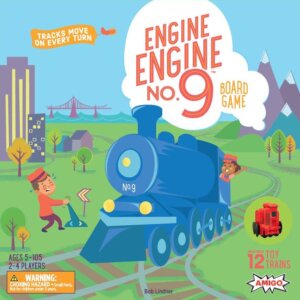
2010
Race shifting tracks, push rival locomotives, and reach the station first.
20
minutes
Light
View game
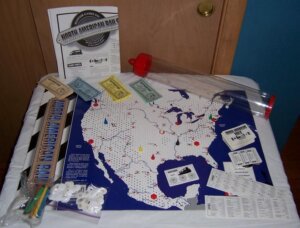
1992
A classic crayon-rail map spanning Canada, Mexico, and the United States.
120
minutes
Medium
View game
2014
Draft railcars, match resources or values, and build the highest-valued train.
10
minutes
Light
View game
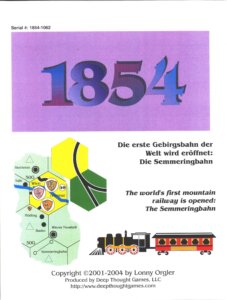
2002
An Austrian 18xx game with tunnels, local networks, and obsolete trains.
300
minutes
Heavy
View game
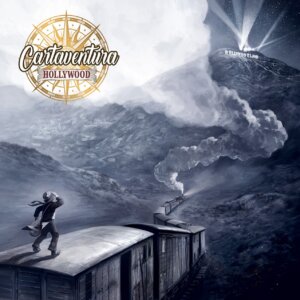
2022
Cross America by rail, chase movie dreams, and seek out Charlie Chaplin.
60
minutes
Light
View game
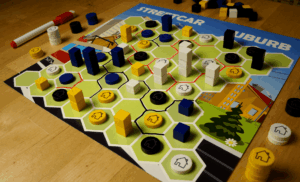
2022
Build a fairer, walkable suburb with strategic streetcar connections.
30
minutes
Medium
View game
1974
A classic American railroad game with freely reusable routes
180
minutes
Medium
View game
2010
Build railways, trade shares, and chase the biggest industrial-era fortune.
120
minutes
Medium Heavy
View game
2023
An 18xx game of shares, trains, and shifting connections
240
minutes
Medium Heavy
View game
2016
A ruthless hour of railroad expansion, dividends, and shifting alliances.
60
minutes
Medium Heavy
View game
2021
Risk it all with new modules, adventures, deeds, characters, and items.
90
minutes
Medium Heavy
View expansion

2004
Explore sea routes in Scandinavia or cube-driven demand in Korea.
120
minutes
Medium Heavy
View expansion
2014
Expand your Russian Railroads collection with engineers, factories, locomotives, and bonuses.
90
minutes
Medium Heavy
View expansion
2003
Two maps, two rule sets, from transcontinental networks to German interurban links.
120
minutes
Medium Heavy
View expansion
2007
Control a shared railroad network and stop opponents from exploiting your routes.
30
minutes
Medium Light
View expansion
2009
Expand Steam with new maps, stock-market rules, and broader player support.
120
minutes
Medium Heavy
View expansion

2010
Build a rail network across 19th-century Mexico and lead the expansion south.
90
minutes
Medium
View expansion
2004
Add surprise objectives and powerful ticket bonuses to your next railway game.
60
minutes
Medium Light
View expansion
2009
Two railroad expansions together in one compact box
60
minutes
Medium
View expansion
2019
Evolve your railway strategy with powerful new connections and scoring options.
90
minutes
Medium Heavy
View expansion

2013
Build railways, invest wisely, and pursue financial success across Great Britain.
90
minutes
Medium
View expansion

2004
A two-sided railway challenge where France and Italy rewrite the rules.
120
minutes
Medium Heavy
View expansion
A train board game centers on establishing rail networks, laying track across a geographic map, and moving goods or passengers between destinations. While some titles focus on light route building and spatial races, others integrate deep economic systems such as corporate stock trading, loan management, and commodity delivery. The defining characteristic across the genre is shared spatial tension on a central map where every rail piece alters the board for all players.
Ticket to Ride is the benchmark introductory train game, offering clear rules where players collect colored train cards to claim routes across North America. For even faster family sessions, Ticket to Ride: New York condenses the route-claiming experience into a snappy 10 to 15 minutes. Another accessible option is TransAmerica, which lets families cooperatively build a shared track network while racing to connect secret destination cities.
Yes, many train games play exceptionally well at two players, especially those designed for tighter spaces or parallel puzzle solving. Ticket to Ride: Nordic Countries is engineered specifically for 2 to 3 players, producing tight route competition without a sprawling board. Additionally, route-drawing titles like Railroad Ink: Deep Blue Edition and Next Station: London are rated best at 2 players because they provide head-to-head competition with virtually no downtime.
Several train titles support dedicated solo play, particularly within route-drawing games and certain operational rail simulations. Puzzly titles like Railroad Ink: Blazing Red Edition and Next Station: London include solo rules where you optimize your rail grid against target high scores. For advanced strategists seeking a heavy logistical challenge, both Age of Steam and 1862: Railway Mania in the Eastern Counties officially accommodate single-player operations.
18XX games are heavy economic railroad simulations named after nineteenth-century railway history that prioritize corporate finance and stock trading over simple track laying. In classics like 1830: Railways & Robber Barons and 1870: Railroading Across the Trans Mississippi from 1870, players act as individual investors who purchase shares in competing rail corporations. As company directors, players construct track, run trains for revenue, and pay dividends, while balancing the risk that obsolete train fleets could bankrupt a company.
Pick-up and deliver tasks players with transporting goods or passengers from supply hubs across the rail network to cities that actively demand them. In games such as Steam and Railways of the World, building tracks is merely the infrastructure; earning income requires moving colored cargo cubes along completed rail lines. This creates economic tension as players race to upgrade engine ranges and deliver supplies before competitors exhaust local demand.
Playing time varies drastically depending on the design weight, ranging from quick 15-minute fillers to multi-hour operational marathons. Light family titles like Ticket to Ride: Europe generally take 30 to 60 minutes, making them easy to fit into a regular game night. Conversely, heavy economic titles such as 1856: Railroading in Upper Canada from 1856 can take around 300 minutes due to the depth of financial calculations and market rounds.
Experienced players looking for deep tactical planning often turn to Brass: Birmingham, which intertwines railway network construction with coal, iron, and beer logistics. For unforgiving logistics and cutthroat auction systems, Age of Steam and Imperial Steam offer complex delivery economies and strict financial constraints. Players who enjoy ruthless stock markets and corporate manipulation will find peak strategic depth in 1830: Railways & Robber Barons.
A frequent error is overextending your network across the board rather than finishing contiguous routes, which leaves you exposed to opponents blocking crucial corridors. Beginners also tend to commit to high-value destination tickets or long-term contracts too early before securing the track space or cards needed to fulfill them. In operational and economic games, failing to budget for train obsolescence or taking on too much debt can quickly paralyze your cash flow.
Interaction in train games is driven by shared geographic space and competitive financial markets rather than direct combat. Because map real estate is finite, claiming a narrow mountain pass or key junction permanently prevents rivals from building the most direct route. In more advanced designs, players interact through bidding wars for operational rights, sharing track links for delivery payouts, or manipulating stock values to wrest control of rival companies.
