
Sleuth
1971
A brilliant deduction game of questions, clues, and hidden possibilities.
45
minutes
Medium

View game

Rules made simple, fun made easy!
Paper-and-pencil is a board game mechanic where players track progress, mark off actions, or sketch directly onto personal sheets using writing utensils. It drives gameplay by turning physical notation into game state changes, spatial networks, or point-scoring opportunities.
639 results
At its heart, this mechanic replaces bulky boards and wooden tokens with printed sheets and writing tools. Players actively draw routes, fill in grids, or tick checkboxes to record their progress. Because each participant works directly on their own paper, the mechanic effortlessly supports simultaneous play and personal optimization puzzles.
At the table, paper-and-pencil games create a deeply satisfying sense of permanent progression. Every stroke of the pencil commits a choice that shapes future possibilities, turning a blank pad into an evolving, visual map of your strategy by the end of the match.
This mechanic is ideal for puzzle lovers, solo hobbyists, and groups that prefer quick, low-downtime gaming sessions. The vast majority of these titles sit firmly in the light to medium complexity range, making them accessible to casual players while still offering enough crunchy decisions to satisfy experienced tacticians.
1971
A brilliant deduction game of questions, clues, and hidden possibilities.
45
minutes
Medium
View game

1995
Question monks, expose traits, and solve a murder in a medieval abbey.
90
minutes
Medium
View game
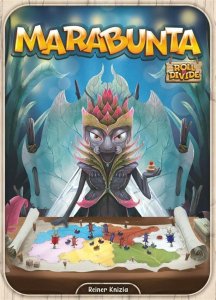
2023
Roll six dice, split the groups, and decide who gets what.
30
minutes
Medium
View game
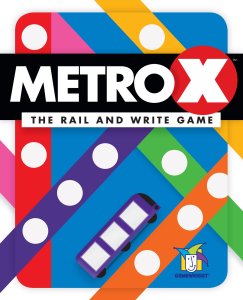
2018
Build your subway network, claim bonuses, and minimize unfinished stations.
20
minutes
Medium Light

View game
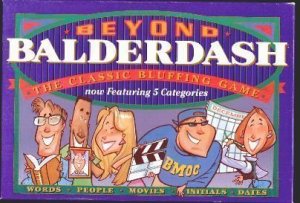
1993
Invent outrageous answers, bluff convincingly, and hope the truth is stranger.
45
minutes
Light

View game

1977
Defend your command post against a single, terrifying cybernetic tank.
45
minutes
Medium
View game

2021
Plan every crossing carefully as your expedition expands across changing landscapes.
20
minutes
Medium Light
View game

2015
The same Telestrations gameplay with a decidedly adult word selection.
30
minutes
Light
View game
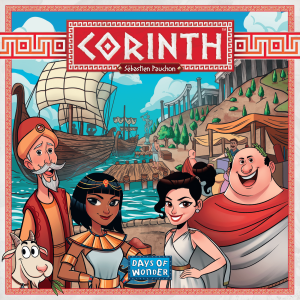
2019
Roll, trade, and outmaneuver rivals beneath a blazing Mediterranean sun.
30
minutes
Medium Light
View game
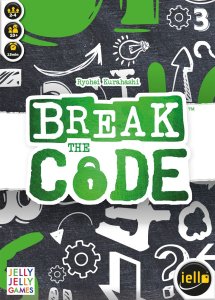
2017
Use logic, ask questions, and uncover hidden tiles before your rivals do.
15
minutes
Medium Light
View game
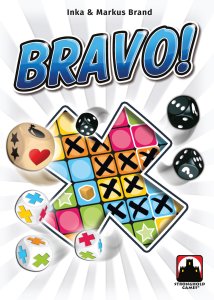
2019
A fresh roll-and-write challenge with bonus symbols and expanded scoring.
20
minutes
Medium Light
View game
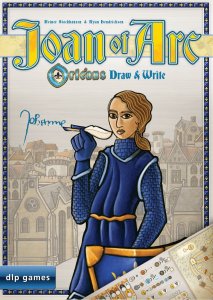
2022
Draft followers, build your influence, and score the most points across France.
45
minutes
Medium
View game
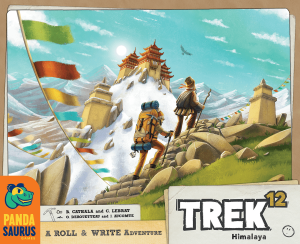
2020
Roll, combine, and build numbered mountain routes in a strategic alpine puzzle.
30
minutes
Light
View game

2024
Draft colorful dice, build your hand, and outscore rival panda clans.
30
minutes
Light
View game
2016
Roll, explore, fight, and survive a perilous solo dungeon crawl.
75
minutes
Medium
View game

1981
Survive thrilling WWII aerial combat and complete daring bombing missions!
60
minutes
Medium
View game
2010
Family-friendly estimation, clever Meeple choices, and quick points for everyone.
20
minutes
Light
View game
2020
A cooperative sci-fi escape packed with danger, dice, and desperate choices.
60
minutes
Medium
View game

2023
Build a stained-glass legacy through generations of clever dice drafting
60
minutes
Medium
View game
2021
A spacious collector’s edition with map packs, pencils, and expansion storage
45
minutes
Medium
View game
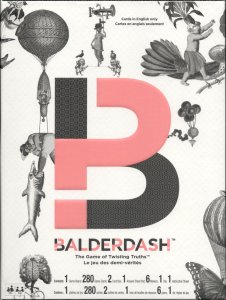
1984
Invent plausible definitions, fool your rivals, and score their votes.
60
minutes
Light
View game
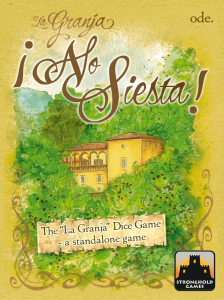
2016
Draft dice, gather resources, and race along the Siesta track.
45
minutes
Medium
View game

2024
Roll dice, shape river habitats, and build a harmonious Cascadian ecosystem.
30
minutes
Medium Light
View game
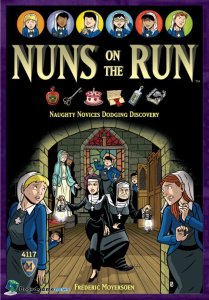
2010
Sneak through the abbey, fulfill your wish, and evade the night patrol.
60
minutes
Medium
View game
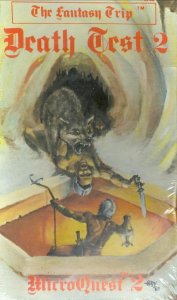
1980
A tougher paragraph-based dungeon crawl for Melee and Wizard
30
minutes
Medium
View expansion

2023
Connect four islands, bridge the gaps, and store routes for later.
30
minutes
View expansion
1979
Search, strike, and sink the enemy fleet in the South Pacific.
120
minutes
Medium
View expansion
2007
A multiplayer French-edition variant built around Catan Dice Game components.
30
minutes
Light
View expansion

2016
Add Percival’s Pillar rules, art, and miniature to your next campaign.
180
minutes
View expansion
A paper-and-pencil board game is a tabletop game where players track game states, plot paths, or record actions directly onto personal paper sheets using writing utensils. Instead of manipulating physical tokens or moving figures across a central board, players drive progression through physical notation on their own pads. Every mark permanently alters the player’s board state, developing a unique spatial layout or score sheet over the course of the game.
Paper-and-pencil is the broad, overarching mechanic, while roll-and-write is a specific subgenre that uses it. Roll-and-write titles specifically rely on rolling dice to generate actions, but paper-and-pencil also encompasses deduction grids, word guessing, tile drafting, and complex economic tracking. In short, all roll-and-writes are paper-and-pencil games, but many paper-and-pencil titles do not use dice at all.
Fast-playing, rules-light titles like Qwixx and Railroad Ink: Deep Blue Edition are ideal starting points for newcomers and families. Both feature intuitive turn structures, take 15 to 30 minutes, and welcome players as young as age 8. For groups wanting a charming spatial puzzle, Cartographers offers engaging map-drawing gameplay that plays smoothly in about 30 to 45 minutes.
Yes, paper-and-pencil games are among the best board game styles for solo play because they are fundamentally self-contained optimization challenges. The logic-deduction game Turing Machine is community-rated best with 1 player, offering tight 20-minute computational puzzles. For a deeper challenge, Hadrian’s Wall provides a rewarding, combo-dense strategic campaign that runs exceptionally well as a solitaire game in 30 to 60 minutes.
Yes, several advanced games use paper-and-pencil sheets to manage complex systems like empire economies, tech trees, and hidden unit movements. For example, Twilight Inscription challenges players across four distinct wipeable player sheets to track navigation, industry, warfare, and politics over 90 to 120 minutes. Similarly, Space Empires 4X uses accounting sheets to record hidden fleet production, economic income, and technological research.
Yes, many paper-and-pencil games scale to massive player counts because everyone acts simultaneously using a shared pool of public information. Hits like Welcome To… and Cartographers officially accommodate up to 100 players without increasing match length. Because turns do not pass sequentially from seat to seat, games finish in under an hour whether you have four players or forty.
While many optimization-focused paper-and-pencil games play like parallel solitaire puzzles, party and deduction titles offer abundant interaction. Cooperative clue-giving games like Just One rely entirely on reading your friends’ minds and comparing written words to avoid duplicate hints. Similarly, team-based code-breaking games like Decrypto use personal sheets to intercept secret communications and crack opposing team ciphers.
In deduction games, the paper sheet serves as a private logic grid where players eliminate suspects, log observations, and verify hypotheses. In The Search for Planet X, participants mark celestial survey data behind player screens to pinpoint the location of an undiscovered planet. Writing down clues ensures players can parse intricate logic webs without accidentally revealing their conclusions to competitors.
Prioritize unlocking combo bonuses early while keeping your future options as open as possible. Rushing to fill large sections can leave you stranded later in the match when random dice rolls or card flips fail to match your remaining spaces. Chaining bonus marks allows you to trigger multiple actions in a single turn, generating higher overall scoring efficiency.
Most publishers provide free printable PDF refills on their official websites, and extra replacement pads are frequently sold online. A popular hobby solution is placing several sheets inside plastic page protectors or laminating them directly. This lets your group use fine-point dry-erase markers indefinitely while saving table space and conserving paper.
The biggest pitfall is marking spaces in permanent ink or forgetting to execute immediate bonus actions before moving on. Because pencil marks establish the physical record of the game state, an overlooked rule or placement error can ruin an entire sheet. Double-checking placement constraints and using a soft pencil with an eraser helps keep your play sheet valid and legible.
