
Brass: Birmingham
2018
Build, connect and sell your way through Birmingham’s industrial revolution.
120
minutes
Medium Heavy

View game

Rules made simple, fun made easy!
Stat-based turn order is a dynamic system where the sequence of play is determined by specific player attributes, such as resource levels, speed values, or track positions.
155 results
In games using this mechanism, sitting clockwise around the table does not dictate who acts next. Instead, the game checks a concrete in-game value—like military dominance, agility, current wealth, or points scored—to rearrange the seating priority each round or phase.
This shifts turn order from an arbitrary rule into an active strategic goal. Players must constantly weigh whether spending an action to advance their rank on an initiative track is worth more than taking an immediate tactical move, creating organic player-driven pacing.
Turn order is determined through a bidding process.
84 gamesPlayers choose actions, which may impact the next turn order.
158 gamesTurn order changes dynamically based on in-game performance.
225 gamesPlayers take turns based on a time-based resource system.
101 gamesThis mechanism is best suited for groups that enjoy deliberate, interactive strategy where sequencing matters as much as the actions themselves. The vast majority of titles using this approach lean toward medium to medium-heavy complexity, appealing to players who like managing interconnected systems, drafting shared resources, and predicting rival moves rather than relying on casual, clockwise play.
2018
Build, connect and sell your way through Birmingham’s industrial revolution.
120
minutes
Medium Heavy
View game

2011
Shape a medieval princedom through clever dice-driven decisions.
90
minutes
Medium

View game

2007
Build an industrial empire across canals, railways, and cotton markets.
120
minutes
Medium Heavy
View game
2019
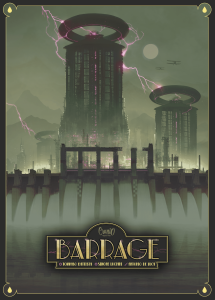
Harness Alpine rivers, build dams, and compete to deliver hydroelectric power.
180
minutes
Heavy

View game

2018
Build a thriving underwater world through clever card placement and planning.
150
minutes
Medium Heavy
View game

2023
Build influence, manage resources, and guide your clan to victory at Himeji Castle.
80
minutes
Medium Heavy
View game
2004
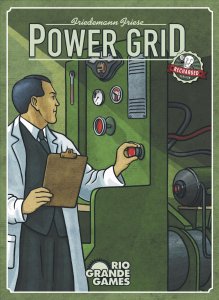
Bid for power plants, fuel your network, and electrify the most cities.
120
minutes
Medium Heavy
View game

2015
Build astonishing tricks, outwit rivals, and become the most famous illusionist.
180
minutes
Heavy
View game
2014
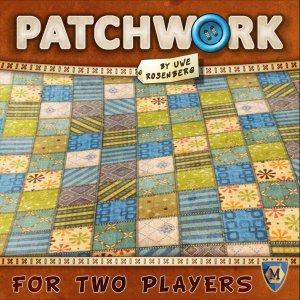
Piece together a quilt, manage your buttons, and outscore your rival.
30
minutes
Medium Light

View game

2016
Build vineyards, produce quality wines, and become Portugal’s top winemaker.
180
minutes
Medium Heavy
View game

2019
Rescue cats, fill your boat, and build scoring families before Lord Vesh arrives.
90
minutes
Medium
View game

2019
Travel west, fulfill contracts, and build wealth in the Khan’s empire.
120
minutes
Medium Heavy
View game

2019
Command apprentices, master illusions, and outshine rival magicians.
180
minutes
Heavy
View game

2018
Draft dice, win influence, and build prestige in Portugal’s Age of Discovery.
90
minutes
Medium Heavy
View game

2013
Build a civilization, balance its needs, and shape history through the ages.
200
minutes
Medium Heavy
View game

2014
Bid, build, and power your way across Europe or North America.
120
minutes
Medium Heavy
View game

2020
Build a legendary Egyptian temple while balancing dice, resources, and divine favor.
120
minutes
Heavy
View game

2018
Plan, price, and expand your smartphone empire across five competitive rounds.
90
minutes
Medium
View game

2015
Walk Nihonbashi, meet Edo’s artisans, and pursue the ideal of IKI.
90
minutes
Medium Heavy
View game

2007
Plan for twelve harsh months of drought, disease, and Mongol attacks.
100
minutes
Medium Heavy
View game

1980
Guide an ancient people from agriculture to the emergence of Rome.
360
minutes
Medium Heavy
View game

2010
Restore a Renaissance church fresco through clever planning and paint mixing.
60
minutes
Medium
View game

2023
Build a thriving Majorcan farm through clever cards, dice, and deliveries.
120
minutes
Medium Heavy
View game

2017
A clever two-player trick-taking game where greed can cost you the victory.
30
minutes
Medium Light
View game
2022
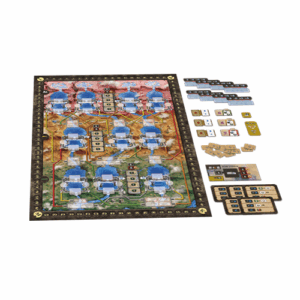
A Nile-themed map introduces Irrigation to Barrage
120
minutes
Heavy
View expansion

2024
A focused two-player challenge with changing costs and competitive objectives.
120
minutes
Medium Heavy
View expansion
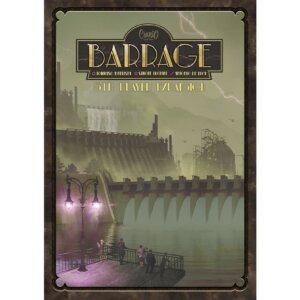
2020
Bring a fifth player to Barrage with new rules, components, and contracts.
120
minutes
Heavy
View expansion

2015
Turn your borough into a thriving holiday destination for up to five players.
90
minutes
Medium
View expansion
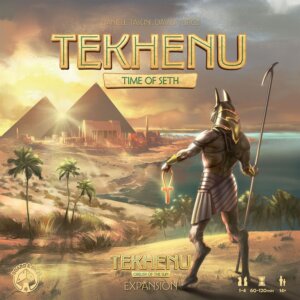
2021
Conquer neighboring lands, muster armies, and secure divine favor.
120
minutes
Heavy
View expansion
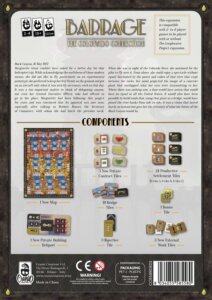
2024
Build bridges across Colorado’s canyons and weigh every dam upgrade.
120
minutes
Heavy
View expansion

2026
Explore Oceania, discover rare specimens, and balance hazards against rewards.
120
minutes
Heavy
View expansion
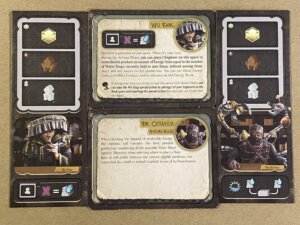
2020
Two Executive Officers introduce fresh energy-production options.
120
minutes
View expansion

2023
Six helpful animals offer setup benefits and a one-time action.
120
minutes
Medium Light
View expansion

2023
Unlock Darwin’s special worker for one powerful turn
120
minutes
Medium
View expansion

2023
Redeem special ships and horses through objective-driven action advances.
120
minutes
Medium Heavy
View expansion
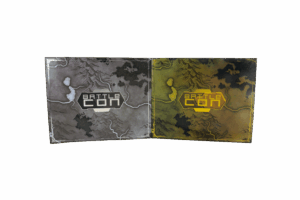
2020
A massive BattleCON storage box packed with upgraded components and solo fighters
Medium Heavy
View expansion
Stat-based turn order is a system where the sequence in which players act is determined by concrete in-game values rather than sitting position. At the start of a round or phase, the game evaluates metrics such as player wealth, points, board position, or initiative track rankings to reorganize who goes first, second, and last. This turns the play order itself into an active tactical consideration rather than a fixed clockwise routine.
A rotating token simply shifts turn priority one seat clockwise each round regardless of board state, whereas stat-based turn order shifts dynamically according to player decisions. In a stat-based system, a player might go first three rounds in a row if they deliberately invest in speed, or drop to last if they spend heavily. This gives players direct agency over when they take their actions instead of leaving initiative to a predetermined schedule.
For young children and families, Dragomino introduces dynamic turn priority in quick 15-minute rounds designed for ages 5 and up. If your group enjoys racing, Formula D is an accessible choice where car track positions naturally dictate who rolls and moves first each round. Both titles keep calculations simple so newer players can grasp how board state affects timing without getting bogged down in upkeep.
Yes, stat-based turn order works exceptionally well at two players because initiative swings create intense head-to-head maneuvering. In Patchwork, player position on a shared time track determines who acts, meaning the trailing player can take multiple consecutive turns before the lead shifts. Similarly, The Fox in the Forest uses card values and trick results to dictate who leads the next play, giving both participants precise control over pacing.
Many games deliberately use reverse stat-based turn order to help trailing players recover by letting them take the first actions. In Power Grid, the player connected to the most cities is placed first in turn order, which penalizes them by forcing them to buy raw resources at higher prices and build last. Inverting priority this way prevents runaway leaders from easily dominating uncontested board spaces.
Strategic titles like Brass: Birmingham and Brass: Lancashire calculate turn order strictly by how much money players spent in the preceding round, rewarding frugality with earlier initiative. For heavier resource management, Barrage and Trickerion: Legends of Illusion incorporate dedicated tracks and action commitments that force players to balance long-term engine building against the urgent need to strike first.
Claiming the lead lets you secure contested board spaces, purchase scarce goods, or draft tiles before opponents can block you. In games like The Castles of Burgundy, advancing your marker along the bridge track guarantees you first selection from the central depots on subsequent turns. Sacrificing an immediate placement to capture initiative often yields far greater rewards across future rounds.
Games resolve ties using specific secondary rules, most commonly marker stacking order, secondary resources, or previous round priority. On physical tracks, games often dictate that a player entering an occupied space places their marker on top of existing discs to grant them priority, or underneath to reward the player who arrived first. Other systems simply allow the player who acted earlier in the previous round to retain the advantage.
A common pitfall is ignoring how an action in the current round will dictate turn placement in the next round. Players often overspend or surge ahead on points without realizing they are handing their opponents a powerful “double turn”—the ability to act last in one round and first in the very next. Mastering this mechanic requires planning not just for immediate gains, but for the initiative hierarchy that follows.
Recalculating stats and moving player markers between phases does add a brief moment of administrative upkeep at the end of each round. However, because player standings are completely public on the table, participants can anticipate the upcoming sequence and formulate their plans well in advance. Once players understand the tracking system, rounds flow smoothly with minimal disruption to the game’s momentum.
