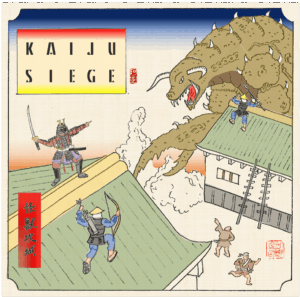
Kaiju Siege
2017
Defend your castle from Kaiju in a 10-round solo battle
20
minutes
Medium

View game

Rules made simple, fun made easy!
A rondel is an action-selection mechanism where available choices are arranged on a circular track. Players advance a marker clockwise around the wheel, typically receiving free movement up to a set distance and paying extra resources to jump further ahead.
190 results
At its core, a rondel replaces open-ended action menus with a physical loop of choices. Because your marker moves in only one direction and cannot easily skip across the board, every decision is tied to where you currently stand. Choosing an action now naturally limits what you can do on your next turn, forcing players to anticipate their needs several steps in advance.
At the table, this restriction creates a natural rhythm and eliminates choice paralysis. Instead of surveying dozens of options, you weigh a small set of accessible spaces against the cost of surging ahead. It introduces subtle, shared tension as players observe each other’s trajectories to predict upcoming moves and race for vital board positions.
Players spend points to perform actions.
2,077 gamesPlayers pre-plan a sequence of actions that are executed in order.
697 gamesPlayers must retrieve spent actions or workers to use them again.
158 gamesActions trigger subsequent actions in a chain reaction.
147 gamesPlayers can mimic or react to another player’s action.
96 gamesPlayers act simultaneously rather than in turns.
355 gamesPlayers spend resources to take movement actions.
107 gamesPlayers secretly choose their actions and reveal them at the same time.
1,544 gamesPlayers spend or gain victory points to perform actions.
213 gamesRondel mechanisms primarily appeal to strategic planners and eurogame enthusiasts who enjoy tactical sequencing and resource management. Games featuring rondels typically sit in the medium to medium-heavy complexity range, offering deep forward-thinking gameplay without overwhelming players with rulebooks full of edge cases. While accessible enough for motivated intermediates, casual groups seeking lightweight party play might find the strict circular movement overly restrictive.
2017
Defend your castle from Kaiju in a 10-round solo battle
20
minutes
Medium
View game
2026
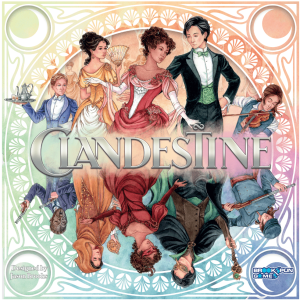
Build intrigue, uncover relics, and guide your secret society to power.
150
minutes
Medium Heavy

View game
2019
Send dreams through time, build sequences, and reshape humanity’s fate.
45
minutes
Medium Light

View game
2005
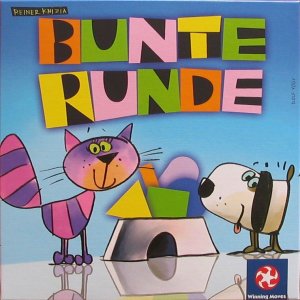
A colorful circle of clever movement, collection, and timed scoring
15
minutes
Light

View game
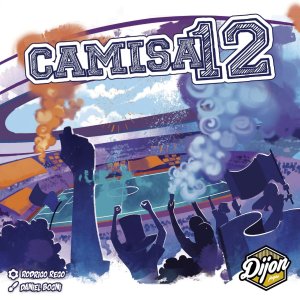
2021
Lead your fan section, build the crowd, and cheer your team to victory.
25
minutes
Medium
View game
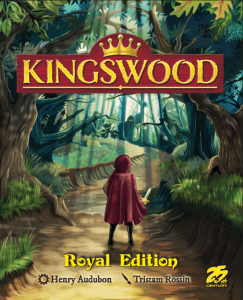
2020
A deluxe 2020 edition with bonus content and upgraded components.
45
minutes
Medium
View game
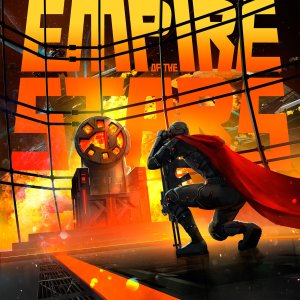
2021
Explore, expand, and fight for control of a galaxy in a tense 4X race.
90
minutes
Medium
View game
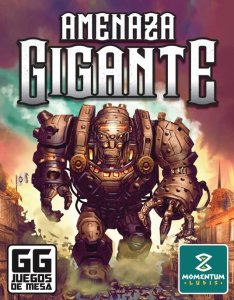
2024
Three heroes face a relentless machine before the city falls.
25
minutes
Medium
View game
2013
Rotate your empire’s gears, gather resources, and compete to restore the Great Engine.
30
minutes
Medium Light
View game
2020
Add new technologies and starting options to every Teotihuacan session.
120
minutes
Medium Heavy
View expansion
2022
Send contractors across Russia and recruit specialists for the cathedral.
90
minutes
Medium
View expansion
2021
Expand the city with obsidian, shamans, conquest, and powerful new options.
120
minutes
Medium Heavy
View expansion
2019
Island routes, shifting colonists, and a fish market full of choices.
90
minutes
Medium
View expansion

2022
Compete for buildings, uncover chests, and choose where your loyalty lies.
90
minutes
Medium Heavy
View expansion

2022
Welcome newcomers, weigh the King’s orders, and decide who may remain.
90
minutes
Medium Heavy
View expansion
2022
Expand your order’s influence with new actions, buildings, and knight orders.
60
minutes
Medium
View expansion
2018
Bring King Arthur, new rewards, Picts, and his ring into the search for a successor.
75
minutes
Medium Heavy
View expansion
2023
Discover Nihonbashi, meet Edo personalities, and trade with player-built ships.
90
minutes
Medium Heavy
View expansion
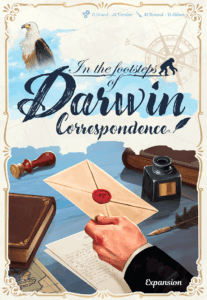
2025
Expand Darwin’s journey with new discoveries, characters, and tokens.
30
minutes
Medium Light
View expansion
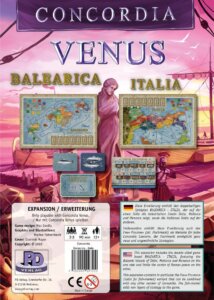
2019
Explore four islands and turn fish into goods, cash, or special actions.
120
minutes
Medium Heavy
View expansion
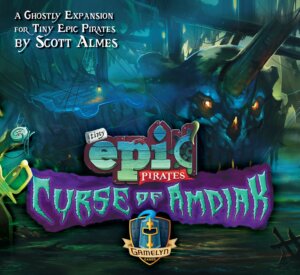
2021
Steal cursed gold, evade a ghost ship, and break Amdiak’s deadly curse.
60
minutes
Medium
View expansion
A rondel is a circular track of action spaces where players take turns advancing a marker to trigger abilities. Because pieces move in one set direction—usually clockwise—your current position determines which moves are readily available next. This structure curbs decision paralysis by presenting a small, forward-facing window of choices instead of an overwhelming menu.
Standard worker placement allows you to send an available worker to almost any open spot on the board, whereas a rondel ties your next move strictly to your current spatial location. On a rondel, you cannot freely teleport between disconnected actions; you must step through or skip past intermediate spaces along a track. This turns action selection into a routing puzzle where timing and spacing matter just as much as spot availability.
Yes, many games adapt the rondel concept into approachable rulesets that work smoothly for families and newcomers. Accessible titles like Patchwork and New York Zoo restrict choices to a small set of upcoming tiles, making each turn quick and intuitive to understand. These games avoid rule clutter while teaching the foundational rhythm of planning around a loop.
A great starting point is Kingswood, which plays briskly in 15 to 45 minutes and clearly demonstrates how movement around a circle dictates action availability. Another excellent option is In the Footsteps of Darwin, where moving your vessel along a track selects tiles in a breezy, easy-to-teach format for players aged 8 and up.
Rondel mechanisms scale exceptionally well to two players because marker positions provide complete, open information about your opponent’s upcoming turns. Dedicated two-player designs like Patchwork and Burgen Land thrive on this dynamic, turning each move into a tight tactical calculation. Even medium-weight options like Glass Road and The Search for Planet X are rated best at just two players.
Yes, several rondel titles feature integrated solo modes where you manage the circular track against automated targets or puzzle thresholds. For example, Nova Luna and The Red Cathedral support solitary play directly out of the box. The predictable motion of the wheel makes it easy to structure solo challenges without requiring complex simulated opponents.
Focus on creating a steady cycle of actions where the output of one space directly fuels the requirements of the next space in your path. Pay close attention to opponents’ markers so you can anticipate which actions they are likely to take before you reach them. Whenever a game charges resources to leap extra spaces, ensure the tempo advantage you gain is truly worth the material cost.
The most frequent error is focusing entirely on the immediate turn without calculating where your marker will land on subsequent rounds. Jumping too far forward can starve you of vital interim actions and leave you waiting for an entire lap to correct the mistake. Overspending resources just to grab a single high-profile space early on can also ruin your economic momentum.
Rondels span a broad spectrum, ranging from light 15-minute games to heavy strategic designs that run over two hours. Lighter titles like Pocket Rockets finish in roughly 20 minutes, while complex eurogames such as Great Western Trail and Teotihuacan: City of Gods require 90 to 150 minutes of deep planning.
Experienced players looking for heavy strategic weight should look at titles like Tawantinsuyu: The Inca Empire and Unconscious Mind. Medium-heavy designs such as Viscounts of the West Kingdom and Wonderland’s War also use circular navigation to anchor complex multi-layered engines.
Both approaches exist, though shared tracks are the most common implementation in modern board games. Shared rondels create direct interaction because players compete for limited space, leapfrog one another, or manipulate common action values as seen in The Red Cathedral. Personal rondels, by contrast, focus purely on individual engine efficiency and private resource conversion loops.
