
Heat: Pedal to the Metal
2022
Manage your speed, beat the heat, and race for the podium.
60
minutes
Medium

View game

Rules made simple, fun made easy!
The sports theme puts players in control of athletic competition, whether coaching a team, piloting a racer, or managing an individual athlete to score points and outmaneuver rivals.
450 results
Sports board games translate the tension, momentum swings, and tactical decisions of athletic contests onto the tabletop. Rather than relying on physical reflexes, these titles challenge you to manage stamina, read your opponent’s playbook, and execute coordinated plays on a field, pitch, or track.
At the table, this theme creates an inherently competitive atmosphere where positioning and timing are critical. Whether you are running a realistic stat-driven simulation or an exaggerated fantasy match, games in this category emphasize head-to-head friction and direct interaction.
Sports games are ideal for competitive pairs, fans of real-world athletics, and players who enjoy tactical maneuvering. In terms of weight, the category leans heavily toward the middle: most titles sit comfortably at a medium or light-medium complexity, offering tactical depth without demanding hours of rules study, though purely light family titles and dense statistical simulations also exist.
2022
Manage your speed, beat the heat, and race for the podium.
60
minutes
Medium
View game
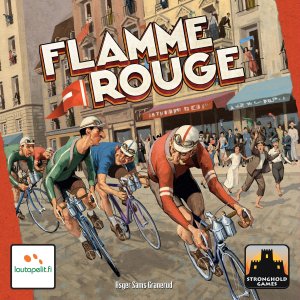
2016
Time the sprint, master the pack, and race your team to the finish.
45
minutes
Medium Light

View game
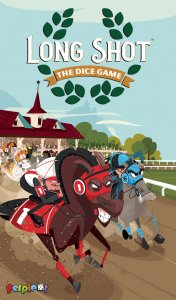
2022
Bet, buy, and push your luck in a thrilling eight-horse race.
25
minutes
Medium Light
View game
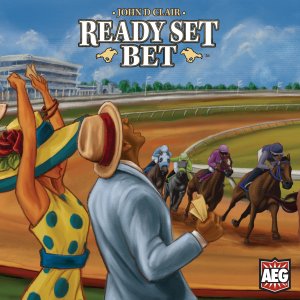
2022
Bet on the race as it unfolds and chase the biggest bankroll.
60
minutes
Light

View game

2011
Build a brutal team, outplay rivals, and cheat your way to the Blood Bowl!
120
minutes
Medium
View game

2017
Bid for speed, place secret bets, and race for the biggest payout.
40
minutes
Medium Light
View game
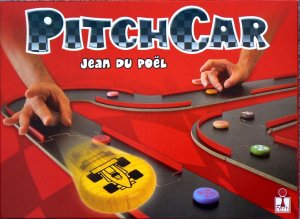
1995
Flick wooden car discs around a modular race track to the finish.
30
minutes
Light
View game

1994
Fantasy football with movement, blocking, and plastic miniatures
180
minutes
Medium
View game
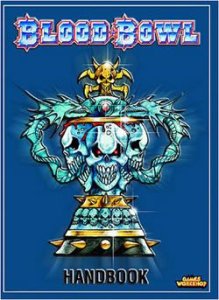
2004
Fantasy rugby meets football, with evolving teams and league play.
120
minutes
Medium Heavy

View game

2015
Build a futuristic baseball team and battle through fast, tactical highlights.
45
minutes
Medium
View game
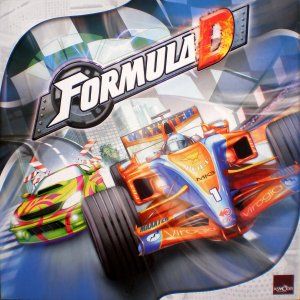
2008
Shift, skid, and outpace the competition in a thrilling dice-driven race.
60
minutes
Medium Light
View game
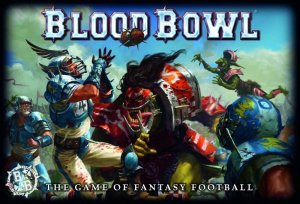
2016
A violent fantasy football clash of tactics, dice, blocks, and brute force
180
minutes
Medium Heavy
View game

2010
Race up the Savage Mountain, manage your cards, and survive the climb.
60
minutes
Medium
View game
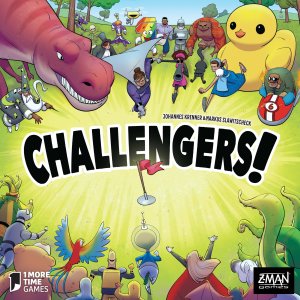
2022
Build a clever character deck and battle through a seven-round tournament.
45
minutes
Medium Light
View game
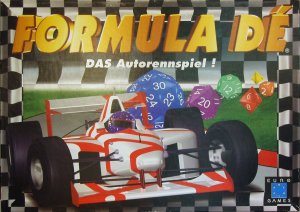
1997
Push your luck through every corner in a thrilling, high-speed race
120
minutes
Medium Light
View game

2008
Race hard, drift wide, and keep your sled from crashing out.
60
minutes
Medium
View game
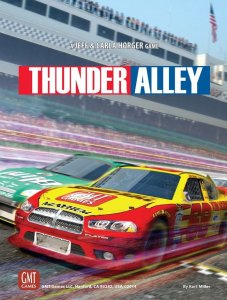
2014
Lead your team through drafting, pit strategy, crashes, and sprints to victory.
90
minutes
Medium
View game

2001
Bet, bluff, and race seven unpredictable horses across three thrilling events.
60
minutes
Medium Light
View game

2016
Build your cube-powered racing machine and speed toward the checkered flag.
45
minutes
Medium
View game
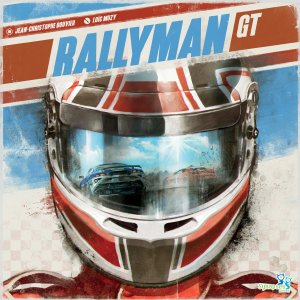
2020
Push your luck, master your gears, and race to the finish.
60
minutes
Medium
View game
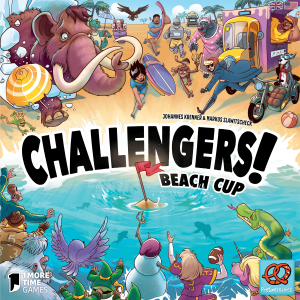
2023
Build clever decks, seize the flag, and battle through a seven-round tournament.
45
minutes
Medium
View game
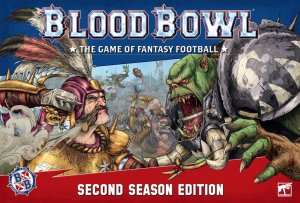
2020
Coach fantasy football’s fiercest teams through a campaign of mayhem
180
minutes
Medium Heavy
View game
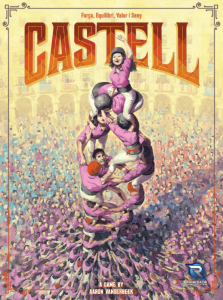
2018
Build towering human formations and lead your Catalan team to festival glory.
90
minutes
Medium Heavy
View game
2009
Race to spot the one matching symbol before everyone else does.
15
minutes
Light
View game
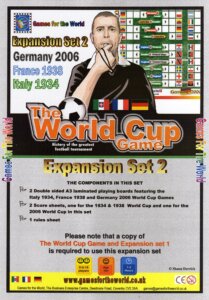
2007
Add three World Cup tournaments, from the brief 1934 event to 2006.
30
minutes
Medium Light
View expansion

2021
Conquer twin peaks and find two distinct routes to the top.
15
minutes
Light
View expansion
2015
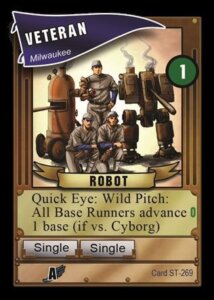
Add 15 Milwaukee cards to your Baseball Highlights: 2045 collection.
45
minutes
Medium
View expansion
2011
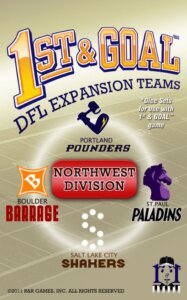
Four custom teams bring contrasting offenses and defenses to the Dice Football League.
60
minutes
Medium Light
View expansion
2020
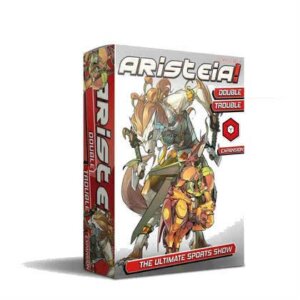
Two champions, two profiles, and a brand-new way to play Aristeia!
90
minutes
Medium Heavy
View expansion

2025
Break free with new arenas, unique rules, and the Vesuvius faction.
60
minutes
View expansion

2022
Bring breaking news, reputation, and fresh board meetings to every match
120
minutes
Heavy

View expansion
2011
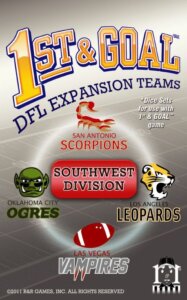
Add four colorful Southwest Division teams and 28 custom dice to your football league.
60
minutes
Medium Light
View expansion
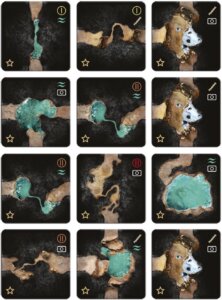
2012
Add 12 special cave tiles to your next subterranean adventure.
60
minutes
Medium
View expansion
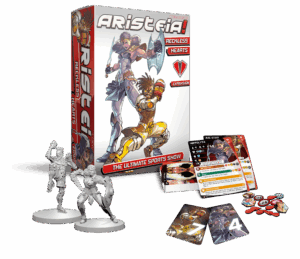
2019
Add two striking fighters, fresh cards, and support to your Aristeia! matches.
90
minutes
Medium Heavy
View expansion
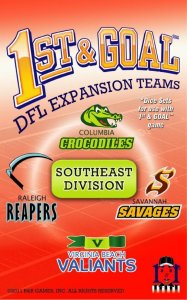
2011
Add four custom DFL teams and bring new strengths, weaknesses, and rivalries to the field.
60
minutes
Medium Light
View expansion
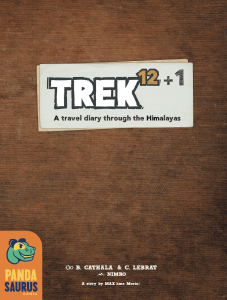
2021
Relive a mountaineer's lost Himalayan expedition through an illustrated diary.
30
minutes
Medium Light
View expansion
A sports board game is a tabletop game that simulates athletic contests, competitive racing, or team management through strategy and rules rather than physical reflexes. Players typically pilot racers, direct individual athletes, or coach teams to outmaneuver opponents on tracks, pitches, or rinks. These titles use mechanisms like hand management, positional blocking, and dice rolls to capture the momentum swings and tactical playcalling of real-world sports.
Yes, many sports games feature intuitive themes and simple rules that make them accessible to newcomers and young children. For younger players, Monza teaches color recognition and movement planning in quick 10- to 15-minute races for ages 5 and up. Families can also enjoy the tactile flicking action of PitchCar or the card-driven auction and racing dynamics of Downforce.
Yes, several sports board games include dedicated solo modes that pit you against automated rivals, the clock, or harsh environments. In Eleven: Football Manager Board Game, the solo mode challenges you to manage finances, tactics, and roster transfers over a demanding club campaign. For racing fans, Heat: Pedal to the Metal features automated bot drivers called legends that run smoothly alongside a solo human driver.
Sports games with simultaneous turns or spectator-friendly betting scale remarkably well to large player counts. Ready Set Bet plays up to nine players in an energetic, real-time horse racing simulation best enjoyed with six participants. Another strong option is Challengers!, which runs simultaneous tournament duels for up to eight players across quick 45-minute brackets.
Sports games are naturally suited to two players because real-world athletics thrive on head-to-head competition and direct friction. Dedicated 1-on-1 pitch games like Blood Bowl (Third Edition) deliver deep tactical duels focused on spatial positioning and defensive pressure. Even racing designs like Flamme Rouge shine at two players, with each coach managing a pair of cyclists jostling for draft position and breakaways.
Experienced hobbyists who want detailed tactical simulations or deep economic management have several heavyweight options. Blood Bowl (2016 Edition) offers an intricate miniature experience centered on risk management, tackle positioning, and long-term roster development. Players looking for operational strategy can turn to Eleven: Football Manager Board Game, which focuses heavily on club infrastructure, staff hiring, and league strategy.
Board games translate athletic stamina and physical reflexes into hand management, calculated risk, and spatial positioning. Rather than relying on real-time agility, a title like Heat: Pedal to the Metal forces you to manage engine heat cards and gear shifts to navigate sharp corners without spinning out. These systems accurately model real-world concepts like drafting behind leaders, muscle fatigue, and defensive lane-blocking.
Session length varies widely depending on whether a game is a streamlined race or an in-depth match simulation. Lighter family races like Monza take just 10 to 15 minutes, whereas mid-weight track games such as Formula D typically run about 60 minutes. Denser miniatures-based sports simulations like Blood Bowl: Living Rulebook require roughly 120 minutes to complete a full contest.
Racing games prioritize course navigation, slipstreaming, and speed management to cross a finish line, whereas team simulations emphasize territory control, asymmetric roles, and scoring intervals. In a racer like Snow Tails, your primary objective is balancing dog sled propulsion and braking to stay on track. Conversely, card-driven squad games like Blood Bowl: Team Manager – The Card Game revolve around deploying specialized player positions to win distinct match highlights across a season.
The most frequent error is overextending too early and exhausting your stamina or hand before the final push. In games featuring endurance mechanisms, driving at top speed right from the start usually floods your deck with fatigue cards or damages your vehicle, leaving you with poor options in the closing rounds. Skilled players usually conserve resources, ride in an opponent’s slipstream, and wait for the final stretch to unleash their best maneuvers.
